Google Ads for remittance companies
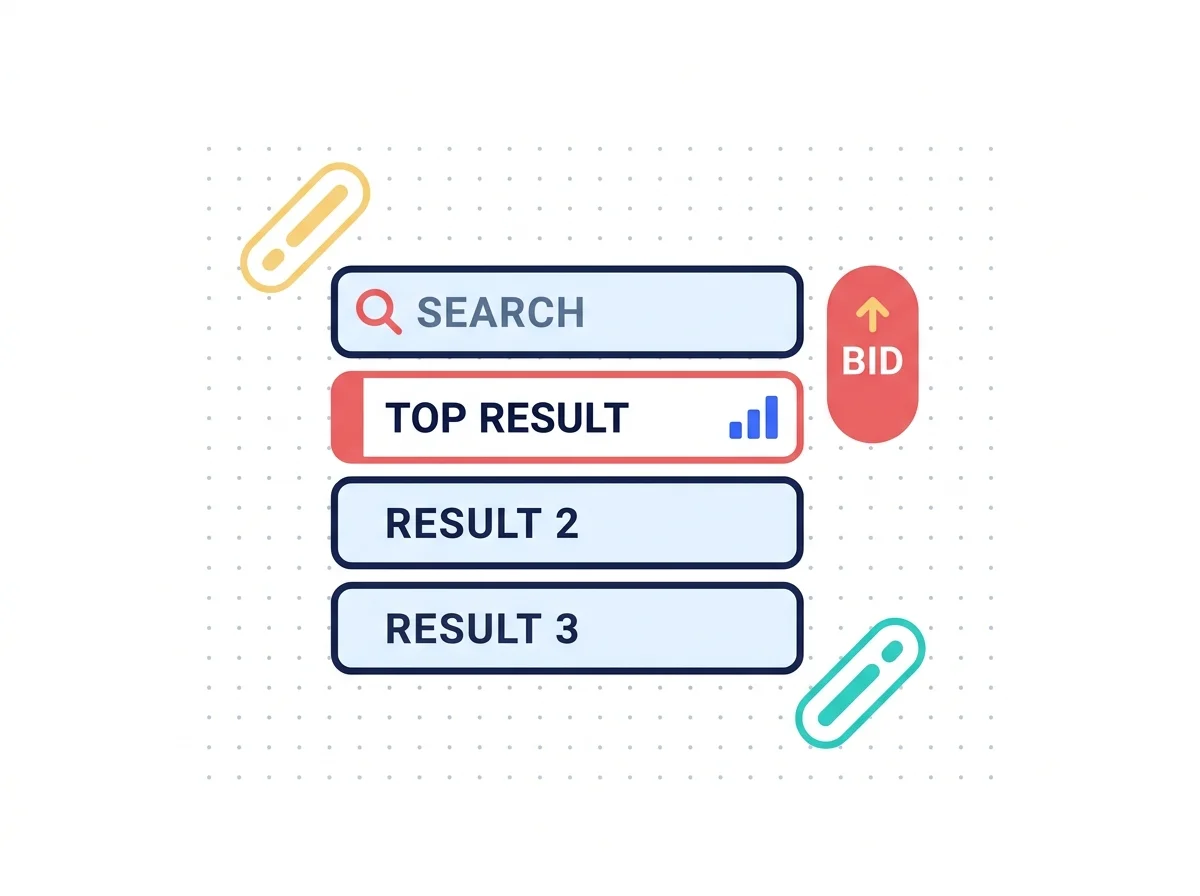
Search demand already exists in every corridor you serve. This buys it right: corridor campaigns, brand defence, clean search terms, and bidding aimed at a funded first transfer instead.
Remittance only · Fixed fees · Reported on first transfers by corridor

Google Ads for remittance companies means buying the search demand that already exists in each corridor: send money to Nigeria, transfer money abroad, money transfer app. Those searches carry direct transfer intent, so campaigns are judged on cost per funded first transfer rather than on clicks or registrations. Twelve workstreams sit inside, from corridor structure to weekly search term review.
What changes in one quarter
Most remittance accounts are structured for a country, not a corridor. Four things change when that is fixed.
Bidding toward signups
The account optimises to registrations, so it buys people who never verify.
Bidding toward transfers
The post-KYC event is passed back, so bidding chases funded senders.
One national campaign
Every corridor shares a budget, so the weak routes drain the strong ones.
One campaign per corridor
Each live corridor gets its own budget, copy and landing page.
Search terms unread
Job seekers, rate checkers and support queries absorb a share of spend.
Search terms reviewed weekly
Negative lists are maintained, so budget follows transfer intent only.
Platform-reported wins
Google reports conversions nobody has checked against the transfer ledger.
Reconciled reporting
Every claimed conversion is matched to your own records each month.
What the programme includes
Four rows of work, run in order. The account is not rebuilt until the tracking behind it can be trusted.
Account and corridor strategy
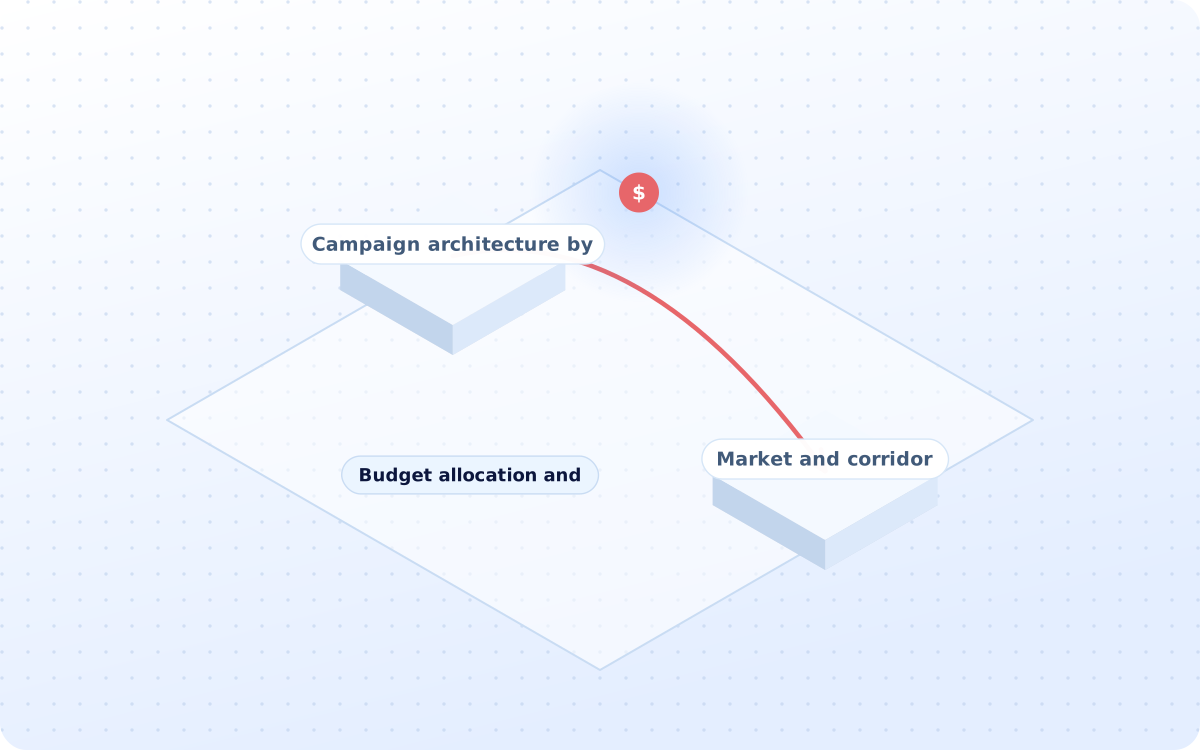
Campaign architecture decided by corridor value rather than by country. Market and corridor prioritisation, funnel mapping, budget allocation and a testing roadmap, with competitor analysis behind each decision.
- Campaign architecture by corridor
- Market and corridor prioritisation
- Budget allocation and testing roadmap

Search, brand and corridor campaigns
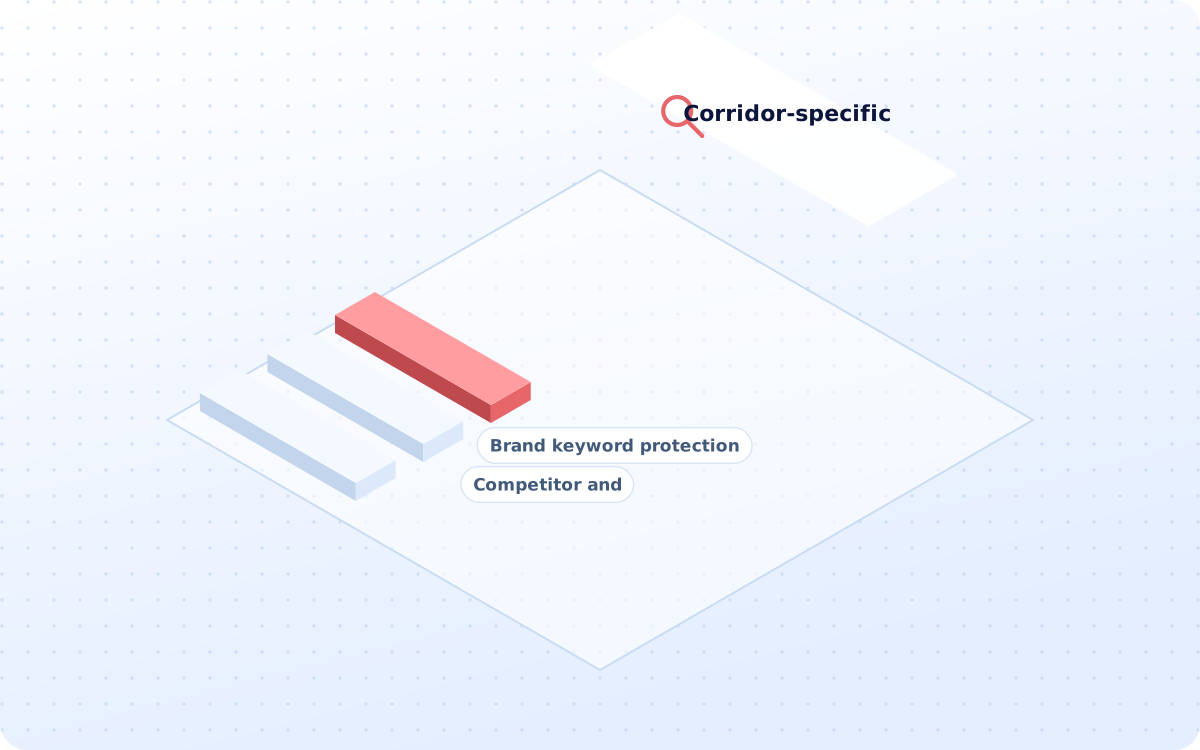
High-intent search built per route, from send money to Nigeria through to business international payments. Brand keyword protection runs alongside, covering app, review, fee and exchange rate queries so the brand is not bought by a competitor.
- Corridor-specific campaign structures
- Brand keyword protection and defence
- Competitor and comparison-intent targeting

Ad copy and landing page alignment
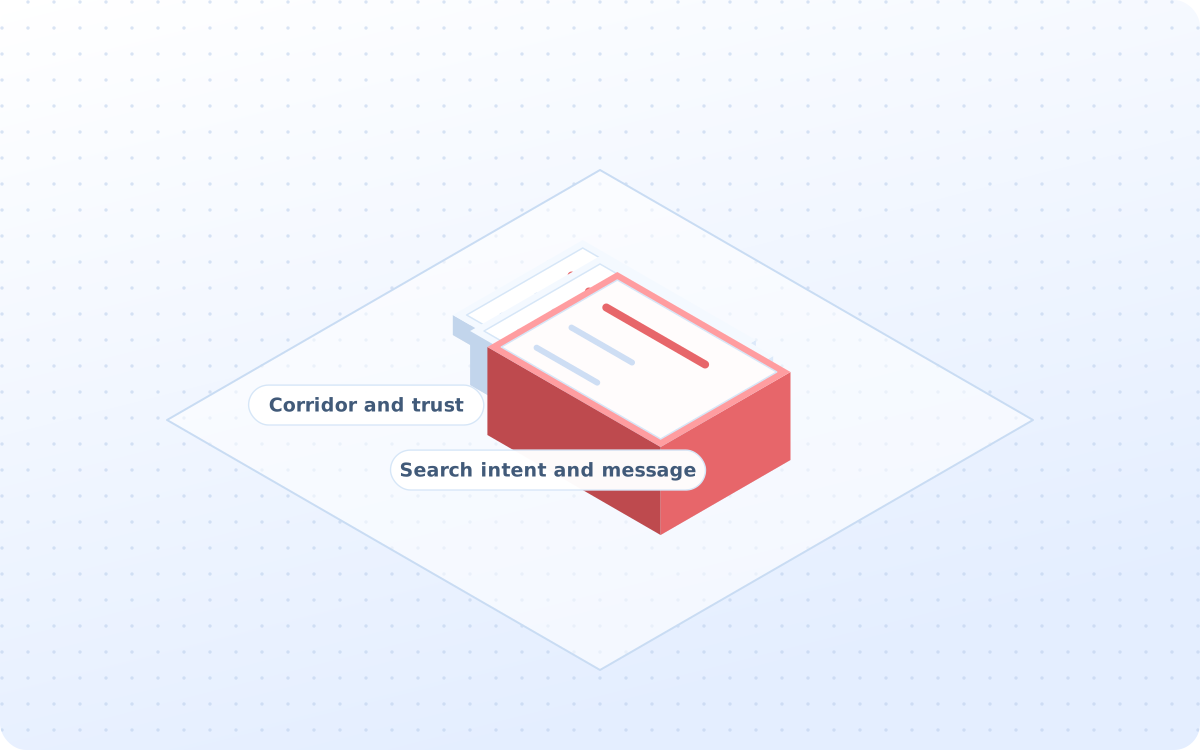
Headlines, descriptions and assets written per corridor, with trust and fee messaging that survives a compliance review. Every ad points at a page that answers the same question, because a mismatched landing page wastes the click.
- Corridor and trust messaging in ad copy
- Search intent and message matching
- Fee and rate messaging that clears review
Tracking, bidding and search terms
Nine events tracked from website registration through to repeat transfer, then bidding built on the ones that carry value. Search term review runs weekly, because an unmanaged query report is the fastest way to lose a corridor budget.
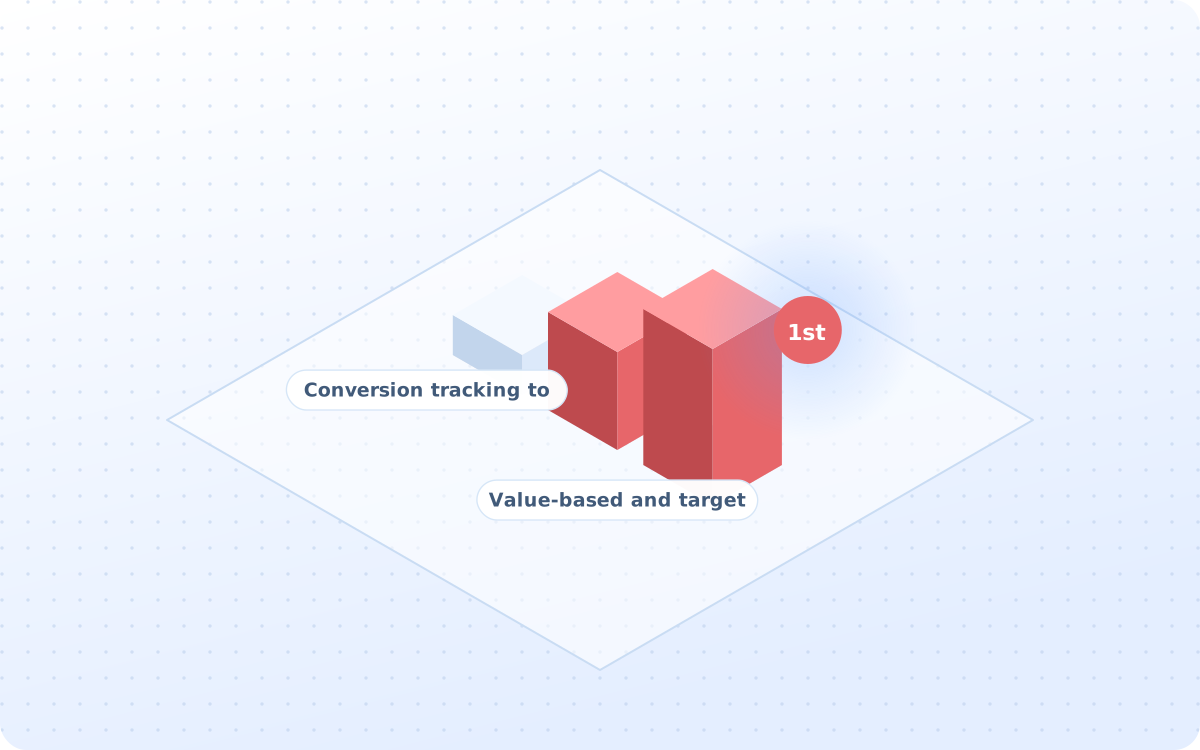
- Conversion tracking to first transfer
- Value-based and target CPA bidding
- Weekly search term and negative review
What you receive each month
Six artefacts you can open and check. Every one of them stays yours if the engagement ends.
Campaign architecture
The account map: campaigns, ad groups and budgets by corridor, with the reasoning for each split.

Corridor campaign set
Live campaigns per route, with keyword groups, localised messaging and corridor-level bidding in place.
Conversion tracking plan
Nine events specified and tested, from website registration through KYC to a first successful transfer.
Ad copy library
Headlines, descriptions and assets per corridor, with the approved claim wording recorded beside each one.
Negative keyword list
The maintained exclusion list, plus the search terms removed each week and the spend that recovered.
Corridor budget model
Budget by corridor against cost per first transfer, with the reallocation proposed for the month ahead.
How the account gets built
Four stages, in order. Nothing is scaled until the event behind the bidding has been proven to fire.
Corridor priority before campaign build
Corridors are ranked on margin, volume and payout reliability, then budget is allocated to the routes that can actually carry more senders.
- 01Corridor and market prioritisation
- 02Account and campaign architecture
- 03Funnel mapping to first transfer
- 04Competitor analysis by corridor
- 05Budget allocation and testing roadmap
Campaigns built route by route
Search, brand and competitor campaigns are built per corridor, with dynamic search and Performance Max used only where they earn their place.
- 01Corridor-specific search campaigns
- 02Brand protection campaigns
- 03Competitor and alternative-provider terms
- 04Dynamic search with tight exclusions
- 05Performance Max where appropriate
Ads and landing pages that match
Copy is written per corridor and checked against approved claims, then each ad is pointed at the page that answers the same sender question.
- 01Headlines, descriptions and assets
- 02Corridor and trust messaging
- 03Search intent and message matching
- 04Fee and rate messaging review
- 05App download and registration paths
Tracking, bidding and weekly review
Events are wired to first transfer, bidding moves to value, and the search term report is worked every week rather than every quarter.
- 01Conversion tracking and enhanced conversions
- 02Offline conversion import from your CRM
- 03Value-based and target CPA bidding
- 04Weekly search term and negative review
- 05Corridor-level profitability reporting
Money transfer Google Ads
The list a generalist would not write. Each one exists because a corridor account failed without it.
Corridor campaigns
One structure per live sending route
Brand defence
Brand, app, fee and review queries
Competitor terms
Where legally and commercially fitting
Dynamic search
Discovery under tight exclusions
Performance Max
Only where it earns its budget
Landing alignment
Ad promise matched by the page
Negative keywords
Job and support queries removed
Post-KYC events
Verification passed back to Google
Offline import
Funded transfers sent from your CRM
Value bidding
Bids follow transfer value, not volume
Customer Match
Existing senders excluded or targeted
Corridor budgets
Spend split by route, not by country
Three ways to buy this
One of these fits, whether you run a remittance app, an exchange house or an agent network.
Managed search programme
We run the account monthly: build, copy, bidding, search terms and reporting. Your team approves claims.
- Fixed monthly fee, never a share of spend
- Weekly search term and negative review
- Monthly corridor profitability reporting
Fixed-scope account build
The account rebuilt once, priced before we start. You keep the structure, the tracking and the plan.
- Priced per corridor, agreed upfront
- Tracking and bidding configured and tested
- Handover pack, no retainer required
In-house team enablement
Your buyer keeps the account. We supply the structure, the bidding rules and a quarterly review.
- Account structure and naming conventions
- Two training sessions for your buyer
- Quarterly review of corridor performance
Comparison. A general fintech buyer optimises to registrations because that is the event they can see. The corridor and post-KYC layer is what they were never set up to build.
Position. We do not price on a percentage of spend, so we earn less as your budget grows.
- Licensing and AML questions go to a qualified adviser. We handle advertising and marketing compliance.
Audit line. If none of the three fits, a fixed-fee growth audit will say which one should.
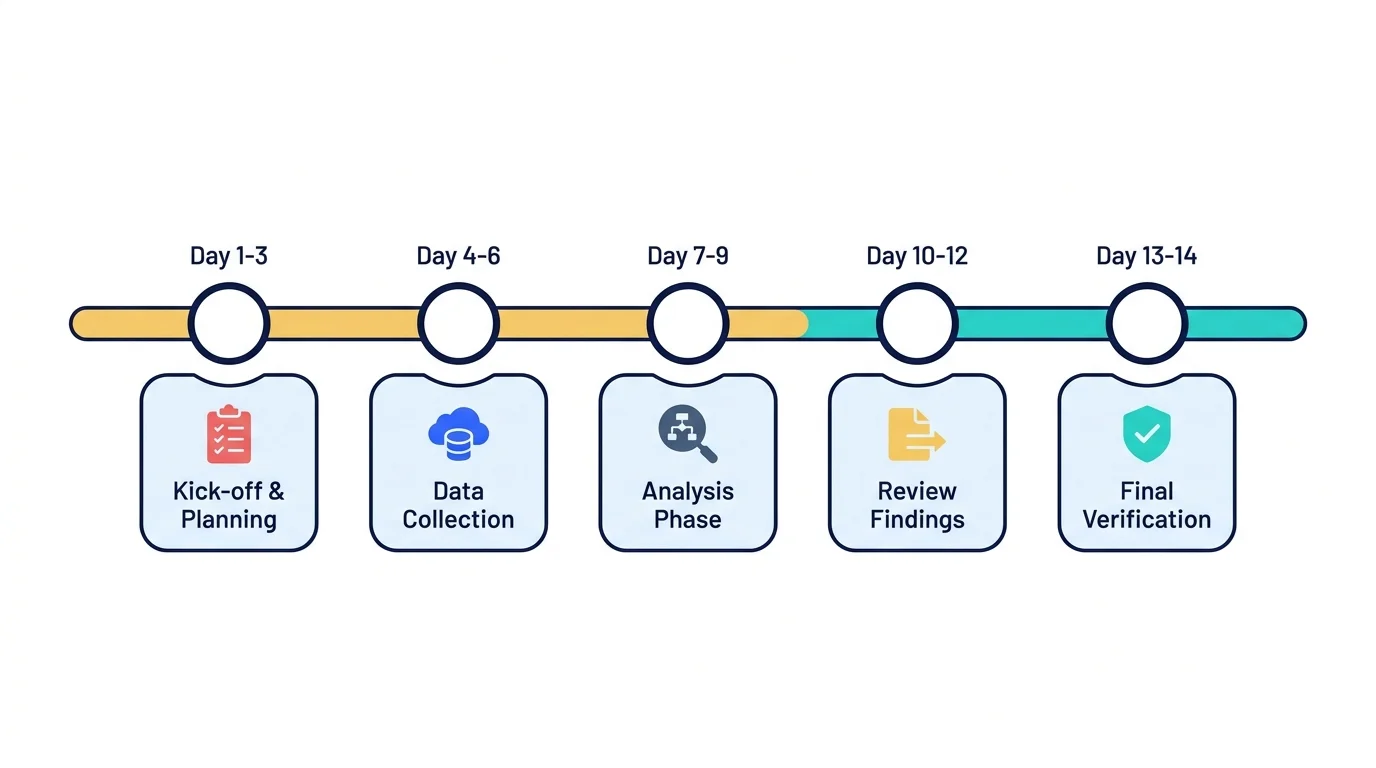
Four steps, then repeat
Two fixed steps, then two that keep on running. The rebuilt account is usually live in week four.
Audit the account
WEEK 1-2Structure, tracking, search terms and corridor performance read against your own transfer records.
Fix the tracking
WEEK 2-3Nine events wired and tested, with the post-KYC event confirmed firing before any bid strategy changes.
Build by corridor
WEEK 3-4Campaigns, copy and budgets rebuilt route by route, starting with the corridor that carries most margin.
Review and scale
WEEKLYSearch terms weekly, bids and budgets monthly, corridor mix reviewed against first transfers each quarter.
How results get reported
No client figures appear here without written permission. These three are facts about how the work runs.
Services that pair with this
Search buys the visit. These three are what decide whether it becomes a verified and funded sender.
Diaspora prospecting and retargeting, for the senders who are not searching for a provider yet.
Learn moreTikTok AdsCreator-led video for younger, mobile-first senders in the corridors search cannot fill alone.
Learn moreThe verification screens where paid budget is most often lost after a click has been paid for.
Questions operators ask first
Answers come first. Where the honest answer is no, the answer says no and explains what to do.
Yes. No account is taken outside cross-border money movement, which is why corridor structure and financial services policy are the starting point rather than the induction.
Yes. App accounts need install and post-KYC events passed back, agent-led operators need catchment targeting and branch or counter conversions. Both are built here.
Yes, one campaign structure per live corridor. Fees, payout methods and competition differ by route, so shared budgets consistently hide the corridor that pays.
Yes, in a priority order set by margin, volume and payout reliability. Three corridors built properly outperform eight sharing one national budget.
Claim wording is agreed before ads are written, and financial services verification is cleared first. Licensing and AML questions go to a qualified adviser.
Ad account access, your live corridor list, funnel numbers from click to first transfer, and access to whatever records funded transfers.
The audit takes two weeks. Where verification and tracking are already in place, a rebuilt account is usually live by week four.
Yes. Reporting is built from your analytics, your CRM and the transfer events you already record, rather than from a parallel measurement stack.
Yes, at event level. KYC completion and first transfer are passed back through enhanced conversions or offline import, so bidding can optimise toward verified senders.
Partly. Customer Match can target or exclude existing senders, though repeat sending is usually cheaper to move through lifecycle messaging than through paid search.
Every campaign is reported on cost per funded first transfer, by corridor. Where attribution cannot carry a claim, the report says so rather than rounding up.
One monthly page: funded first transfers, cost per first send, corridor mix and the search terms removed. Method sits beside the numbers.
Against cost per funded first transfer and payback period. A campaign that lowers cost per click while raising cost per sender has failed.
By bidding toward the post-KYC event rather than the signup, and by pointing each corridor query at a page that answers the fee and payout question.
Indirectly. It acquires senders who complete a first transfer, and repeat behaviour then depends on lifecycle work rather than on further search spend.
Operators, remittance apps and payout platforms on the roster
Marks appear once written permission is on file for each operator.
Start with the search term report
Google Ads for remittance companies is won on corridor structure and clean events. Two weeks and a fixed fee will show what your account is buying.
You keep the roadmap whether or not we work together.