Content marketing for remittance companies
Corridor guides, fee explainers and KYC education, written for senders who have not yet chosen a provider, briefed on real search demand and measured on first transfers, not sessions.
Remittance only · Fixed fees · Reported by corridor, not by session

Content marketing for remittance companies means building a library of pages that answer the questions senders ask before choosing a provider: what a transfer costs, how long it takes, what documents are needed and which payout options exist in a specific corridor. Unlike paid media, that library keeps producing first transfers after the spend stops, which is what actually lowers blended acquisition cost over time.
What changes in six months
Remittance content usually fills a calendar. Four things change when it is written to earn a first send.
Topics chosen in a meeting
Someone picks subjects that feel useful. Nobody checks sender demand.
Topics chosen by demand
Every topic maps to a question senders ask in a live corridor.
One page per country
The send country gets a page. The receive country gets nothing.
One page per corridor
Each live corridor gets its own page, rates, fees and payout options.
Compliance blocks the draft
Articles reach compliance late, then sit in review for weeks.
Compliance sees the brief
Claims are agreed before writing, so approval takes days, not weeks.
Sessions reported
Traffic is up. Nobody can say whether a sender completed a transfer.
First transfers reported
Each article reports assisted first transfers, by corridor and by month.
What the programme includes
Four rows of work, run at once. The full Marketing service list shows where the rest of it connects.

Content strategy built on send demand
Demand mapping comes first: which corridors you run, what senders search before a first send, and what your support queue answers weekly. Content marketing for remittance companies starts there, not a calendar.
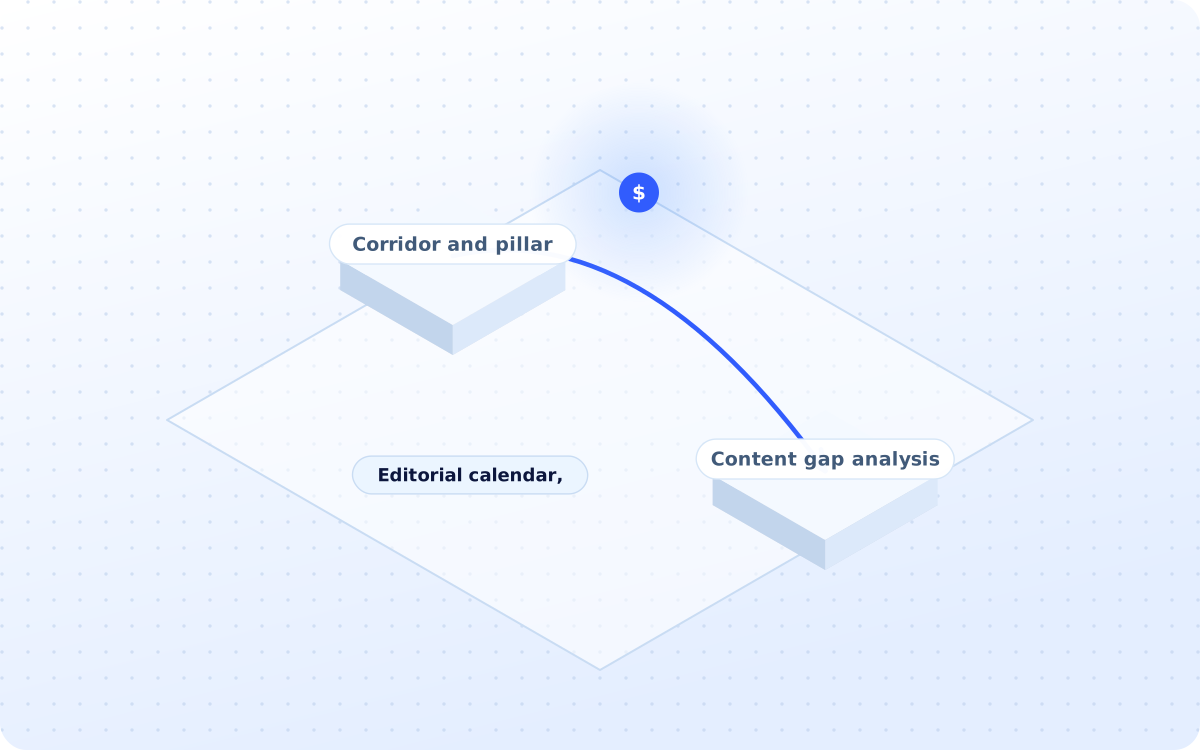
- Corridor and pillar mapping by send country
- Content gap analysis against three rivals
- Editorial calendar, prioritised by first-send value
Corridor content, built as a system
One page per corridor, covering fees, the exchange rate margin, payout options and delivery time. UK to Nigeria reads nothing like Canada to India, so the pages are written separately, never spun from a template.
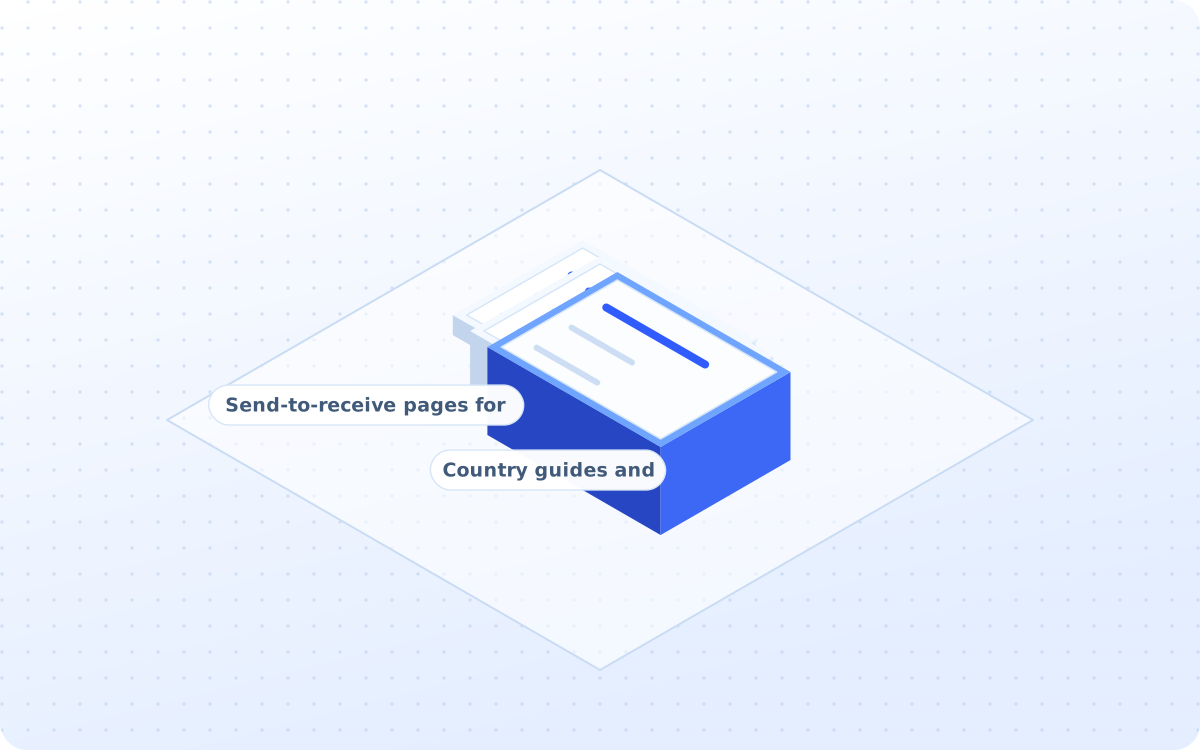
- Send-to-receive pages for live corridors
- Country guides and corridor FAQs
- Recipient-method content: wallet, bank, cash
Fees, rates and trust, explained
Senders compare on total cost, not on the headline fee. These pages explain the FX spread, the transfer fee and what lands in the recipient's account, then cover scam awareness and beneficiary checks.
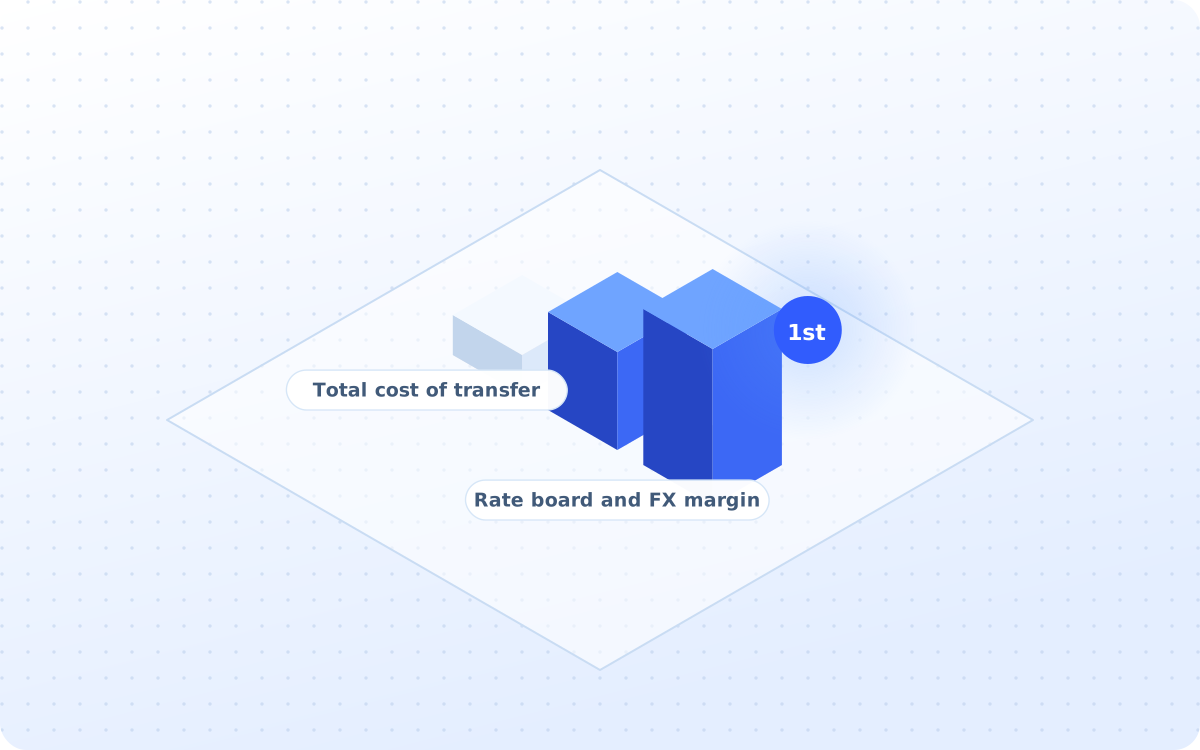
- Total cost of transfer explainers
- Rate board and FX margin education
- Scam awareness and account security
KYC and product content that clears
Verification is where senders stall, so this set covers document capture, source of funds and transfer limits. All regulated or compliance-sensitive content should remain subject to appropriate client approval.
- Verification troubleshooting for stalled senders
- Source-of-funds and transfer limit pages
- App guides: signup, beneficiary, tracking
What you receive each month
Six artefacts you can open and check. Nothing here is a status update or a slide about progress.
Corridor content plan
Every live corridor mapped to pages, questions and payout methods, with a build order by value.

Editorial calendar
Twelve weeks visible at all times, with owner, publish date and the corridor each piece serves.
Written content briefs
One brief per article: the search intent, the claims allowed, the internal links and the word count.
Monthly article set
A fixed number of published articles each month, agreed before the quarter starts and never padded.
Content refresh cycle
Existing articles updated when rates, limits or payout partners change, plus a list of pages to prune.
Performance review
One page showing assisted first transfers, repeat sends and the corridors that moved, with method stated.
How the content system runs
Four stages, in order. Each one produces something the next one needs, so nothing waits on a meeting.
Demand mapping before a word is written
Corridor demand, support tickets and competitor gaps come first, ranked into a priority topic list tied to the corridors you already serve.
- 01Corridor demand mapping by send country
- 02Support ticket and search query mining
- 03Competitor content gap analysis
- 04Topic clustering by funnel position
- 05Ranked topic list, priced by effort
Briefing and writing against agreed claims
Each article gets a brief carrying the search intent, the claims allowed and the internal links it must hold. Compliance approves beforehand.
- 01One brief per article, claims agreed
- 02Compliance review before writing starts
- 03Informational and commercial-intent drafts
- 04Fee, rate and KYC accuracy checks
- 05Two rounds of client amendments
Publishing, structure and the internal link map
Pages publish into a corridor cluster, never a flat blog. Internal links run from the education pages to whichever corridor page converts.
- 01Corridor cluster structure, not a flat blog
- 02Internal links from education to corridor
- 03Schema and heading structure applied
- 04Publishing into your CMS or ours
- 05Image briefs and alt text written
Measure first transfers, then refresh the set
Every article is read against assisted first transfers and repeat sends by corridor. Weak pages get refreshed, merged or pruned each quarter.
- 01Assisted first transfers, by corridor
- 02Repeat send rate on content-sourced senders
- 03Quarterly refresh of rate and fee pages
- 04Pruning list for pages that never rank
- 05One reporting page, method stated
Money transfer content marketing
The list a generalist would not write. Each one exists because a sender asked, or because a corridor changed.
Corridor guides
Send-to-receive pages per corridor
Rate board content
Why the rate moved, in plain English
FX margin education
The spread, explained without a spreadsheet
Total cost pages
Fee plus spread, what lands abroad
Cash pickup guides
Agent counter steps, ID and limits
Mobile wallet guides
Wallet payout rules by receive country
Beneficiary setup
Account fields senders get wrong
KYC explainers
Document capture, liveness, manual review
Source-of-funds pages
What proof is asked for, and when
Scam awareness
Fraud patterns senders actually meet
Seasonal sending
Eid, Christmas and school fee peaks
Refresh and pruning
Old rates and dead pages, removed
Three ways to buy this
One of these fits, whether you run a remittance app, an exchange house or an agent network.
Managed content programme
We run strategy, briefs, writing and reporting each month. Your team approves claims and publishes.
- Fixed monthly article count, agreed upfront
- Compliance review built into every brief
- Monthly reporting on first transfers
Fixed-scope corridor set
A defined corridor set built once, priced before we start. You keep the pages and the plan.
- Priced per corridor, agreed upfront
- Six to twelve pages per corridor
- Handover pack, no retainer required
Editorial team enablement
Your writers keep the work. We supply the plan, the brief template and a quarterly page review.
- Brief template and claim rules
- Two training sessions for your writers
- Quarterly review of published pages
Comparison. General fintech agencies spend their first quarter learning corridor economics. Cross-border payment companies pay for that quarter twice, in fees and in lost months.
Position. We do not price on a percentage of spend, so we earn less as your budget grows.
- Licensing and AML questions go to a qualified adviser. We handle advertising and marketing compliance.
Audit line. If none of the three fits, a fixed-fee growth audit will say which one should.
Four steps, then repeat
Two fixed steps, then two that keep on running. The first published article lands in week three.
Map the demand
WEEK 1-2Corridors, search demand and support questions, ranked into a topic list you sign off.
Brief and write
WEEK 3-4Briefs first, claims agreed with compliance, then drafts from writers who know the category.
Publish and link
MONTHLYPages publish into corridor clusters, with internal links pointing at the page that converts.
Review and refresh
QUARTERLYFirst transfers read by corridor, weak pages refreshed or pruned, the plan reordered.
How results get reported
No client figures appear here without written permission. These three are facts about how the work is sold.
Services that pair with this
Content works harder when the pages convert and search visibility compounds. These three do most of that.
Landing page copy for the corridor pages your articles point at, written to earn a first send.
Learn moreEmail MarketingLifecycle email that follows the first transfer, so a content-sourced sender sends a second time.
Learn moreFull Stack SEOTechnical and on-page work that gets the article set indexed, clustered and cited by answer engines.
Learn moreQuestions operators ask first
Answers come first. Where the honest answer is no, the answer says no and explains what to do.
Yes. Bussinesstan works only with remittance and money transfer companies, so no time is spent learning corridor economics or financial advertising policy on your budget.
Yes. Digital apps need product and verification content, while agent-led MTOs need branch, cash pickup and agent counter content. Both sets get written, and they read differently.
Yes, corridor by corridor. UK to Nigeria and Canada to India differ on fees, payout methods and documents, so each corridor gets its own pages rather than one template repeated.
Yes. Corridors are built in a priority order set by margin and volume, usually three to five first, then added each quarter as the earlier set starts producing first transfers.
Claims are agreed before writing. All regulated or compliance-sensitive content should remain subject to appropriate client approval. Licensing and AML questions go to a qualified adviser.
Your live corridor list, the send and receive countries, current article performance, and access to support tickets. Pre-launch teams supply the corridor plan instead.
The topic map is signed off in two weeks and the first articles publish in week three. Corridor sets take longer, because each one needs fee and payout accuracy checks.
Yes. Reporting is built from your analytics, your CRM and the first-transfer events you already track. No new tracking stack is sold, and no platform number is taken on trust.
Yes, at aggregate level. Article performance is read against KYC completion and first transfer counts by corridor, using your own numbers rather than platform-claimed conversions.
Yes. Product education, corridor updates and rate explainers give a dormant sender a reason to open the app again, which is where send frequency actually moves.
Each article is tagged to a corridor and read against assisted first transfers, not sessions. Where attribution cannot carry the claim, the report says so rather than rounding up.
One page each month: assisted first transfers, repeat sends, corridor mix and the pages that moved. Method sits on the same page, so every number can be checked.
Against cost per first send and payback period, never against traffic alone. Content marketing for remittance companies is slower than paid media and cheaper per send later.
By answering what happens after the first transfer: tracking, limits, beneficiary changes and rate movement. A sender who understands the product sends again sooner.
By meeting the sender at the question that precedes a first transfer: total cost, delivery time, documents needed and the payout options in that corridor.
Operators, remittance apps and payout platforms on the roster
Marks appear once written permission is on file for each operator.
Start with the corridor numbers
Content marketing for remittance companies is a two-year asset built one corridor at a time. The audit shows which corridor is worth the first six pages.
You keep the roadmap whether or not we work together.