SMS and email automation for MTOs
A monthly newsletter to everybody is not lifecycle marketing. The sender who abandoned KYC last night and the one who sends every payday need different messages, on different days.
Remittance only · Triggers, not calendars · One channel for each message

SMS and email automation for remittance companies runs on states, not on a calendar. The core principle is: Customer behaviour should trigger communication. Build automated messaging triggered by actual customer lifecycle and transaction states rather than sending generic communications on fixed schedules. A verified customer who has not sent yet hears something different from the one who sends every month.
What changes in messaging
The monthly send to everybody costs more in opt-outs than it earns in transfers. Four things change.
Everyone gets everything
The same newsletter lands with a dormant and a daily sender.
State decides the message
Verified but never sent gets a different email to a repeat sender.
Every channel, every time
The same message arrives by email, SMS and push at once.
One channel, one job
Urgent goes to SMS, detail goes to email, nothing goes twice.
Status typed by hand
A completion email goes out before the payout actually lands.
Status from the system
Processing, completed and action required all match the record.
Send until they leave
Nobody caps the frequency, so the opt-out rate does it instead.
Frequency has a ceiling
Caps, suppression and quiet periods are set before launch.
What the automation covers
Four rows. The principle, the eight sender states, the two rules of restraint, and then the occasions.

The principle underneath all of it
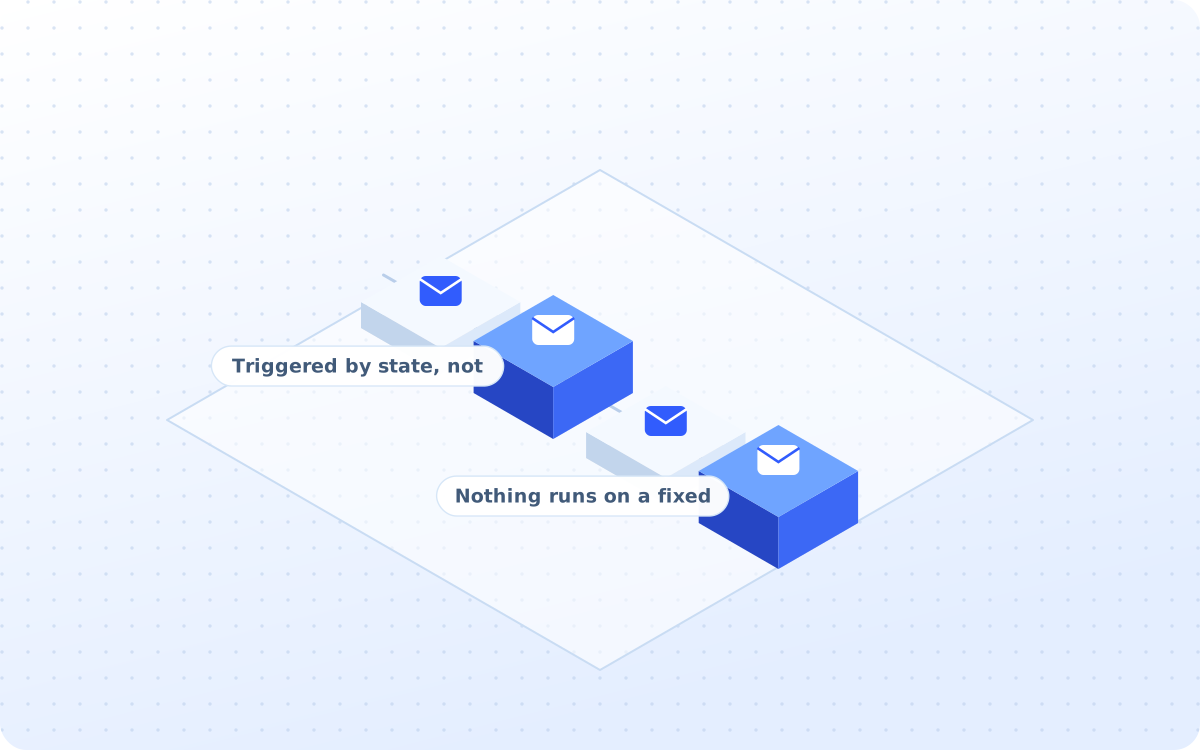
Nothing goes out just because it happens to be a Tuesday. Build automated messaging triggered by actual customer lifecycle and transaction states rather than sending generic communications on fixed schedules.
- Triggered by state, not by date
- Nothing runs on a fixed schedule
- Behaviour decides what gets sent

The eight states a sender moves through
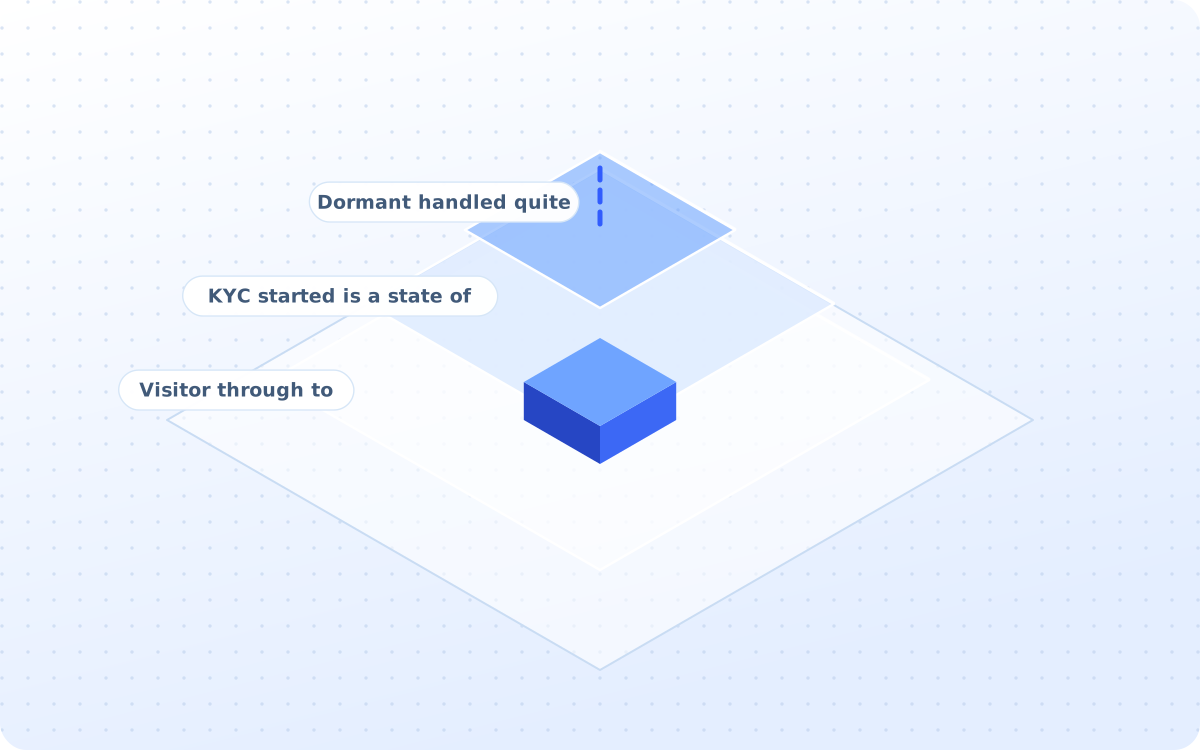
Eight states, in order. The core principle is: Customer behaviour should trigger communication. Visitor → Registered → KYC Started → Verified → First Transfer → Repeat Sender → Dormant → Reactivated
- Visitor through to reactivated
- KYC started is a state of its own
- Dormant handled quite separately
The two rules that stop a message
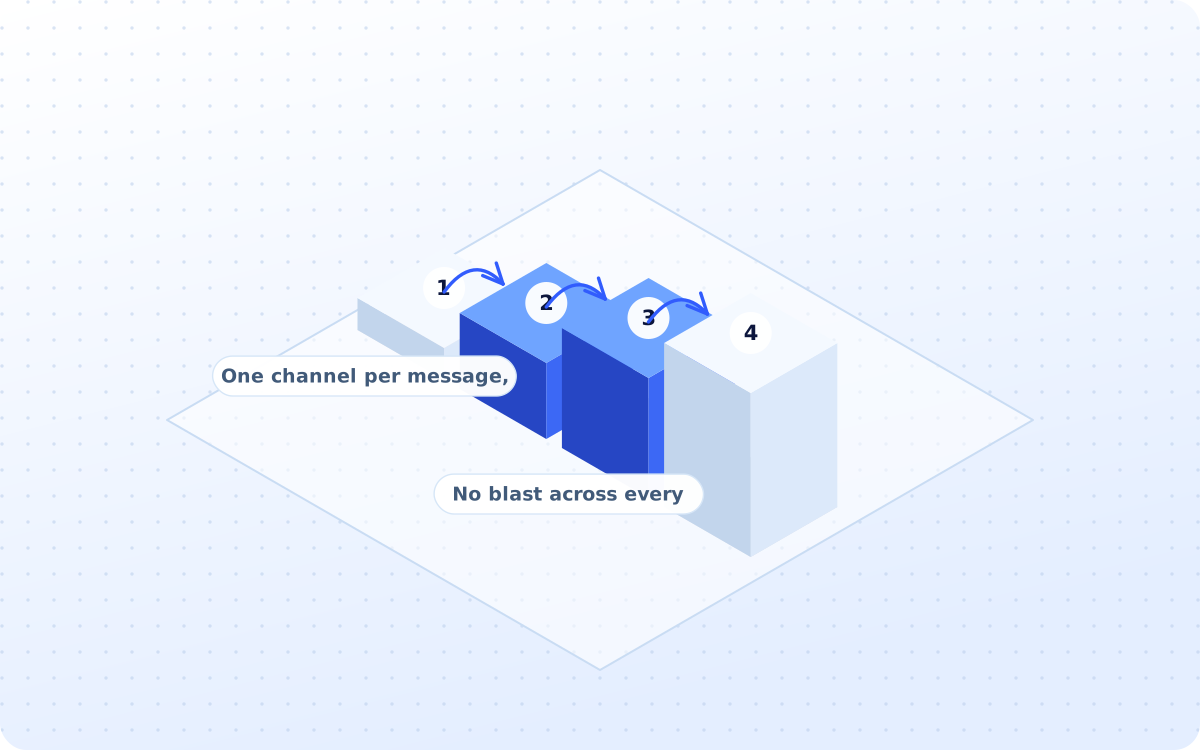
Two more rules, and the first is to pick the channel that suits the message, rather than sending every communication through every channel. Sensitive financial information should be handled conservatively.
- One channel per message, always
- No blast across every single channel
- Financial detail handled carefully
When the money actually moves home
Eid, Ramadan and the school-fee season are when the money actually moves home. Potential campaigns around legitimate customer needs such as: Eid, Ramadan, Christmas, School-fee periods, Other relevant occasions
- Eid, Ramadan and the Christmas
- School-fee periods are included
- Occasions, not invented events
What you actually receive
Six artefacts, all of them yours to keep. The trigger map is the one the team lives in.
The lifecycle map
Visitor, registered, verified, first transfer, repeat and dormant, with the message set for each one.

Trigger architecture
Signup started, KYC abandoned, first transfer completed and transfer failed, each one wired up properly.
Message library
Welcome, KYC recovery, first-send reminders and repeat prompts, written in each of the corridor languages.
The channel rules
The channel decision for every message, including the ones that should not be sent at all, ever.
The frequency caps
How often, how quiet, which campaigns clash, and what suppression applies to any one customer.
Lifecycle reporting
The delivery, the opens, the clicks, KYC completion, first transfers, repeat sends and the opt-outs.
How the messaging runs
Four stages, run in order. The triggers all get wired before a single message is even written.
Where every single sender actually is
Visitor, registered, KYC started, verified, first transfer, repeat sender, dormant and reactivated each become a state with its own message.
- 01Every state named and then counted
- 02Dormant split by how long it is
- 03Verified, but has not yet sent
- 04Repeat cadence actually measured
- 05Reactivated is counted separately
What actually fires each message off
Signup started, KYC abandoned, first transfer completed, transfer failed and customer inactive all become live triggers in the system itself.
- 01Signup started, signup stalled
- 02KYC abandoned fires almost at once
- 03Beneficiary added is a real signal
- 04Transfer failed needs a message
- 05Inactive after a set period passes
What each of those states actually hears
Welcome, signup recovery, KYC recovery, first-transfer activation, repeat prompts and reactivation each get their own words and their own timing.
- 01Welcome, and then product help
- 02Signup recovery, within the hour
- 03KYC retry guidance is included
- 04First-send reminder, once only
- 05Repeat prompts on past cadence
What stops the whole thing becoming spam
Frequency caps, suppression rules, quiet periods, customer preferences and campaign overlap all get set before the first message goes out.
- 01Frequency capped for each customer
- 02Quiet periods actually honoured
- 03Campaign overlap checked first
- 04Preferences stored and then used
- 05Opt-outs applied across channels
What the service covers
Seventeen groups of work sit behind the service, and these twelve are what carry the messages out.
Lifecycle strategy
Eight sender states, one map
Trigger build
Signup, KYC, transfer, inactivity
Welcome flow
Introduction, app help, education
Signup recovery
Incomplete accounts and OTPs
KYC recovery
Reminders, documents and retries
First-send push
Verified, but not yet sending
Transaction messages
Processing, completed, action needed
Repeat automation
Corridor, cadence, time since last
Reactivation work
Recent, medium and long dormant
The rate alerts
The customer sets the threshold
Channel rules
Email, SMS, WhatsApp or push
Three ways to buy this
One of these will fit, whether the triggers already exist or whether nothing fires at all yet.
Complete lifecycle build
The map, the triggers, the messages and the frequency rules, built and wired in a single pass.
- Fixed fee, agreed before we start
- Six weeks from the map to live
- Frequency caps set before launch
Recovery sequence only
Just the KYC recovery messages, when that one drop-off is costing the most first transfers.
- One fixed fee, three weeks total
- One flow, and measured properly
- Credited if the full build follows
Ongoing lifecycle work
The flows all kept current, with the tests run monthly and the opt-out rate watched closely.
- Monthly fee, three months minimum
- One test running in every month
- Opt-out rate watched very closely
Comparison. A general email platform sells sends. SMS and email automation for remittance companies is judged on KYC completion and the second transfer, not the open rate.
Position. Most operators send too much to everybody and nothing at all to the ones who stalled.
- Transaction messages reflect the system state. Consent and frequency rules sit above every send.
Audit line. If none of the three fits, a fixed-fee growth audit will say which one should.
Four steps to the first send
Six weeks to live. The triggers all get agreed before anybody argues about any of the subject lines.

Map the states
WEEK 1Visitor through to reactivated, with the number of senders sitting in each one today.
Wire the triggers
WEEK 2-3Signup, KYC, beneficiary and transfer events connected to the system that already knows them.
Write the flows
WEEK 4-5Welcome, recovery, activation, repeat and reactivation, in the languages the corridor speaks.
Cap the volume
WEEK 6Frequency, suppression and quiet periods set before the first message ever goes out.
How results get reported
No client figure appears without written permission. These three are facts about how the work is run.
Services that pair with this
Messages are one nudge. These three cover the phone call, and the screen the message points at.
The inbound phone line, for the first-time sender who reads the message and then rings about it.
Learn moreAI Outbound CallingThe call for the customers who ignored every reminder and still have not sent anything at all.
Learn moreThe upstream repair for the KYC screen every one of those recovery messages points back at.
Questions operators ask first
Answers come first. Where the honest answer is no, it says no and explains what to do instead.
Both. An agent-led operator often has a phone number and no email address, which makes SMS the only channel that reaches the sender at all.
Yes. The triggers read the states your own systems already record, so nothing new has to be invented and no second database appears.
Yes. Corridor sits in the personalisation variables, so a repeat prompt can name the route, the language and the payday pattern that goes with it.
Yes. SMS and email automation for remittance companies is the only kind built, so KYC recovery and first-transfer activation are already in the map.
Sensitive financial information should be handled conservatively. A reminder says a document is outstanding. It does not put an amount in an SMS.
The states your systems can already report, the consent you hold for each channel, and whoever approves what a customer gets told.
Six weeks to live, or three weeks for a single recovery flow. Wiring the triggers takes longer than writing the messages, every time.
Yes. Transactional messages should reflect actual system states. A completion email that arrives before the payout lands does more harm than no email.
Yes. Corridor is a trigger variable, so the Ramadan message goes to one set of senders and the school-fee message goes to a completely different set.
That is most of the service. Repeat prompts run on the previous cadence, and reactivation is split into recently, medium and long-term dormant.
KYC completion and first transfers are two of the nine measures, counted per flow, so the activation sequence gets judged on transfers rather than opens.
Nine measures, all reported monthly: delivery, opens, clicks, replies, KYC completion, first transfers, repeat transfers, reactivation and the opt-out rate.
By catching the verified customer who has not sent yet, with recipient guidance rather than a discount, on the day they were most likely to try.
Transfers per flow, against the cost of sending. SMS and email automation for remittance companies usually pays back on the KYC recovery sequence alone.
A prompt timed to the sender's own cadence works. The same prompt on the first of the month, to everybody, mostly earns opt-outs instead.
Operators, remittance apps and payout platforms on the roster
Marks appear once written permission is on file for each operator.
Let the behaviour do the sending
The abandoned KYC queue and the dormant list are both sitting in your CRM already. A fixed-fee growth audit will say which one to message first.
You keep the lifecycle map whether or not you build the flows.