Workflow automation for remittance apps
The campaign was finished on Monday. It went live on Thursday, because the brief sat in somebody's inbox waiting for an approval nobody realised they were supposed to give.
Remittance only · Handoffs removed · The regulated decisions are left alone

Workflow automation for remittance companies is about the gaps between people, not the people. Connect systems, teams and repetitive processes so customer, marketing and operational work moves automatically between stages without unnecessary manual handoffs. A campaign brief that waits days for an approval nobody chased is the actual problem. The compliance decision at the end of it still belongs to a person.
What changes between teams
Nobody here is slow. The work just stops between one desk and the next, over and over again.
The brief waits
A campaign sits in an inbox because nobody was ever told.
The brief moves on
Submission routes to a named reviewer with a clock on it.
The same data, twice
Somebody retypes a lead from the website into the CRM again.
Entered once, moved on
The form writes the record, and the owner gets a notification.
Silence when it breaks
Tracking fails on a Friday and nobody notices until Monday.
An alert when it breaks
A tracking failure or a spend overrun pages somebody at once.
Approvals in a chat
Nobody can prove who approved the rate claim, or even when.
Approvals on a record
Submitter, reviewer, changes, approval and date all get logged.
What the automation covers
Four rows. What it connects, where the line sits, the two stop rules, and then the map.

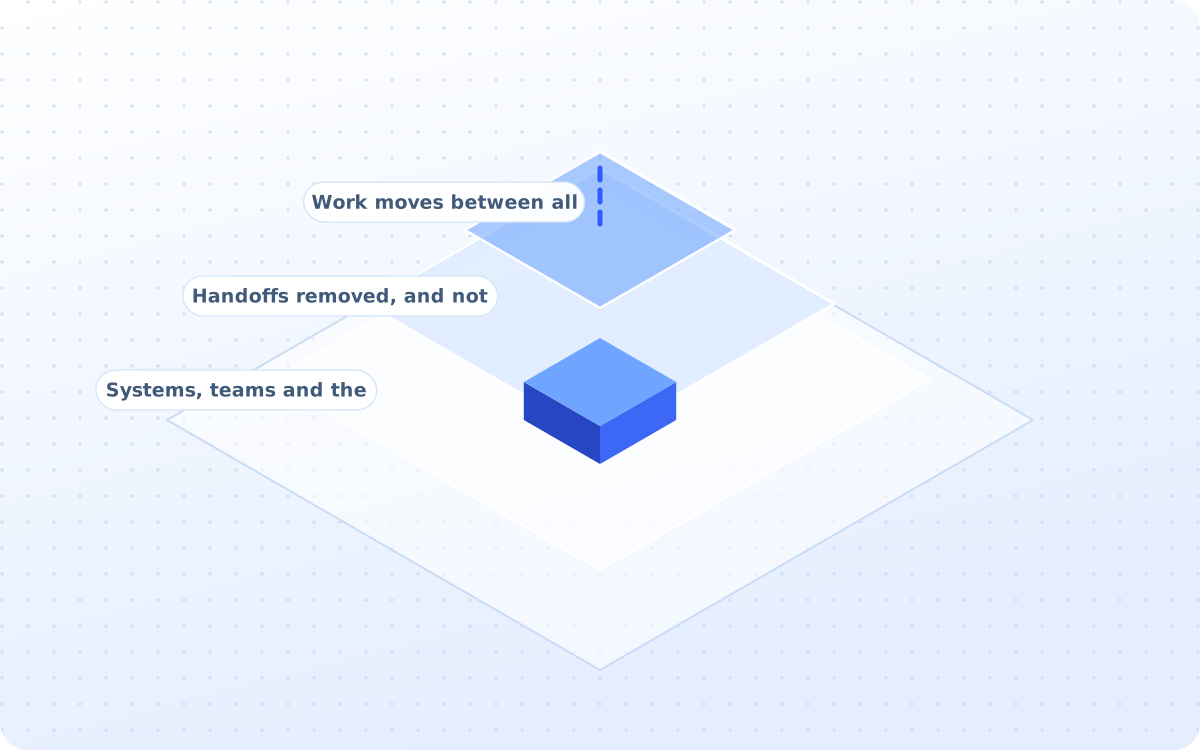
What this service actually connects
Most of the delay is a handoff, not a task. Connect systems, teams and repetitive processes so customer, marketing and operational work moves automatically between stages without unnecessary manual handoffs.
- Systems, teams and the processes
- Handoffs removed, and not people
- Work moves between all the stages
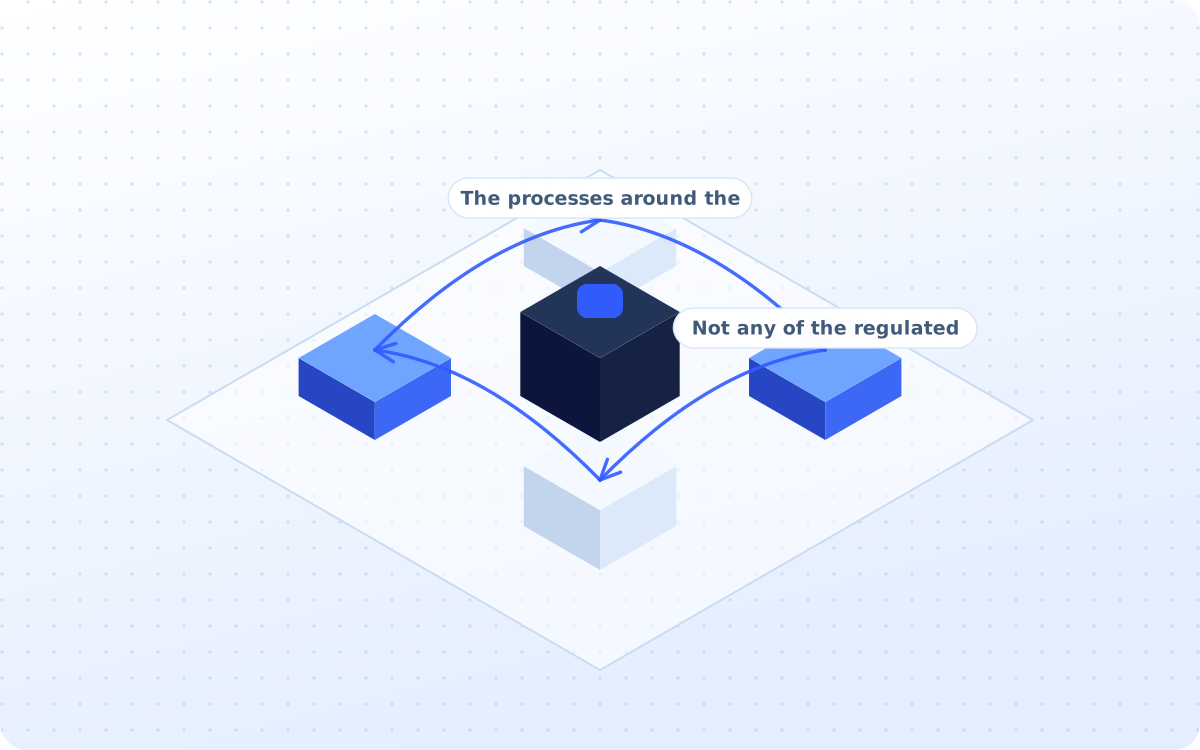
Where the line sits, quite exactly
There is a line here, and it sits around the regulated part of the business. This service should focus on processes surrounding the remittance business rather than automating regulated decisions themselves.
- The processes around the business
- Not any of the regulated decisions
- Marketing and the operations work
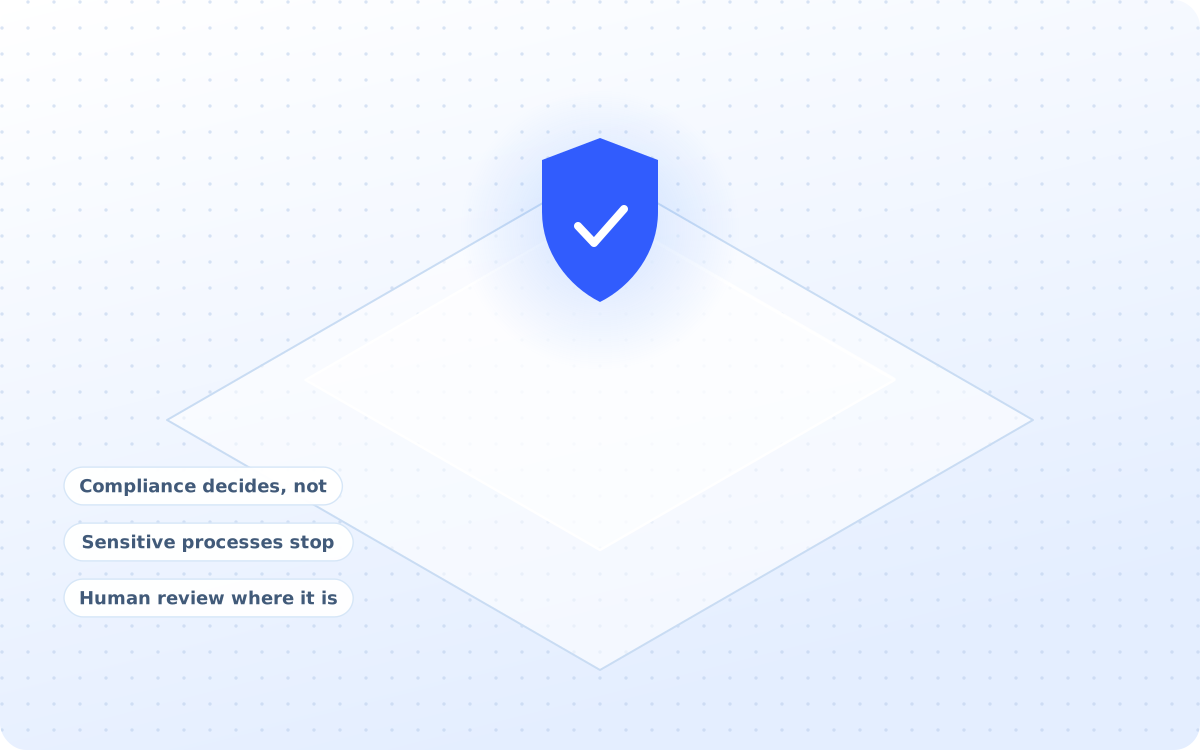
The two rules that stop the machine
Two controls make the difference, and both stop the machine. Automation supports the workflow but does not make the compliance decision. Ensure sensitive processes stop for human intervention when required.
- Compliance decides, not the tool
- Sensitive processes stop for people
- Human review where it is needed
How every workflow gets drawn up
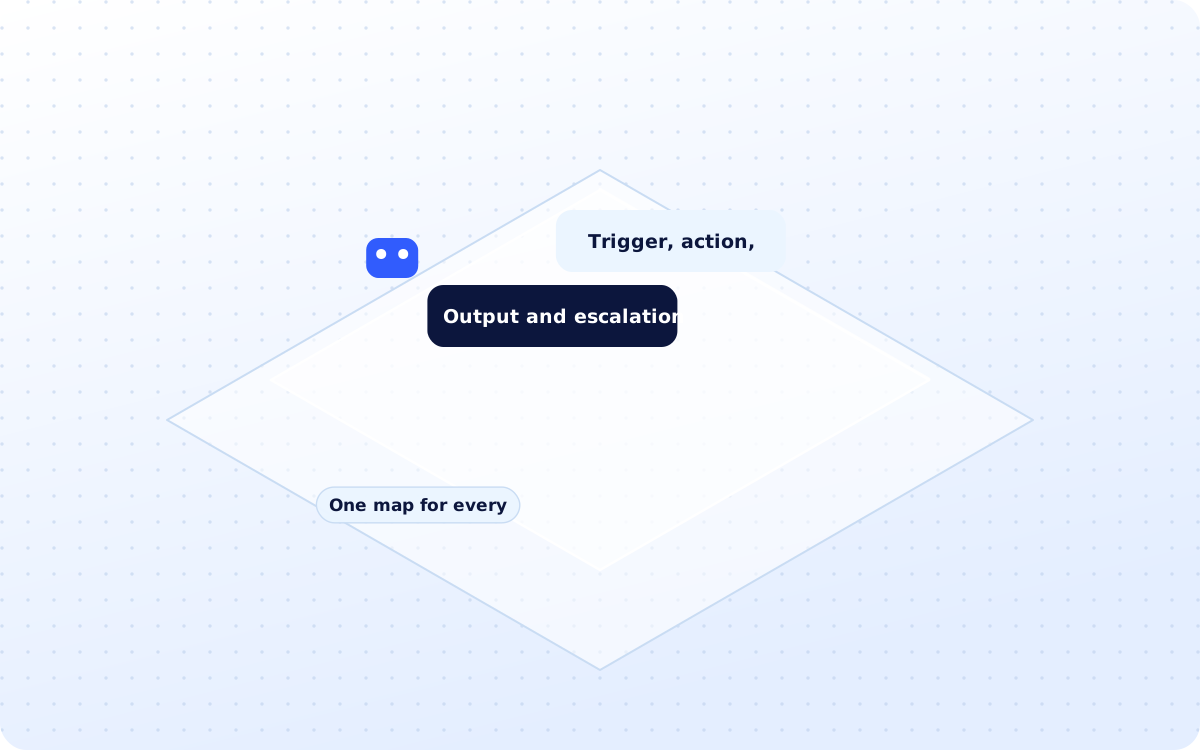
Every workflow gets drawn the same way, then routed properly. Trigger → Action → Decision → Owner → Output → Escalation Marketing Draft → Compliance Review → Changes → Approval → Publication
- Trigger, action, decision, owner
- Output and escalation named too
- One map for every workflow, always
What you actually receive
Six artefacts, all of them yours to keep. The audit trail is the one you will actually need.
The workflow audit
The manual tasks, the repeated entry, the handoffs and the approval bottlenecks, all counted up.

The process maps
Trigger, action, decision, owner, output and escalation, drawn out for every single workflow that matters.
Opportunity matrix
Time saved, frequency, business impact, risk and complexity, all of them ranked against each other.
Built workflows
The lead routing, the lifecycle triggers, the support routing and the campaign approval, all live.
Alerts and failures
Tracking failure, overspend, conversion drops and support backlog, each with somebody to tell about it.
The audit trail
Who submitted, who reviewed, what changed, who approved and when, kept on every single item.
How the automation runs
Four stages, run in order. The maps all get drawn before a single tool ever gets connected.
Where all the time is actually going
Manual tasks, repeat data entry, handoffs, delays, duplicate work, approval bottlenecks and reporting work all get counted before anything moves.
- 01Manual tasks all counted properly
- 02Repeated data entry gets found
- 03Handoffs timed, and not guessed
- 04Approval bottlenecks are named
- 05Reporting hours are all added up
The shape every single workflow has to take
Trigger, action, decision, owner, output and escalation get written down for every single process, so that nobody argues about it later.
- 01The trigger named, not assumed
- 02One named owner for every step
- 03The output is written down too
- 04Escalation path sits on the map
- 05Decisions marked out as decisions
Which of the workflows get built first
Lead routing, lifecycle triggers, support routing, campaign approval and reporting get built in the order the matrix decided, not the loudest.
- 01Quick wins built first, always
- 02Lead routing to one named owner
- 03KYC triggers wired into the CRM
- 04Campaign approval, with a clock
- 05Reporting built so it runs itself
What happens when one of them breaks
API failures, missing data, duplicate records, failed deliveries and workflow timeouts each one gets a fallback and a person to tell it.
- 01An API failure gets a fallback
- 02Duplicates caught, and not merged
- 03Timeouts raise an actual alert
- 04Manual review whenever it is needed
- 05Every failure gets counted too
What the service covers
Twenty one groups of work sit behind the service, and these twelve are what save the hours.
Workflow audit
Tasks, handoffs, delays, rework
Process mapping
Trigger, action, owner, output
Lead automation
Form, CRM, owner, notification
Lifecycle triggers
Registration, KYC, first transfer
Support routing
Ticket, priority, team and SLA
Campaign workflow
Brief, approval, build, launch
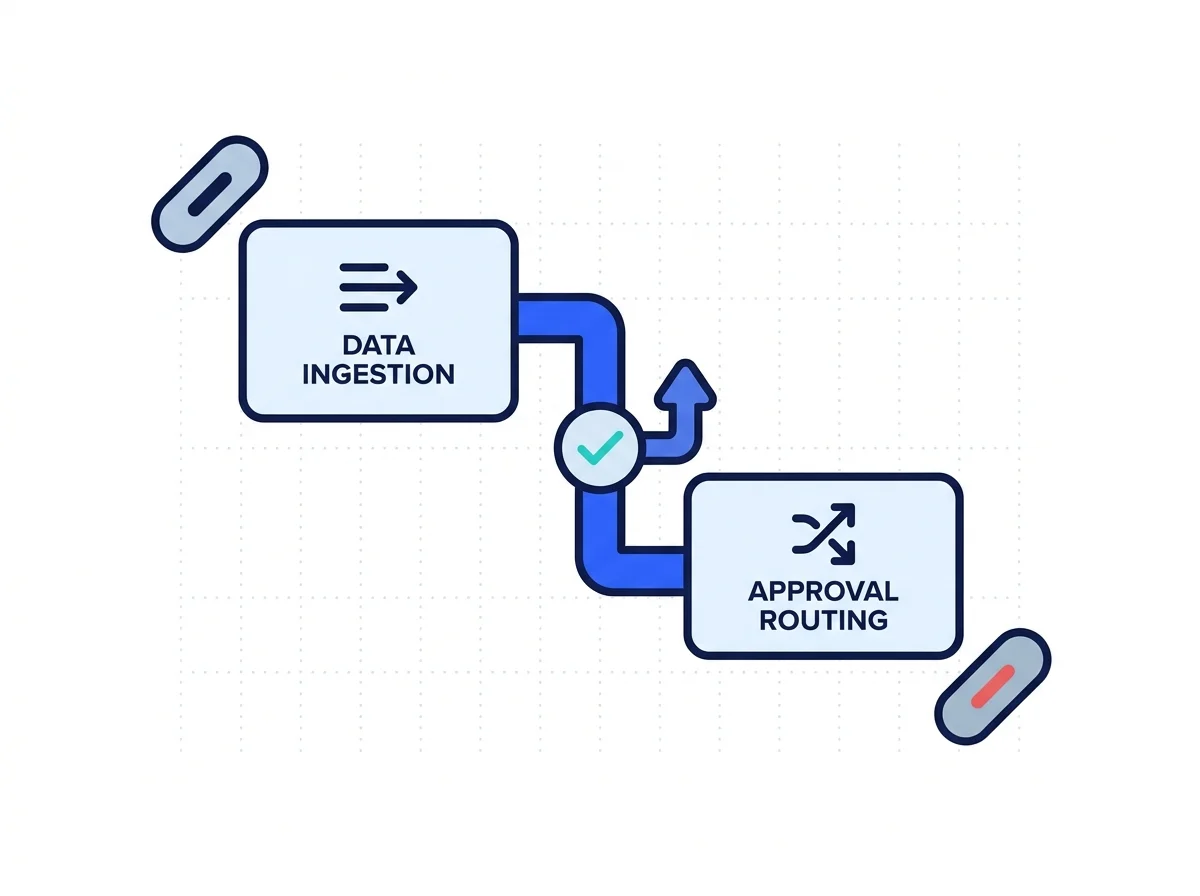
Approval routing
Draft, review, changes, approval
Reporting automation
Extraction, refresh and summaries
Data synchronisation
CRM, analytics, support tools
Three ways to buy this
One of these will fit, whether the whole operation drags or it is only the approvals that do.
Complete workflow build
The audit, the maps, the matrix and the first set of workflows, built, tested and monitored.
- Fixed fee, agreed before we start
- Eight weeks from audit to live
- Human stops built in from day one
Approval workflow only
Just the compliance approval path, when that is the one queue everything else waits behind.
- One fixed fee, three weeks total
- One workflow, measured properly
- Credited if the full build follows
Ongoing automation work
The workflows monitored, the failures chased and the new ones added as the team asks for them.
- Monthly fee, three months minimum
- Failures chased inside the day
- New workflows added each month
Comparison. A general automation shop will connect two tools and call it done. Workflow automation for remittance companies starts by asking which decisions must stay human.
Position. Most operators do not need more staff, they need the work to stop stalling between them.
- Automation moves the work along. Compliance, KYC and any regulated call stay with your people.
Audit line. If none of the three fits, a fixed-fee growth audit will say which one should.
Four steps to the build
Eight weeks to live. Nothing gets automated until the map has an owner on every single step.
Count the waste
WEEK 1-2Manual tasks, repeated entry, handoffs and delays, measured before anybody promises anything.
Map it properly
WEEK 3-4Trigger, action, decision, owner, output and escalation, written down for each process.
Build the first
WEEK 5-7The highest saving, lowest risk workflow gets built, tested and watched for a fortnight.
Watch the rest
WEEK 8Success, failure, processing time and the manual interventions, all reported every single month.
How results get reported
No client figure appears without written permission. These three are facts about how the work is run.
Services that pair with this
Workflows move the work along. These three are what the work is usually about in the end.
The inbound phone line, one of the workflows that always ends up with a trained human being.
Learn moreAI Outbound CallingThe outbound calling sequence that fires off a lifecycle trigger the workflow has already set.
Learn moreThe upstream repair for the screen that fills up the KYC recovery workflow every single week.
Questions operators ask first
Answers come first. Where the honest answer is no, it says no and explains what to do instead.
Both. An agent-led operator has more handoffs, not fewer, because a counter, a supervisor and a head office all touch the same case.
Yes. The workflows run between the tools you already pay for, which is usually cheaper than another platform nobody wanted.
Yes. A corridor can have its own approval route and its own alert thresholds, because a new market rarely behaves like an established one.
Yes. Workflow automation for remittance companies is the only kind built, which is why the compliance approval path is in every version of it.
Automation supports the workflow but does not make the compliance decision. The routing, the reminders and the audit trail are ours. The verdict is not.
A list of the tools in daily use, the processes that hurt the most, and somebody who can say who owns each step of it today.
Eight weeks for the first set, or three weeks for a single workflow. Mapping takes longer than building, and always has.
Yes, as a signal. A workflow can act on a verification state or a first transfer. It does not decide either one of them.
Yes. The same workflow can branch by market, so a Ghana campaign and a Philippines campaign follow the same path with different approvers.
Yes, at the plumbing level. A dormancy trigger fires the workflow, and the message itself comes from the lifecycle automation next door.
A campaign that launches on Tuesday instead of the following Monday earns a week of first transfers it would otherwise have missed entirely.
Eight indicators, monthly: hours saved, workflow completion time, automation rate, manual interventions, error rate, approval turnaround, cost per process and SLA adherence.
By getting the KYC reminder out in minutes rather than at the end of the week, and by making sure the campaign actually launches on time.
Hours saved against the build cost, and the approval turnaround. Workflow automation for remittance companies usually pays back on the reporting alone.
Indirectly. A repeat campaign that ships every week instead of every third week reaches more senders, and that is mostly a workflow problem.
Operators, remittance apps and payout platforms on the roster
Marks appear once written permission is on file for each operator.
Take the handoffs out of it first
Every hour lost to a handoff is an hour nobody can bill for. One fixed-fee growth audit will say which workflow is quietly costing the most.
You keep the process maps whether or not you automate anything.