Marketing operations for remittance teams
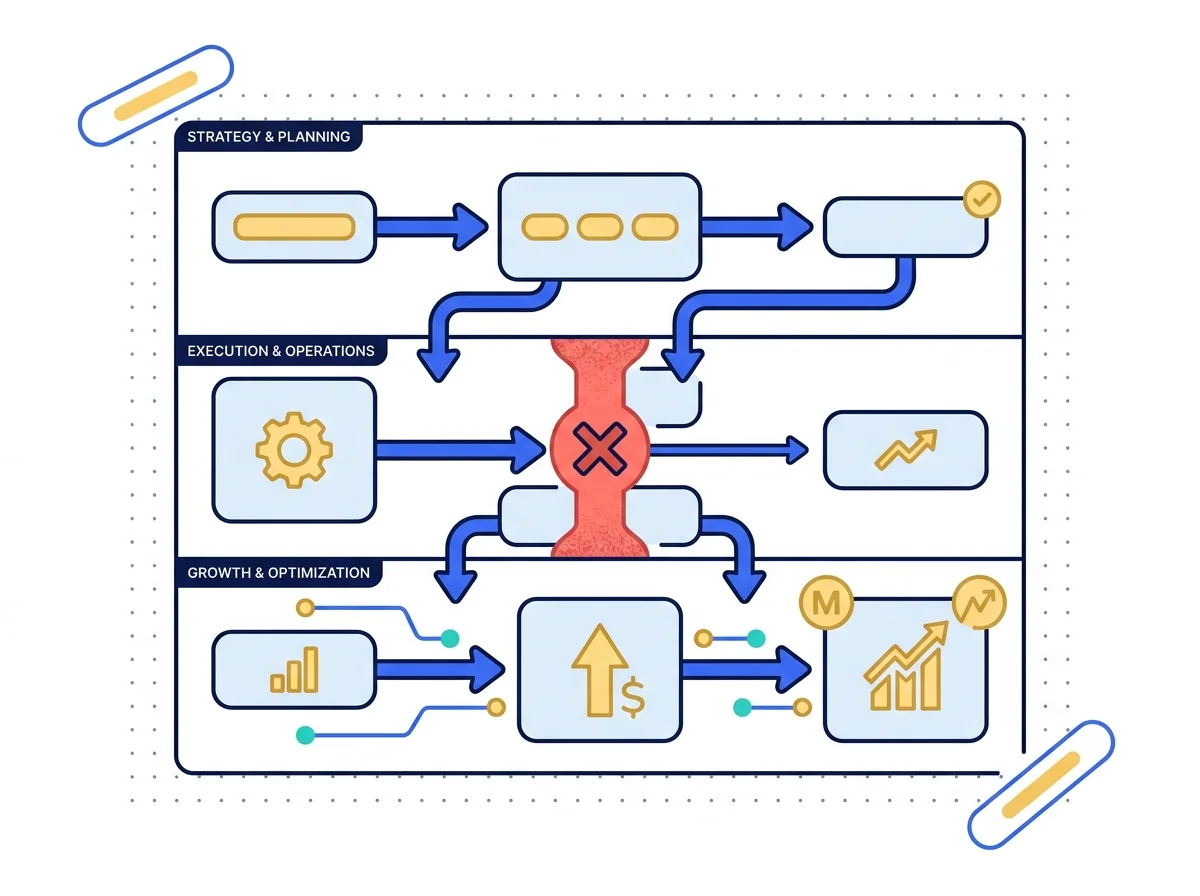
Paid media, CRM, SEO and content each run inside the same remittance business, with separate calendars, separate naming and separate reports, and nothing much joining them to each other.
Remittance only · Process, not opinion · Every compliance call stays yours

Marketing operations for remittance companies is the work of connecting the parts that already exist. Improve the structure, tooling, workflows, governance, reporting and execution processes used by an in-house remittance marketing team. The compliance team remains responsible for compliance decisions. Everything else that slows a campaign down, from the brief to the naming to the report, is fair game for it.
What changes in operations
None of this is about working any harder. Four things change about how the work actually moves.
Tools nobody agreed on
Two teams pay for the same tool under two different names.
One reviewed stack
Duplicates, unused seats and the missing pieces all named.
Nobody owns the step
A campaign waits days for an approval nobody was ever asked for.
Every step has an owner
Who owns it, who approves it and who signs it off, in writing.
Campaign names by mood
The report cannot separate a corridor from a creative test.
Names follow one rule
Market, corridor, channel, audience and offer, in that order.
Compliance as a surprise
The rate claim gets checked after the creative is finished.
Compliance in the path
Rate, fee and speed claims get reviewed before the build starts.
What the operations work covers
Four rows, in order. What it changes, what it names, and the one decision it never makes.
What this service actually improves
There is usually no shortage of activity in a team, only of order. Improve the structure, tooling, workflows, governance, reporting and execution processes used by an in-house remittance marketing team.
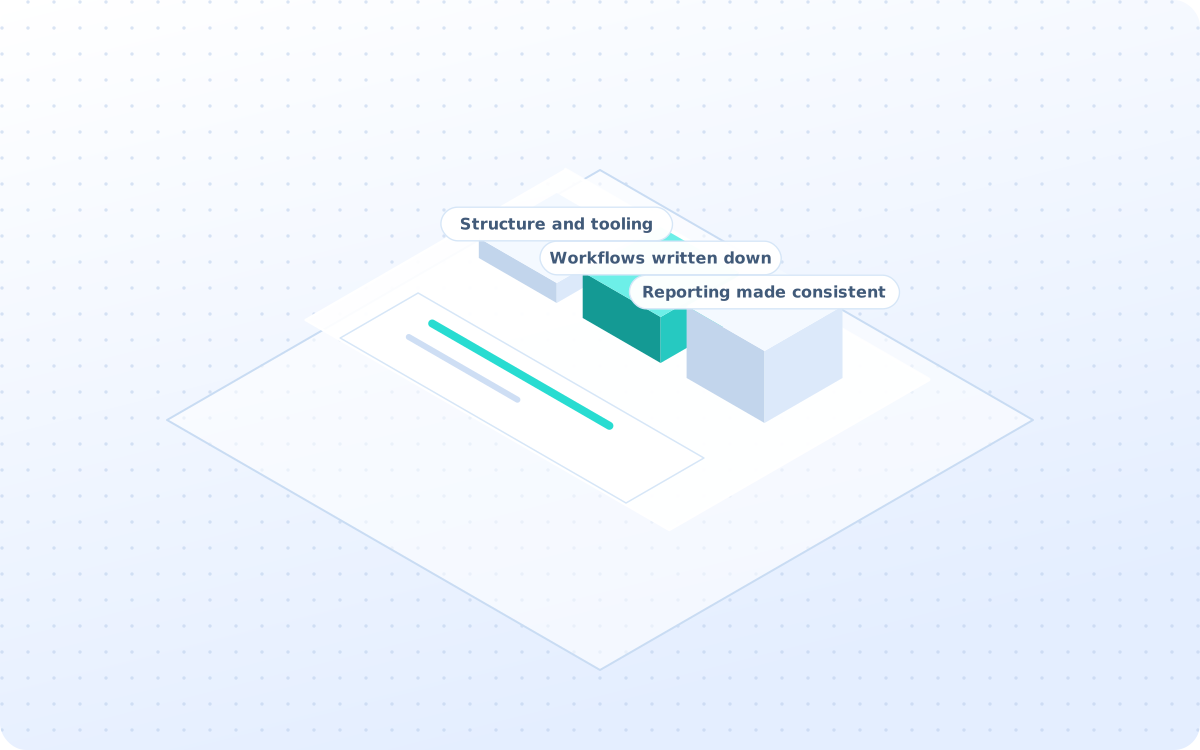
- Structure and tooling reviewed
- Workflows written down properly
- Reporting made consistent at last

The problem it usually walks into
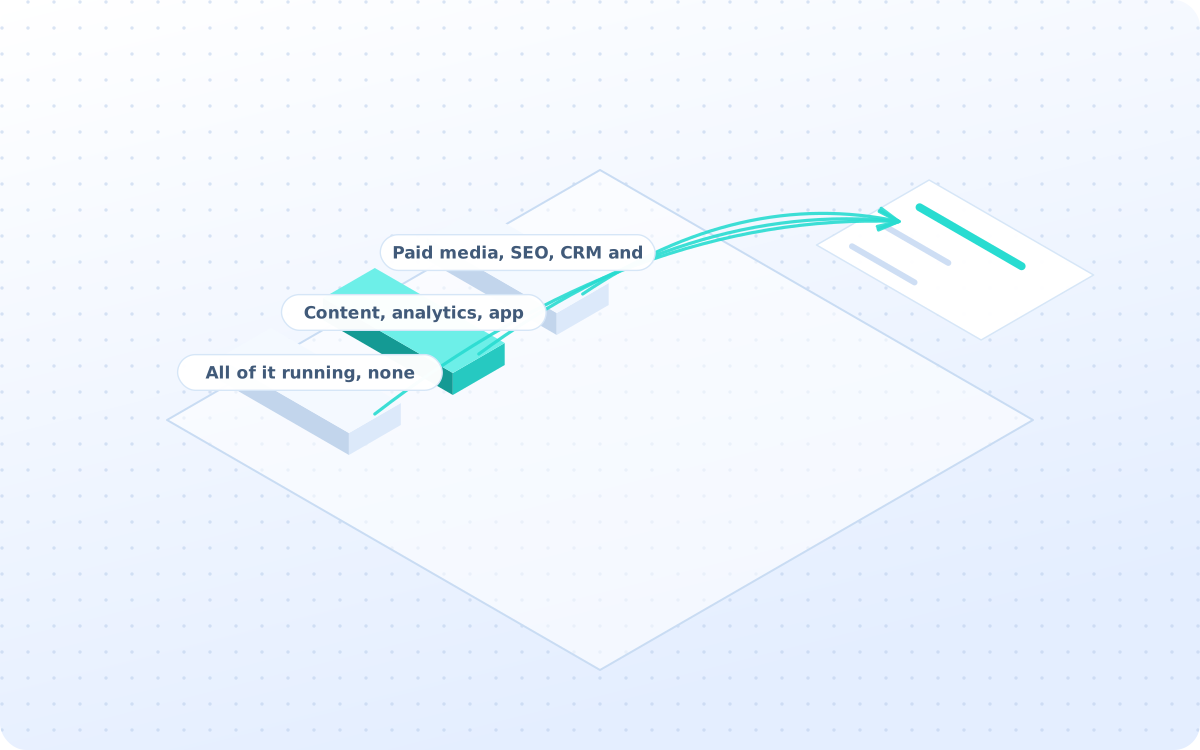
It is a familiar list. This service addresses a common problem: A company may have: Paid media, SEO, CRM, Social, Content, Analytics, App campaigns but no unified operating system connecting them.
- Paid media, SEO, CRM and social
- Content, analytics, app campaigns
- All of it running, none connected
The campaign path, start to finish
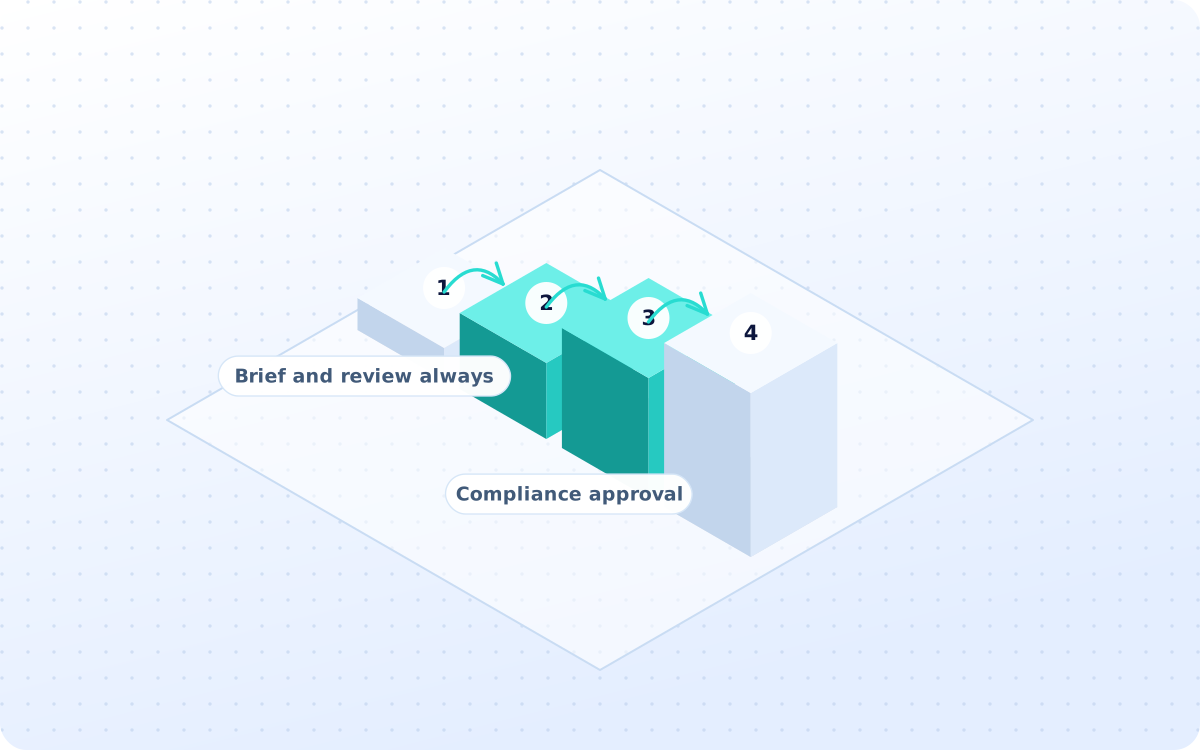
One campaign path, written down once, and then followed by everybody who touches a single campaign. Brief → Review → Compliance Approval → Creative → Build → QA → Launch → Monitor → Report
- Brief and review always come first
- Compliance approval before build
- QA before launch, every single time
Where the compliance line sits
Marketing can design the approval path, name the steps and hold the calendar. What it cannot do is make the decision at the end of it. The compliance team remains responsible for compliance decisions.
- Approval paths drawn out clearly
- Rates, fees, speed and security
- The decision stays with compliance
What you actually receive
Six artefacts, all of them yours to keep. The roadmap is the one that survives the quarter.
Operations audit
Team, roles, tools, processes, reporting and approvals, all reviewed and written up in one place.

RACI and ownership
Who owns it, who approves it, who executes it and who reviews it, for each marketing activity.
Campaign workflows
Every step in the campaign workflow, in order, with the owner and the approval gate on each.
Martech stack review
Analytics, CRM, email, SMS, push and the project tools, with all the duplicates marked out.
SOPs and templates
Campaign briefs, naming guides, QA procedures and the reporting guide, written to be actually used.
90-day operations roadmap
What changes in week one, what changes by month three, and who is held accountable for each.
How the work actually runs
Four stages, run in order. The audit comes first, because nobody yet agrees on the current state.
What the marketing team actually does
The team structure, the roles, the tooling, the reporting and the approval paths all get reviewed before a single process gets rewritten.
- 01Roles and responsibilities mapped
- 02Every tool listed, with its cost
- 03Approvals traced from end to end
- 04Reporting cadence written down
- 05Documentation gaps found early
Who owns what, and who signs each off
Growth, paid media, SEO, content, social, CRM and analytics each receive an owner, an approver and a reviewer, named rather than assumed.
- 01One owner per marketing activity
- 02The approver named, not implied
- 03A reviewer named for every one
- 04Duplication between roles removed
- 05Vendor and agency roles included
One path, one naming rule, one report
The campaign path, the naming convention, the UTM rules and the reporting cadence get written once, then used by everybody without exception.
- 01Campaign names follow one rule
- 02UTM structure fixed and governed
- 03KPI definitions agreed just once
- 04One dashboard, one set of numbers
- 05Creative versioning and archiving
What keeps it all running afterwards
The weekly performance review, the monthly business review and the quarterly plan give the operating system somewhere to be checked and fixed.
- 01Weekly performance review held
- 02Monthly business review, properly
- 03Quarterly planning, with budget
- 04Budget reallocation has a rule
- 05Experiments reviewed, not forgotten
What the work looks at
Twenty two groups of work sit behind the service, and these twelve are what teams feel first.
Team structure
Growth, paid, SEO, CRM, content
RACI framework
Owns, approves, executes, reviews
Campaign workflow
Brief to launch, in nine steps
Marketing calendar
Corridors, promotions and launches
Martech audit
Analytics, CRM, email, SMS, push
Naming rules
Market, corridor, channel, offer
UTM governance
Source, medium, campaign, content
Creative operations
Briefing, versioning and archiving
Approval workflow
Rates, fees, speed and security
Data flow map
App, analytics, CRM, then ads
Budget governance
Allocation, approvals and tracking
Three ways to buy this
One of these will fit, whether the team is a small one or spread across several markets.
Complete operations audit
The audit, the RACI, the workflows and the reporting framework, delivered as one operating system.
- Fixed fee, agreed before we start
- Six weeks from audit to roadmap
- Compliance decisions stay yours
Campaign workflow only
Just the campaign path itself and the approval gates, when the tooling is not the actual problem.
- One fixed fee, three weeks total
- The path, the gates, the owners
- Credited if the full audit follows
Ongoing operations help
Somebody in the weekly review, holding the process in place while the habit actually forms.
- Monthly fee, six months minimum
- In the weekly review every week
- The documentation gets maintained
Comparison. A general consultancy will hand over a slide deck about ways of working. Marketing operations for remittance companies hands over the naming rule, the gates and the owners.
Position. Most in-house teams do not need more activity, they need the same activity to arrive on time.
- The compliance team remains responsible for compliance decisions. We build the path, not the verdict.
Audit line. If none of the three fits, a fixed-fee growth audit will say which one should.
Four steps to the system
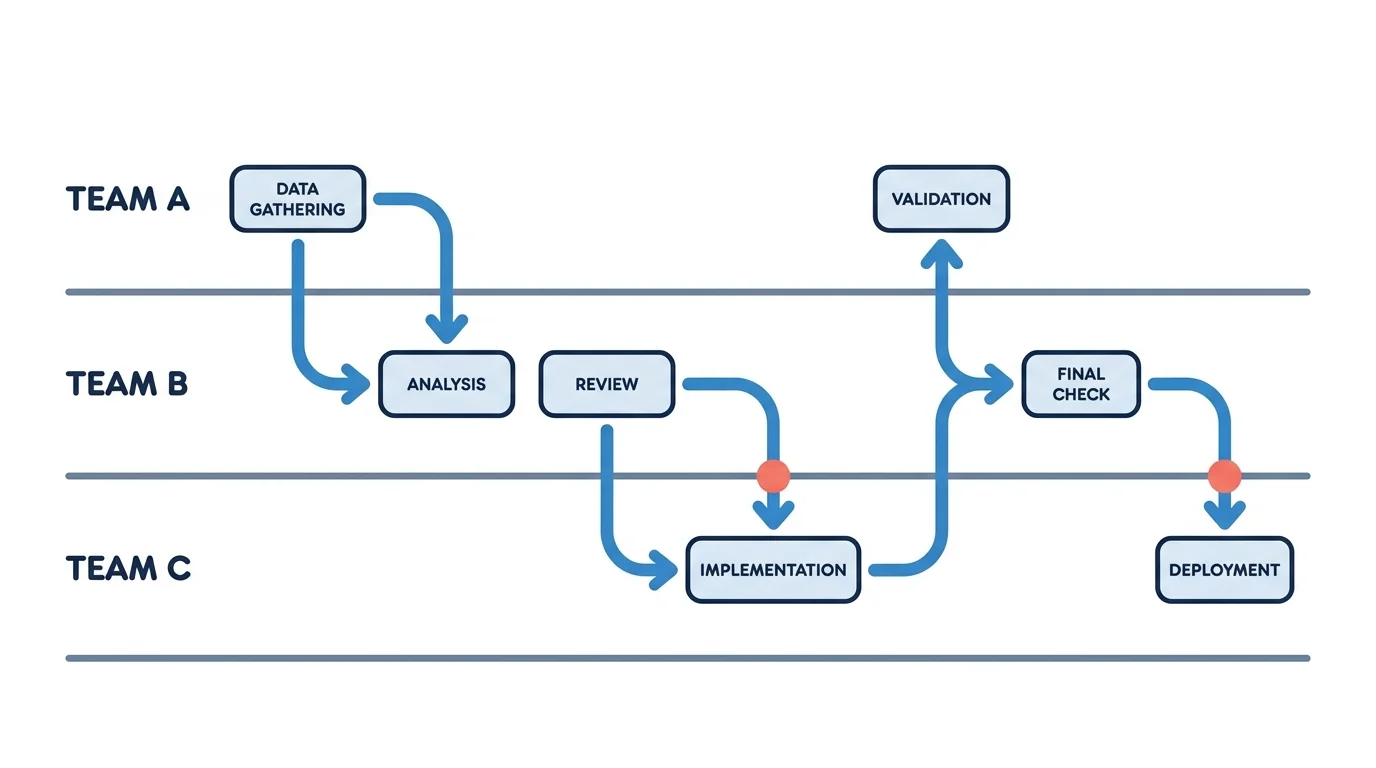
Six weeks to the roadmap. The audit always runs first, before anybody argues about any of the tooling.
Audit the state
WEEK 1-2Team, roles, tools, processes and reporting, reviewed against what actually happens now.
Name the owners
WEEK 3Who owns, approves, executes and reviews each activity, written down and agreed by the team.
Build the path
WEEK 4-5Nine steps from brief to report, with compliance approval sitting before the build starts.
Keep it running
WEEK 6Weekly review, monthly business review and a quarterly plan, so the process survives the quarter.
How results get reported
No client figure appears without written permission. These three are facts about how the work is run.
Services that pair with this
Operations makes the work move. These three say whether the work was ever worth moving at all.
The website review that tells the content and the SEO owners which fixes actually matter most.
Learn morePaid Ads AuditThe account review that shows what the naming and tracking mess has actually been costing you.
Learn morePaid Ads Audit (Paid Growth)The campaign-side version of it, for when the spend is the thing that needs answering first.
Learn moreQuestions operators ask first
Answers come first. Where the honest answer is no, it says no and explains what to do instead.
Both. An agent-led operator has an agent network and a counter team in the approval path, which makes the naming and the ownership matter more, not less.
Yes. Nothing gets ripped out. The audit names the duplicates and the gaps, then you decide what stays, because those subscriptions are yours.
Corridor sits in the naming convention, so every campaign, report and budget line can be split by send route without anybody rebuilding a dashboard.
Yes. Marketing operations for remittance companies is the only kind run, so KYC steps and corridor reporting are in the workflow from the start.
Compliance approval sits inside the workflow, before the build, not after it. The compliance team remains responsible for compliance decisions.
The tool list with costs, the last three months of campaign reports, and one hour with each person who owns a channel budget.
Six weeks to the roadmap, or three weeks for the workflow alone. Most teams feel the difference in the first campaign after it lands.
Yes. The data flow gets mapped from app and website through analytics and CRM to advertising, so KYC and first transfer land in the same report.
That is what the naming convention is for. Corridor is a field in every campaign name, so market-level spend and revenue can be seen without a rebuild.
Yes. CRM operations covers lifecycle stages, triggers, suppression rules and campaign ownership, which is usually where reactivation quietly falls apart.
The performance framework ties the marketing activity to registrations, KYC, first transfers, repeat transfers, revenue, acquisition cost and lifetime value.
One reporting cadence, one set of KPI definitions and one dashboard. Weekly performance, monthly business review, quarterly plan, and nothing invented in between.
By getting the campaign live in days rather than weeks, and by making the tracking good enough that the first transfer can be attributed to something.
Campaign cycle time, duplicate tool spend and the hours lost to rework. Marketing operations for remittance companies usually pays back on the tooling alone.
Lifecycle campaigns stop being the thing nobody has time for. Ownership, triggers and a testing rule mean the repeat-send programme actually runs each month.
Operators, remittance apps and payout platforms on the roster
Marks appear once written permission is on file for each operator.
Fix the operating system first
A team that cannot agree on last week's numbers will not agree on next year's plan. A fixed-fee growth audit will say where the process breaks.
You keep the operations audit whether or not you continue.