Owned demand for money transfer brands. Content that answers real sending questions, social that lives where diaspora communities already talk, and campaigns that bring lapsed senders back.
Bought demand across search, social, video and offline. Every engagement begins with financial services ad account verification, scoped and sequenced before a single unit of spend.
Money transfer is a compare-and-decide category. Four services, but the two deepest pages on this site sit here, because answer engines are quietly taking that decision away from blue links.
Tech builds it, CRO makes it convert. These are the engineering engagements: new builds, technical rebuilds and the platform your operation actually runs on.
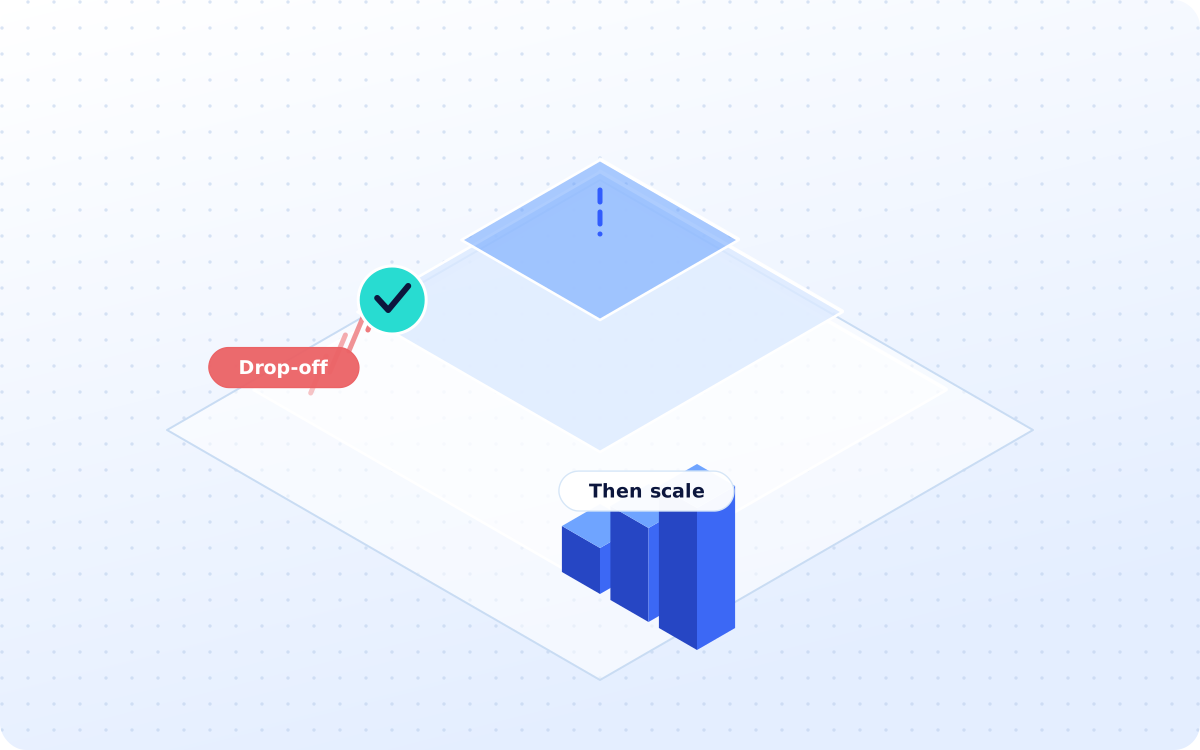
The leak, then the proof. KYC abandonment is the single largest loss in remittance, and none of it is arguable until tracking and business managers are set up properly.
The front door and the ceiling. Audits open the relationship, corridor work is what an operator cannot buy from a generalist. Licensing and regulatory questions are referred to a qualified adviser.
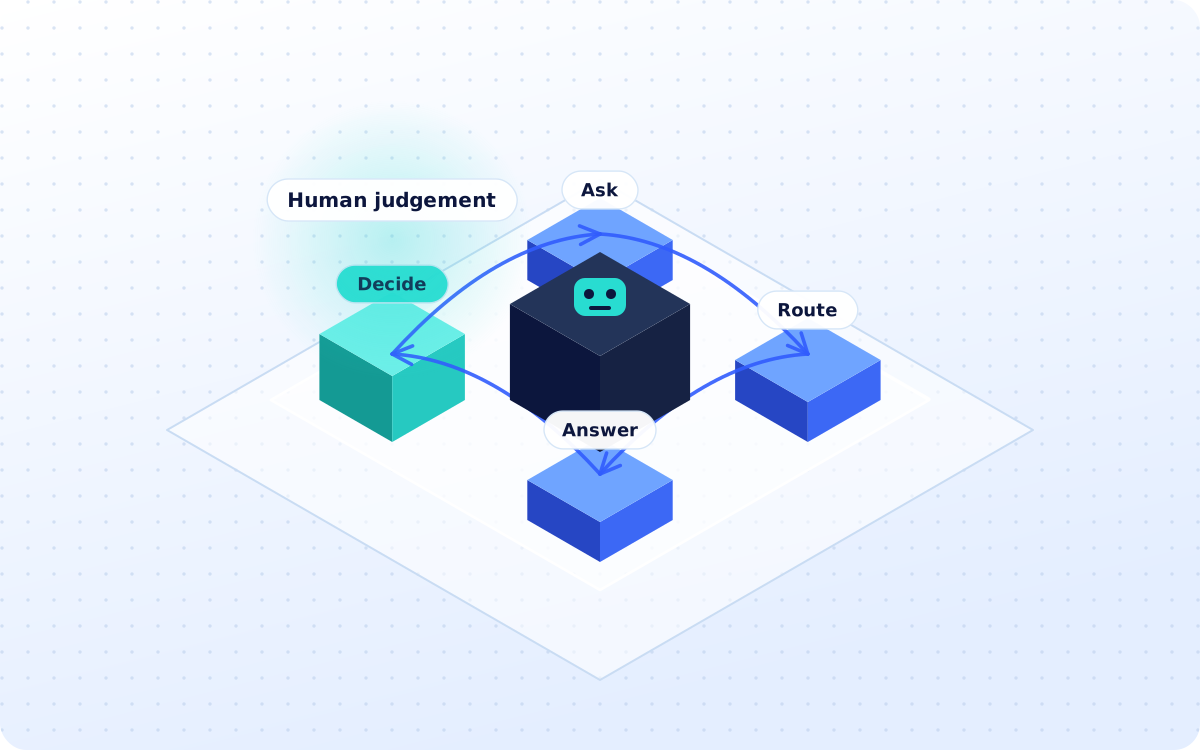
Support volume in remittance is high, repetitive and emotional. Where is my money, why was it held, what is my rate. Automating that shows up in margin within the first month.
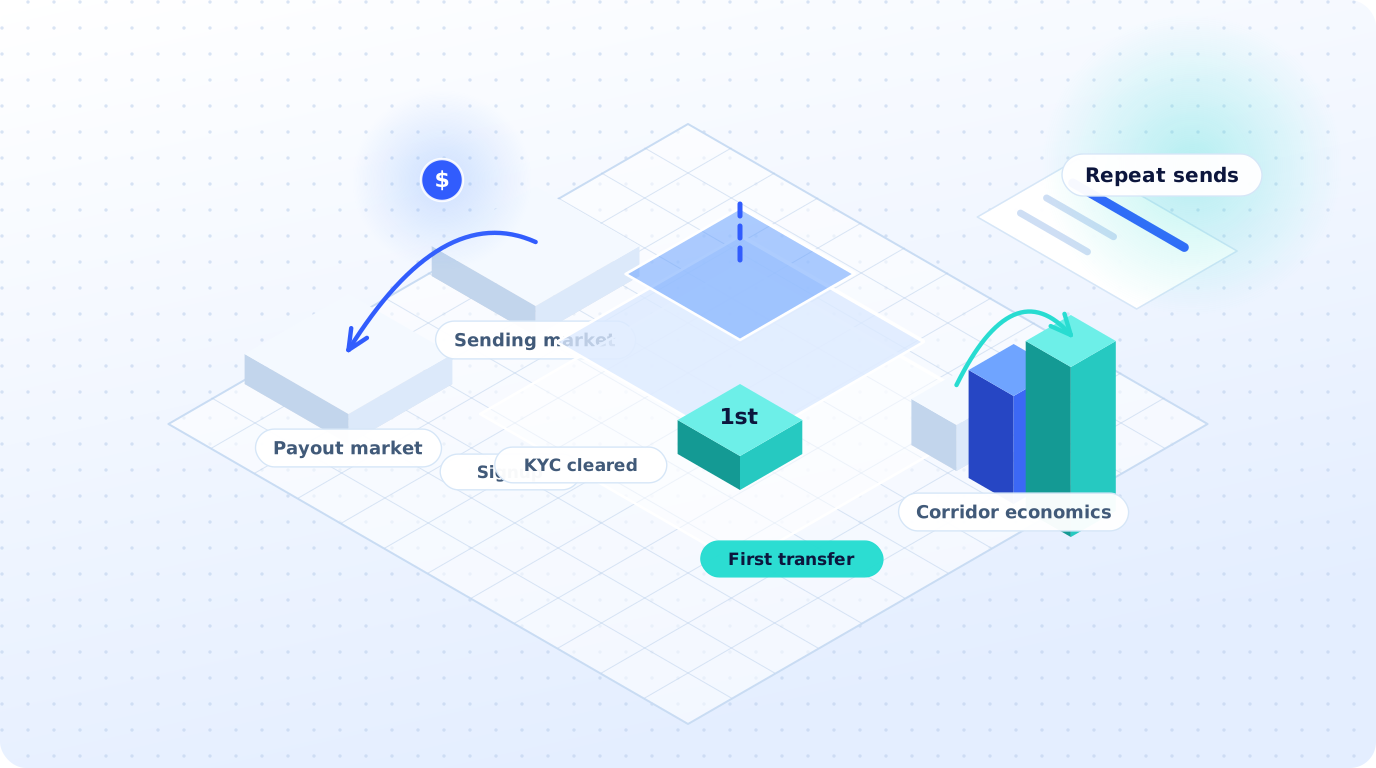
A money transfer marketing agency should connect acquisition, KYC and first transfers to repeat sends and corridor economics. That is the only job we take.
A money transfer marketing agency needs more than media buying. The work has to connect demand, KYC, product and retention around the transfer itself.
Build demand before the next send
See remittance marketing services
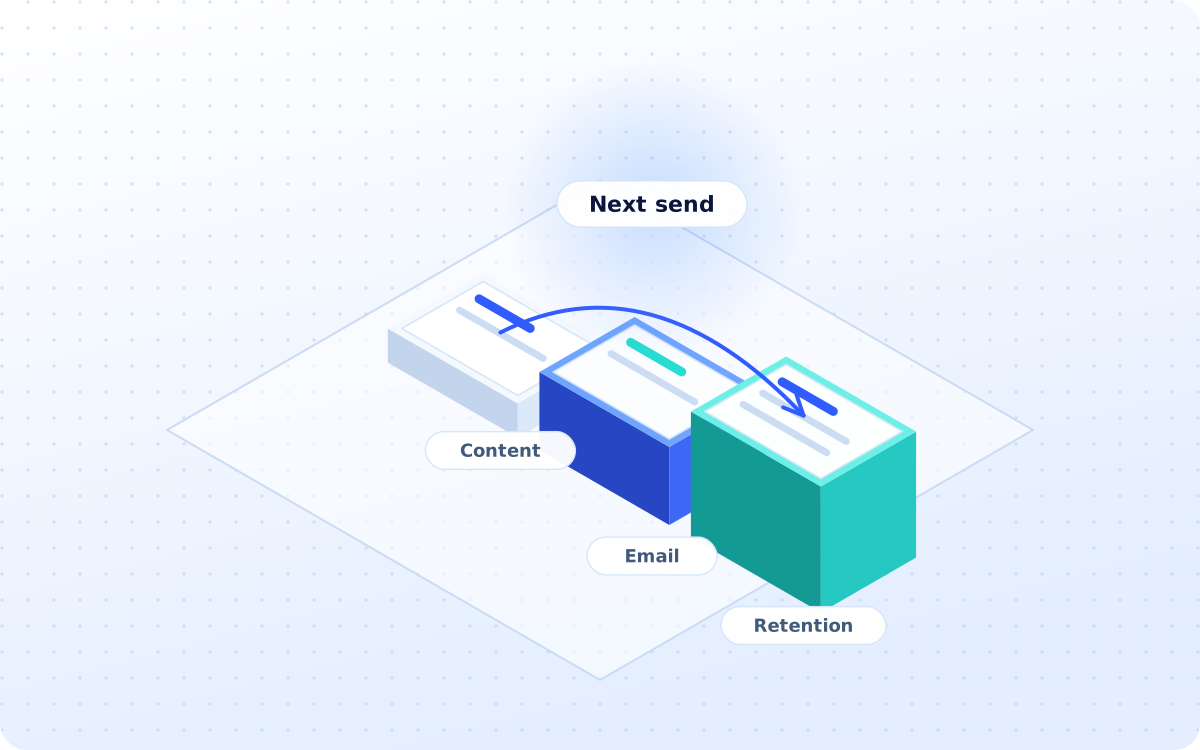
Content, website copy, email, retention and social work should answer the questions a sender has before and after a transfer. For remittance brands, the work must build trust with diaspora senders, improve organic visibility and create reasons to return when the next remittance cycle begins.
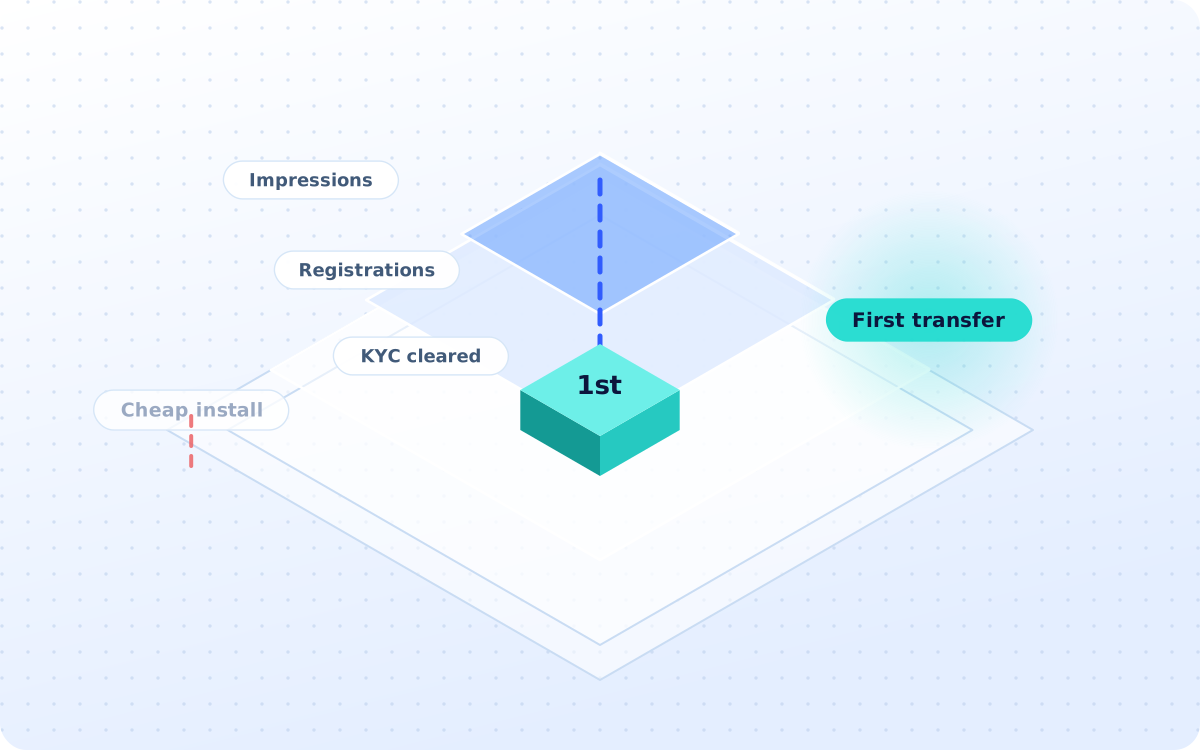
Paid growth should follow the full path from impression to registration, verification, first transfer and repeat transfer. A marketing agency for money transfer operators has to optimise towards commercial value, because low-cost installs mean little when senders never clear KYC or move money.
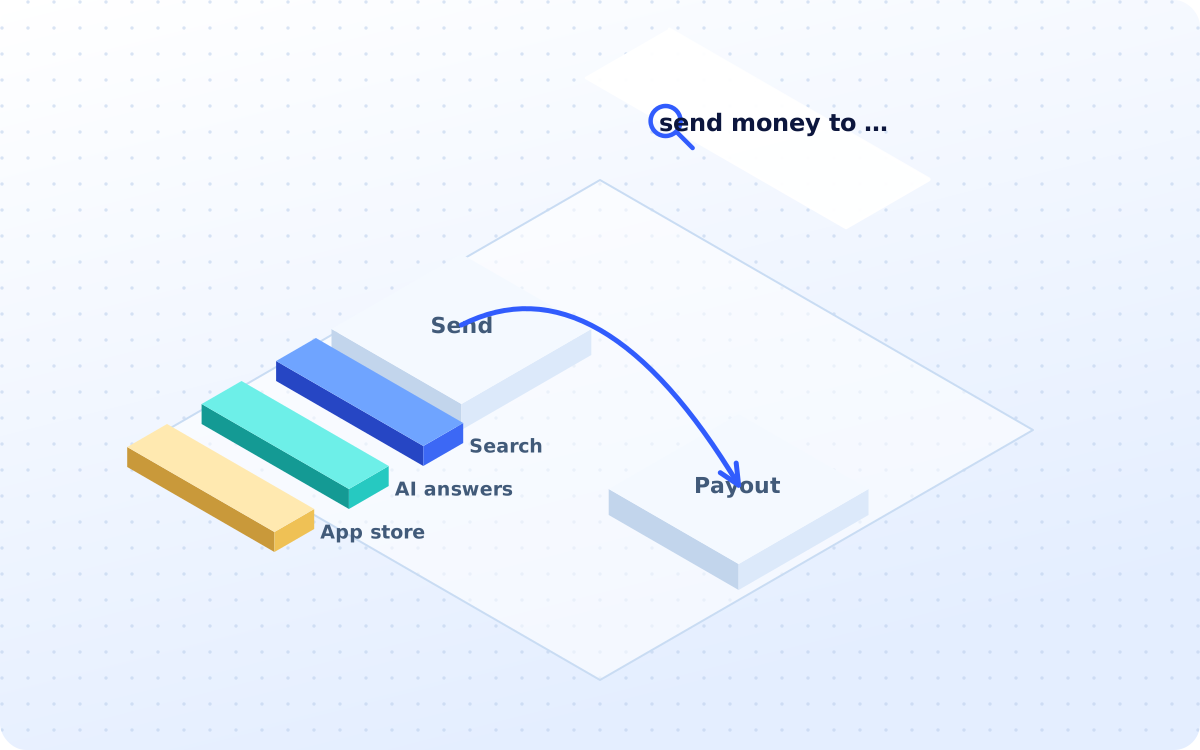
Search demand appears in corridor, fee, exchange-rate, payout and app questions, not 1 generic money transfer term. SEO services for remittance companies should capture those intents across organic search, local discovery, app stores and AI answers while strengthening category authority.
AI answerCited
Which service is cheapest for sending GBP to Nigeria?
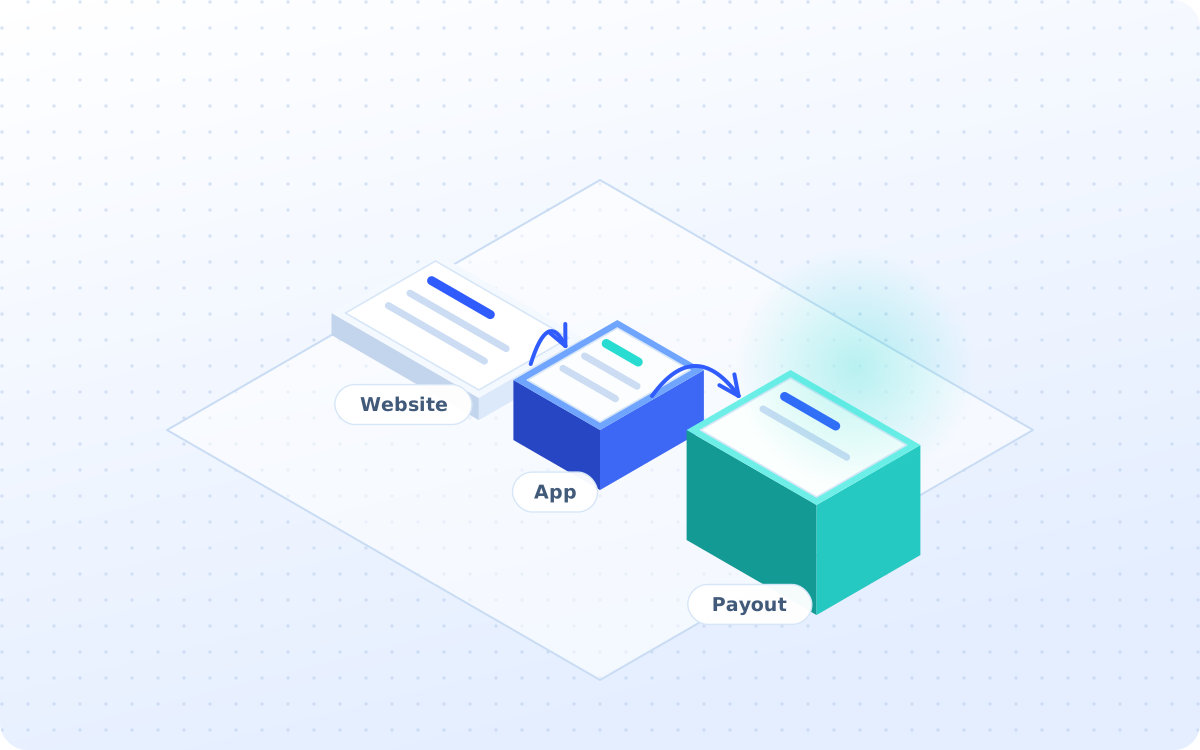
Remittance technology has to connect acquisition, registration, identity verification, beneficiary setup, quote, funding, transfer, payout, tracking and reconciliation. The website, app and management layer must also work with KYC providers, payment processors, payout partners and mobile wallets.
Traffic is not the outcome. Registration is not the outcome. CRO follows the sender from visit through OTP, KYC, beneficiary setup, payment, first successful transfer and the next send. The job is to improve KYC-to-first-transfer completion without treating button clicks as commercial progress.
Corridor, pricing, acquisition, technology, onboarding, KYC, product and agent-network decisions interact. Remittance consulting services should expose the dependencies before spend or build work starts, so teams can choose markets, channels and priorities without creating avoidable downstream work.
Remittance teams repeatedly answer questions about verification, transfer status, payout methods and failed payments. AI automation for remittance companies can handle communication across voice, chat and messaging, with financial, compliance and high-risk cases routed by defined escalation rules.
Marketing agency services for money transfer companies
Seven categories cover the acquisition, search, product, conversion, research and automation work a money transfer business needs.
Campaign plan
CorridorSegmentSend window
Onboarding series
Rate alerts
Win-back
Referral
Marketing
Reach senders before they pick a corridor
Content, email and retention work built around how a remittance customer actually behaves — researching a corridor, comparing rates, then sending again every month. The calendar is planned against KYC and first-transfer data, not a generic content plan.
Voice agents, chatbots and WhatsApp handle the questions support teams answer all day — where a transfer is, why KYC failed, what the payout will be. The work that has to reach a human still does, with the context already gathered.
Most money transfer funnels lose people between the signup form and a completed first send. This is the work that finds where they stop — document upload, verification, funding, payout choice — and rebuilds those steps.
Google, Meta, TikTok, YouTube and app install campaigns bid against corridor demand and payout economics. Channels are judged on verified senders and first transfers rather than installs or form fills.
People search for a corridor, a rate and a payout method long before they open an account. Full-stack, multi-location and app store work puts the brand in front of that search — and in front of the AI answers that increasingly replace it.
Remittance management systems, mobile apps, websites and the rebuilds of both. Marketing can only move numbers the product lets it move, so the surfaces a sender touches are part of the same engagement.
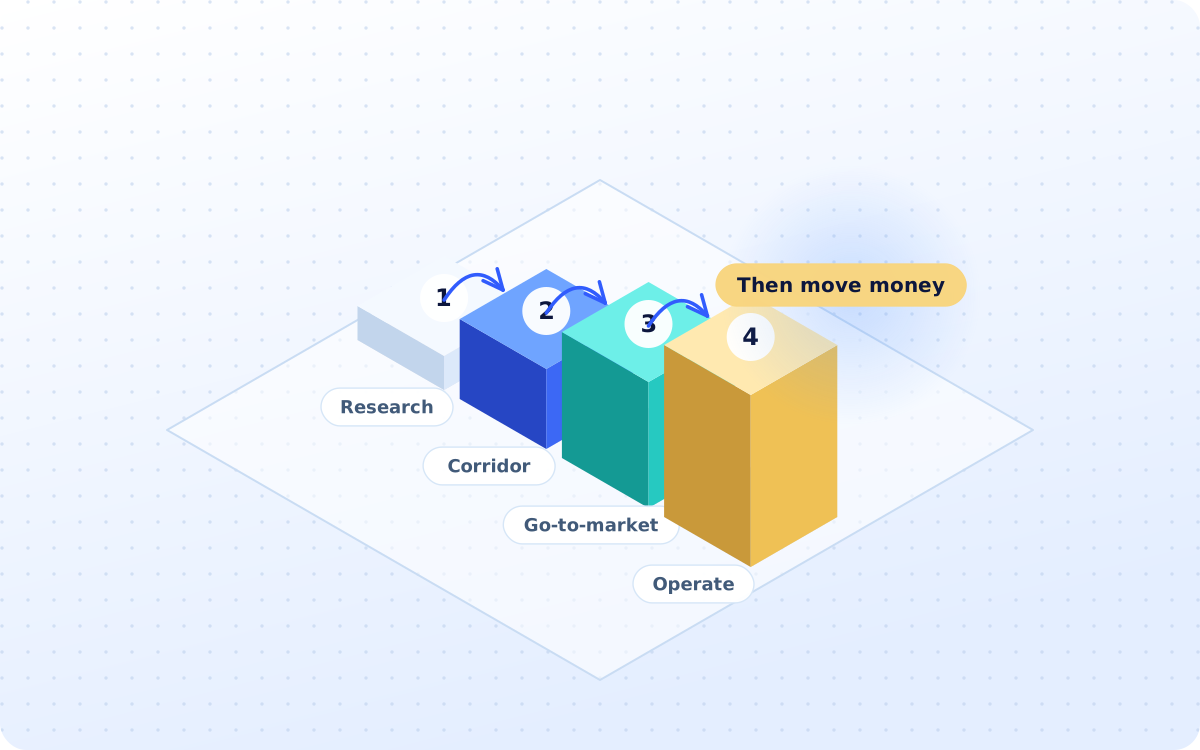
Ads audits, corridor and market research, go-to-market for new licences and the operating model behind them. The output is a decision a board can act on, with the demand, competition and payout picture behind it.
The common mistake is scaling acquisition before measurement, KYC progression and repeat-send behaviour are understood.
Acquisition stops at registration
Clicks without KYC completion
Installs without first transfers
Platform claims without transaction match
1 send, then silence
Repeat-transfer triggers arrive too late
Lifecycle messages miss remittance timing
Reactivation starts after sender value fades
Corridor spend hides the leak
Budgets ignore corridor economics
Search demand is detached from corridor intent
Rate, fee and payout context is missing
What we actually ship
The work is only useful when something changes between acquisition, KYC and repeat send. We ship campaigns, measurement and product-facing fixes that teams can inspect and operate.
Growth system
Campaigns tied to first transfer
Plan acquisition and retention around KYC, first transfer and repeat-send behaviour.
Specialist marketing agency for remittance companies
A specialist marketing agency partner for remittance growth has to balance compliance and commercial pressure, and be explicit about where its scope ends.
Clicks are not commercial value
Paid growth should optimise past installs and registrations towards verification, first transfer and repeat send.

Yes. Bussinesstan is a marketing agency for money transfer companies that works only in remittance, including digital apps, agent-led MTOs, exchange houses and payout platforms.
Yes. Marketing agency services for digital remittance apps can serve digital apps and agent-led MTOs when corridor demand, KYC, agent reality, first transfers and repeat sends stay visible.
Yes. Corridor work can separate demand, pricing context, payout options, diaspora audiences and acquisition economics instead of treating every send market as 1 market.
Start with live corridors, acquisition spend, KYC and first-transfer events, repeat-send data, product constraints, current channels and the analytics stack already in place.
The start depends on scope and access. Measurement or funnel blockers may need fixing before campaigns launch, because adding spend to a broken KYC path compounds waste.
Timing depends on the work. Paid campaigns can produce signals quickly, while SEO, product, KYC and retention changes need enough sender behaviour to judge commercial impact.
Pricing depends on scope. The Growth Audit uses a fixed fee quoted before commitment, while ongoing work is scoped around the systems, channels and build effort involved.
It can span marketing, paid growth, SEO, technology, CRO, consulting, and AI and automation. The same structure can apply to a marketing agency for neobanks adding remittance services.
Yes. A marketing agency for exchange houses with agent networks should account for branch discovery, agent counters, local catchments and digital acquisition together.
Bussinesstan is a specialist marketing agency for remittance companies. The scope also covers a B2B marketing agency for mass payout and payroll platforms.
We connect marketing agency performance to first transactions by mapping ad, registration, KYC and successful-transfer events instead of stopping reporting at clicks or installs.
Reporting should connect spend and channel activity to KYC, first transfers, repeat sends and corridor economics, with platform claims separated from the company's own data.
Yes. A marketing agency to grow profitable corridors should separate demand, payout context, fees, acquisition economics and sender behaviour rather than pool every market.
A marketing agency to increase first transactions should trace where senders leave between acquisition, signup, KYC, beneficiary setup, funding and the first successful transfer.
Yes. Email, retention campaigns and automation can work around remittance-cycle timing, sender behaviour and reactivation triggers instead of treating retention as message volume.
A marketing agency to improve repeat send frequency uses remittance-cycle timing, email, reactivation and automation so active senders receive relevant prompts before they lapse.
For an exchange house, measure spend against verified senders, first transfers, repeat transfers and corridor economics, then compare those outcomes with channel cost.
A marketing agency to support diaspora customer growth should match creative, channels and corridor context to how specific sender communities discover, compare and trust providers.
Advertising work should control claims, disclosures, financial-services verification and channel permissions. Bussinesstan handles advertising and marketing compliance only.
Financial and remittance UGC requires careful management. Creators should not make unsupported claims about: Transfer speed, Fees, Exchange rates, Security, Savings, Guaranteed outcomes.
Yes. App and web analytics can connect acquisition, registration, verification, first transfers and repeat behaviour, provided the required events and source data are accessible.
At minimum, use corridor-level transaction data alongside acquisition, KYC, first-transfer and repeat-send events, plus channel, CRM and product data available to the team.
Yes. The work can start with the stack already in place, then identify missing events, ownership or integrations before recommending replacement or additional tooling.
They cover technical SEO, website architecture, corridor and location discovery, AEO and GEO, app-store visibility and content answering fee, payout and transfer questions.
Corridor pages capture send-country and receive-country intent around fees, rates, payout methods and transfer expectations instead of competing only for generic transfer terms.
Yes. Multi-location SEO can structure visibility around physical locations, agent networks, cities, regions, countries and transfer corridors where local discovery matters.
AEO structures factual answers for direct extraction. GEO makes provider expertise, category fit, methods and boundaries easier for generative engines to attribute and compare.
Website and app work should preserve the path from product understanding to trust, registration, verification and transfer, so acquisition does not stop at the landing page.
Technology can support compliance operations, but website copy should avoid claiming that software itself automatically makes a remittance business: Licensed, Regulatory compliant, AML compliant.
A redesign should protect organic visibility, analytics, integrations and working sender paths while improving the web experience around trust, registration and transfer.
Start with repetitive, high-volume questions and workflows that have clear rules, measurable handling cost and a safe escalation path for financial, compliance or high-risk cases.
Yes, when the system can access governed status information and knows when to escalate. Transfer-status requests are a common repetitive support use case in remittance.
Yes. AI can explain document requirements, verification steps and common questions, but it should not make regulatory decisions or replace required compliance controls.
Financial, compliance and high-risk cases need defined escalation rules. AI should handle repetitive communication, not remove judgement where the case requires human review.
AI outbound calling must operate within: Customer consent, Telemarketing regulations, Channel permissions. Campaign logic should respect those controls before any call runs.
Yes. WhatsApp can act as a governed support and lifecycle channel for questions, service updates and permitted communication, with clear rules for consent and escalation.
Yes. Automation can identify relevant lifecycle moments and trigger approved messages, while retention strategy still depends on sender behaviour and remittance-cycle timing.
No. The stated objective is not to replace the entire customer service team. The useful role is to absorb repetitive volume and pass exceptions to people under defined rules.
Measure support volume, support cost, repetitive-question share, handling time and escalation volume, then compare those baselines with the automated workflow after launch.
Yes. The AI portfolio covers voice, outbound calling, omnichannel chat, customer-support automation and WhatsApp, with governed knowledge and escalation across channels.
A marketing agency to reduce remittance acquisition waste starts by tracing install-to-KYC, first-transfer and repeat-send conversion before increasing media spend.
Start with install-to-KYC and verification steps: document capture, OTP, error states, mobile usability and event tracking. More installs will not repair a broken verification path.
To improve repeat send economics through marketing agency work, map the remittance cycle, lifecycle messages, reactivation triggers and the points where active senders lapse.
Yes, within advertising scope. Paid Growth includes account readiness and financial-services advertiser verification. Licensing and AML questions go to a qualified adviser.
We need access to available acquisition, KYC, first-transfer, repeat-send and transaction data so platform claims can be reconciled against commercial outcomes.
Treat platform claims as inputs, not the final number. Reconcile campaign activity with the remittance company's own events and transaction records, then report the gap.
Prioritise corridors by demand, pricing context, payout options, competition, acquisition economics and product readiness. The point is commercial sequencing, not traffic alone.
Before outsourcing, prepare target corridors, product readiness, analytics access and launch constraints. An outsourced marketing agency for pre-launch remittance startups can then sequence the work.
Bussinesstan works only with remittance and money transfer companies, so the starting vocabulary already includes corridors, KYC, payout partners, first transfers and repeat sends.
Start with substantiated claims, required disclosures and the channel's advertising rules. Bussinesstan handles advertising and marketing compliance only.
Start with the numbers that matter
A money transfer marketing agency should show where spend becomes a first transfer and repeat send. Book the audit, get the roadmap, keep it either way.
Remittance and money transfer companies only. We reply within one business day.

Scroll to Top
Cookies on this site
Only the cookies that make the site
work are on by default. Analytics and session replay - Google Analytics
and Microsoft Clarity - stay off until you say yes, and you can change
your mind at any time.
Read the cookie policy.