Mobile app development for remittance apps
A remittance app that needs four screens before it shows a quote loses the sender to the agent counter. The development finishes at the second transfer, not at installation.
Remittance only · Eight transfer states · Events mapped before the build

Mobile app development for remittance companies covers the eight states a sender passes through: registration, KYC, quote, beneficiary, funding, transfer, tracking and the repeat send. Each one of them is built, instrumented and tested as an event, so the drop between KYC started and first transfer is visible in week one rather than argued about six months after the launch date.
What changes in the build
Most remittance apps get built as a product and then instrumented as an afterthought. Four things change.
Quote buried deep
The rate appears four screens after the sender opens it.
Quote on screen one
The corridor, the rate and the fee sit on the first screen.
KYC drops silently
Senders abandon the document capture and nobody sees it happen.
Every KYC step logged
Started, submitted, referred and passed each fire as events.
One transfer, then gone
The sender completes one send and never opens the app again.
Built for the second
Saved beneficiaries, rate alerts and repeat send in two taps.
Events added later
The SDKs go in after launch and the funnel is guesswork.
Events mapped first
Install through to first transfer is specified before any code.
What the app work covers
Four rows of work, run in order. The event map is agreed before the very first sprint starts.
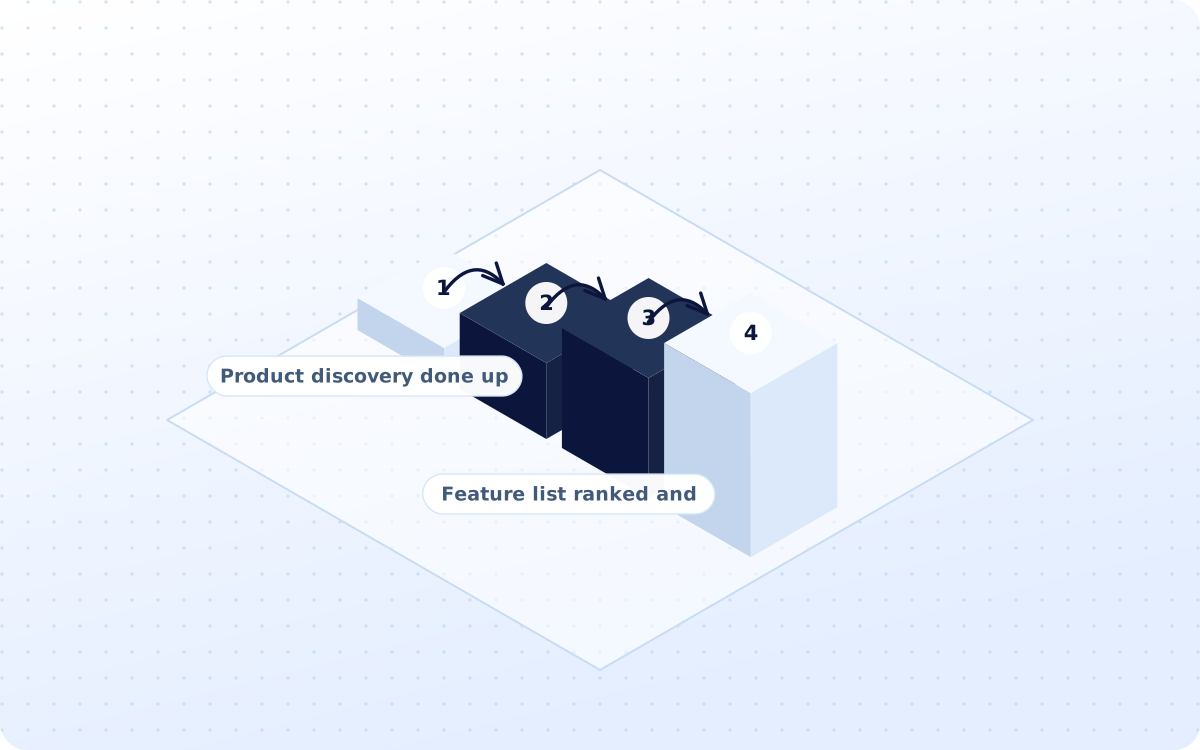
The eight states, all in order
Eight states, and the remittance app has to hold every one of them. A typical remittance app may support: Registration → KYC → Quote → Beneficiary → Funding → Transfer → Tracking → Repeat Transfer
- Product discovery done up front
- Feature list ranked and then cut
- The MVP defined before any build
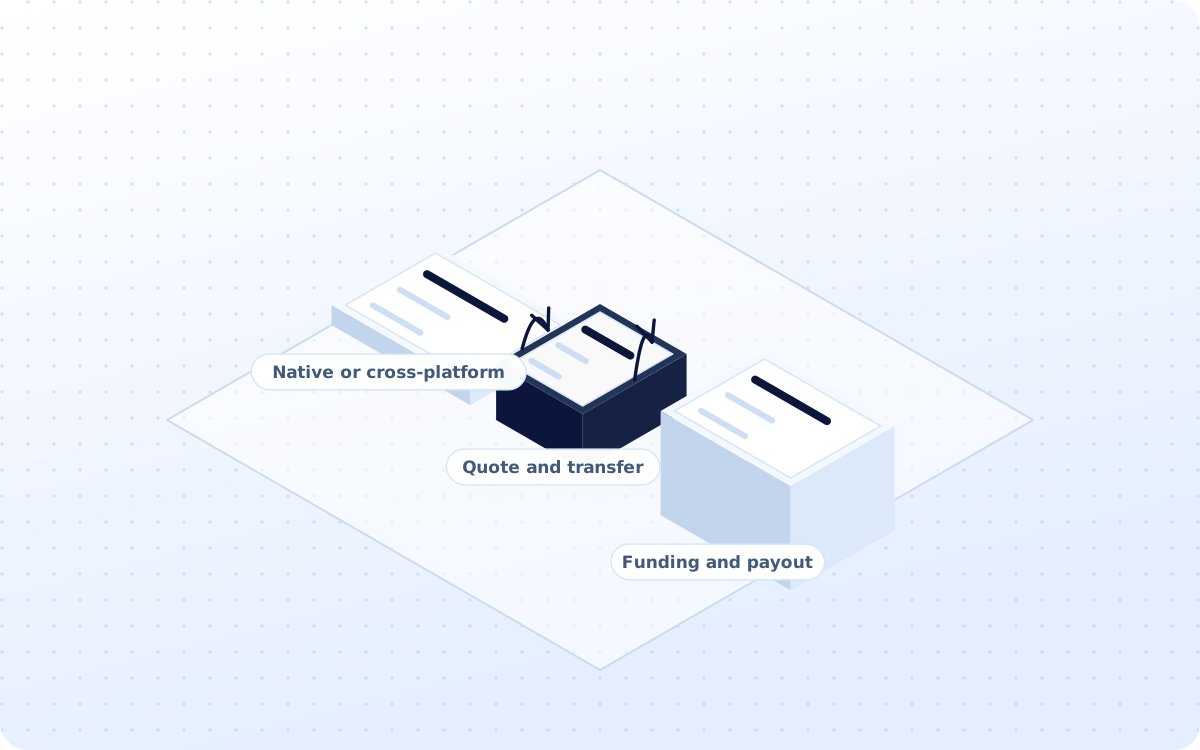
The platform, and the codebase
iOS, Android or one cross-platform codebase, decided on what the product actually needs and who is going to maintain it. Technology selection should reflect product requirements rather than trend alone.
- Native or cross-platform chosen
- Quote and transfer screens built
- Funding and payout methods wired
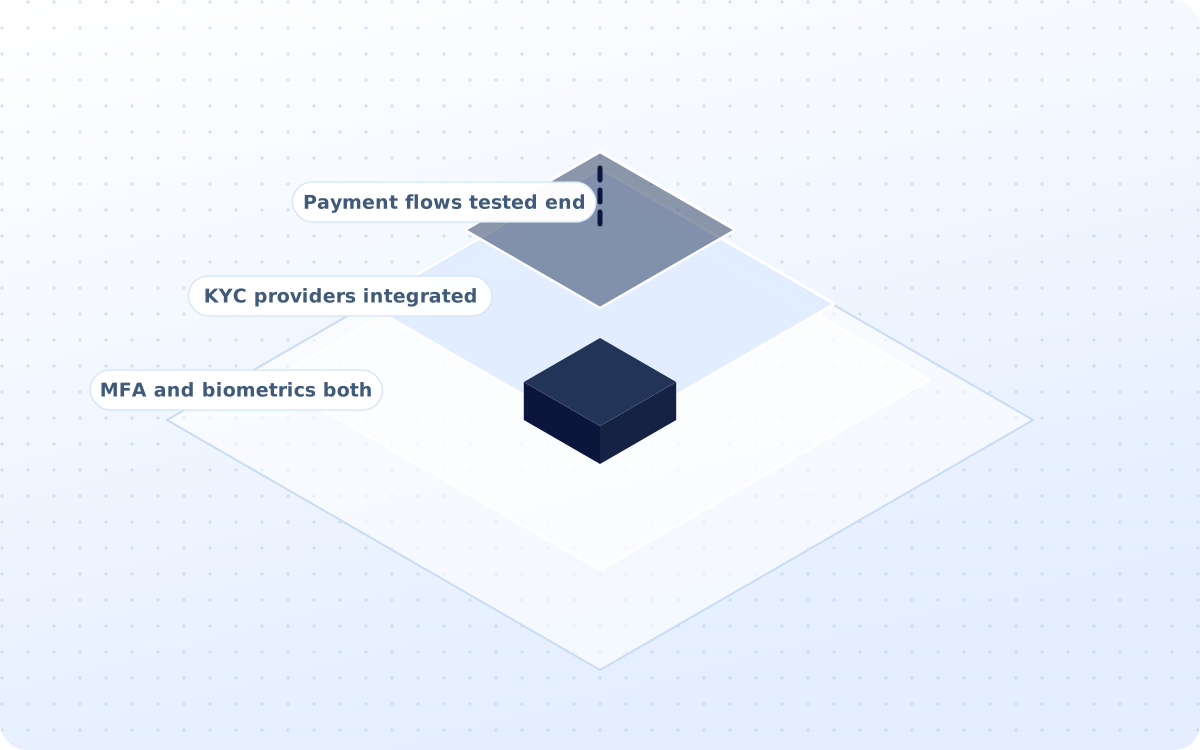
Security, and where it all stops
Biometrics, session management, device intelligence and fraud scoring all get built into the app. Actual compliance rules remain the responsibility of the regulated business and its approved compliance providers.
- MFA and biometrics both in place
- KYC providers integrated properly
- Payment flows tested end to end
The events, mapped before any code
Install, app open, registration, KYC started, KYC completed, beneficiary added, quote created, transfer initiated and first transfer are all mapped as events before the very first build sprint begins.
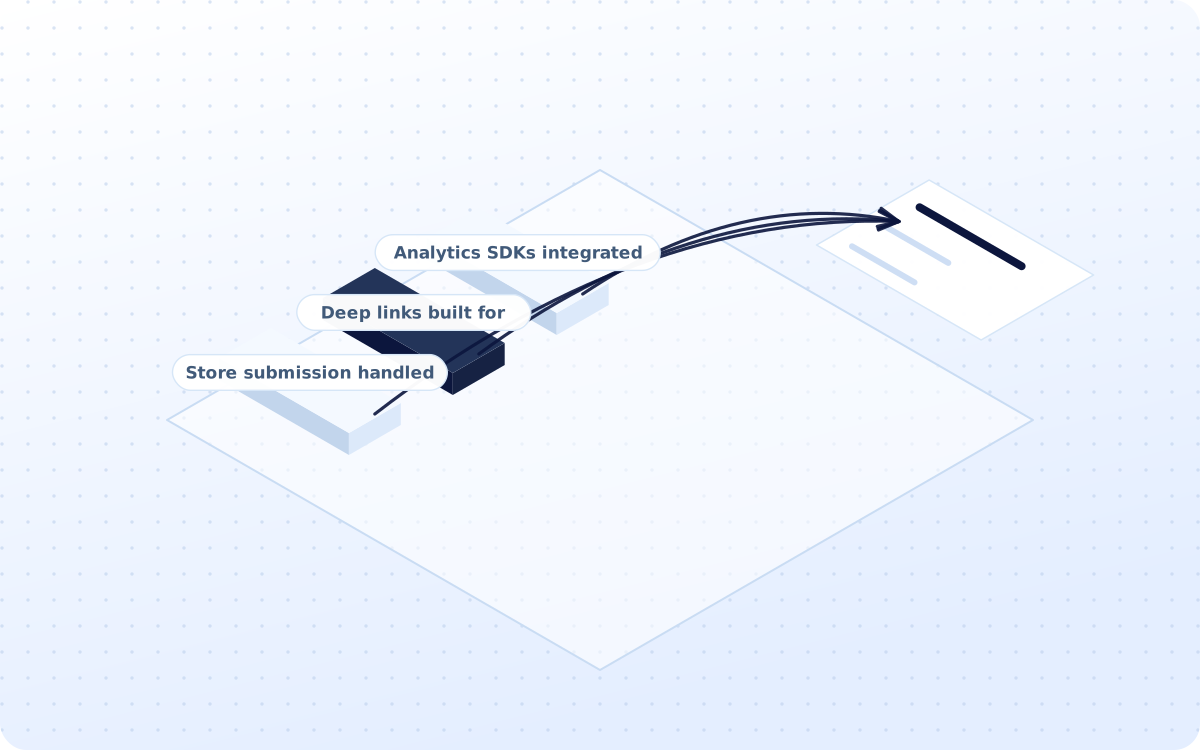
- Analytics SDKs integrated early
- Deep links built for every campaign
- Store submission handled as well
What you actually receive
Six artefacts, all of them yours to keep. The event map will outlive any agency you use.
App feature scope
What ships in version one, what waits until later, and what was excluded from it completely.

Technical architecture
How the app, the APIs and the payout partner systems are all meant to fit together properly.
The app event map
Every event from install through to repeat transfer, named, with the properties on each one.
iOS and Android builds
The apps themselves, submitted to both of the stores with all the release notes written out.
Release test report
Functional, device, payment and analytics testing, each one of them signed off before the release.
Store submission pack
Listing assets, privacy declarations and the release setup, ready for both of the app stores.
How the app build runs
Four stages, run in order. No screen gets designed before the eight states have all been agreed.
What the app actually has to do first
Requirements, corridors, payout partners and funding methods are documented, then the feature list is cut back to what version one can carry.
- 01Business requirements written up
- 02Competitor apps all taken apart
- 03The features ranked, and then cut
- 04Architecture agreed in writing
- 05The roadmap beyond version one
The screens that a sender actually uses
Registration, the quote, the beneficiary, funding and tracking are built in that order, because each one feeds directly into the next one.
- 01Registration and the OTP built
- 02Quote screen with rate and fee
- 03Beneficiary details saved once
- 04Funding methods properly wired in
- 05Tracking states shown honestly
Security, and what stays with your team
MFA, biometrics, secure storage and fraud scoring go in during the build, and the payment paths are tested against real partner responses.
- 01MFA and a biometric login built
- 02Session and device management set
- 03Fraud provider integration done
- 04Payment flows tested very properly
- 05Security testing before release
The stores, and then everything after
Analytics, deep links and push are wired before submission, so the first campaign has somewhere specific to land and something to measure.
- 01Firebase and GA4 both integrated
- 02MMP events matched to the funnel
- 03Deep links for the referral codes
- 04Push and rate alerts made live
- 05Both store submissions handled
What the work actually does
Twenty five groups of work sit behind the service, and these twelve are what actually ships first.
App strategy
What version one has to carry
iOS and Android
Native or cross-platform, decided
Sender registration
Phone, OTP, MFA and the profile
KYC integration
Document, selfie, address checks
Saved beneficiaries
Bank, wallet or a cash pickup
Quote experience
Rate, fee and delivery estimate
Funding methods
Card, bank transfer, open banking
Transfer tracking
Ten states that a sender sees
Push and alerts
Status, rate alerts, reactivation
Referral engine
Codes, links and reward status
Analytics SDKs
Firebase, GA4, AppsFlyer, Adjust
Store submission
Assets, privacy, release setup
Three ways to buy this
One of these will fit, whether an app exists already or there is nothing built at all yet.
Complete remittance app
The discovery, the build, the testing and the submission, delivered once for both of the platforms.
- Fixed fee, agreed before we start
- Both platforms in the same price
- The event map written before code
Continuous feature team
A standing team on your own roadmap, shipping the releases every two or three weeks without fuss.
- Monthly team fee, with no lock-in
- Your roadmap and your priorities
- Releases every two or three weeks
Complete scoping study
What version one should contain, what the whole build will cost, and how long it all takes.
- Three weeks, priced before we start
- No obligation to build with us
- The scope document is handed over
Comparison. A general agency will ship an app. Mobile app development for remittance companies ships one where the KYC drop-off is visible on the day it happens.
Position. Most operators need the quote and the KYC steps rebuilt, not a new app entirely, and it costs less.
- Licensing and AML questions go to a qualified adviser. We handle advertising and marketing compliance.
Audit line. If none of the three fits, a fixed-fee growth audit will say which one should.
Four steps to the store
Three weeks of scoping, and then the build. Store review usually adds a week at the end.
Scope the build
WEEK 1-3Requirements, corridors and payout partners are documented, then the features ranked and cut.
Map the events
WEEK 4Install through to first transfer named as events, with all the properties agreed up front.
Build and test
WEEK 5-24Screens, integrations and payment paths built, then tested against real partner responses.
Submit and watch
LAUNCHBoth stores submitted, then installs and first transfers watched every day afterwards.
How results get reported
No client figure appears without written permission. These three are facts about how the work is run.
Services that pair with this
An app is not the only route to a first transfer. These three cover the rest of the route.
The site the app sits beside, because most senders read before they ever download anything.
Learn moreWebsite Redesign & RebuildThe rebuild, for when the old site is the thing that holds the installs back more than anything.
Learn moreConversion Rate OptimizationThe testing work that keeps improving the quote and the KYC screens long after the launch itself.
Learn moreQuestions operators ask first
Answers come first. Where the honest answer is no, it says no and explains what to do instead.
Both. An agent-led operator usually needs agent features and a locator inside the app, while an app-led one needs the quote and the funding methods first.
Yes. Firebase, GA4 and whichever MMP you run are integrated during the build, with the same event names your web funnel already uses.
Yes. Corridor, currency and payout method are configuration rather than code, so a new route is a release rather than a rebuild.
Yes. Mobile app development for remittance companies is all that gets built, so beneficiaries, payout methods and KYC states are already understood.
Referral and promotional wording goes to your compliance review. Promotions should follow applicable regulatory and consumer-marketing requirements. Licensing and AML go to a qualified adviser.
Your corridor list, funding methods and API docs. The exact feature set depends on the client's operating model, licenses, banking relationships, payment providers and remittance infrastructure.
Three weeks to scope, then sixteen to twenty four weeks for a first version, depending on integrations. Store review usually adds about a week.
Yes. The KYC provider, the risk provider and your transaction data are all wired in, so registration through to first transfer reads as one funnel.
Yes. Corridors, currencies and payout methods are built as data, so adding a route does not mean rewriting the transfer screens each time.
Directly. Saved beneficiaries, repeat transfer, rate alerts and push notifications are the features that move send frequency more than anything else.
Install, registration, KYC completed and first transfer are all named events, so cost per first send can be read per campaign rather than estimated.
Monthly: installs, registrations, KYC completion, first transfers, repeat sends and the drop between each pair, split by corridor and by platform.
By putting the rate on the first screen and cutting the steps between registration and funding, which is where most senders leave the app.
First transfers and repeat sends against the build cost. Mobile app development for remittance companies pays back over quarters, not weeks.
Saved beneficiaries turn a ten minute send into a two tap one, and rate alerts bring the sender back without a marketing message.
Operators, remittance apps and payout platforms on the roster
Marks appear once written permission is on file for each operator.
Map the events before the build
Most remittance apps cannot say where the sender stopped. A fixed-fee growth audit will show which state loses them and what a rebuild would fix.
You keep the event map whether or not we build the app.