Full remittance corridor market research
Every operator has a corridor shortlist. Very few can say which route has the demand, which one has competitors already discounting, and which one is quietly not worth entering.
Remittance only · Corridor by corridor · Every source is time stamped

Remittance corridor market research says which route to enter, in what order, and which one to leave alone for now. Provide commercial research that helps remittance businesses understand where demand exists, how customers behave, which competitors dominate, how markets differ and where marketing investment may offer the strongest opportunity. Licensing and AML assessment are not part of it, and never will be.
What changes in research
Most corridor decisions get made on a spreadsheet and a strong opinion. Four of those things change.
Opinion decides it
The loudest person in the room picks the next send corridor.
Evidence decides it
Flows, diaspora size, search demand and competitor pricing do.
Every market looks equal
The candidate markets sit on one list with no ranking at all.
Markets get graded
Priority, test, monitor or low priority, with the reason attached.
Pricing quoted from memory
A competitor rate gets repeated months after it changed.
Pricing quoted with a date
Every fee and rate carries the day it was actually captured.
Regulatory fit guessed
A marketing report quietly implies the licensing will be fine.
Regulatory fit excluded
That question is marked out and sent to a qualified specialist.
What the research covers
Four rows, in order. What it covers, what it does not, and who takes on the rest of it.
What this service actually focuses on
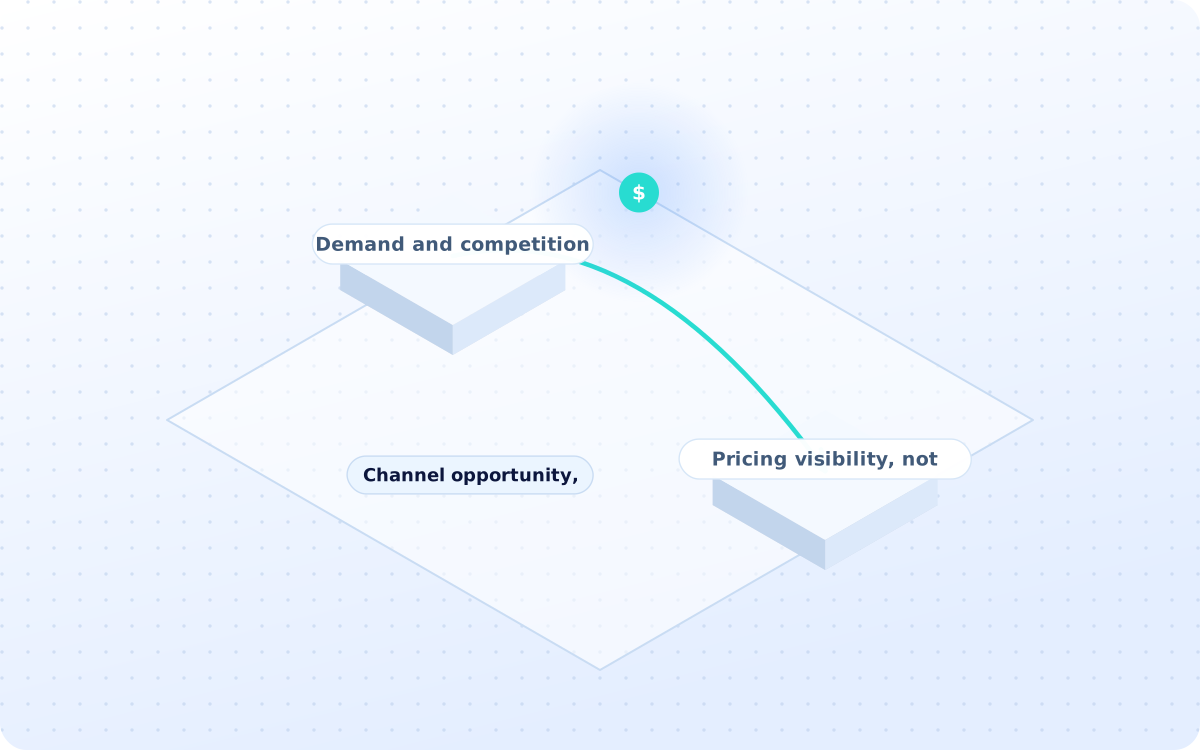
The scope is set out first, and it is a short list of seven. This service focuses on: Demand, Competition, Customers, Pricing visibility, Channel opportunity, Marketing economics, Market attractiveness
- Demand and competition come first
- Pricing visibility, not pricing advice
- Channel opportunity, market by market

What it does not replace, at all
That is the seven it covers. The next four are the ones it does not touch at any point at all. It does not replace: Regulatory due diligence, Licensing analysis, Legal opinions, AML assessment
- No regulatory due diligence at all
- No licensing analysis gets done
- No legal opinions, at any point

Who handles the regulatory side
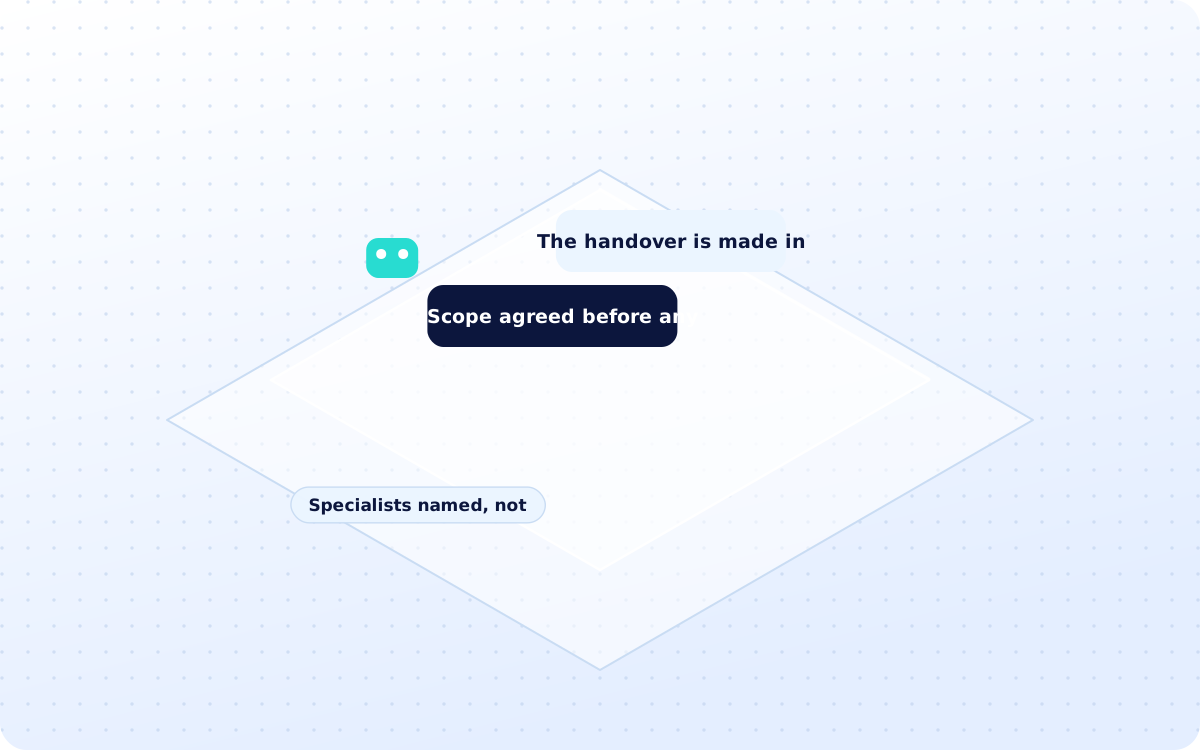
The other work goes to people qualified to do it. Regulatory feasibility should remain a separate workstream handled by qualified specialists. These should be handled by appropriately qualified specialists.
- The handover is made in writing
- Scope agreed before any work starts
- Specialists named, not implied
How the pricing work gets qualified
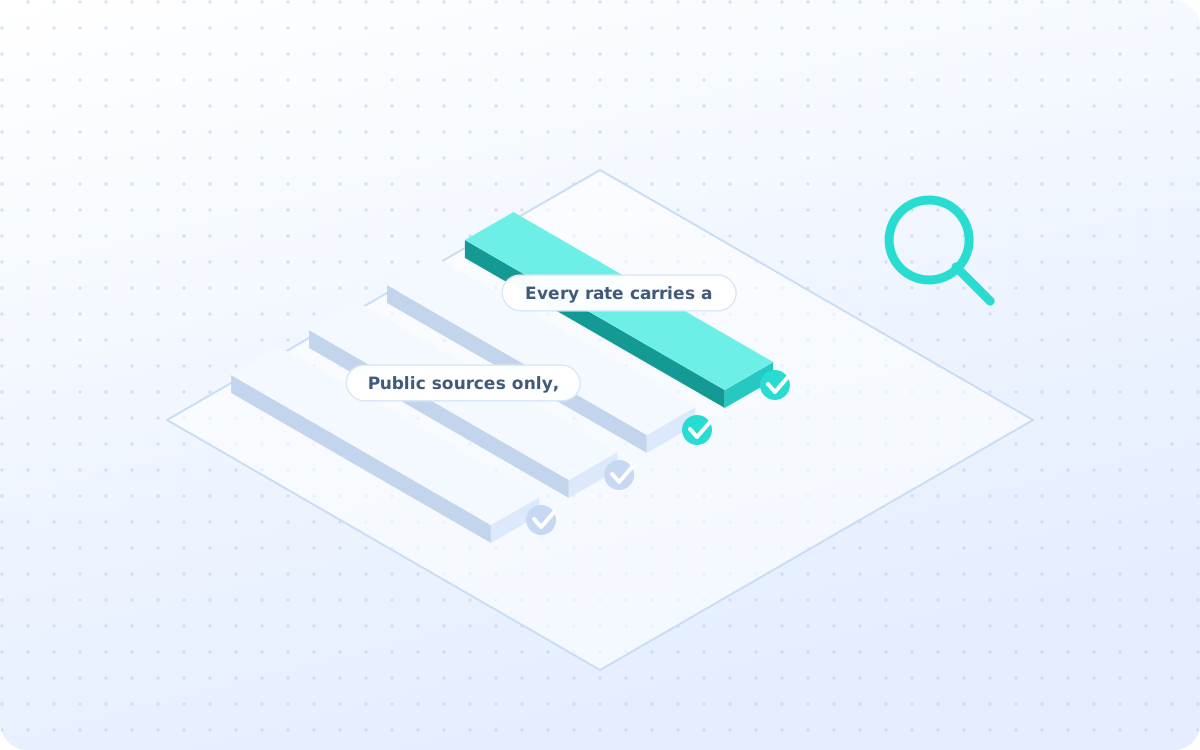
Any pricing table on this site is a snapshot, not a promise, and the date it was taken sits right beside it. Any live pricing comparison should remain time-stamped and appropriately qualified.
- Every rate carries a capture date
- Public sources only, always cited
- Comparisons get requalified later
What you actually receive
Six artefacts, all of them yours to keep. The scorecard is the one that ends the argument.
Corridor report
Origin, destination, the currencies, send frequency and digital adoption, for each route on the list.

Competitor matrix
Transfer methods, payout methods, the fees and rates displayed, app experience and the trust signals.
Diaspora analysis
The cities, the regions and the community clusters, with the population behind each one of them.
Pricing landscape
The fee structures, the promotional offers and the first-transfer incentives, each with its capture date.
Market scorecard
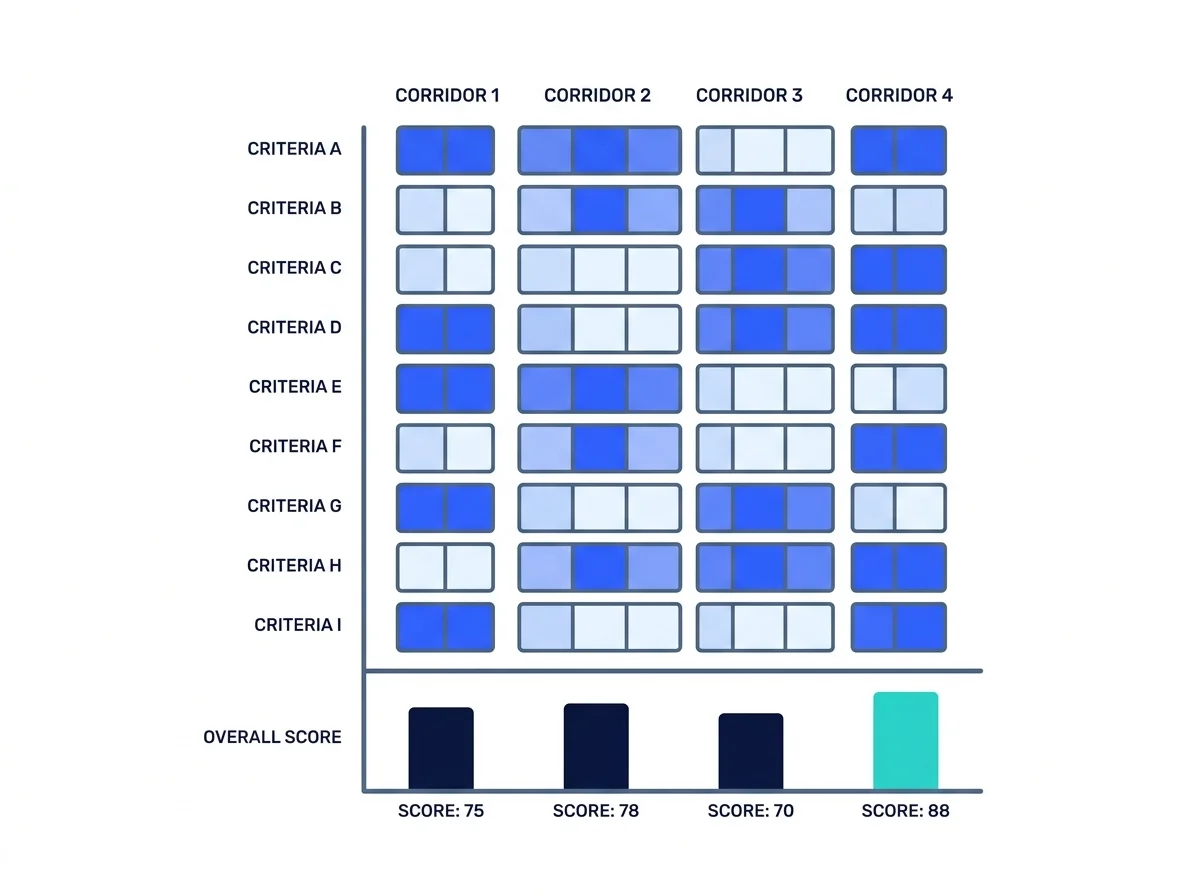
Seven dimensions get scored per market, then graded as priority, test, monitor or low priority.
Executive recommendations
Positioning, channels, content, offers and the market sequence, written for the people who will decide.
How the research work runs
Four stages, run in order. Nothing gets graded until the demand and the competition are both read.
How much money the route actually moves
Remittance flows, diaspora population and digital transfer adoption get estimated first, because everything after this depends on the size of it.
- 01Remittance flows estimated first
- 02Diaspora population counted out
- 03Digital adoption read per market
- 04Market growth taken into account
- 05Segments sized, and not assumed
Who is sending, and how often they send
Transfer motivations, price sensitivity, speed expectations and payout preferences get read at the corridor level, not at the country level.
- 01Send frequency read per send route
- 02Price sensitivity checked properly
- 03Payout preference at the far end
- 04Trust concerns all written down
- 05Segments: family, students, SMEs
Who else is already running the route
Major brands, digital specialists, banks, agent operators and local competitors get compared on fees, rates, payout methods and app experience.
- 01Fees and rates exactly as displayed
- 02Promotions and first-send offers
- 03App experience walked all through
- 04Search and paid activity both read
- 05Trust signals compared as well
Which of the markets gets the budget
Demand, competition, acquisition cost, product fit, channel opportunity and customer concentration each get a score, and then a grade after that.
- 01Seven dimensions, then one score
- 02Priority, test, monitor or low
- 03Every grade carries its reason
- 04Regulatory feasibility is excluded
- 05Sequence recommended, not ordered
What the work looks at
Sixteen groups of work sit behind the service, and these twelve are what carry the whole report.
Market sizing
Flows, diaspora, adoption, growth
Corridor demand
Origin, destination, currency, frequency
Diaspora clusters
Cities, regions and community groups
The segmentation
Frequent, occasional, family, student
Customer needs
Motivation, price, speed, payout, trust
Competitor set
Brands, banks, agents, digital rivals
Product compare
Methods, markets, app, trust signals
Pricing research
Public fees, rates and promotions
Search demand
Corridor terms and brand searches
Paid landscape
Search, Meta, TikTok and YouTube
Distribution fit
App, agents, wallets, cash pickup
Entry scorecard
Seven dimensions and one grade
Three ways to buy this
One of these will fit, whether it is one corridor in question or a whole shortlist of them.
Full research programme
The sizing, the demand, the competitors, the pricing and the scorecard, across your whole shortlist.
- Fixed fee, agreed before we start
- Five weeks from start to report
- Regulatory work always referred out
Single corridor report
One route, read properly, when the argument is about a single corridor and nothing else at all.
- One fixed fee, two weeks total
- A go or no go on that corridor
- Credited if the full study follows
Ongoing research watch
The pricing and the competitor picture, refreshed each quarter, because both of them move constantly.
- Monthly fee, six months minimum
- Pricing recaptured every quarter
- Every source still carries its date
Comparison. A general fintech agency will size a market once and quote it for years afterwards. Remittance corridor market research puts a capture date on every rate it prints.
Position. Most operators need the corridor question settled before any of the launch budget gets committed.
- Regulatory due diligence and AML assessment sit with qualified specialists. We handle commercial research only.
Audit line. If none of the three fits, a fixed-fee growth audit will say which one should.
Four steps to the grade
Five weeks to the report. Nothing gets graded until every single source has a date on it.
Size the market
WEEK 1Flows, diaspora population and digital adoption, estimated from public and licensed sources.
Read the demand
WEEK 2Motivations, price sensitivity, speed and payout preference, all taken corridor by corridor.
Compare the field
WEEK 3-4Brands, banks, agents and digital rivals, compared on fees, rates and payout methods.
Grade the list
WEEK 5Seven dimensions scored, then priority, test, monitor or low priority against each market.
How results get reported
No client figure appears without written permission. These three are facts about how the work is run.
Services that pair with this
The research says where to go. These three check what happens once the money actually starts moving.
The check on whether the site can actually convert the demand this research has just found.
Learn morePaid Ads AuditThe account review that says whether the corridor you already run is paying for itself at all.
Learn morePaid Ads Audit (Paid Growth)The campaign-side version of it, for when the corridor spend is running ahead of the returns.
Learn moreQuestions operators ask first
Answers come first. Where the honest answer is no, it says no and explains what to do instead.
Both. An agent-led operator gets the agent network and the cash pickup habit read as closely as the app experience gets.
Yes. Your own corridor-level transaction data makes the research sharper, though the market and competitor work runs without it if that is easier.
That is the unit of work. One corridor at a time, with its own diaspora, payout habit, competitor set and search demand read separately.
Yes. Remittance corridor market research is the only kind written, so send frequency and payout preference are the starting questions, not new concepts.
It does not replace: Regulatory due diligence, Licensing analysis, Legal opinions, AML assessment. Advertising and marketing compliance is the part that is ours.
The corridors on your shortlist, the ones you already run, your payout partner options, and whoever will sign off the market decision.
Five weeks to the full report, or two weeks for a single corridor. Most operators have the scorecard before the next budget round.
Yes. Your own first-transfer and KYC completion rates get read beside the market data, which is what separates a real corridor from a large one.
That is the point of the scorecard. Every corridor on the shortlist gets the same seven dimensions, so the comparison is actually a comparison.
Indirectly. Send frequency sits in the demand analysis, so a corridor full of one-off senders gets graded differently from one full of monthly senders.
The scorecard weights acquisition cost against expected first transfers, so a cheap corridor with no completion behind it does not score well.
One scorecard, one grade per market, and a sequence. The report says which corridor to enter first, which to test, and which to leave alone.
By pointing the launch budget at the corridor where the diaspora is concentrated, the competitors are thin, and the payout method already suits the receiver.
The corridor you did not enter. Remittance corridor market research usually pays for itself on the market that scored low and quietly got dropped.
By grading corridors on send frequency, not just volume. A route full of monthly family senders is worth more than a larger one full of one-off transfers.
Operators, remittance apps and payout platforms on the roster
Marks appear once written permission is on file for each operator.
Settle the corridor question first
A corridor entered on instinct costs a quarter of budget to disprove. A fixed-fee growth audit will say which route deserves the research first.
You keep the corridor report whether or not you enter.