Website development for remittance apps
A remittance site is an acquisition and product-access layer, not a brochure. Corridor pages, a live rate calculator, a registration path that holds, and tracking working on day one.
Remittance only · Fixed scope · Tracking tested before the site launches

Website development for remittance companies means building the acquisition and product-access layer, not a corporate brochure: corridor pages, a working rate calculator, a registration path that survives the handoff to verification, and conversion events wired on the day it launches. The measure is registrations and funded first transfers, not how the homepage looks on a laptop. Twenty-two workstreams sit inside.
What changes at launch
Most remittance sites are built as brochures and then asked to acquire senders. Four things change here.
A corporate brochure
The site explains the company. It never explains a corridor.
An acquisition layer
Every page answers a sender question and points at registration.
A rate table nobody sees
The calculator renders late, so search engines index a blank block.
A rate module that loads
The calculator renders fast and matches the rate at checkout.
Registration ends the site
The handoff to verification loses senders and nobody can see where.
Registration is tracked
The path from click to KYC start is instrumented and reportable.
Tracking added later
Events get retrofitted months after launch, so early spend is unreadable.
Tracking at launch
Eleven events fire from day one, tested before the site goes live.
What the build includes
Four rows of work, run in order. Discovery sets the architecture, and the architecture sets everything after.

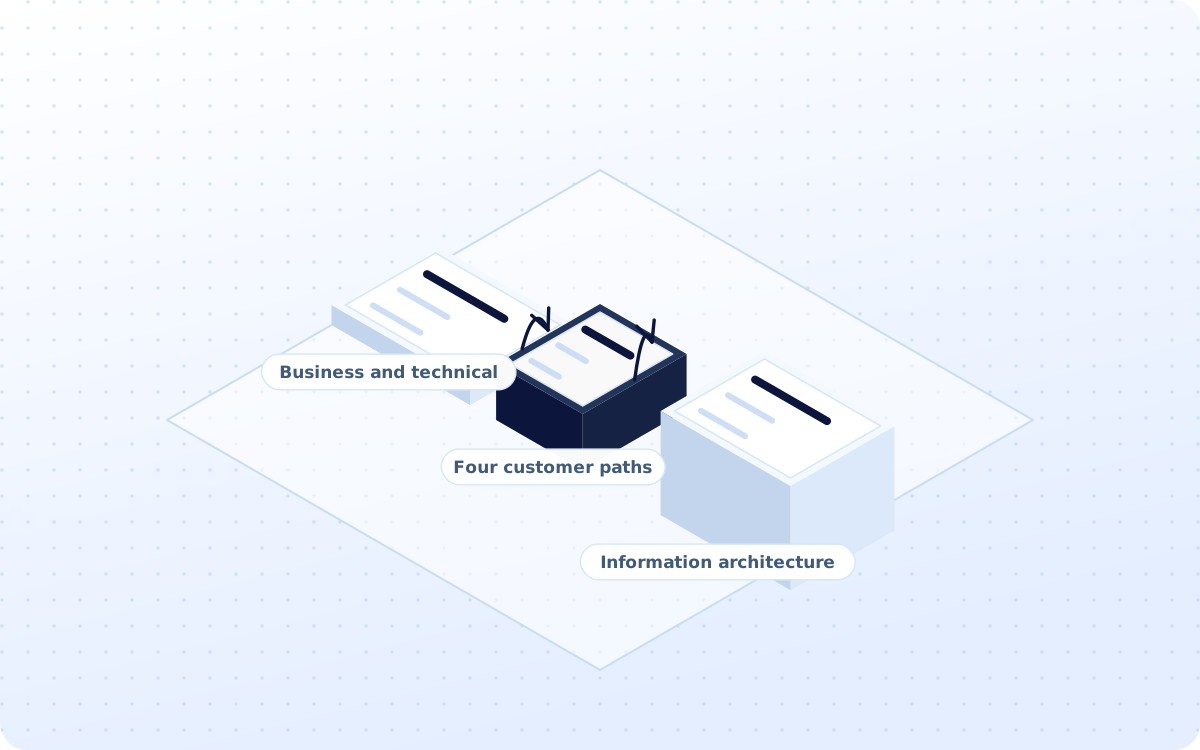
Discovery, architecture and customer paths
Four customer paths are mapped before a page is designed: the new sender, the app installer, the corridor searcher and the business buyer. Architecture gives products, corridors and recipient methods a place.
- Business and technical requirements
- Four customer paths mapped in discovery
- Information architecture and conversion goals
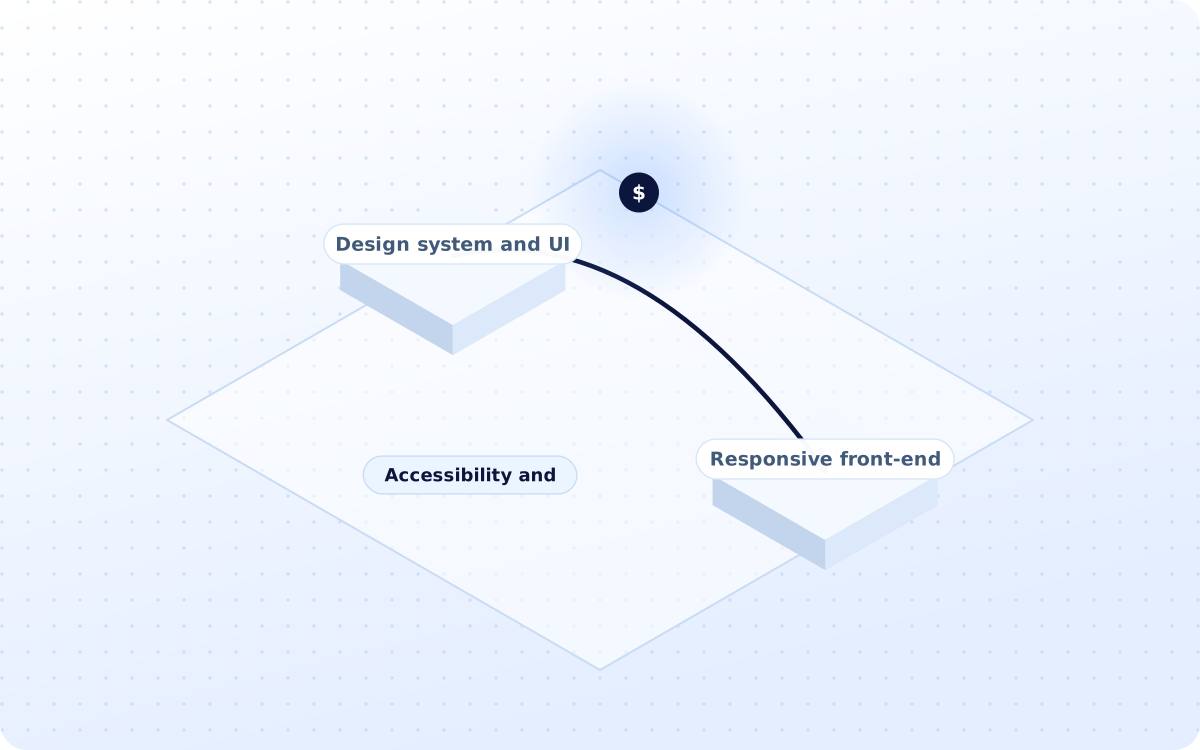
Design system and front-end build
The design system covers rate modules, calculators, trust blocks and the forms senders fill in. Then the front end is built and tested across browsers and on the mid-range phones they actually use.
- Design system and UI components
- Responsive front-end development and testing
- Accessibility and cross-browser testing
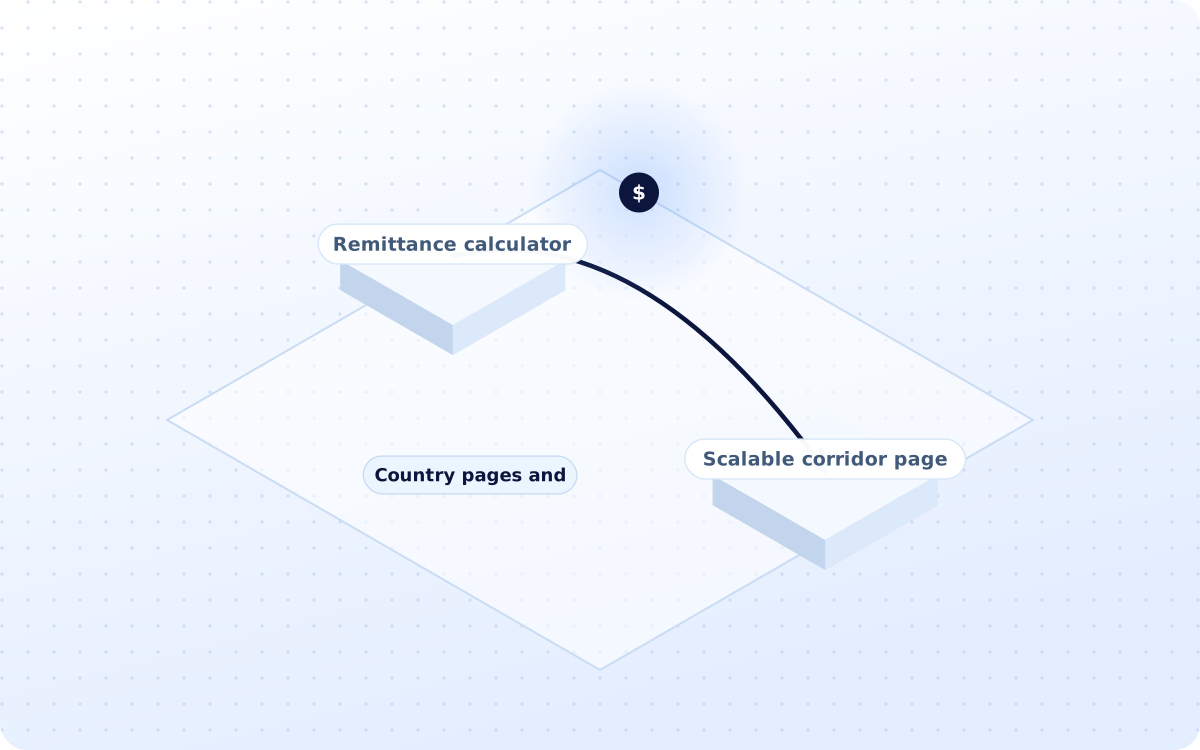
Calculator, corridor and country pages
The calculator carries send amount, receive amount, rate, fee and estimated total. All displayed pricing and rates must reflect actual authorized product data, so it reads your live rate source.
- Remittance calculator build and testing
- Scalable corridor page templates
- Country pages and recipient methods
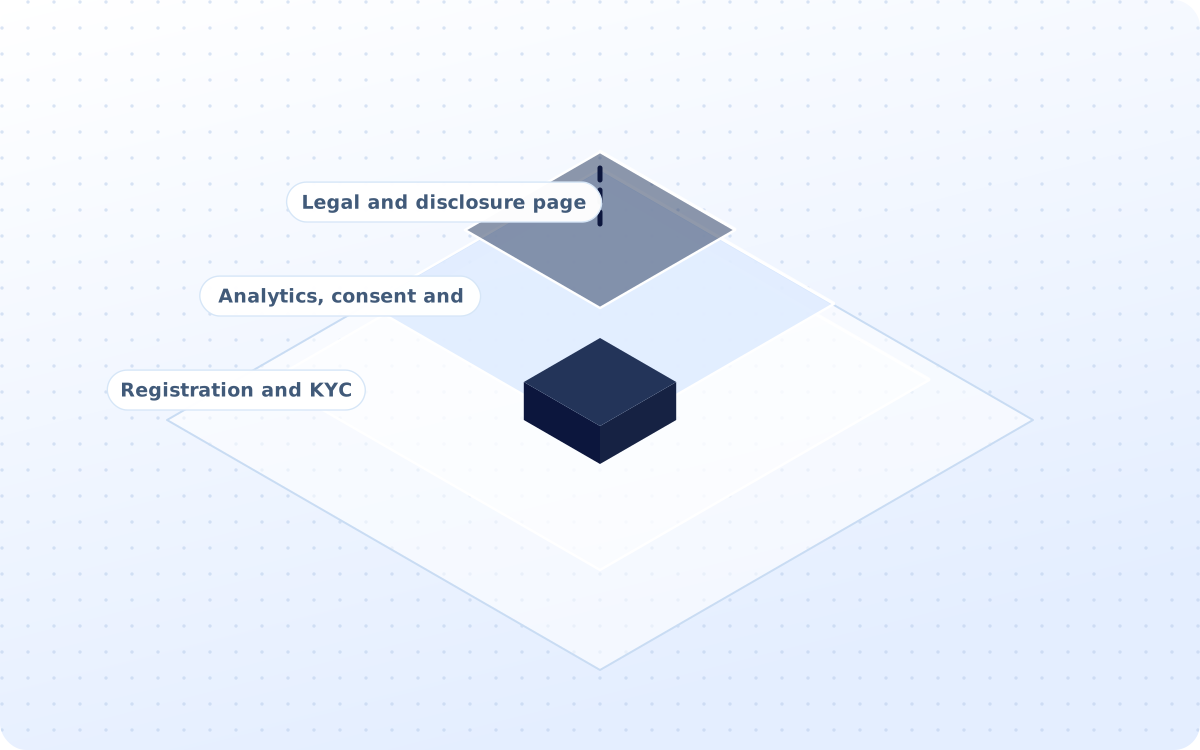
Registration, tracking and compliance pages
Handoffs are built with failure states and retry flows. The website itself does not determine regulatory requirements. These must come from the client's compliance function and regulated technology providers.
- Registration and KYC handoff flows
- Analytics, consent and conversion events
- Legal and disclosure page implementation
What you receive at handover
Six artefacts you can open and check. Every one of them is yours, in your own repository and accounts.
Discovery document
Requirements, audiences, customer paths and the conversion goals this site has to serve on launch.

Website architecture
The page hierarchy for products, corridors, countries and recipient methods, with the URL pattern set.
UI and design system
Components for rate modules, calculators, trust blocks and forms, reused on every page you build later.
Responsive website
The built site with CMS access, tested across browsers and on the handsets your senders actually carry.
Conversion event map
Eleven events specified, implemented and tested, from a CTA click through to a first transfer.
QA documentation
Functional, responsive, tracking and SEO test results, with anything deferred listed out and given a date.
How the build actually runs
Four stages, in order. Nothing goes live until the tracking has been tested against a real transaction path.
Requirements agreed before any design work
Business goals, product scope, compliance limits and the four customer paths are agreed first, because architecture decided late gets rebuilt.
- 01Business requirements gathered first
- 02Audience and product analysis work
- 03Customer path mapping by segment
- 04Conversion goal mapping per path
- 05Technical and compliance requirements
Site map, interface and design components
The page hierarchy is built around corridors and recipient methods, then a design system covers every module the site will need afterwards.
- 01Information architecture and hierarchy
- 02Wireframes and interface design
- 03Design system and shared components
- 04Rate module and calculator design
- 05Mobile, tablet and desktop layouts
Front end, back end and integrations
Front-end development, the CMS, the calculator, registration handoff and account access, with API work scoped to what the product truly needs.
- 01Responsive front-end development work
- 02CMS for corridors and site content
- 03Calculator and rate integration
- 04Registration and KYC handoff flows
- 05CRM, analytics and API integrations
Tracking, security and the launch testing
Events, consent, security and accessibility are tested together, because a site that launches untracked cannot be judged for its first quarter.
- 01Analytics and tag manager setup
- 02Conversion event implementation and QA
- 03Consent and privacy infrastructure
- 04Security and accessibility checks
- 05Functional, tracking and SEO QA
Money transfer web builds
The list a general web agency would not write. Each one exists because a remittance site needed it.
Rate calculators
Live rates, fees and estimated totals
Corridor templates
Scalable pages per transfer route
Country pages
Recipient methods and availability
Registration handoff
Browser signup into the product
KYC handoffs
Upload, status, failure and retry states
Rate API work
The site reads your real rate source
Corridor CMS
Your team edits routes without a ticket
Event mapping
Eleven events from click to transfer
Consent setup
Analytics and advertising consent logic
Security build
Headers, access control and logging
Accessibility build
Keyboard, contrast and form usability
Tracking QA work
Every event tested before go-live
Three ways to buy this
One of these fits, whether you run a remittance app, an exchange house or a payout platform.
Complete website build
Discovery through launch, fixed scope and price per phase. You own the code from the first commit.
- Fixed price per phase, agreed upfront
- Tracking tested before go-live
- Full handover at launch, no lock-in
Corridor template system
The template, CMS and calculator built once, so your team can publish new routes without a developer.
- One template, unlimited corridor pages
- Rate and fee fields wired to your source
- Editor training for your marketing team
Extended engineering team
Your developers keep the roadmap. We take the corridor, calculator and tracking work they never reach.
- Works inside your repository and process
- Scoped by sprint, cancellable monthly
- Documentation written as we go
Comparison. A general web agency builds a beautiful brochure and hands over an untracked site. The calculator, the corridor template and the KYC handoff are what they were never asked to build.
Position. We say when an off-the-shelf template is enough, which costs us the larger build.
- Licensing and AML questions go to a qualified adviser. We handle advertising and marketing compliance.
Audit line. If none of the three fits, a fixed-fee growth audit will say which one should.
Four steps to a launch
Two fixed steps, then build and launch. Most marketing sites take eight to sixteen weeks end to end.
Agree the scope
WEEK 1-2Requirements, customer paths, compliance constraints and the conversion goals the site has to serve.
Design the system
WEEK 3-6Architecture, wireframes and a component set covering rate modules, calculators and trust blocks.
Build and connect
WEEK 6-14Front end, CMS, calculator, registration handoff and the integrations the product actually requires.
Test and launch
WEEK 14-16Functional, tracking, SEO and accessibility testing, then launch with events already firing.
How results get reported
No client figures appear here without written permission. These three are facts about how the build runs.
Services that pair with this
A new site is the start. These three keep it converting, extend it to mobile and stop it decaying.
For an existing site, where preserving rankings and tracking matters more than starting again.
Learn moreMobile App DevelopmentThe app the site hands senders to, covering registration, verification and the full transfer flow.
Learn moreConversion Rate OptimizationThe testing programme that improves what was built, once real senders are moving through it.
Learn moreQuestions operators ask first
Answers come first. Where the honest answer is no, the answer says no and explains what to do.
Yes. No client is taken outside cross-border money movement, so nobody has to be told what a payout method or a corridor page is.
Yes. App-led operators need registration and store handoffs, agent-led operators need locator, branch and counter content. Both are built here.
Yes, through a corridor template with real per-route data. Fees, payout methods and delivery times differ enough that one shared page misleads senders.
Yes, without a developer per route. The CMS lets your team publish and edit corridor pages once the template and rate fields are built.
The website itself does not determine regulatory requirements. These must come from the client's compliance function and regulated technology providers.
Your corridor list, rate source, product scope, brand assets and access to whoever owns compliance sign-off on disclosures and pricing pages.
A marketing site with corridor pages usually takes eight to sixteen weeks. Transactional functionality and account access extend that considerably.
Yes. Analytics, tag management, pixels and CRM integrations are implemented as part of the build, then tested before launch rather than after.
Yes. Document upload, verification status, failure states and retry flows are built, with the provider and the policy remaining yours throughout.
Partly. Account access, transfer history and saved beneficiaries help, though repeat sending mostly moves through the app and lifecycle messaging.
Eleven events run from CTA clicked through registration and KYC to first transfer completed, so the site is judged on funded senders rather than sessions.
Against a pre-launch baseline: registration rate, KYC start rate and first transfers from the site. Regressions are reported as plainly as gains.
Website development for remittance companies is measured on registration and first-transfer movement against the build cost, plus the paid efficiency gained.
By removing friction between a corridor search and a funded transfer: the right page, an accurate calculator, and a registration path that does not break.
Indirectly, through account access, transfer history and beneficiary management. Most repeat behaviour is earned in the app rather than on the website.
Operators, remittance apps and payout platforms on the roster
Marks appear once written permission is on file for each operator.
Start with the requirements list
Website development for remittance companies is decided in discovery, not design. Two weeks and a fixed fee will tell you what the site has to do.
You keep the roadmap whether or not we work together.