Website redesign for remittance companies
The new site looks better and the organic traffic disappears. That is what happens when the redirect map, the tracking and the ranking pages are considered after design sign-off.
Remittance only · Rankings kept · Redirects all tested before you launch

Website redesign for remittance companies starts with what already works: the pages that rank, the redirects that exist, the conversion events that fire and the corridor traffic that arrives. Those are mapped before a single screen is drawn. The rebuild then fixes the registration flow, the rate visibility and the mobile experience, and the redirect map is tested in staging before launch.
What changes in a rebuild
Most remittance redesigns start with the visual system and find the damage only afterwards. Four things change.
Design first
The wireframes arrive before anybody looks at what ranks.
The audit first
Rankings, redirects and events are mapped before any design work.
URLs quietly change
The corridor pages move and nobody writes the redirects.
Every URL mapped
Old to new, one row per page, tested twice before launch.
Tracking rebuilt late
The new site launches with no conversion events firing at all.
Tracking rebuilt first
GA4, GTM and the ad platforms fire in staging beforehand.
Content thrown away
The old corridor guides go simply because they look dated.
Content judged first
Keep, improve, merge, redirect or remove, one page at a time.
What the rebuild covers
Four rows of work, run in order. The audit happens well before the very first design review.
The objective, and not the look
The goal should not simply be: Make the website look newer. The objective is: Preserve What Works → Fix What Does Not → Improve UX → Improve Conversion → Modernize Technology → Protect Search Visibility
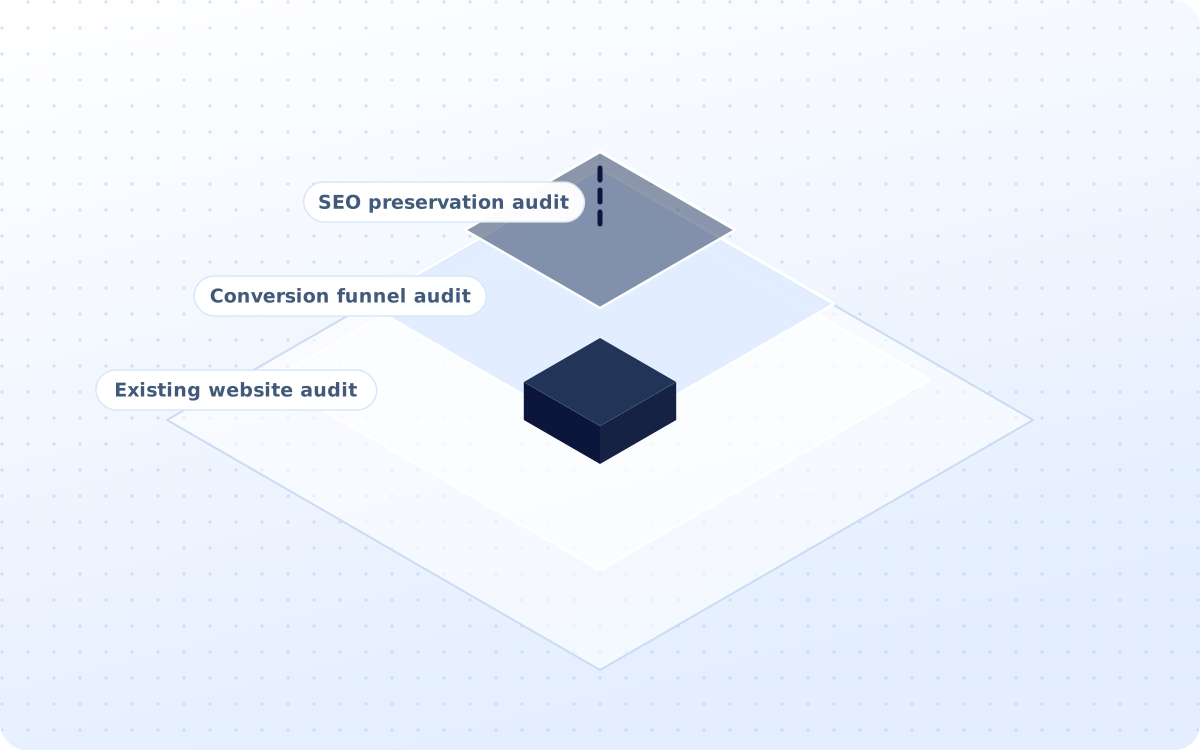
- Existing website audit done first
- Conversion funnel audit run too
- SEO preservation audit built out
What must not be lost in a rebuild
A redesign should not accidentally destroy the acquisition engine already working underneath the website. Do not discard valuable ranking content simply because the design is changing. Both rules apply.
- Ranking pages listed and then kept
- Content marked keep, merge or drop
- Backlinks and top pages held onto
What belongs in the plan from day one
This is the whole point of the rebuild. SEO, tracking, integrations, URLs, conversion events and existing customer behaviour should therefore form part of the redesign plan from the beginning.
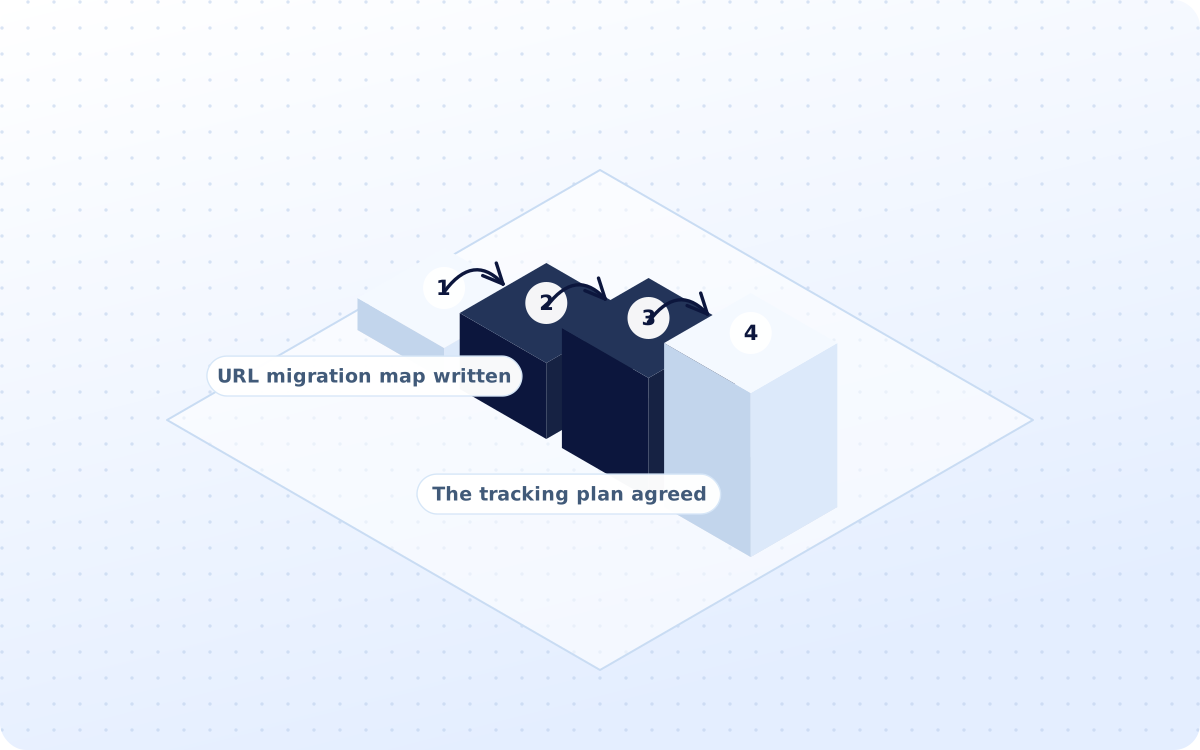
- URL migration map written up front
- The tracking plan agreed early on
- Integrations listed and tested
Build it, test it, then launch
The rebuild ships behind a redirect map, a tracking plan and a launch checklist. Every conversion event is fired once in staging before anybody points the domain anywhere near the new site.
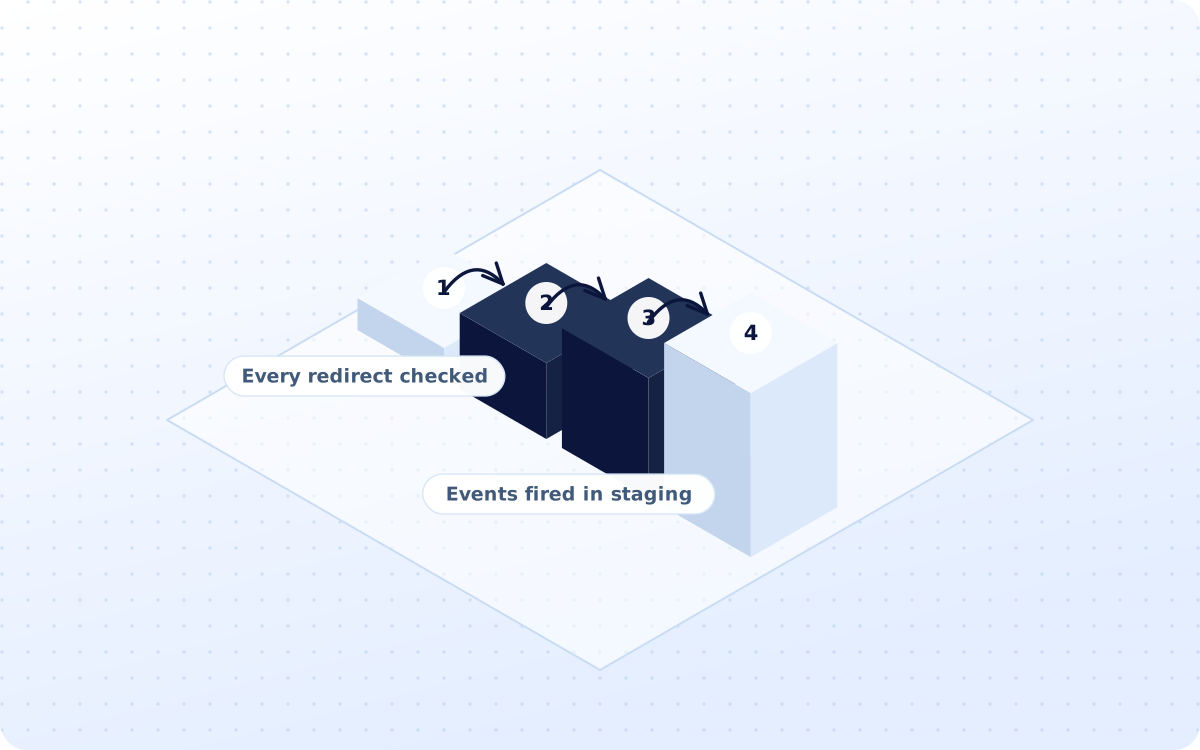
- Every redirect checked row by row
- Events fired in staging first too
- Crawl errors watched after launch
What you actually receive
Six artefacts, all of them yours to keep. The URL map matters more than any of the mockups.
The redesign audit
What the current website does well, what it does badly, and what each fault is costing you.

URL migration map
Old address, new address and redirect type, with one row for every single page you have live.
Content decision list
Every page marked keep, improve, merge, redirect or remove, with the reason written beside it.
Tracking rebuild plan
Every conversion event, tag and property that has to exist on the new site before launch day.
Launch QA checklist
Redirects, metadata, canonicals, events, forms and the APIs, all signed off before you go live.
Post-launch report
Crawl errors, rankings, traffic and conversions, all watched weekly for the first month or so.
How the whole rebuild runs
Four stages, run in order. Nothing gets redesigned before the audit has said what it actually earns.
What the current site is actually earning
Design, content, SEO, funnel and technology are reviewed together, because the page that converts worst is often the page that ranks best.
- 01Design and the content reviewed
- 02Registration flow walked through
- 03Corridor pages checked for traffic
- 04Rankings and backlinks recorded
- 05Analytics and events inventoried
What gets protected before anything moves
Ranking pages, redirects, tracking and integrations are documented and frozen, so the rebuild has something specific to protect not a promise.
- 01Content decisions made per page
- 02URL mapping built from old to new
- 03Redirects written and reviewed
- 04GA4 and GTM both specified again
- 05Ad platform events all preserved
The site itself, and the stack under it
Navigation, rate visibility, forms and the registration flow are rebuilt, with whatever the technology audit said was holding the site back.
- 01Navigation and hierarchy fixed
- 02Rate visibility made obvious again
- 03Registration flow made shorter
- 04Mobile and page speed both sorted
- 05Accessibility and contrast fixed
The week when nothing should go wrong
Redirects, metadata, canonicals, events, forms and APIs are validated in staging, then crawl errors and rankings are watched daily afterwards.
- 01Redirect QA done before go live
- 02Metadata and canonicals checked
- 03Conversion events proven to fire
- 04Compliance pages flagged early
- 05404s and crawl errors both watched
What the work actually does
Fifteen groups of work sit behind the service, and these twelve are what actually changes on site.
Website audit
Design, content, tech, analytics
Funnel audit
Where registrations get lost
SEO preservation
Rankings recorded before changes
Content decisions
Keep, improve, merge or remove
URL migration
Mapping, redirects and canonicals
The IA redesign
Services, corridors and countries
The UX redesign
Navigation, rates and registration
UI modernisation
Components, forms and calculators
Technology rebuild
CMS, front end, hosting, APIs
Tracking rebuild
GA4, GTM, ads, CRM attribution
Performance work
Core Web Vitals and page speed
The launch QA
Redirects, events, forms, APIs
Three ways to buy this
One of these will fit, whether the site runs to forty pages or several thousand of them.
Complete website rebuild
The audit, the preservation, the rebuild and the launch, run once with the monitoring included.
- Fixed fee, agreed before we start
- Rankings protected as a condition
- One month of post-launch cover
Migration only rebuild
Your design, your own build team, and the URL, tracking and redirect work all handled by us.
- One fixed fee, six weeks total
- Works with your own developers
- The redirect map is handed over
Complete redesign audit
What should be kept, what should be fixed, and what the rebuild would actually end up costing.
- Two weeks, priced before we start
- No obligation to rebuild with us
- Costed against the whole fix list
Comparison. A general agency will redesign the site. Website redesign for remittance companies keeps the corridor rankings, the redirects and the conversion events intact while it does.
Position. Most operators need the funnel and the tracking fixed, not a new colour palette, and it costs less.
- Licensing and AML questions go to a qualified adviser. We handle advertising and marketing compliance.
Audit line. If none of the three fits, a fixed-fee growth audit will say which one should.
Four steps to the launch
Two weeks of audit, and then the build. Rankings usually settle a month or so after going live.
Audit the site
WEEK 1-2Rankings, funnel, content and technology are reviewed before anything at all gets drawn.
Map the changes
WEEK 3Every URL, event and integration is written down, old against new, one row at a time.
Build and test
WEEK 4-10The rebuild happens in staging, with the redirects and events proven before anybody sees it.
Watch the crawl
MONTH 1Crawl errors, rankings and conversions checked daily for the first fortnight after launch.
How results get reported
No client figure appears without written permission. These three are facts about how the work is run.
Services that pair with this
A rebuild is not always the right answer. These three cover what sits either side of it.
The build itself, for when there is no old website worth preserving in the first place anyway.
Learn moreMobile App DevelopmentThe app itself, because the website rebuild will send a lot more people towards downloading it.
Learn moreConversion Rate OptimizationThe testing work that keeps improving the new site long after the rebuild has actually shipped.
Learn moreQuestions operators ask first
Answers come first. Where the honest answer is no, it says no and explains what to do instead.
Both. An agent-led operator usually has more legacy pages to preserve, and an app-led one usually has more download paths to protect.
Yes. Every event, tag and CRM handoff is inventoried before the build and proven again in staging, because that is where most rebuilds quietly break.
Yes. Corridor pages usually carry the organic traffic, so they get mapped, preserved and rewritten one route at a time rather than as a batch.
Yes. Website redesign for remittance companies is all that gets built, so the rate table and the verification steps are not a surprise.
Pages carrying rate, fee or security claims are flagged for your compliance review before launch. Licensing and AML questions go to a qualified adviser.
Search console and analytics access, the current sitemap, your CMS and hosting details, the corridor list, and whoever signs off published claims.
Two weeks to audit, then six to ten weeks to build, depending on page count. Rankings usually settle about a month after going live.
Yes. Registration and verification steps stay instrumented through the rebuild, so a drop between signup and first transfer is visible immediately.
Yes. The information architecture is rebuilt around corridors, countries and payout methods, which is usually where the old structure had run out.
Partly. A faster site and a shorter login path help returning senders, though repeat sending is moved far more by lifecycle messaging.
Conversion events are rebuilt to the same definitions, so registrations and first transfers can be compared honestly across the old site and the new one.
Weekly for the first month: crawl errors, rankings, organic traffic, registrations and first transfers, each compared against the same period before launch.
By shortening the registration flow, making the rate visible earlier, and putting the payout options where a sender looks rather than three clicks in.
First transfers against the build cost, with organic traffic held as the control. Website redesign for remittance companies pays back over quarters, not weeks.
Modestly. Senders return to a site that loads quickly and remembers them, though frequency responds far more to email, push and rate alerts.
Operators, remittance apps and payout platforms on the roster
Marks appear once written permission is on file for each operator.
Audit before anybody draws a screen
A rebuild that loses the corridor rankings costs more than it saves. A fixed-fee growth audit will say what is worth keeping before the design starts.
You keep the audit and the URL map whether or not we rebuild.