Money transfer SEO website copywriting
Corridor pages, service pages and metadata written for people sending money home, and for the searches they type. Copy that reads as a money transfer product, not as filler.
Remittance only · Fixed fee per page · Metadata and links included

SEO website copywriting for remittance companies covers the pages that carry search demand: the homepage, each transfer service, each corridor, and the product pages that explain rates, tracking and verification. The work sets the heading structure, places the keyword, writes the metadata and links the pages to one another, so a search for sending money to Nigeria lands on a page built to convert.
What changes on the site
Most remittance sites are written for the board, not for the sender. Four things change when copy is rewritten.
One page, forty corridors
Every corridor sends the same visitor to the same generic page.
A page per corridor
Nigeria, Ghana and Pakistan each get a page that names the payout.
Fintech words
Copy could describe a lending app, a wallet or any other fintech.
Sender words
Pages name the corridor, the payout method and the receiving fee.
Metadata left blank
Titles repeat the brand name and say nothing about the corridor.
Metadata written
Each title carries the send country, receive country and intent.
Pages sit alone
Nothing links a corridor page to the signup or the app page.
Pages feed each other
Corridor pages link to payout pages, then on to the signup screen.
What the copy work covers
Four rows of work, in order. Nothing is written until the corridor and page map is agreed.

The page map before any writing
Search demand is mapped to pages first: which corridors deserve their own page, which service pages exist already, and which legacy pages should be rewritten, merged or left alone. Nothing is drafted before that.
- Search intent mapped to page type
- Corridor and country page list
- Legacy pages marked for rewrite
The homepage, services and products
The homepage carries the value proposition, the trust lines and the main call to action. Service pages cover bank transfer, cash pickup, wallet and card sends. Product pages explain rates, tracking, verification.
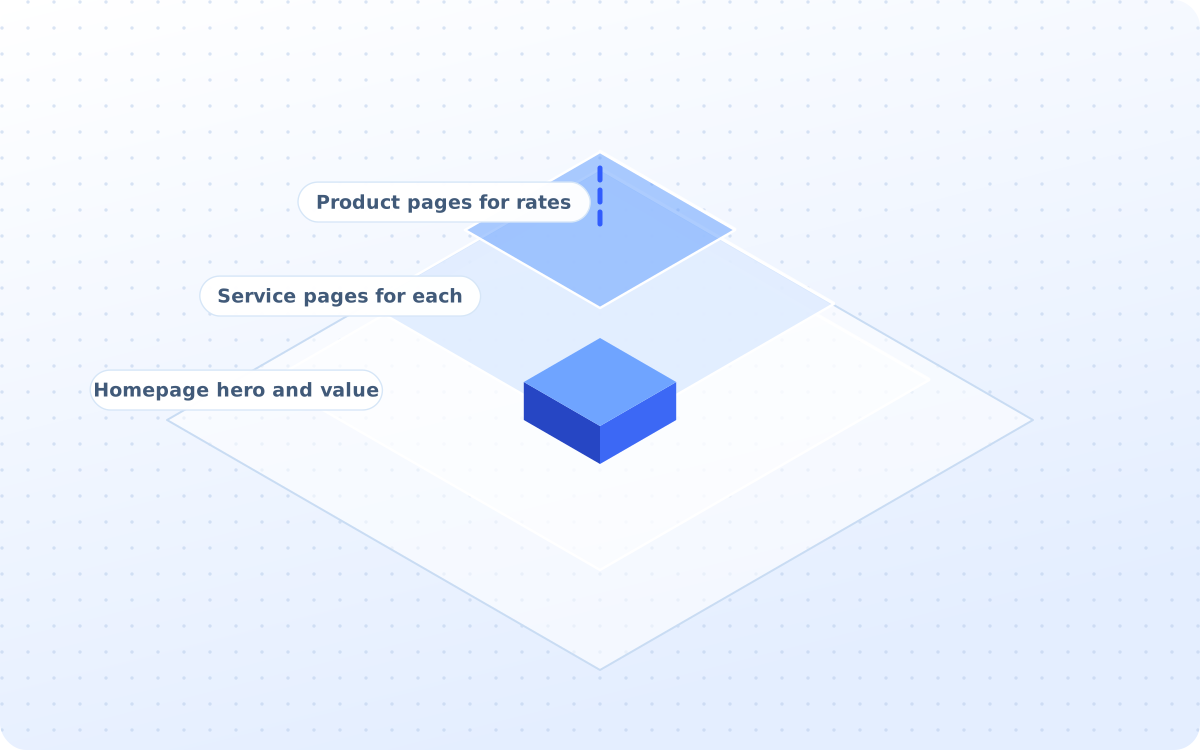
- Homepage hero and value proposition
- Service pages for each transfer type
- Product pages for rates and tracking
Corridors, audiences and B2B industries
Corridor pages answer the search a sender makes, from send money to Nigeria to send money to Mexico. Audience pages speak to migrant workers, students and families. Industry pages serve payroll and gig payouts.
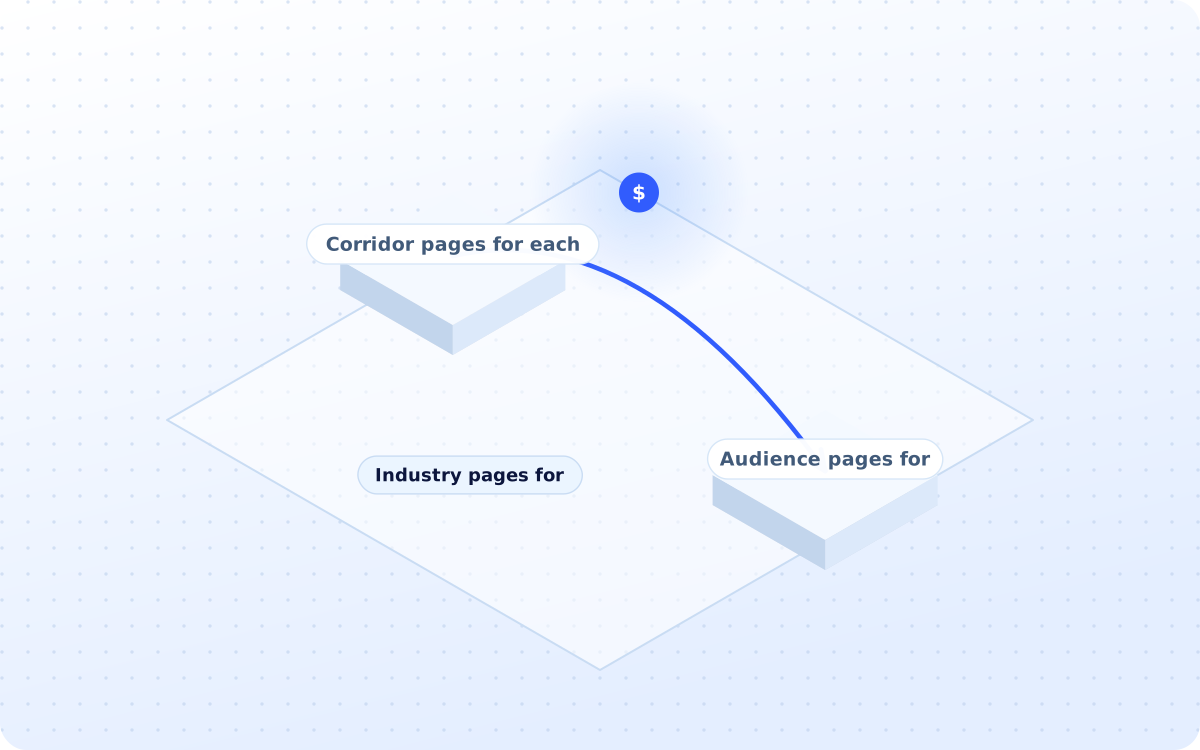
- Corridor pages for each send route
- Audience pages for diaspora senders
- Industry pages for payroll and NGOs
Landing pages and conversion copy
Paid landing pages match the ad that sent the click. Signup prompts, trust lines and objection handling sit where a sender hesitates. FAQ blocks answer the fee, limit and delivery time questions up front.
- Paid landing pages per campaign
- Signup and app download prompts
- FAQ blocks on fees and transfer limits
What lands in your inbox
Six files, all editable. The copy arrives ready for a developer to paste into the page template.
Final page copy
Every page written to its character ceiling, in the order your developer needs to build them.

Metadata for every page
A title and a description written to the pixel limit, with the send corridor named in both.
Heading hierarchy
One H1 for every page, with the subheading structure set to match documented search intent.
Internal link map
Which page links to which, with the descriptive anchor text written out and ready to paste.
CTA recommendations
The wording for every button and prompt, from the corridor page through to the signup screen.
FAQ copy blocks
Answers to the fee, rate, limit and delivery questions, written once and used across pages.
How the copy gets built
Four stages, run in order. The page list is agreed before a single headline is written down.
Search demand mapped to the page list
Keyword demand is grouped by corridor and intent, then matched against existing pages, missing pages and pages needing a complete rewrite.
- 01Keyword demand mapped to page type
- 02Corridor priority by send volume
- 03Existing page inventory and gaps
- 04Search intent checked per page
- 05Cannibalisation and duplicates found
The pages that a first-time sender reads
Homepage, service and corridor pages are drafted against the character ceiling for every slot, so the finished copy fits the built design.
- 01Homepage and value proposition copy
- 02Service page copy per transfer type
- 03Corridor pages by send country
- 04Audience and industry page copy
- 05Product pages on rates and security
Metadata, headings and the internal links
Every page leaves with its title, description, heading order and outbound anchor links specified, so nothing gets invented at build time.
- 01SEO title and description per page
- 02H1 to H3 order set on every page
- 03Keyword placement inside the headings
- 04Contextual links between services
- 05Corridor to product link paths
Calls to action, FAQs and the rewrites
Buttons, signup prompts and FAQ blocks are written last, then legacy pages are rewritten or consolidated so none compete against each other.
- 01CTA and signup prompt copy written
- 02Objection handling near the button
- 03FAQ blocks for fees and timing
- 04Legacy page rewrites and merges
- 05Microcopy for forms and errors
What actually gets written
Twelve groups of work sit behind the service, and these are the twelve a search engine sees.
Homepage copy
Hero, proposition and trust lines
Service pages
Bank, cash pickup and wallet sends
Corridor pages
One page per send and receive route
Product pages
Rates, tracking, security and the app
Audience pages
Migrant workers, families, students
Industry pages
Payroll, gig, NGO and marketplace payouts
Landing pages
Paid media and app download pages
SEO metadata
Titles and descriptions per page
Heading structure
H1 to H3 set by search intent
Internal linking
Corridor, product and service links
Conversion copy
Buttons, prompts and objection lines
Page rewrites
Legacy pages merged or rewritten
Three ways to buy this
One of these will fit, whether the site is already live, half-built or still just a domain name.
Complete website rewrite
Every page on the site rewritten, from the homepage through to the corridor pages and metadata.
- Fixed fee per page, agreed first
- Metadata and link map included
- Delivered in a developer-ready format
Corridor landing pages
Ten to thirty corridor pages, written to a single template, for teams adding new send routes.
- Priced per corridor page, not hourly
- One template, many send countries
- Metadata written for each route
Legacy content rewrite
Pages that already rank get rewritten, merged or corrected, without touching the rest of the site.
- Audit first, then a fixed page list
- Search intent corrected per page
- No new pages unless demand exists
Comparison. A general agency writes about fast, safe transfers. SEO website copywriting for remittance companies names the payout partner, the receive country and the cash pickup limit.
Position. Most sites need thirty corridor pages rather than a full rewrite, and that is the cheaper of the two.
- Licensing and AML questions go to a qualified adviser. We handle advertising and marketing compliance.
Audit line. If none of the three fits, a fixed-fee growth audit will say which one should.
Four steps to published
Two weeks of mapping, then writing. A corridor pack of ten pages is usually delivered inside three weeks.
Map the demand
WEEK 1Keyword and corridor data grouped into a page list, ranked by search demand and margin.
Draft the pages
WEEK 2-3Copy written slot by slot, to the character ceiling in the built design, page by page.
Wire it together
WEEK 3Metadata, heading order and internal links written, so pages point at one another on purpose.
Review and deliver
WEEK 4Every page read against the ceilings, then delivered in a format a developer can paste.
How results get reported
No client figure appears without written permission. These three are facts about how the work is sold.
Services that pair with this
Page copy earns the search. These three earn the click before it, and the transfer after it.
The articles that answer questions before a first-time sender is ready to open the app and send.
Learn moreEmail MarketingThe lifecycle messages that bring a quiet sender back for a second and then a third transfer.
Learn moreFull Stack SEOThe technical and off-page work that makes the finished copy rank once the pages are published.
Learn moreQuestions operators ask first
Answers come first. Where the honest answer is no, it says no and explains what to do instead.
Yes. SEO website copywriting for remittance companies is all that gets written, so corridor names, payout methods and verification steps are already understood.
Both. App-led operators need signup and app-download copy. Agent-led operators need branch, counter and cash pickup pages that a walk-in customer can follow.
Yes. Delivery time, payout method, document rules and fees differ by route, so each corridor page is written from that route's facts rather than a filled template.
Yes. One structure, many routes. The page shape stays consistent while payout options, delivery times and receiving fees are written per send country.
Copy explains verification, it never promises approval. Licensing and AML questions go to a qualified adviser. Advertising and marketing compliance is what gets handled.
Your current page list, the corridors you want to grow, any search data you already hold, and whoever signs off product and compliance wording internally.
A corridor pack of ten pages is usually written within three weeks. Ranking takes longer, and the first movement on organic sessions is normally a matter of months.
Copy does not change your stack. Page names, headings and link paths are handed over so your analytics events and search reports line up with the new structure.
Indirectly. Pages are named and tagged consistently, so registration, verification and first-transfer events can be read against the page a sender arrived on.
Partly. Page copy earns the first transfer. Repeat sending is moved far more by lifecycle email and messaging than by a page somebody reads once.
Each page is tracked to registration, verification and first transfer, so SEO website copywriting for remittance companies is judged on senders produced, not sessions.
Monthly: organic sessions by page, registrations, verification completion and first transfers, split by send country rather than reported as one blended total.
The page fee against first transfers from those pages over the following months. Organic pages keep earning, so the payback period matters more than month one.
By answering the fee, rate and delivery questions on the page itself, so a sender reaches the signup screen already convinced rather than still comparing rate boards.
Modestly. Clear payout and tracking pages reduce the anxious second transfer, though send frequency responds far more to lifecycle messaging than to page copy.
Operators, remittance apps and payout platforms on the roster
Marks appear once written permission is on file for each operator.
Start with the corridor page list
The pages your senders search for either exist or they do not. A fixed-fee growth audit will name the missing ones and their commercial value.
You keep the page list whether or not we work together.