AI automation consulting for MTOs
The reporting pack takes days to assemble every month. The KYC decision takes a trained human. Most operators automate neither, then wonder where all the marketing time actually went.
Remittance only · Automate the work · The KYC call stays human

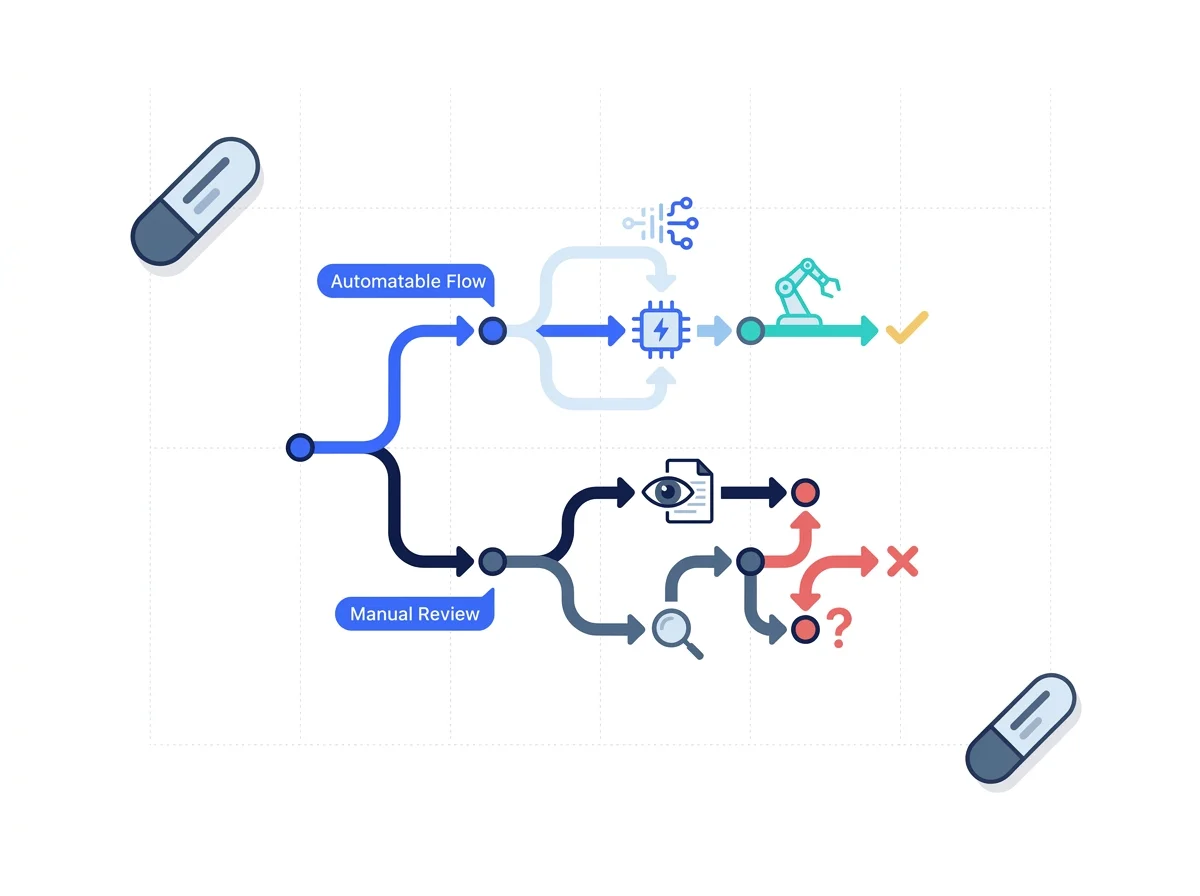
AI automation consulting for remittance companies finds the repetitive work in a marketing team and takes it away. The central principle should be: Automate repeatable work, not accountability. Reporting, briefs, UTM strings, ticket themes and translation drafts are all fair work for a machine. A KYC approval, a sanctions call or a rate promise is not, and never becomes one either.
What changes in the work
Nothing here replaces a person who signs something off. Four things change about the work around them.
Reports built by hand
Someone rebuilds the weekly deck from the same handful of tabs.
Reports built once
The collection, the summary and the alerts all run themselves.
AI bought, then parked
A licence gets paid for and nobody can name the workflow.
Use cases before tools
The task gets named first, then the tool that actually suits it.
Compliance finds out late
A drafted rate claim reaches a customer without any review.
Review built into it
Regulated claims stop at a human before anything is published.
Everything at once
A large platform gets bought before one workflow is proven.
Quick wins first
Low risk, high saving jobs get automated before the hard ones.
What this consulting covers
Four rows. The rule first, then the list of decisions that stay with a person, whatever happens.
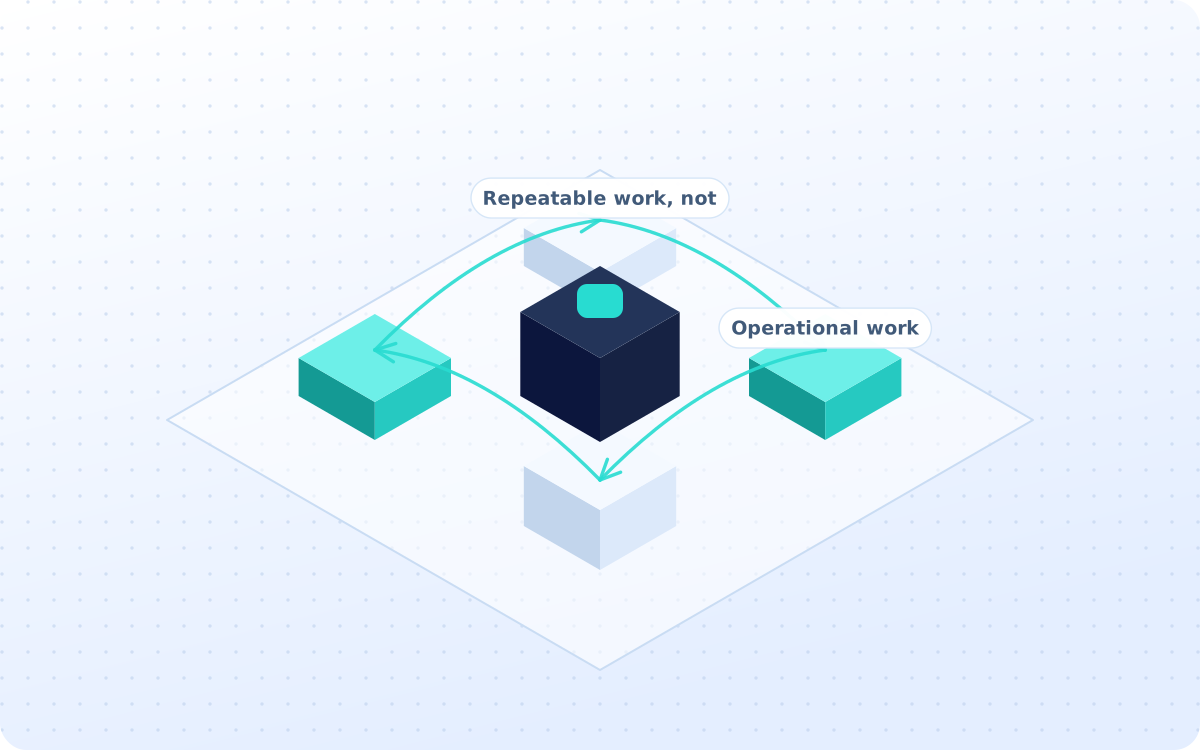
The rule the whole service runs on
There is one rule under it all. The central principle should be: Automate repeatable work, not accountability. The service should clearly distinguish operational automation from regulated or high-risk decisions.
- Repeatable work, not accountability
- Operational work separated first
- High-risk decisions left alone
What AI never decides on its own
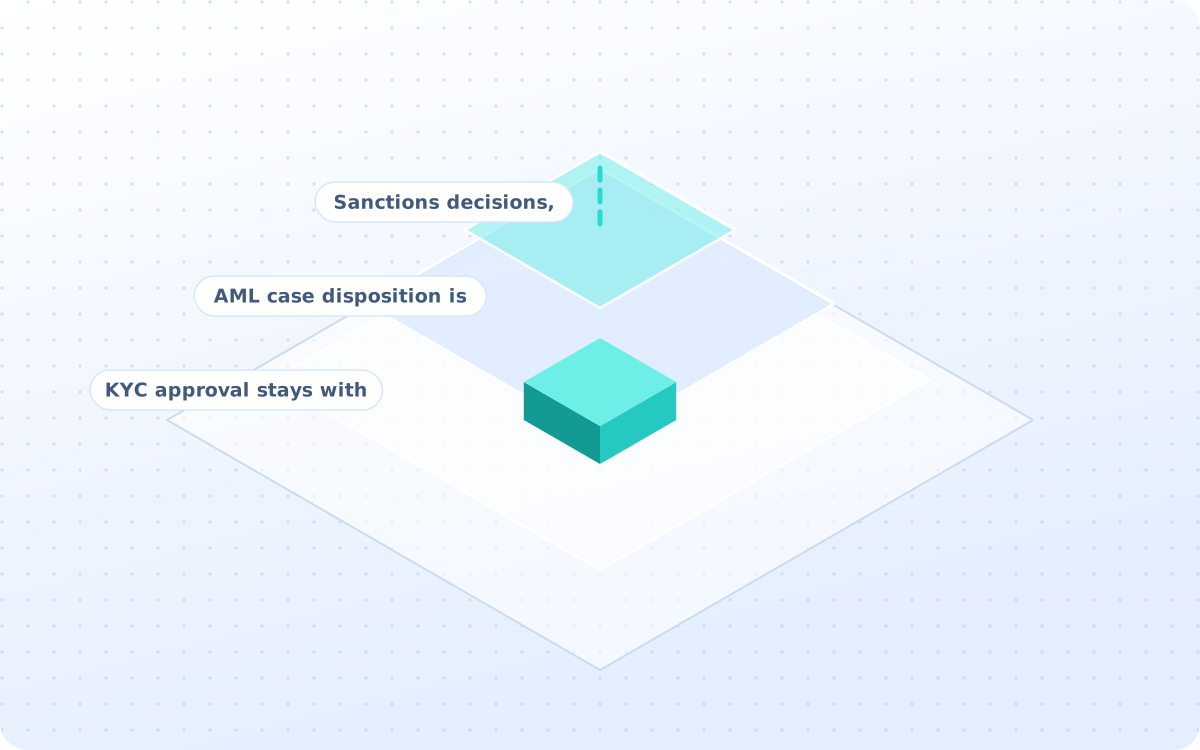
Some of these decisions are not for a model to make. AI should not independently make final decisions about: Customer KYC approval, AML case disposition, Sanctions decisions, Suspicious activity determinations
- KYC approval stays with people
- AML case disposition is excluded
- Sanctions decisions, never automated
The rest of that very same list
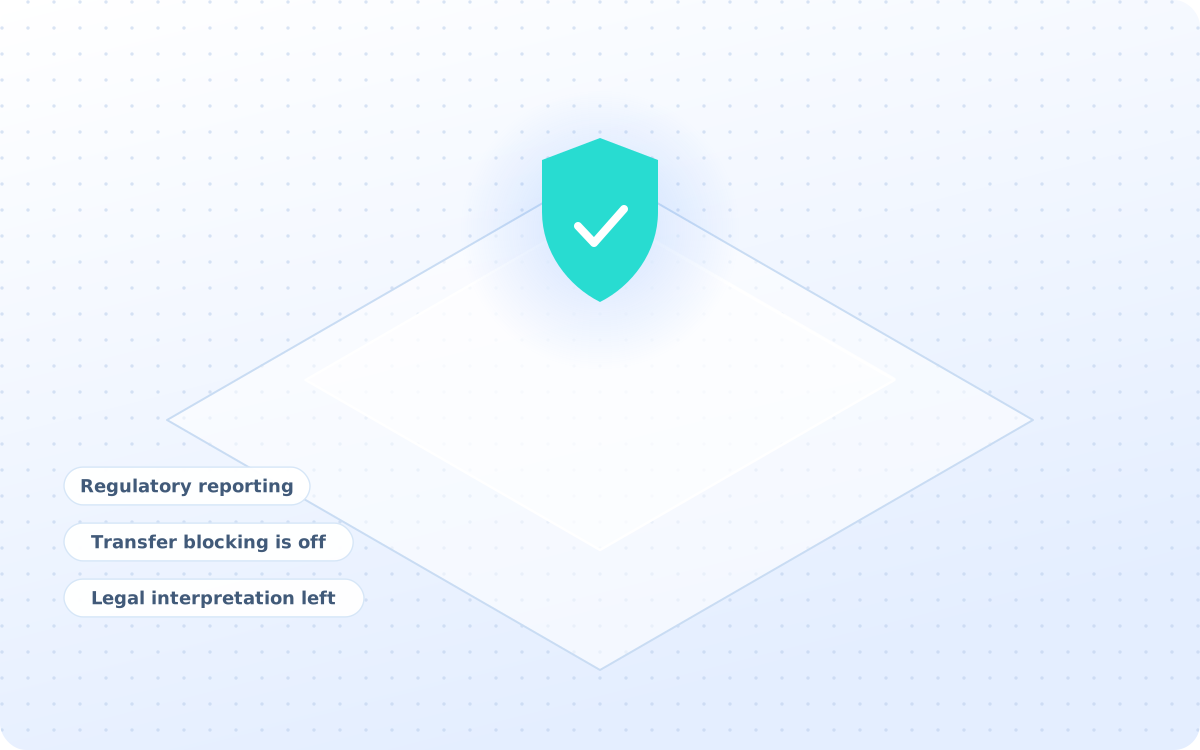
The list carries on, and none of it is a marketing decision, whatever a tool vendor happens to say about it. Regulatory reporting, Transfer blocking, Customer risk classification, Legal interpretation
- Regulatory reporting stays manual
- Transfer blocking is off limits
- Legal interpretation left to lawyers
The one exception, and whose it is
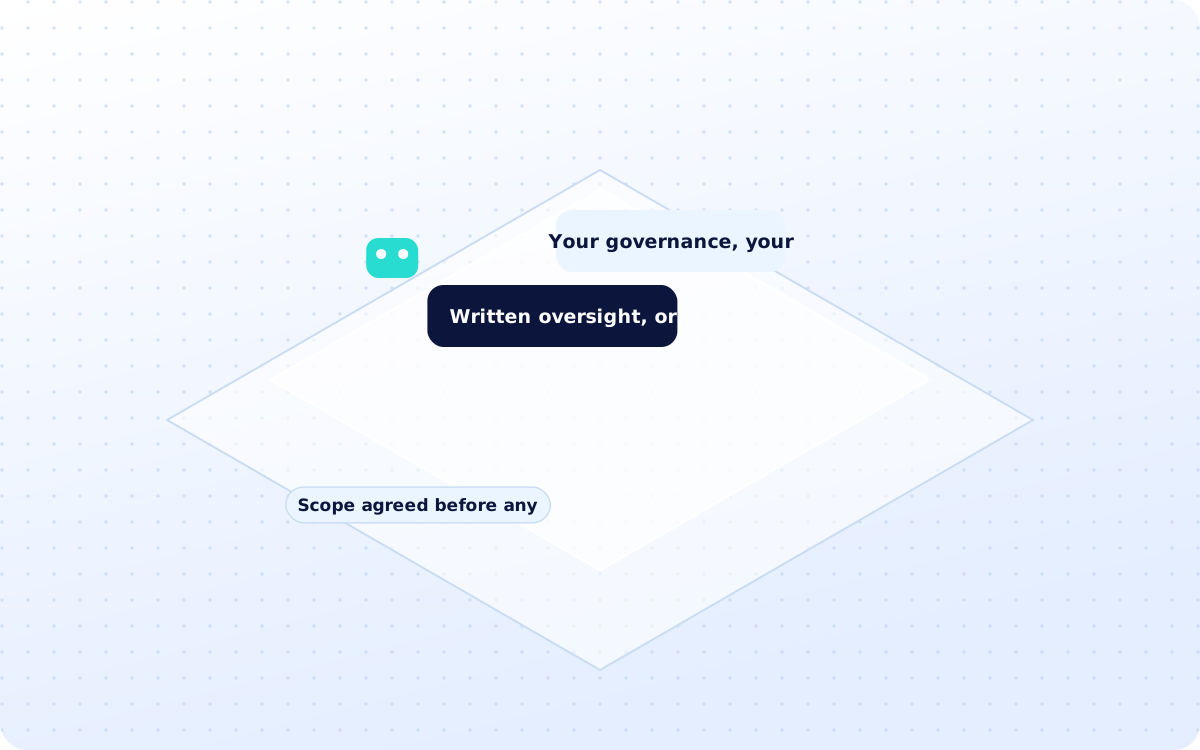
There is one exception, and it belongs to you rather than to us or to a vendor. unless the client's properly governed and approved systems explicitly support such use under qualified oversight.
- Your governance, your approval
- Written oversight, or nothing at all
- Scope agreed before any work starts
What you actually receive
Six artefacts, all of them yours to keep. The roadmap is the one with the money sitting on it.
AI readiness audit
The processes, the data, the team capability, the tools and the security, all scored honestly.

Opportunity map
Every repetitive task across marketing, content, paid media, reporting, CRM and support, all listed out.
ROI and effort matrix
Hours saved, cost reduction, revenue potential, complexity and risk, all ranked one against the other.
Governance framework
Approved tools, data rules, human review points, prompt guidance and who is allowed the access.
The AI risk matrix
Hallucination, wrong pricing, wrong exchange rates and false promises, and a control set beside each.
Implementation roadmap
Quick wins first, then the operational projects, then the advanced work that needs real controls.
How the work actually runs
Four stages, run in order. The risk work always happens before anything gets switched on at all.
Whether the team is actually ready for it
Processes, data, team capability, tools, security and the risk picture get scored before a single automation gets proposed for anything.
- 01Process maturity scored up front
- 02Data quality checked quite honestly
- 03Team capability, not just tools
- 04Security position taken seriously
- 05Risk noted before any of the benefit
Which of the jobs are truly repetitive
Marketing, content, paid media, reporting, CRM, support, research and creative operations get searched for the work that repeats every week.
- 01Campaign briefs and the QA lists
- 02Reporting and the UTM generation
- 03Ticket themes and review sorting
- 04Search term categorisation work
- 05Translation and resizing drafts
What is worth doing, and in what order
Hours saved, cost reduction, revenue potential, complexity, risk and implementation effort decide the order, not how interesting the tool looks.
- 01Hours saved, and counted properly
- 02Cost and revenue are both weighed
- 03Complexity estimated quite honestly
- 04Risk scored against the saving
- 05Quick wins separated from projects
What stops the whole thing going wrong
Approved tools, data rules, human review points, output validation and access control get written down before the first pilot ever runs.
- 01Approved tool list, in writing
- 02Sensitive data rules are set out
- 03Human review points are all named
- 04Output validation before any use
- 05Access control and documentation
What the work looks at
Twenty five groups of work sit behind the service, and these twelve carry most of the saving.
Readiness check
Process, data, tools, security
The ROI ranking
Hours, cost, revenue and risk
Workflow automation
Briefs, UTMs, QA lists, summaries
Content operations
Outlines, briefs, repurposing drafts
SEO assistance
Clustering, gaps, link suggestions
Reporting automation
Collection, summaries and alerts
Customer insight
Reviews, tickets, survey themes
CRM automation
Segments, triggers and reactivation
Knowledge base
Product, brand, corridor, SOPs
AI governance
Tools, data, review, validation
Risk assessment
Pricing, rates, claims, bias
Three ways to buy this
One of these will fit, whether AI is already in the building or still just an argument.
Full automation review
The readiness audit, the opportunity map, the ROI matrix and the governance framework, in one pass.
- Fixed fee, agreed before we start
- Five weeks from audit to roadmap
- No decision automation at all, ever
Single automation pilot
One workflow, built and proven, when the argument is about whether any of this works at all.
- One fixed fee, three weeks total
- One workflow, measured properly
- Credited if the full review follows
Ongoing rollout support
Somebody holding the governance and the review points in place while the habit actually forms.
- Monthly fee, six months minimum
- Governance reviewed every month
- Human review points kept honest
Comparison. A general AI consultancy will demo a platform. AI automation consulting for remittance companies starts with the KYC decision it will never touch.
Position. Most operators want the reporting hours back, not a model making commercial promises for them.
- KYC, AML and sanctions decisions stay with your governed systems and your trained people.
Audit line. If none of the three fits, a fixed-fee growth audit will say which one should.
Four steps to the plan
Five weeks to the roadmap. Nothing gets automated before the risk against it has been written down.
Score the ground
WEEK 1Processes, data, tools and security, marked against what an automation would actually need.
Find the repeats
WEEK 2Every task done the same way each week, across marketing, content, reporting and support.
Rank the saving
WEEK 3-4Hours, cost, revenue and risk weighed together, so the order is arguable rather than assumed.
Set the guards
WEEK 5Approved tools, human review points and the escalation rule, written before any pilot goes live.
How results get reported
No client figure appears without written permission. These three are facts about how the work is run.
Services that pair with this
Automation makes the work faster. These three say whether the work was right in the first place.
The website review that finds the pages worth writing before any of the drafting gets automated.
Learn morePaid Ads AuditThe account review that finds the alerts worth building, and the ones nobody would ever read.
Learn morePaid Ads Audit (Paid Growth)The campaign-side version of it, for when the spend needs an answer before the tooling does.
Learn moreQuestions operators ask first
Answers come first. Where the honest answer is no, it says no and explains what to do instead.
Both. An agent-led operator usually has more repetitive work, not less, because the counter reporting and the agent queries all arrive by hand.
Yes. The point is to automate around what you already own, not to buy a platform that duplicates the CRM you are still paying for.
Yes. Corridor content, corridor FAQs and corridor reporting are the obvious candidates, though the local claims still need a qualified human to read them.
Yes. AI automation consulting for remittance companies is the only kind run, which is why the KYC and sanctions boundary is written before anything else.
The service should clearly distinguish operational automation from regulated or high-risk decisions. Advertising compliance is ours, the KYC call is not.
The tools you already pay for, the reports somebody rebuilds by hand each week, and your existing rules on customer data.
Five weeks to the roadmap, or three weeks for a single pilot workflow. The reporting automations usually land first because the risk is lowest.
It can read from them for reporting. It does not decide with them, which is the difference the governance framework exists to hold in place.
Yes, and that is usually where the saving is. The same corridor content, FAQs and reports get produced once and adapted rather than written again.
Yes. Segmentation, lifecycle triggers and reactivation identification are all listed as candidates, with the message itself still written and approved by a person.
Automation buys back campaign time, and campaign time buys tests. The ROI matrix scores hours saved against the revenue that time can be pointed at.
Hours saved per workflow, cost removed per tool, and the error rate before and after. Nothing gets counted that was not measured beforehand.
By giving the team back the hours it currently spends assembling reports, and by getting corridor content and FAQs out faster than a manual process can.
Hours returned to the team, against the cost of the tools. AI automation consulting for remittance companies pays back on reporting long before anything clever.
Lifecycle campaigns stop waiting on somebody with spare time. Segments, triggers and drafts get prepared automatically, then a person checks and sends them.
Operators, remittance apps and payout platforms on the roster
Marks appear once written permission is on file for each operator.
Automate the work, not the call
The reporting hours are worth saving. A model quoting an exchange rate is not worth the risk. A fixed-fee growth audit will separate the two.
You keep the opportunity map whether or not you build anything.