CONSULTING

Website audit for remittance companies

Traffic arrives, the rate looks fine, and almost nobody registers. An audit that names the three pages responsible is worth more than another list of two hundred small fixes.

Remittance only · Ranked by revenue impact · Fixed fee, fixed scope

Website reviewed for technical, conversion and trust problems

A website audit for remittance companies reviews seventeen areas, from technical health and SEO through to trust, corridor architecture, analytics and the way fees and rates are presented. Every finding is walked against the path a sender takes, then sorted into critical fixes, quick wins, growth improvements, technical projects and redesign work, so the first month of the plan is obvious.

BEFORE AND AFTER

What changes after the audit

Most website audits arrive as a spreadsheet of two hundred rows in no order at all. Four things change.

Before

Findings by category

Everything sorted by SEO, UX and tech, and nothing by value.

After

Findings by value

Critical fixes first, then the quick wins that pay this month.

Before

Corridor pages ignored

The audit reads the homepage and stops somewhere near it.

After

Corridor pages read

Every send route gets checked for overlap and thin content.

Before

Trust never mentioned

Nobody checks whether a sender can find the licence details.

After

Trust read as a page

Entity, fees, support and security judged as one impression.

Before

No plan attached

The report lands and the team argues about where to start.

After

A plan attached

Thirty, sixty and ninety days, with owners named on each.

WHAT IS INCLUDED

What the whole audit covers

Four rows of work, run in order. Nothing gets recommended without a real number sitting behind it.

The one question it has to answer

An audit that does not answer one question is a document nobody reads. The audit should answer: Is the website capable of turning qualified demand into trust, registration and transaction activity?

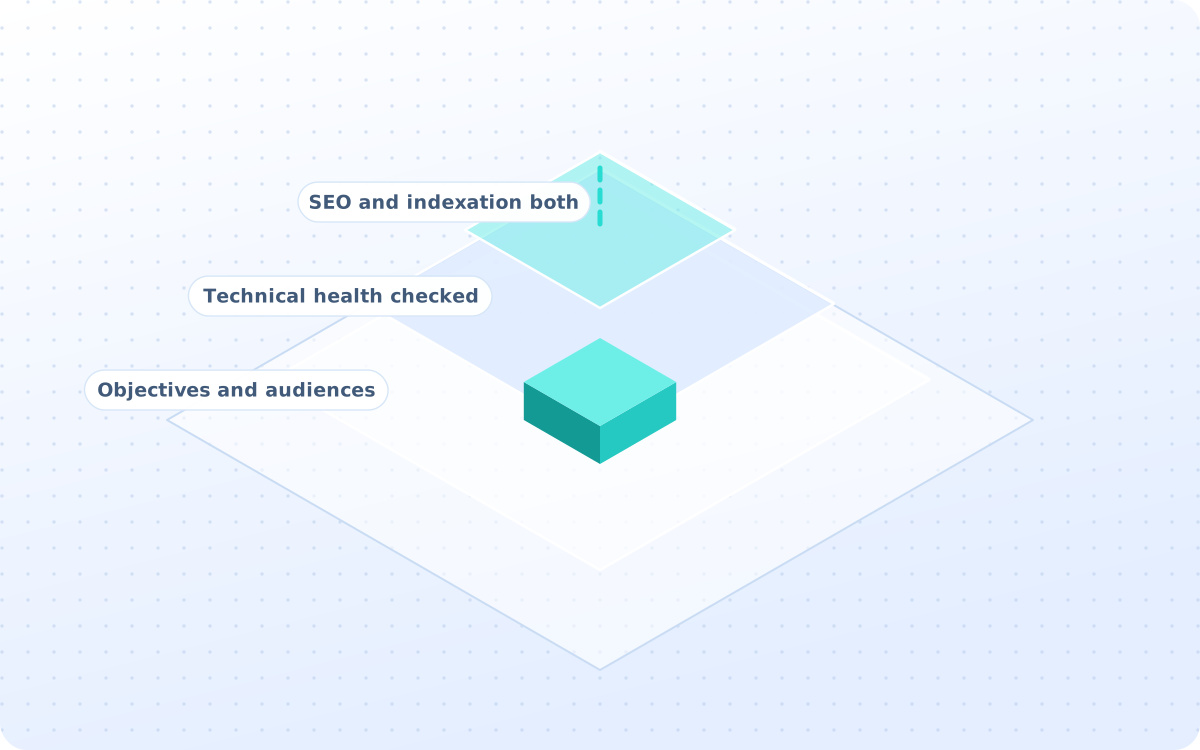
  • Objectives and audiences both read
  • Technical health checked first
  • SEO and indexation both reviewed

The actual path a sender takes

The audit follows the same path a sender takes, and marks the exact point where each one stops dead. Map: Landing → Understand → Trust → Register → Verify → Transfer and identify friction.

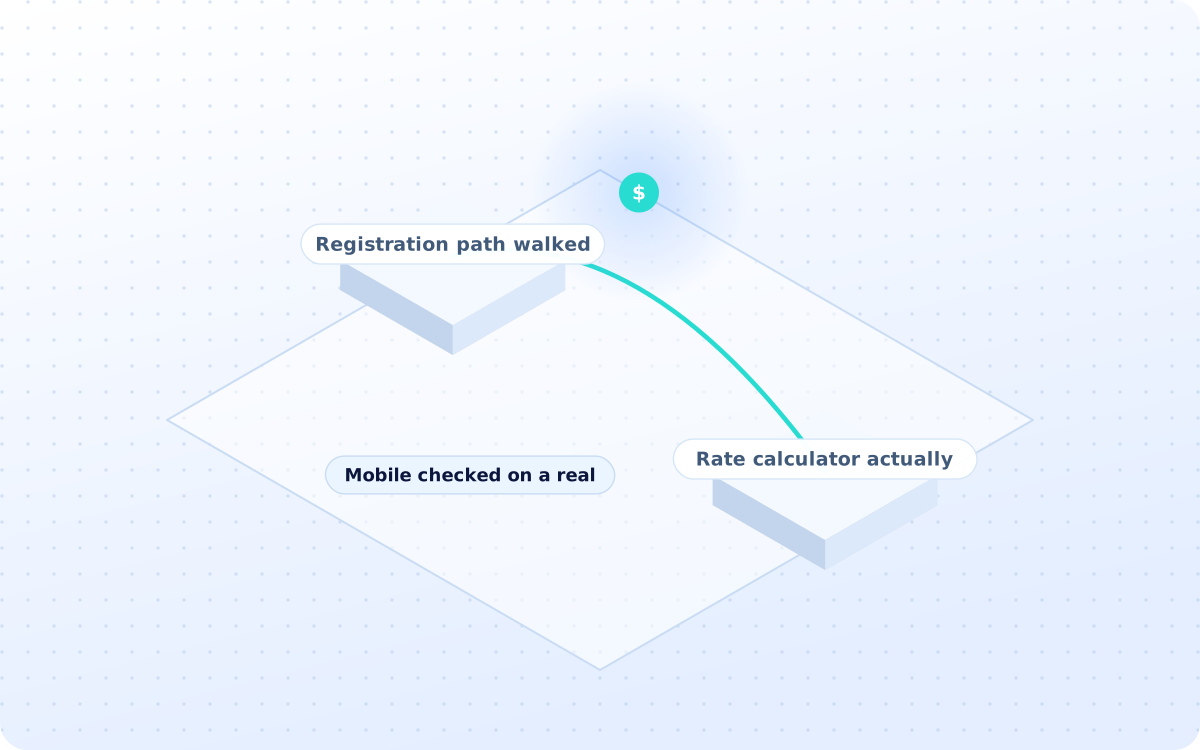
  • Registration path walked twice
  • Rate calculator actually tried out
  • Mobile checked on a real phone

What a careful reader actually sees

Fees, exchange rate wording, the legal entity and the complaints route all get read the way a customer would. Review whether regulated or sensitive information appears clearly and consistently.

  • Fee and rate wording all checked
  • Legal entity made easy to find
  • Complaints route actually there

What to do first on Monday morning

Nobody needs a list of two hundred things to go and fix all at once. Classify recommendations into: Critical fixes; Quick wins; Growth improvements; Technical projects; Strategic redesign opportunities

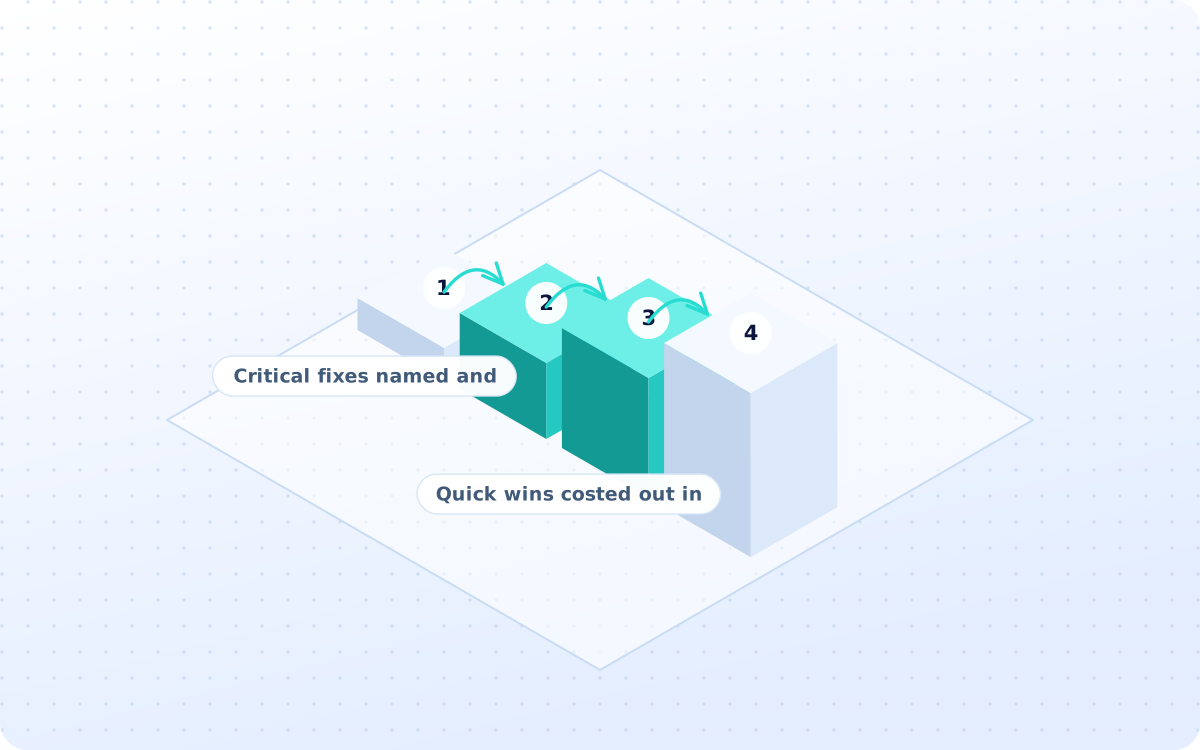
  • Critical fixes named and owned
  • Quick wins costed out in hours
  • Redesign work flagged, not hidden
DELIVERABLES

What you actually receive

Six artefacts, all of them yours to keep. The roadmap is the one you will actually use.

ONE-OFF

Technical audit

What exactly is broken, what is slow, and what breaks on a perfectly ordinary mid-range handset.

ONE-OFF

SEO and content audit

What ranks today, what should be ranking, and which pages are quietly competing for the same term.

ONE-OFF

Conversion audit

Where the registration path leaks, screen by screen, with the size of each single leak marked.

ONE-OFF

The trust audit

Whether the first-time sender can actually find out who you are and what it will cost them.

ONE-OFF

Competitor benchmark

How three competitors handle the very same corridor, page by page and side by side with yours.

ONE-OFF

Prioritised action plan

Thirty, sixty and ninety days, with an owner and a rough cost against each single line item.

HOW IT WORKS

How the whole audit runs

Four stages, run in order. The roadmap is written before the report itself ever gets handed over.

What the machines can and cannot see

Speed, indexation, redirects, forms and structured data all get checked first, because a page nobody can reach is not a conversion problem.

Workstreams
  1. 01Speed measured on mobile first
  2. 02Crawl and indexation both checked
  3. 03Redirects and canonicals all read
  4. 04Forms tested on actual devices
  5. 05Structured data validated as well
CAPABILITIES

What the audit looks at

Seventeen areas sit behind the service, and these twelve are the ones that usually pay for it.

01

Strategy review

Objectives, audiences and goals

02

Technical SEO

Crawling, indexing and canonicals

03

Content audit

Homepage through to the FAQs

04

Search intent

Whether the page answers it all

05

The mobile UX

Thumbs, and not mouse pointers

06

Corridor pages

Overlap, thin pages, duplication

07

Analytics review

Whether the numbers are real

08

Paid readiness

Can the page take the traffic

09

Competitor look

Three rivals, the same corridor

WAYS TO BUY

Three ways to buy this

One of these will fit, whether the site is brand new or has been patched for years now.

Complete website audit

All seventeen of the audit areas, the benchmark and the roadmap, all delivered in one pass.

  • Fixed fee, agreed before we start
  • Three weeks from start to finish
  • The roadmap is included, not extra

Focused conversion audit

Only the registration path and the trust content, but looked at in some real depth instead.

  • One fixed fee, and one week total
  • Best when the budget is quite tight
  • Upgrades into the full audit later

Continuous audit cycle

The very same audit, run every quarter, so the roadmap stays honest as the site keeps changing.

  • Quarterly fee, cancel at any time
  • Progress measured against the last
  • Roadmap rewritten each quarter

Comparison. A general agency will send you a spreadsheet. A website audit for remittance companies sends a plan with owners, costs and an order to work in.

Position. Most operators need the corridor pages and the registration path fixed, and that is a fortnight.

Where this stops
  • Licensing and AML questions go to a qualified adviser. We handle advertising and marketing compliance.

Audit line. If none of the three fits, a fixed-fee growth audit will say which one should.

PROCESS

Four steps to the plan

Three weeks from end to end. The findings arrive weekly, so nothing has to wait for the report.

01

Crawl the site

WEEK 1

Speed, indexation, errors and forms all checked before anybody opens a design file.

02

Read the pages

WEEK 1-2

Homepage, corridor and rate content are read cold, without any of your product knowledge.

03

Walk the funnel

WEEK 2

Somebody registers, verifies and stops, with every point of friction written down properly.

04

Rank the findings

WEEK 3

Bands, owners, costs and a thirty, sixty and ninety day plan, handed over to your team.

WHAT WE CLAIM

How results get reported

No client figure appears without written permission. These three are facts about how the work is run.

17AUDIT AREASSeventeen areas are reviewed, from strategy through to the priority roadmap.
6FUNNEL STEPSSix sequential steps are walked, from landing page through to transfer.
5PRIORITY BANDSFive bands sort the findings, critical fixes through to redesign work.
FAQ

Questions operators ask first

Answers come first. Where the honest answer is no, it says no and explains what to do instead.

Operators, remittance apps and payout platforms on the roster

  • PayaLink
  • SendBridge
  • SwiftLoom Pay
  • Transfeo
  • Transfera Loop
  • VaultBridge
  • Alta Remit
  • Corridor Pay

Marks appear once written permission is on file for each operator.

NEXT STEP

Find out what is actually broken

A fixed fee and three weeks delivers the findings, the order, the owners and the costs, with nothing on the list that needs a redesign first.

You keep the audit and the roadmap whether or not we continue.

Scroll to Top