AI & AUTOMATION

CRM implementation for remittance apps

Marketing knows who registered. Support knows who complained. Nobody knows whether they are the same person, which is why the reactivation campaign keeps going to a customer who left.

Remittance only · One lifecycle model · Only data you can justify

Customer record layer that every other system depends on

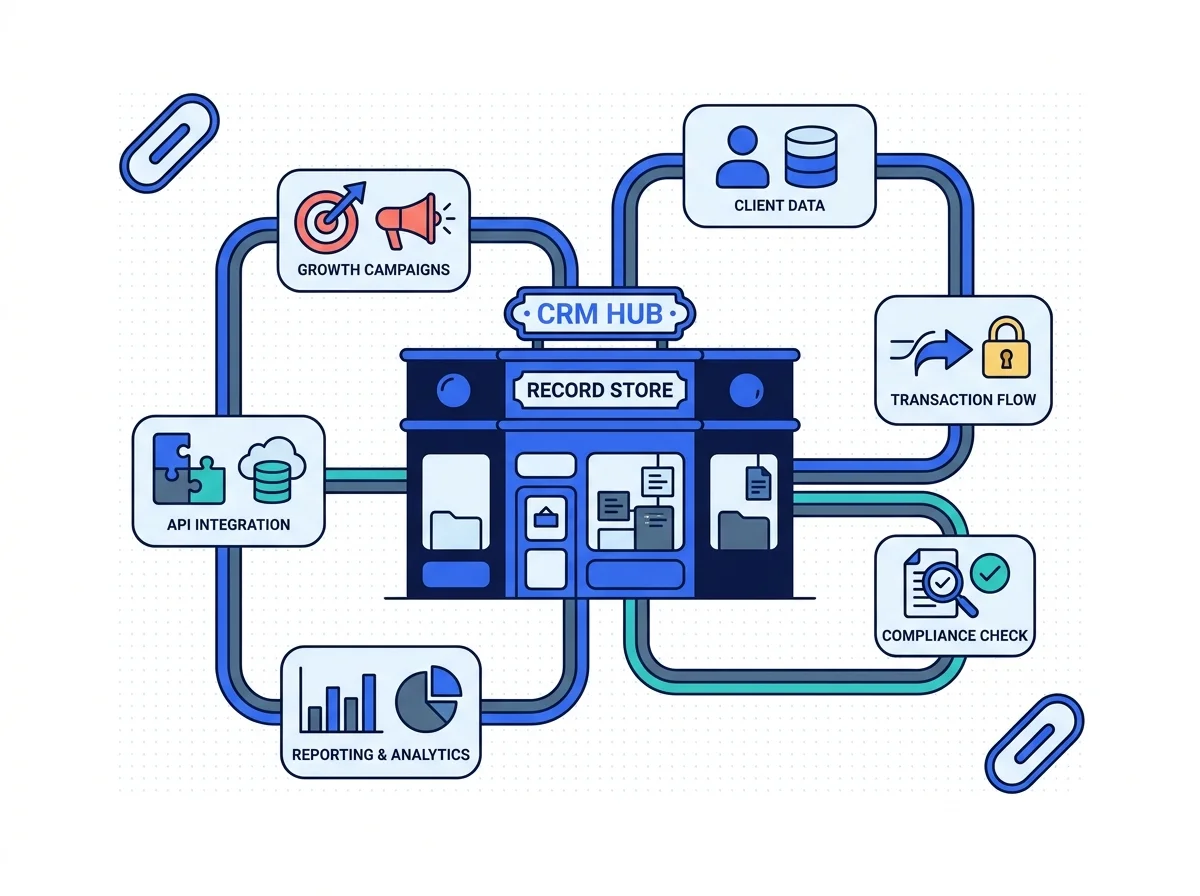
CRM implementation for remittance companies is a data model before it is a tool. Design, implement and integrate a CRM that gives marketing, sales, customer support and lifecycle teams a structured view of customer and partner relationships. Sensitive transaction data should only enter the CRM where there is a justified business, legal and security basis. Everything else follows from that.

BEFORE AND AFTER

What changes in the data

Buying the platform is the easy part. Deciding what actually belongs inside it is the whole job.

Before

Three lists, no truth

Marketing, support and finance each keep their own contact list.

After

One record per person

The same customer appears once, with every interaction on it.

Before

Everything gets copied in

Full transaction histories sit in a marketing tool for no reason.

After

Only what earns a place

Lifecycle state and consent go in, the ledger stays where it is.

Before

Campaigns go nowhere

Nobody can say which campaign produced a first transfer.

After

Campaigns join up

Campaign, lead, lifecycle and outcome sit on one connected line.

Before

Agent leads in a spreadsheet

A payout partner enquiry sits in an inbox until it goes cold.

After

A pipeline with stages

Lead, qualified, discovery, proposal, review, then won or lost.

WHAT IS INCLUDED

What the CRM work covers

Four rows. What actually gets built, the lifecycle stages, and the two rules about the customer data.

Customer record layer linking profile, transfers and campaign attribution

What this service actually builds

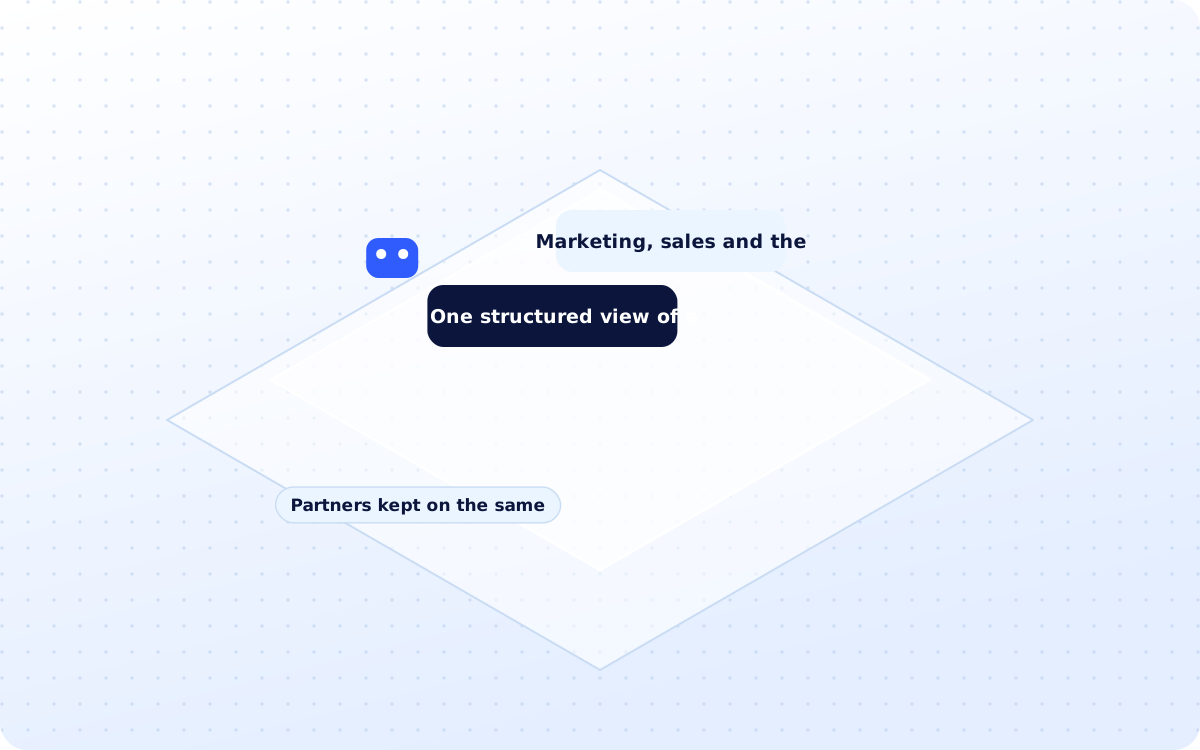
A CRM is not a mailing list with tabs. Design, implement and integrate a CRM that gives marketing, sales, customer support and lifecycle teams a structured view of customer and partner relationships.

  • Marketing, sales and the support
  • One structured view of a customer
  • Partners kept on the same record

The stages a customer moves through

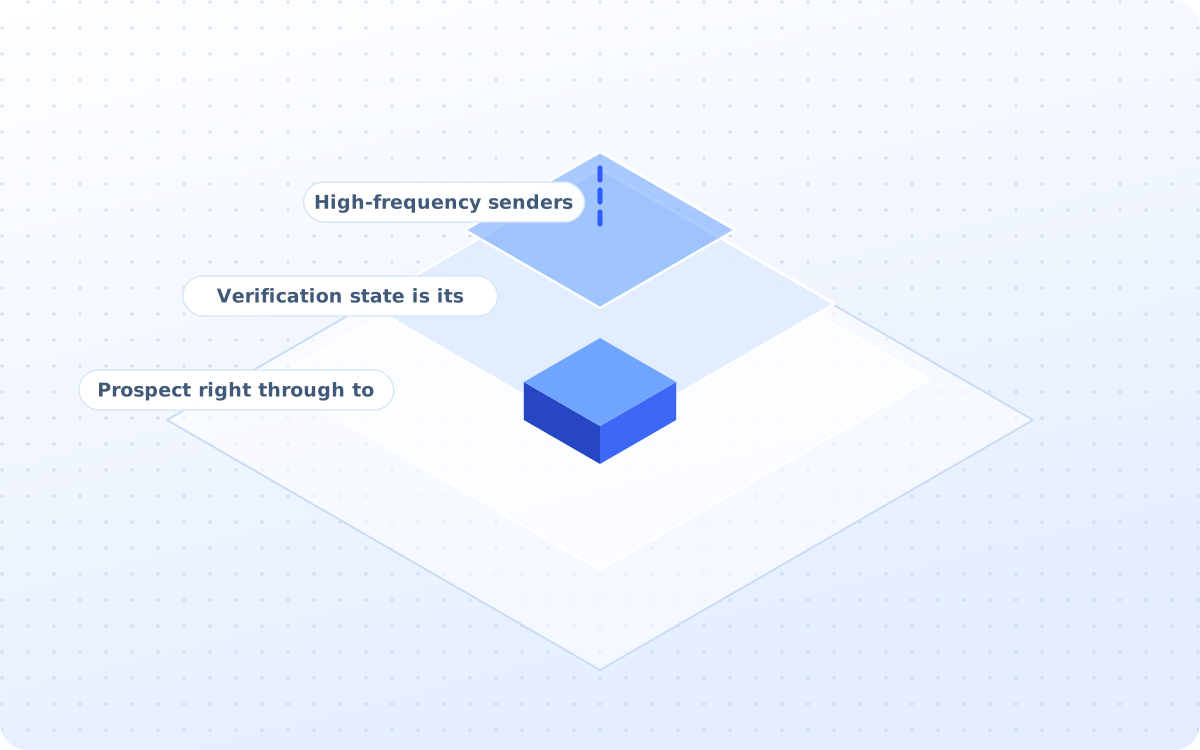
A CRM that cannot tell a verified customer from an active one is an address book with a logo. Nine stages sort that. Prospect, Registered, Verification started, Verified, First-transfer customer, Active customer

  • Prospect right through to dormant
  • Verification state is its own stage
  • High-frequency senders get marked

What should never go into the CRM

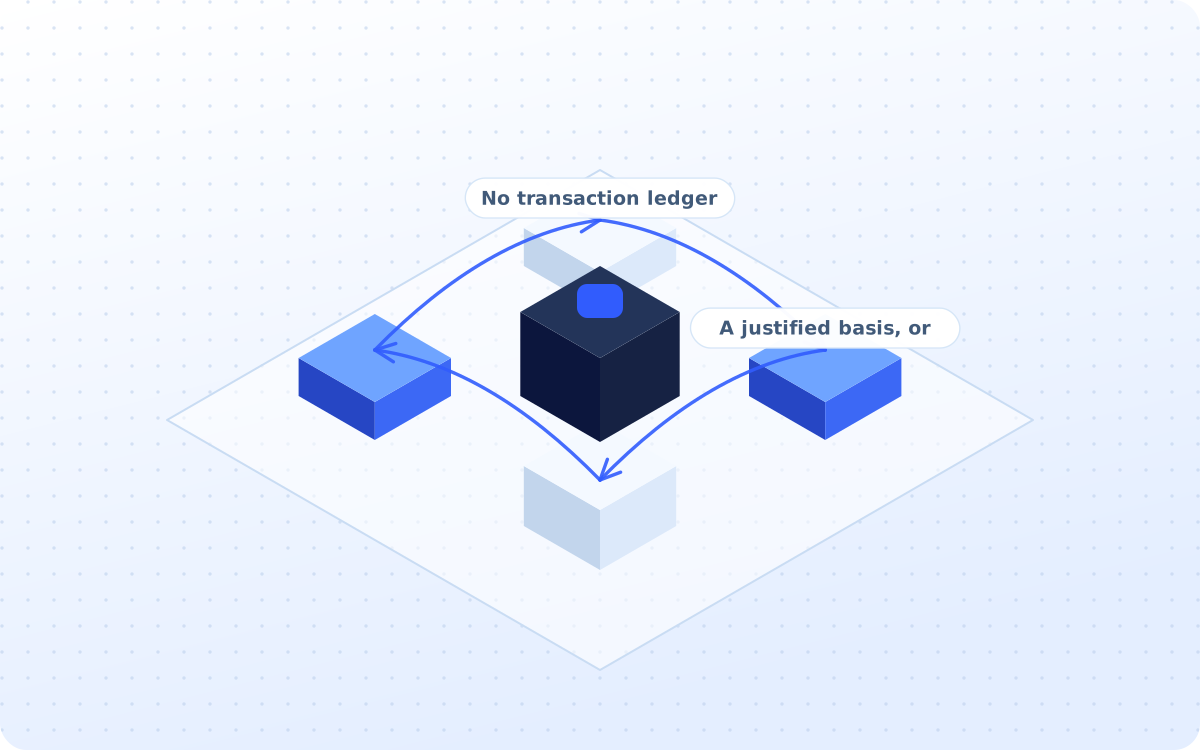
The CRM does not need to know what somebody sent last Tuesday, or to whom. Sensitive transaction data should only enter the CRM where there is a justified business, legal and security basis.

  • No transaction ledger copied inside
  • A justified basis, or none of it
  • Consent recorded for each channel

The other rule, and attribution

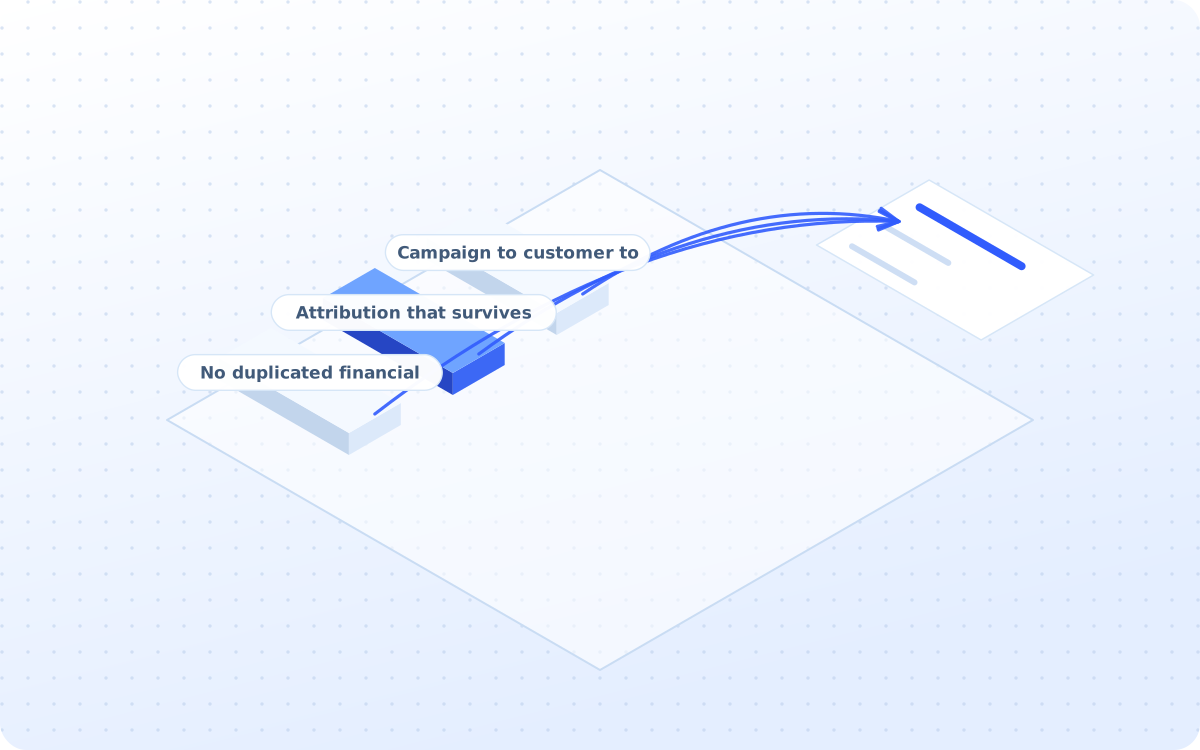
Two more rules apply, and the second one is what makes attribution work at all. Avoid unnecessary replication of sensitive financial records. Campaign → Lead/Customer → Lifecycle → Commercial Outcome

  • Campaign to customer to outcome
  • Attribution that survives audit
  • No duplicated financial records
DELIVERABLES

What you actually receive

Six artefacts, all of them yours to keep. The data model is the one that outlives all of us.

ONE-OFF

Requirements document

The users, the teams, the customer types, the integrations and the reporting that anybody needs.

ONE-OFF

Platform recommendation

Which platform suits the size, the model and the integration list, with the reasoning attached.

ONE-OFF

The CRM data model

Contacts, companies, partners and customers, with the fields that earn their place on each one.

ONE-OFF

Lifecycle model

Prospect to dormant, with the trigger that moves a customer from one stage to the next one.

ONE-OFF

B2B pipeline setup

Agent, payroll, payout and API partner opportunities, each moving through the same six named stages.

ONGOING

Dashboards and SOPs

Marketing and sales reporting, plus the written procedures so that the team actually uses it.

HOW IT WORKS

How the CRM build runs

Four stages, run in order. The data model gets agreed before any single platform ever gets bought.

Who will actually use it, and for what

Users, teams, customer types, partner types, lifecycle stages, integrations and reporting all get defined before a single platform gets picked.

Workstreams
  1. 01Users and teams are listed first
  2. 02Customer and partner types named
  3. 03Integrations all named up front
  4. 04Reporting decided before build
  5. 05Platform chosen last, not first
CAPABILITIES

What the service covers

Twenty two groups of work sit behind the service, and these twelve are the ones you feel.

01

Requirements work

Users, teams, data, reporting

02

Platform selection

Fit, integrations and the cost

03

CRM architecture

Contacts, companies and partners

04

Lifecycle design

Prospect right through to dormant

05

B2B pipeline

Agents, payroll, payout, API

06

Field architecture

Only fields that earn a place

07

Website integration

Forms, enquiries, signup activity

08

Platform integration

Verification and first-transfer state

09

Lifecycle automation

KYC abandoned, verified, dormant

10

Audience segments

Corridor, stage and the product

11

The attribution

Campaign to customer to outcome

12

Data governance

Access, retention, deletion, audit

WAYS TO BUY

Three ways to buy this

One of these will fit, whether the CRM is empty, wrong or simply is not there at all yet.

Full CRM implementation

The requirements, the platform, the data model, the integrations and the dashboards, in one project.

  • Fixed fee, agreed before we start
  • Ten weeks from the scope to live
  • Migration and training included

Data architecture only

Just the data model and the fields, when the platform is bought and already half filled in.

  • One fixed fee, four weeks total
  • The model, and nothing else at all
  • Credited if the full build follows

Ongoing CRM operations

The automations, the dashboards and the data quality all checked and corrected at every month end.

  • Monthly fee, six months minimum
  • Duplicate rate watched monthly
  • Data completeness reported too

Comparison. A general CRM partner will install the platform and hand over the keys. CRM implementation for remittance companies starts with which fields belong in it at all.

Position. Most operators have several customer lists and no agreement on which one is the right one.

Where this stops
  • Sensitive transaction data stays out unless there is a justified basis for holding it.

Audit line. If none of the three fits, a fixed-fee growth audit will say which one should.

PROCESS

Four steps to a live CRM

Ten weeks to live. The data model gets signed off before anybody logs into anything at all.

01

Ask the questions

WEEK 1-2

Users, teams, customer types, integrations and reporting, written down before shopping starts.

02

Build the model

WEEK 3-5

Contacts, companies, partners and the lifecycle stages, with a field list that survives review.

03

Connect the rest

WEEK 6-8

Website, app, verification state, marketing tools and the helpdesk, wired in one at a time.

04

Train the team

WEEK 9-10

User training, admin training, the SOPs and the governance guidance, so adoption actually happens.

WHAT WE CLAIM

How results get reported

No client figure appears without written permission. These three are facts about how the work is run.

22WORK GROUPSTwenty two work groups comprise the service, discovery through to training.
10KPIS TRACKEDTen indicators are reported, from the CRM adoption to attribution coverage.
6PIPELINE STAGESSix pipeline stages, running from qualification through to won or lost.
FAQ

Questions operators ask first

Answers come first. Where the honest answer is no, it says no and explains what to do instead.

Operators, remittance apps and payout platforms on the roster

  • VaultBridge
  • Alta Remit
  • Corridor Pay
  • Corriva Pay
  • Diaspora FX
  • EchoSend
  • HaloSend
  • Kora Send

Marks appear once written permission is on file for each operator.

NEXT STEP

Decide the data before the tool

A CRM with the wrong fields costs more to untangle than it cost to build. A fixed-fee growth audit will say precisely what belongs in yours.

You keep the data model whether or not you switch platform.

Scroll to Top