AI chatbots for remittance companies
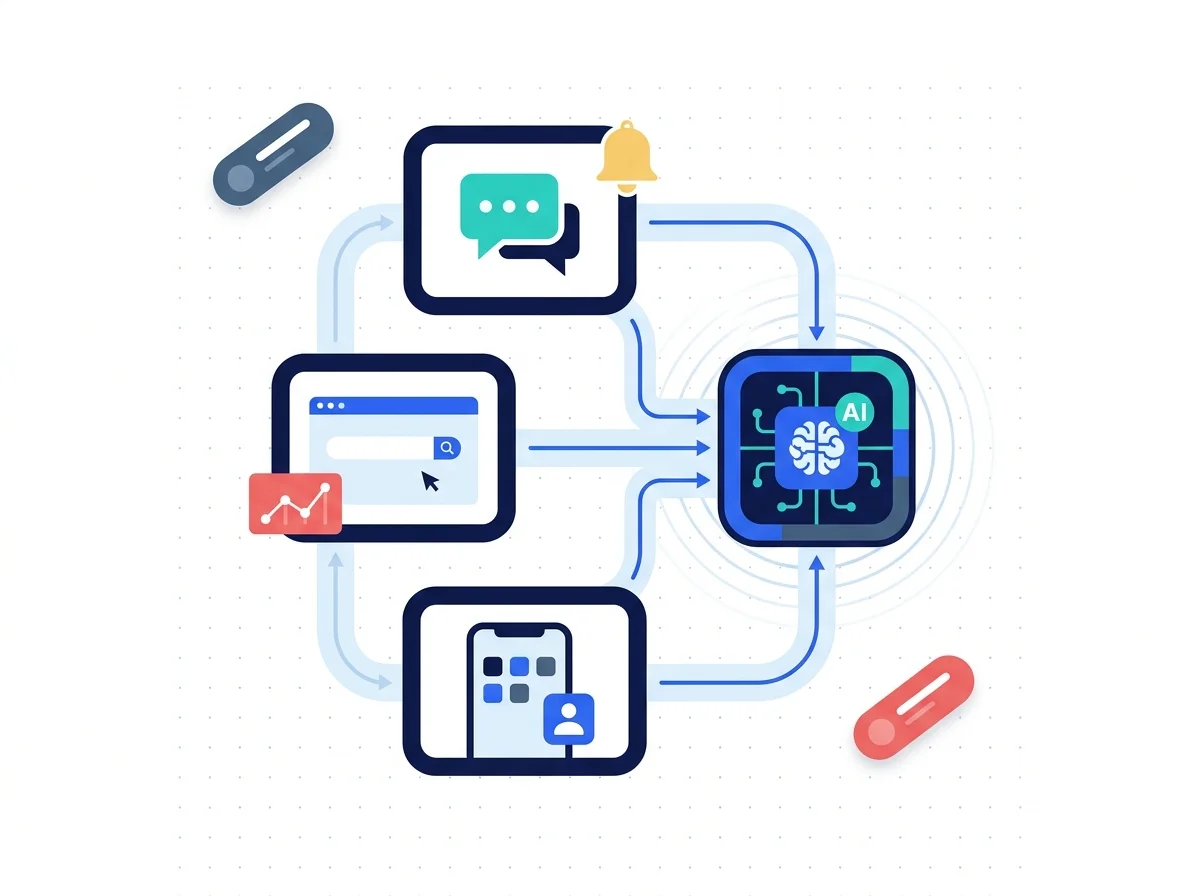
The same pricing question gets answered on the website, inside the app and over WhatsApp. Three different answers is not a support problem, it is a knowledge base problem.
Remittance only · One knowledge base · Rates are pulled, never invented

AI chatbots for remittance companies only work with one approved answer behind them. Provide a consistent AI-assisted customer experience across website, mobile app and messaging channels using one governed knowledge and customer-service framework. Fees, corridors and transfer status come from systems of record, never from a guess. Complaints, disputes and the verification decision all go to a person, as always.
What changes in support
A chatbot that invents an exchange rate costs more than it ever saves. Four things change here.
Three answers, one question
The app, the site and WhatsApp each say something different.
One answer, three doors
One approved knowledge base sits behind all of the channels.
The bot invents a rate
A number appears in the chat that nobody can actually trace.
The bot fetches a rate
Fees, rates and status all come from the system of record.
The bot decides KYC
A customer gets told their document will probably be fine.
The bot explains KYC
Steps, documents and retries explained, with the decision left alone.
English only, at speed
Half the diaspora reads the reply and simply gives up on it.
Their language, reviewed
Priority diaspora languages, with a human checking the wording.
What the chatbots cover
Four rows. One knowledge base, the channels it reaches, and the two things it will not do.

What this service actually builds
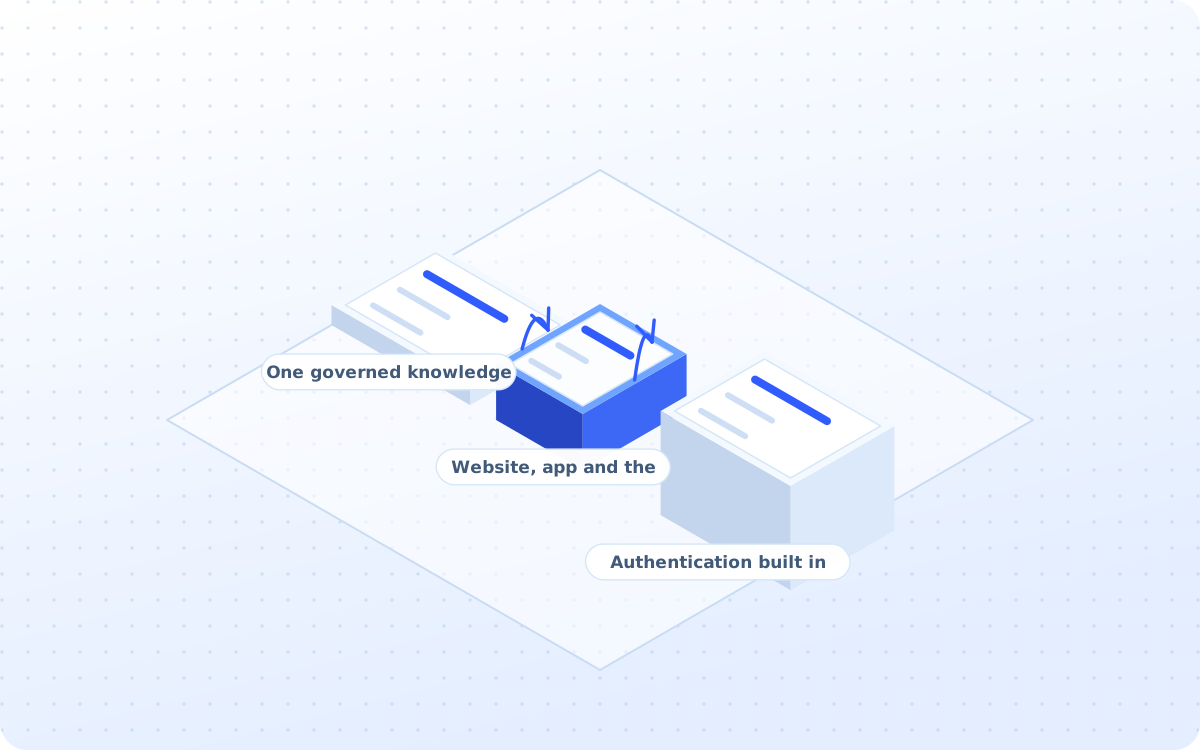
One brain, many doors, and one set of answers. Provide a consistent AI-assisted customer experience across website, mobile app and messaging channels using one governed knowledge and customer-service framework.
- One governed knowledge base only
- Website, app and the messaging
- Authentication built in from early
Why one answer beats three of them
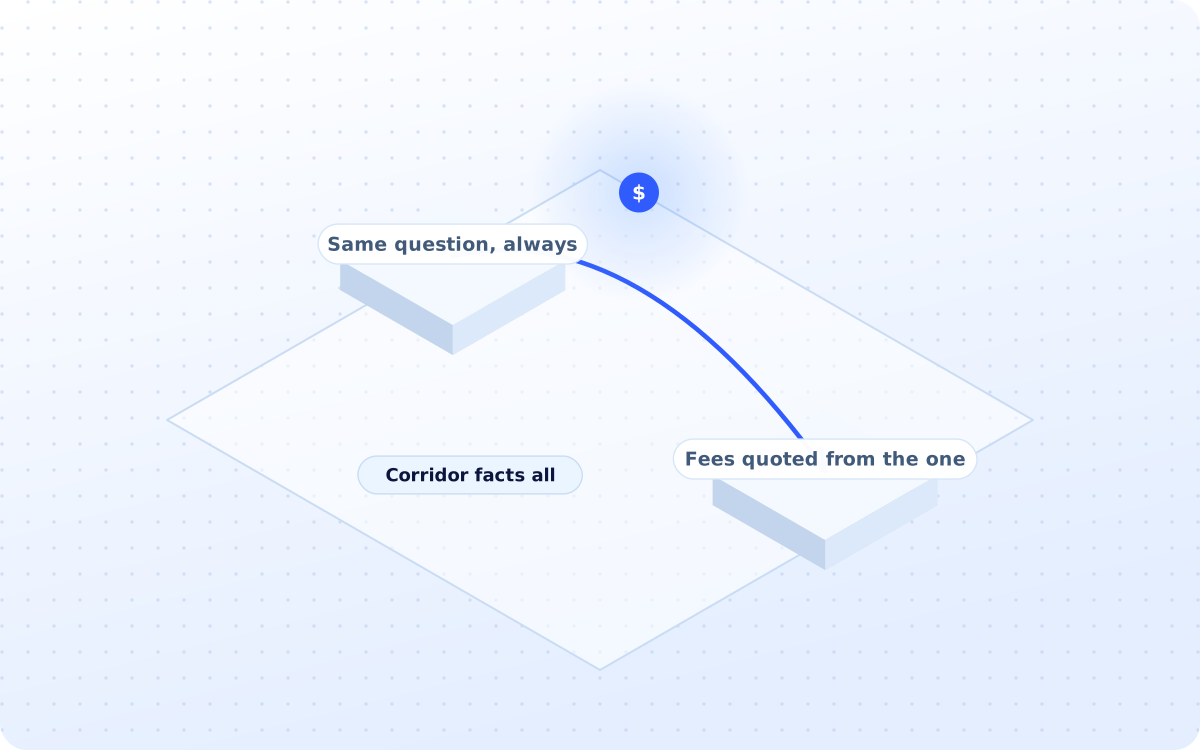
Ask about a fee on the website and in the app and you should get the same sentence back at you. The objective is: One approved knowledge base, multiple customer touchpoints, consistent answers.
- Same question, always same answer
- Fees quoted from the one source
- Corridor facts all checked once
Which channels it actually reaches
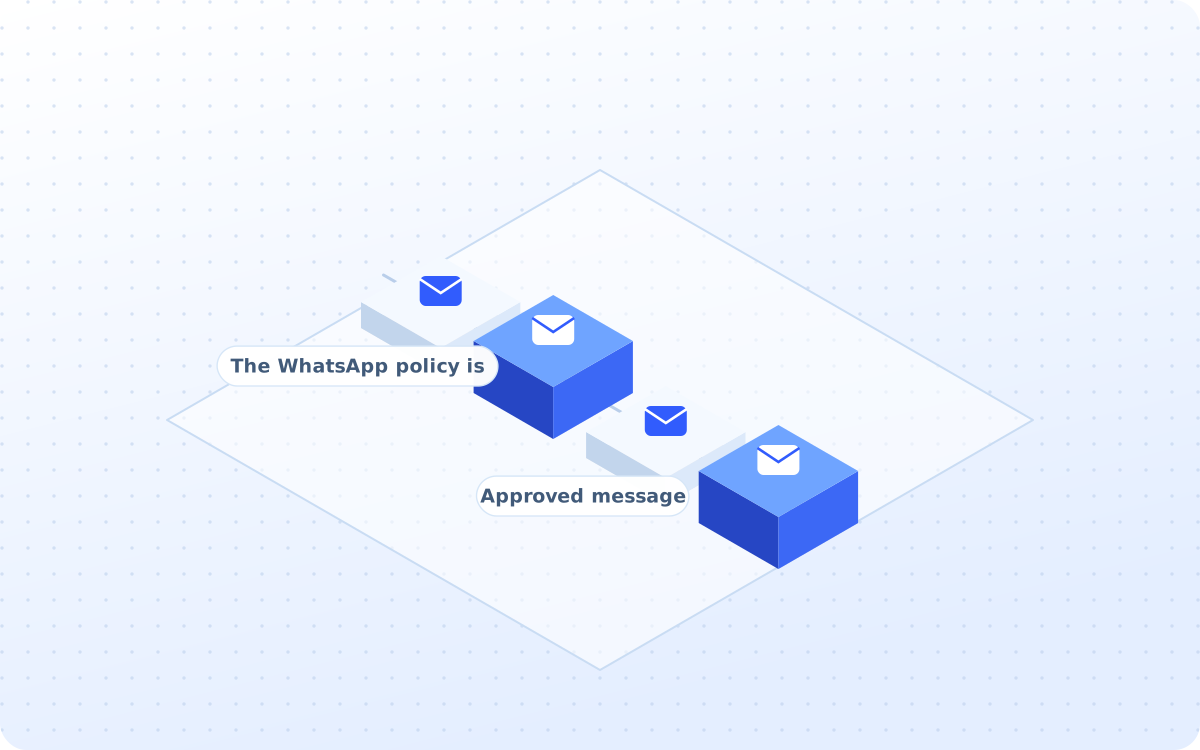
The channel list is short, and one of them has rules. Potential channels: Website, Mobile app, WhatsApp, Messenger, Other approved messaging channels subject to WhatsApp policies and approved message categories.
- The WhatsApp policy is respected
- Approved message categories only
- The in-app assistant is included
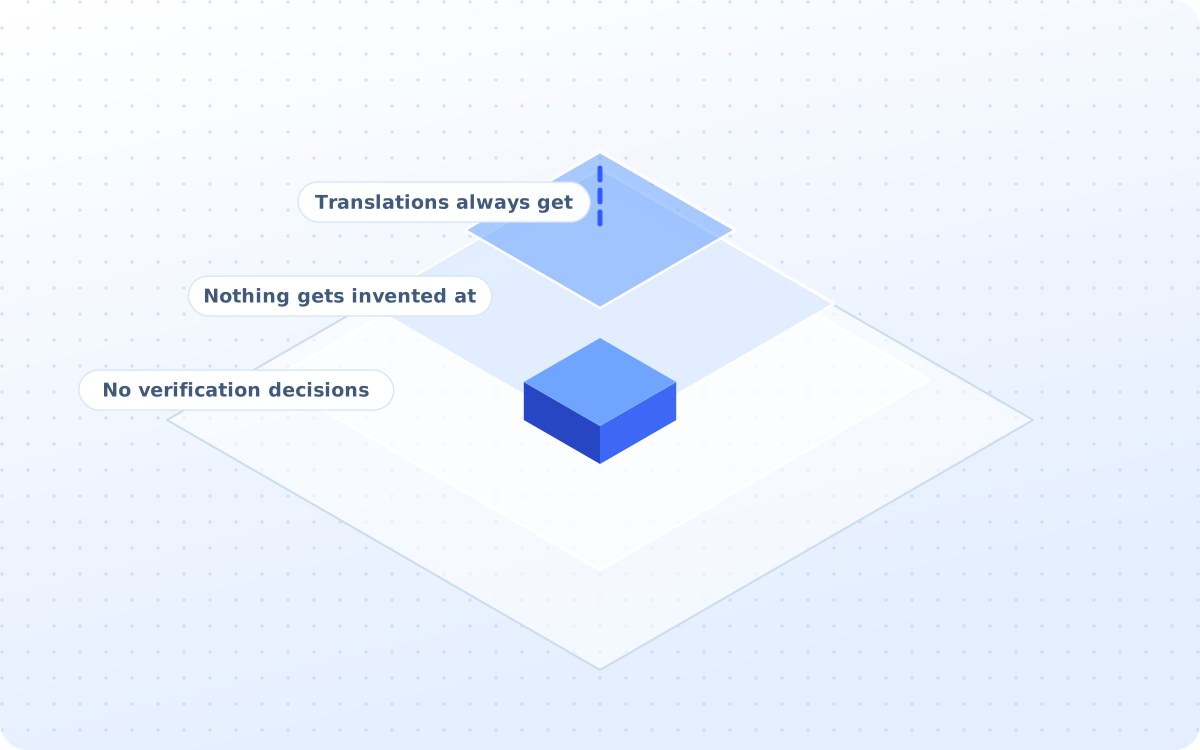
Where the assistant has to stop
The assistant explains what a verification step needs, and then it stops there, without making verification decisions. AI should retrieve dynamic facts from systems of record instead of inventing them.
- No verification decisions at all
- Nothing gets invented at any point
- Translations always get reviewed
What you actually receive
Six artefacts, all of them yours to keep. The knowledge base is the one that really lasts.
The knowledge base
The transfer methods, the countries, the currencies, the fees and the limits, in one approved place.

Customer intent map
What senders actually ask, sorted by intent, with the approved answer sitting behind each one.
The channel build
The website, the in-app assistant, WhatsApp and the rest, each running the same knowledge base.
Escalation rules
Which conversations stop and go to a person, covering the complaints, disputes and fraud concerns.
The language pack
The priority diaspora languages, and every high-impact translation is reviewed by a human who knows it.
The chat analytics
The volume, the resolution, the escalation and the assisted first transfers, all reported each month.
How the chatbot work runs
Four stages, run in order. The knowledge base gets approved before any single channel ever goes live.
What senders are actually asking about
The customer intents, the supported channels, the knowledge sources and the escalation rules all get defined before a single channel gets built.
- 01Intents listed, not guessed at
- 02Restricted topics named up front
- 03Authentication rules all agreed
- 04Knowledge sources are approved
- 05Escalation triggers written down
One knowledge base sitting behind it all
The help centre, the product documentation, the FAQs, the corridor data and the internal SOPs get pulled into one single retrieval layer.
- 01Help centre content all pulled in
- 02Corridor data connected up live
- 03Rates and fees fetched, not typed
- 04SOPs behind the support answers
- 05One source, checked by a human
The channels the senders actually use
Website, in-app assistant, WhatsApp and the other approved messaging channels all run the same answers, inside each platform's own policy.
- 01Website chat for the new visitors
- 02In-app help with beneficiaries
- 03WhatsApp, inside its own rules
- 04Corridor discovery on the site
- 05Status help after authentication
When the assistant should stop talking
Complaints, fraud concerns, transfer disputes, account restrictions and any low-confidence reply all get sent straight to a trained human agent.
- 01Complaints leave the bot at once
- 02Fraud concerns escalated quickly
- 03Disputes go to a trained agent
- 04Low confidence means a handover
- 05Context passed to the agent too
What the service covers
Sixteen groups of work sit behind the service, and these twelve are what the customers actually meet.
Conversation strategy
Intents, channels and escalation
Website chatbot
Visitors, corridors and registration
In-app assistant
Beneficiary setup and transfer help
WhatsApp chatbot
FAQs and status, inside policy
Product knowledge
Methods, countries, fees, limits
Corridor discovery
Is that country supported yet
KYC guidance
Steps, documents and retries
Status support
After secure authentication only
Knowledge retrieval
Help centre, SOPs, corridor data
Human handoff
Complaints, disputes, fraud concerns
Multilingual chat
Priority diaspora languages, reviewed
Chat analytics
Resolution, escalation and drop-off
Three ways to buy this
One of these will fit, whether the help centre is already written or has barely been started.
Complete chatbot build
The knowledge base, the intents, every approved channel and the escalation rules, all built once.
- Fixed fee, agreed before we start
- Eight weeks from scope to live
- No verification decisions, ever
Single channel version
Just one channel, built properly, when WhatsApp is where most of the questions actually arrive.
- One fixed fee, four weeks total
- One channel, measured properly
- Credited if the full build follows
Ongoing chatbot support
The knowledge base kept current, with all the unanswered questions reviewed at every month end.
- Monthly fee, three months minimum
- Unanswered questions get added
- Escalation rate watched closely
Comparison. A general chatbot vendor sells a widget and a template. AI chatbots for remittance companies start with the corridor data and the rate the system actually holds.
Position. Most operators want the repeat questions handled, not a bot guessing at a transfer limit.
- The assistant explains verification and never decides it. Complaints and disputes go to your agents.
Audit line. If none of the three fits, a fixed-fee growth audit will say which one should.
Four steps to going live
Eight weeks to the first channel. The knowledge base gets written before anything at all gets connected.
Map the intents
WEEK 1-2What senders ask, in what words, and which of those questions repeat every single week.
Write the base
WEEK 3-5Methods, countries, fees, limits and corridor facts, approved once and stored in one place.
Wire the channels
WEEK 6-8Website, app and WhatsApp connected to the same base, each inside its own platform rules.
Watch the gaps
MONTHLYUnanswered questions, escalations and drop-offs reviewed monthly, then written back into the base.
How results get reported
No client figure appears without written permission. These three are facts about how the work is run.
Services that pair with this
Chat answers the question. These three deal with the calls, and with the screen that caused it.
The spoken version of it, for the first-time sender who would still rather ring somebody and talk.
Learn moreAI Outbound CallingThe outbound half, for the customers who stopped answering and never came back to the chat.
Learn moreThe upstream repair for the KYC screen that made people ask the question in the first place.
Questions operators ask first
Answers come first. Where the honest answer is no, it says no and explains what to do instead.
Both. An agent-led operator gets the same knowledge base behind the counter, so the answer a customer hears in person matches the one on the site.
Yes. The assistant reads from the systems you already run and writes the conversation back, so an agent picking it up can see what was already said.
Yes. Corridor support, the currencies and the recipient methods all differ per route. All high-impact translated content should undergo quality review.
Yes. AI chatbots for remittance companies are the only kind built, which is why corridor support and transfer limits sit in the knowledge base already.
The assistant explains the verification steps, the approved documents and the retry options, without making verification decisions. Advertising compliance stays ours.
The help centre as it stands, the top questions from support, the corridor list, and whoever approves what the assistant is allowed to say.
Eight weeks to the first channel, or four weeks for one channel alone. Writing the knowledge base is what takes the time, not the connection.
Yes, after secure authentication. The assistant can find a transfer and explain its status. It cannot approve a document or release a payment.
Yes. Corridor discovery is one of the sixteen work groups, so a customer can ask whether a country is supported and get the current answer, not last year's.
Partly. Faster answers keep a sender moving, and the chat analytics show which questions stall a repeat transfer, though the campaigns sit elsewhere.
Assisted registrations and assisted first transfers are two of the nine indicators, counted when a conversation happened before the customer completed the step.
Nine indicators, monthly: conversation volume, resolution, escalation, response time, satisfaction, support cost per interaction, assisted registrations, assisted first transfers and lead capture.
By answering the question that stops a first transfer at midnight, when support is closed and the sender is standing in a queue with their phone out.
Support cost per interaction, against the tickets that never got raised. AI chatbots for remittance companies usually pay back on the repeat questions alone.
A sender who gets a straight answer about a fee at eleven at night tends to send again. One who waits until Monday for a reply often does not.
Operators, remittance apps and payout platforms on the roster
Marks appear once written permission is on file for each operator.
One knowledge base, every channel
Three channels giving three answers costs more in support tickets than any chatbot licence. A fixed-fee growth audit will say where to start.
You keep the knowledge base whether or not you build the bot.