Money transfer out of home advertising
A billboard on the ring road reaches nobody who transfers money. The bus shelter outside the Nigerian supermarket on the high street reaches the people who actually do send.
Remittance only · Data-led site picks · Every site carries a code

Out of home advertising for remittance companies buys the streets a diaspora community actually uses: the high street with the money shops on it, the bus route to the industrial estate, the shelter outside the community centre itself. Every site carries a QR code or a promo code, so the whole campaign can be read against installs and registrations rather than simply guessed at.
What changes on the street
Most remittance outdoor buys the cheapest sites, then hopes that somebody notices the logo. Four things change.
Cheapest sites win
The media owner offers a discount and the plan follows it.
Sites chosen on data
Placement follows where the sending community actually lives and shops.
One national brand line
The same English poster hangs in nine different neighbourhoods.
A message per community
The poster names the corridor, the payout and the local language.
Nothing to scan
A passer-by cannot act, so the campaign leaves no trace.
A code on every site
QR codes and promo codes make each location properly countable.
Impressions estimated
The media owner supplies a footfall figure nobody can check.
Installs counted
Scans, codes and branded search are read per site location.
What the outdoor work covers
Four rows of work, run in order. The location map comes before a single site is booked.

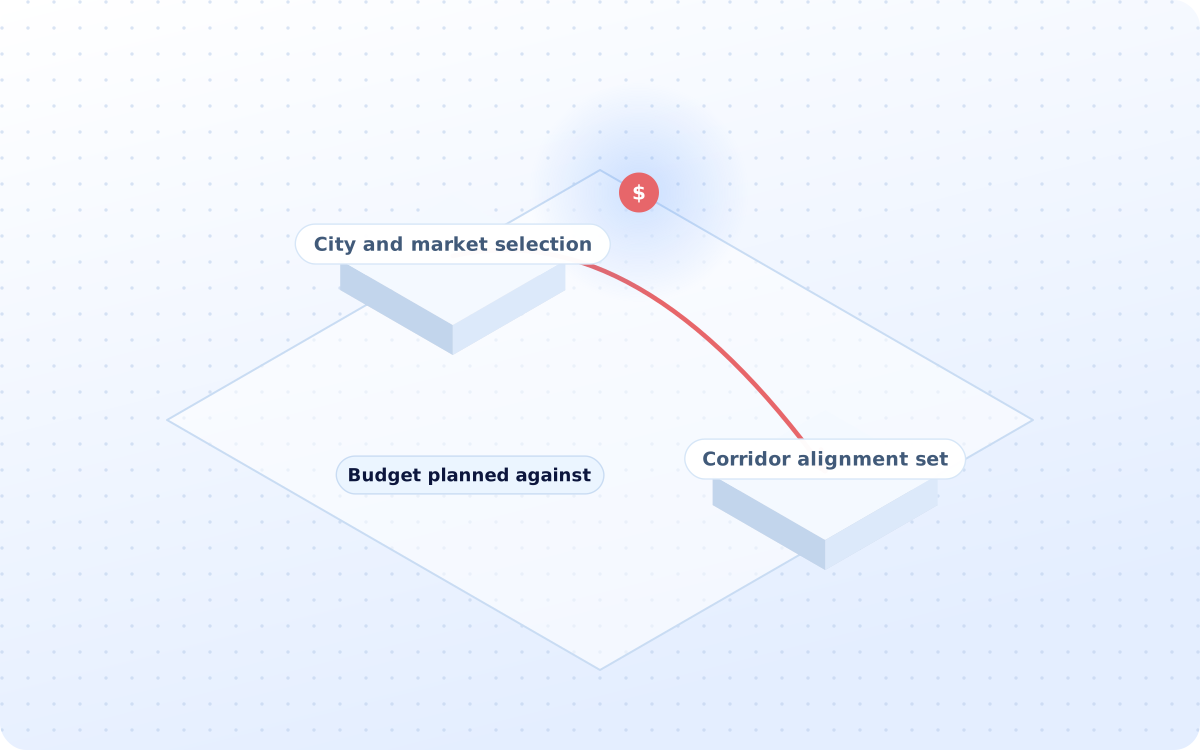
Markets, cities and the budget
City selection comes before site selection: which market, which corridor and what the campaign is actually meant to do. Budget is set against the search and social spend it will lift, not against a rate card.
- City and market selection first
- Corridor alignment set per city
- Budget planned against digital
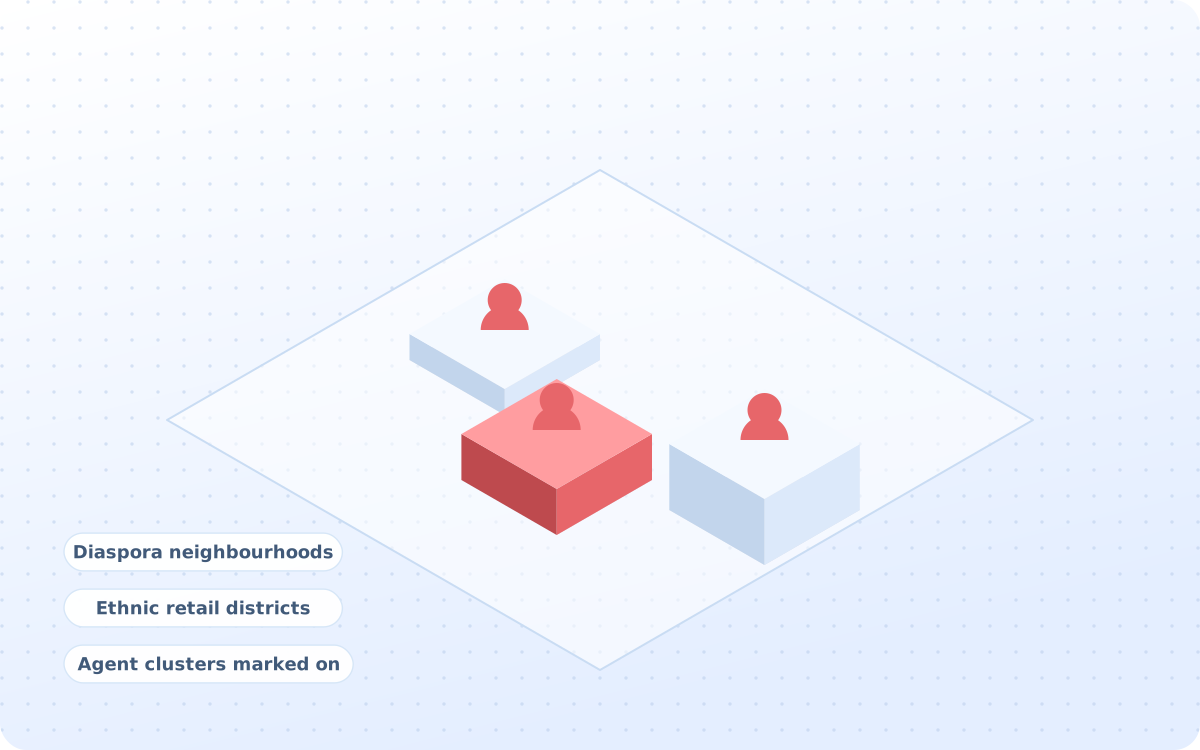
Where the community actually is
Diaspora neighbourhoods, ethnic retail districts, community hubs and transfer agent clusters are all mapped out street by street first. Targeting decisions should rely on legitimate market and audience data.
- Diaspora neighbourhoods are mapped
- Ethnic retail districts listed
- Agent clusters marked on the map
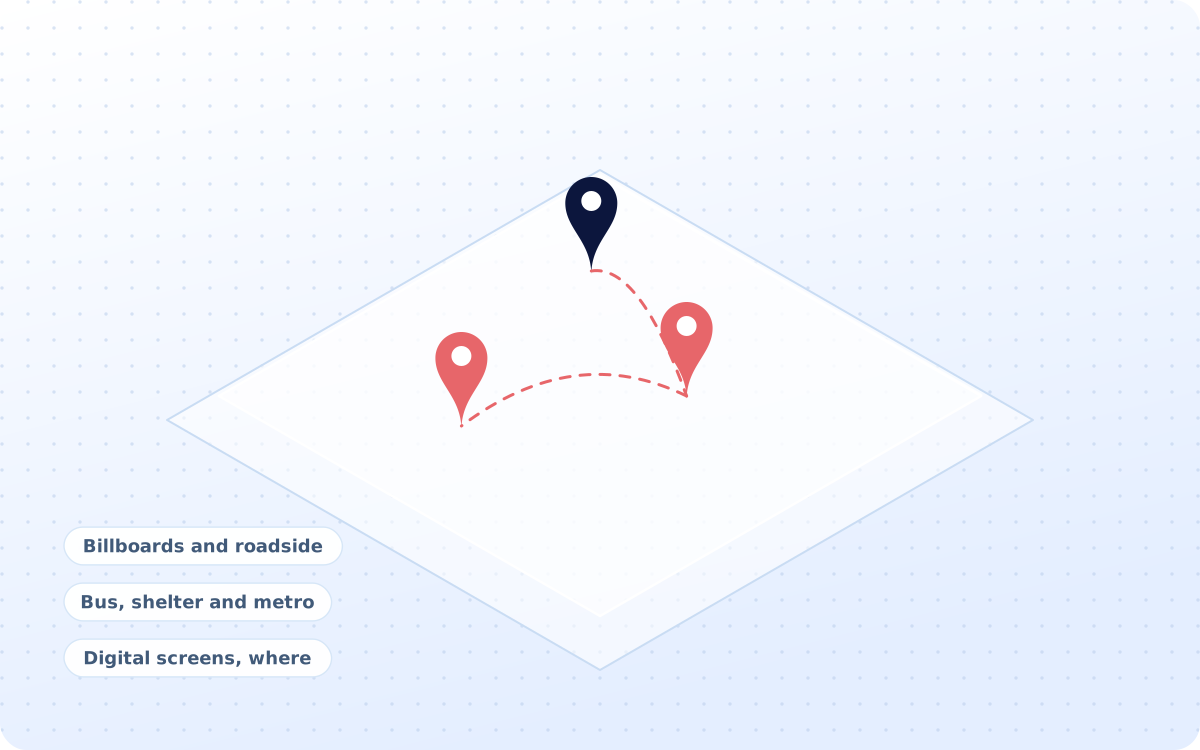
Billboards, transport and the screens
Large format billboards, roadside sites, bus shelters, station and metro placements, high street retail and digital screens are booked against the map rather than against whatever inventory is cheapest.
- Billboards and roadside site picks
- Bus, shelter and metro placements
- Digital screens, where they pay
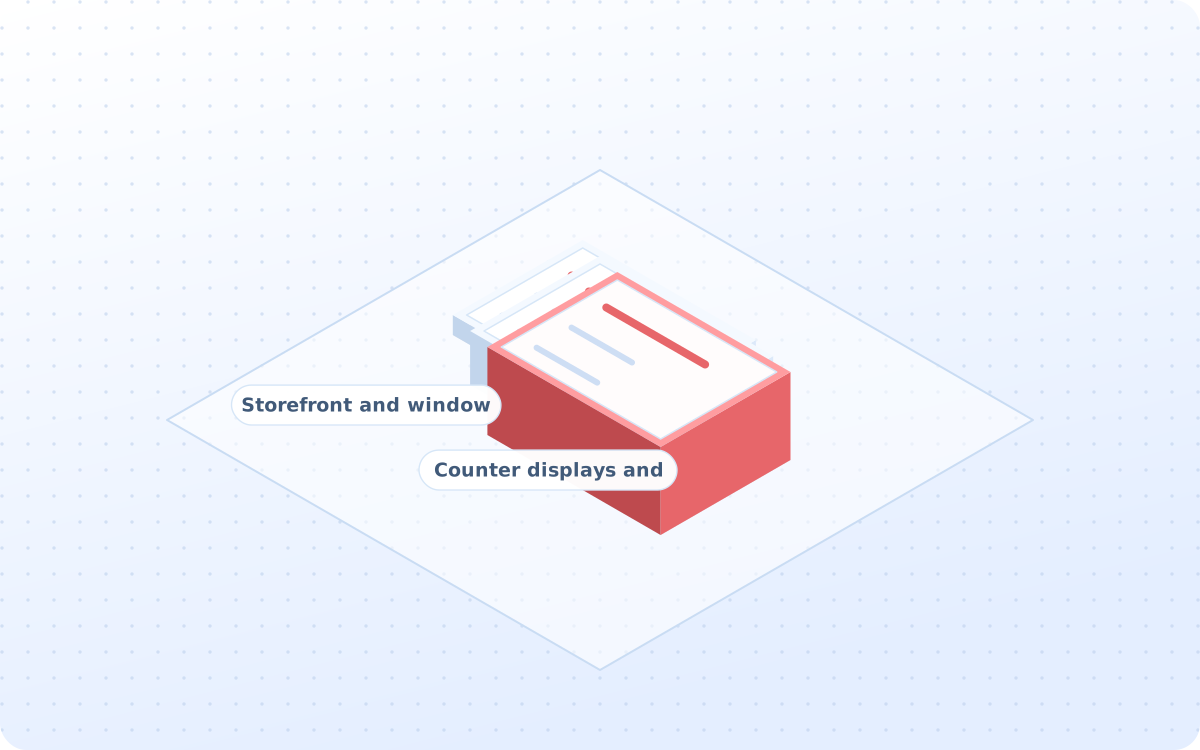
Agents, creative and the counting
For traditional or hybrid remittance operators, storefront branding, window advertising and counter displays matter more than a billboard. Every placement carries a QR code or a promo code, where possible.
- Storefront and window branding
- Counter displays and local posters
- QR and promo codes on each site
What you actually receive
Six artefacts, all of them yours to keep. The location map outlives the campaign that used it.
Market and city list
Which cities are worth buying, in what order, and which ones can safely wait until next year.

The location map
Street level, showing the neighbourhoods, the retail clusters and the agent sites that actually matter.
Placement schedule
Every single location, its format, its dates and what it costs, listed one location at a time.
Agent branding kit
Window vinyls, counter cards, posters and signage, all sized for every storefront that you run.
Localised creative set
One design per community, with the language, the corridor and the payout method all changed.
Measurement plan
Which code sits where, and how each scan gets traced all the way through to a registration.
How the outdoor work runs
Four stages, run in order. Nothing gets booked at all before the location map has been agreed.
The city, and then the streets inside it
Cities are chosen on corridor value, then narrowed to the neighbourhoods, retail clusters and agent sites where the community actually gathers.
- 01Market and city selection done
- 02Audience mapped street by street
- 03Corridor alignment checked first
- 04Objectives agreed before booking
- 05Budget set against digital spend
The sites, and what each one actually costs
Billboards, shelters, station panels, high street retail and digital screens are booked to the map, at rates agreed before anything is signed.
- 01Large format billboard site picks
- 02Bus shelters on the right routes
- 03Station and metro panels booked
- 04High street and retail clusters
- 05Digital screens where they earn
The message, and the shopfront as well
Each community gets its own language, corridor and payout line, and agent storefronts get window branding, counter cards and direction signs.
- 01Corridor message per community
- 02Language adapted per city district
- 03Storefront branding for the agents
- 04Counter cards and window posters
- 05App download call to action used
What a poster can honestly prove to you
QR scans, promo codes, branded search and geographic install changes are read together, because no single one of them proves anything alone.
- 01QR scans counted per single site
- 02Promo code redemptions tracked
- 03Branded search uplift watched too
- 04App installs read by city area
- 05Agent transaction change read too
What the campaign covers
Nine groups of work sit behind the service, and these twelve are what appears on the street.
City selection
Which markets earn a campaign
Location mapping
Streets, not whole postcodes
Diaspora districts
Where the community actually shops
Billboard sites
Large format and roadside panels
Transport sites
Buses, shelters, stations, metros
High street sites
Retail rows and shopping centres
Digital screens
Bought programmatically where sold
Agent branding
Windows, counters and signage
Corridor creative
One message per sending community
Language versions
Printed in the language spoken
QR and promo codes
Every single site made countable
Uplift reporting
Scans, installs and branded search
Three ways to buy this
One of these will fit, whether the plan covers a single city or a full national campaign.
Complete campaign build
The strategy, the mapping, the booking, the creative and the measurement, for one city launch.
- One fixed fee for the whole launch
- Media billed straight to you at cost
- A code goes on every single site
Agent network branding
Every storefront, window and counter branded to one single standard, across the whole agent network.
- Priced per storefront that is branded
- One standard across the network
- Artwork files are handed over too
Complete mapping study
The map and the full site shortlist, so your own media buyer can book every site themselves.
- One fixed fee, three weeks total
- You book all the media yourself
- The map is yours to keep forever
Comparison. A media agency will sell you the sites it has left. Out of home advertising for remittance companies starts from the streets your senders walk down.
Position. Most operators should not buy any outdoor until one city is already working online.
- Licensing and AML questions go to a qualified adviser. We handle advertising and marketing compliance.
Audit line. If none of the three fits, a fixed-fee growth audit will say which one should.
Four steps to the street
Three weeks of planning, then booking. Sites usually go live six weeks after the map is signed.
Pick the cities
WEEK 1Markets chosen on corridor value and on where your digital spend already works hardest.
Map the streets
WEEK 2-3Neighbourhoods, retail clusters and agent sites plotted before any inventory is priced.
Book and brand
WEEK 4-6Sites booked to the map, with creative adapted per community and per local language.
Count the scans
WEEKLYScans, promo codes, branded search and app installs all read per site, week by week.
How results get reported
No client figure appears without written permission. These three are facts about how the work is run.
Services that pair with this
A poster earns the search. These three then catch the person once they finally look you up.
The branded search that a poster creates, which somebody else will happily buy from under you.
Learn moreMeta AdsThe retargeting that reaches the same street a fortnight after the poster has already come down.
Learn moreThe signup screen that a scanned QR code drops somebody straight into, ready or not at all.
Questions operators ask first
Answers come first. Where the honest answer is no, it says no and explains what to do instead.
Both, and agent-led operators often get more. Storefront branding, window vinyl and counter cards turn an existing shop into the campaign itself.
Yes, through codes rather than pixels. Every site gets its own QR or promo code, so scans and registrations land in your own reporting.
Yes. The site list, the language and the payout message all change per corridor, because a Ghana community and a Polish one share no streets.
Yes. Out of home advertising for remittance companies is all that gets bought, so the maps already know where diaspora communities cluster.
Rate and fee claims go to your review before artwork is printed, since a poster cannot be edited later. Licensing and AML go to a qualified adviser.
Your corridor priorities, current city performance online, brand assets, agent locations if you have them, and whoever approves printed claims.
Six weeks from brief to live sites, with three of those spent mapping. Printing and installation take most of the remainder.
Only through codes and geography. A scan can be traced to registration, but a person who simply remembered the poster cannot be attributed.
Yes, though usually one city at a time. Splitting a small budget across three cities produces three campaigns nobody notices at all.
Barely, beyond reminding existing senders you exist. Reactivation is moved far more reliably by email, SMS and push than by a poster.
Through QR scans, promo codes and geographic install changes, read together. Attribution is honest rather than exact, and the reporting says so plainly.
Monthly: scans and code redemptions per site, branded search movement, app installs by area, and agent transaction change where it can be read.
By reaching people who never search for a money transfer app. Out of home advertising for remittance companies works in the streets where they already send.
Cost per scan and cost per registration against the site fee, with branded search movement reported beside it rather than instead of it.
Mostly through familiarity near an agent counter. Send frequency responds far more to lifecycle messaging than to seeing a poster again.
Operators, remittance apps and payout platforms on the roster
Marks appear once written permission is on file for each operator.
Start with the map, not the sites
The right bus shelter beats a motorway billboard every time, and costs a fraction of it. A fixed-fee growth audit will name the streets worth buying.
You keep the location map whether or not we work together.