Money transfer UGC content creation
A creator who has actually sent money home explains the product better than any brand video. The complication is that everything said about fees and speed must be documented.
Remittance only · Diaspora creators · Every claim checked before it runs

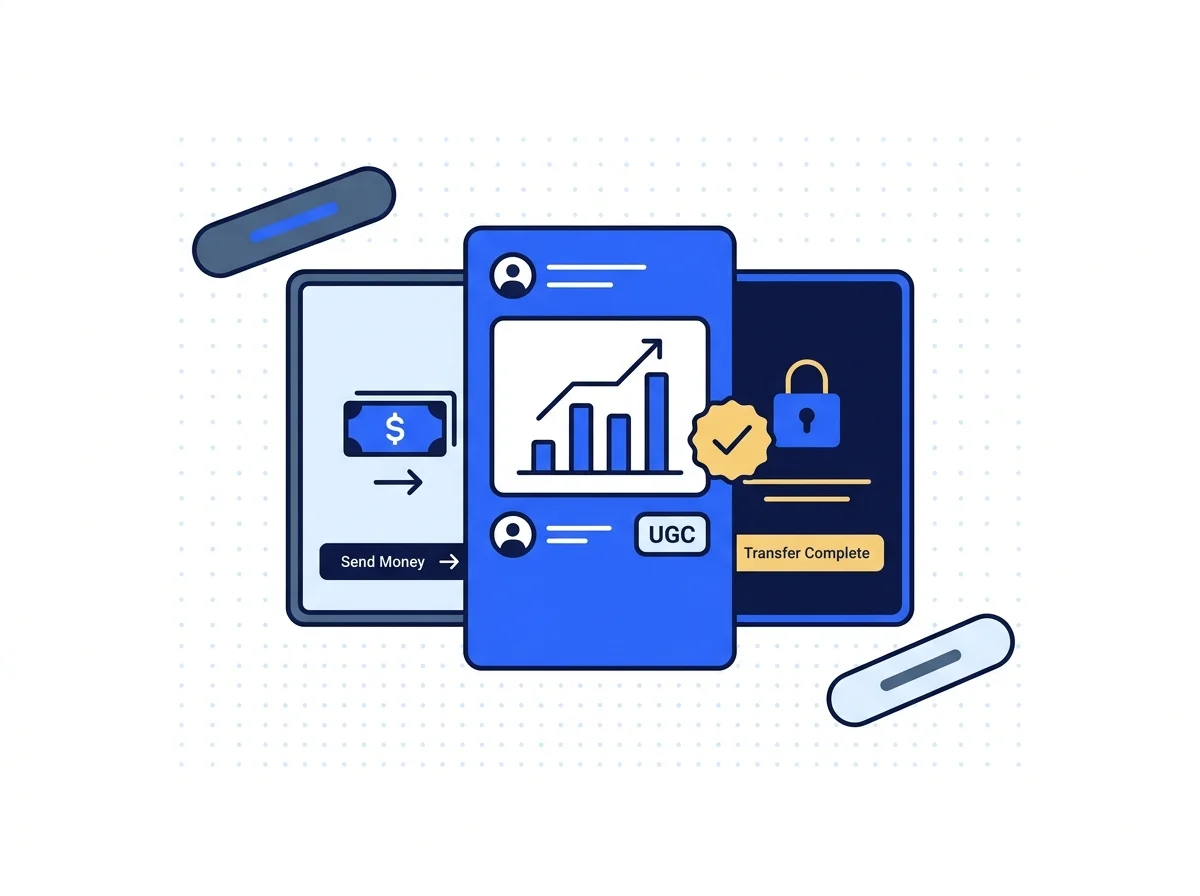
UGC content creation for remittance companies puts diaspora creators in front of the camera instead of a studio set. Scripts cover the app walkthrough, the school fees story, the emergency send, and the corridor a community actually uses. Every claim about fees, speed or rates is checked before filming, and each video is cut into several different ad variations for final testing.
What changes in the creative
Most remittance ads use stock footage of a smiling family that nobody believes for a second. Four things change.
Stock footage
A hired model who has never sent money home holds a phone.
Real creators
Somebody who sends every month explains it in their own words.
One video, one ad
A single expensive film runs until the audience stops watching.
One shoot, ten cuts
Each script comes back as several hooks, lengths and end cards.
Claims nobody checked
A creator says fastest and cheapest, and legal finds out later.
Claims checked first
The brief lists what cannot be said before anybody films.
Views are the metric
The video did well, and nobody knows if it sold anything.
Installs are the metric
Every cut is read against installs and cost per first transfer.
What the UGC work covers
Four rows of work, run in order. The claims list is agreed before any creator is booked.

Strategy, and who appears on camera
The angle comes before the creator: which persona, which platform, which objective. Sourcing then looks for diaspora creators, finance creators and micro-creators who already have the community's attention today.
- Creative angle and persona set
- Diaspora and finance creators found
- Platform and objective agreed first

Scripts, demos and the real stories
Scripts are written before anybody films: the video hook, the app walkthrough, the problem and the solution. School fees, an emergency at home and a monthly household send are the themes that land.
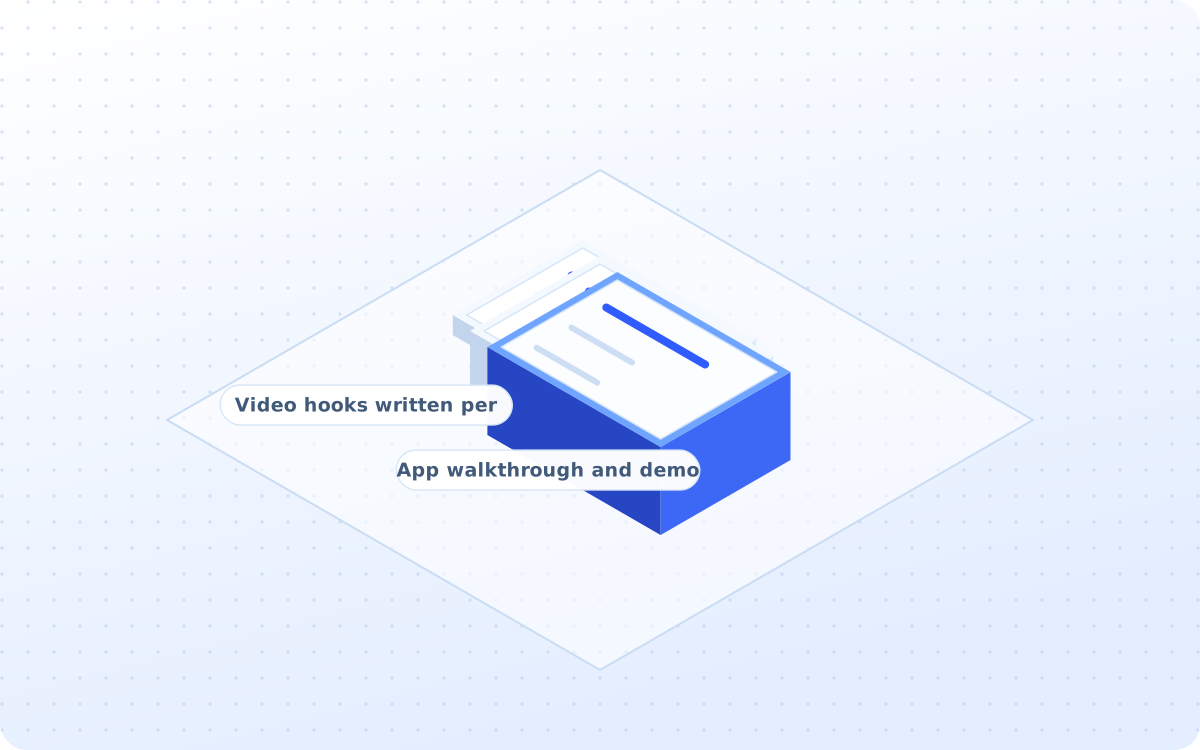
- Video hooks written per creator
- App walkthrough and demo scripts
- Problem and solution story lines
Corridors, language and the culture
A creator in Houston and a creator in Milan are not interchangeable, so scripts are adapted per language, per culture and per country. Testimonial style content runs only where claims are genuine and approved.
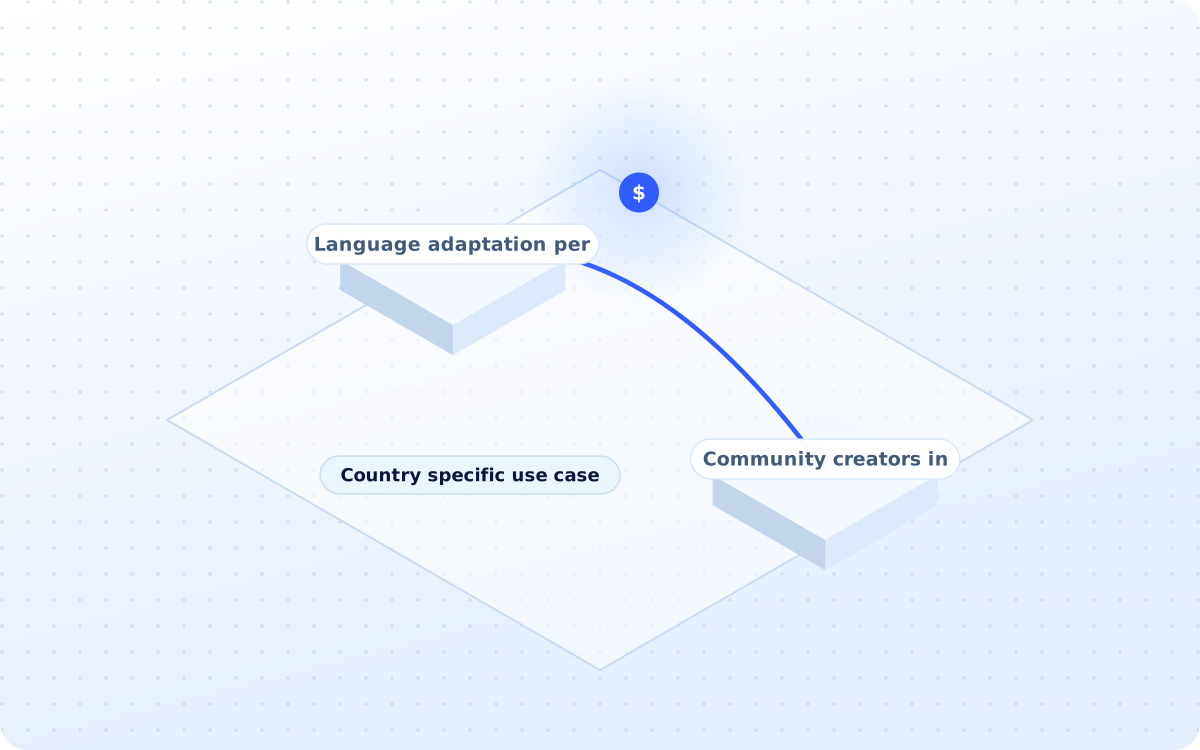
- Language adaptation per corridor
- Community creators in each city
- Country specific use case scripts
Compliance, editing and the testing
Every brief names what cannot be said, and each video is checked before it ever goes out. Paid partnerships, testimonials, and promotional relationships should also carry the appropriate disclosures.
- Claim list agreed before filming
- Disclosures on every paid post
- Hook and CTA variations cut out
What you actually get back
Six artefacts, all of them editable. The claims list is the one your compliance team will read.
Creative strategy
The angles, the personas and the platforms each piece of content is actually being made for.

Creator shortlist
Diaspora and finance creators per city, with their rates, their audience and previous work attached.
The video scripts
The hook, the story, the demonstration and the call to action, all written out line by line.
Finished video files
The master cuts plus vertical, square and short versions, all ready for the ad account itself.
Ad variation set
Several hooks, captions and end cards per script, so the testing has something to run with.
Creative test results
Which hook, which creator and which call to action produced the cheapest install for the month.
How the content gets made
Four stages, run in order. The claims list is signed off before a camera is switched on.
The angle, and who will actually say it
Personas, angles and objectives are set first, then creators are sourced from the communities that already send on the corridor you want.
- 01Creative angles and personas set
- 02Diaspora creator sourcing done
- 03Finance and lifestyle creators
- 04Micro-creators found in each city
- 05Campaign objective set per piece
The words, written before the camera runs
Video hooks, product stories, demonstrations and calls to action are pre-scripted, so a creator is never improvising a claim on the shoot.
- 01Video hooks and the opening lines
- 02App walkthrough demo scripts written
- 03Problem and solution story scripts
- 04School fees and emergency sends
- 05Call to action endings per script
Corridors, creators and what they say
Filming happens per community, with language and cultural adaptation, and testimonial pieces run only where claims are genuine and approved.

- 01Community creators per corridor
- 02Language and cultural adaptation
- 03Customer experience story pieces
- 04Product and feature demonstrations
- 05Recipient option explanation clips
Editing, disclosures and then the tests
Every finished piece becomes several different ad variations with captions and burned-in subtitles, then each is tested one variable at a time.
- 01Short-form editing per platform
- 02Captions and subtitles added on
- 03Disclosures on paid partnerships
- 04Multiple ad variations produced
- 05Hook, script and creator tests
What actually gets filmed
Ten groups of work sit behind the service, and these twelve are what ends up on screen.
Creative angles
The idea, before any creator
Creator sourcing
Diaspora, finance and micro-creators
Video scripts
Hook, story, demo and the CTA
App walkthroughs
The transfer shown, step by step
Problem stories
School fees, rent, an emergency
Testimonial style
Only where claims are approved
Corridor content
One creator per receive country
Language versions
Adapted rather than just subtitled
Paid ad creative
Cut for Meta and TikTok feeds
Short-form editing
Captions, subtitles and end cards
Claim checking
Nothing said that cannot be shown
Creative testing
Hooks, creators and CTAs compared
Three ways to buy this
One of these will fit, whether the ad account needs four videos a quarter or forty of them.
Ongoing creative supply
A set number of creators and finished videos every month, with the testing read alongside it.
- Monthly fee, agreed before we start
- Creator fees billed to you at cost
- Every claim checked before filming
Complete content batch
Three creators, twelve videos and all the cuts, produced once and then handed straight over.
- One fixed fee for the whole batch
- Six weeks from the brief to files
- Full usage rights are handed over
Scripting service only
The angles, the scripts and the claims list, for creators your own team already works with.
- One fixed fee for each script set
- You book and pay all the creators
- Claims list included as standard
Comparison. A creative agency will book an actor. UGC content creation for remittance companies books somebody who has stood in a queue to send money home.
Position. Most operators need three creators tested before booking twenty, and that costs a great deal less.
- Licensing and AML questions go to a qualified adviser. We handle advertising and marketing compliance.
Audit line. If none of the three fits, a fixed-fee growth audit will say which one should.
Four steps to the files
Two weeks of planning, and then filming. The first batch of videos is usually delivered inside six weeks.
Set the angles
WEEK 1Personas, platforms and objectives agreed, with the claims list written at the same time.
Book the people
WEEK 2-3Creators sourced from the communities you serve, checked for audience and past work.
Script and film
WEEK 4-5Every line written and approved, then filmed to the brief rather than to a general mood.
Deliver and test
WEEK 6Variations delivered to the ad account, then compared on cost per install and first transfer.
How results get reported
No client figure appears without written permission. These three are facts about how the work is run.
Services that pair with this
A video buys the attention. These three explain the product properly once you actually have hold of it.
The long-form articles holding the detail that a thirty second video has no room for at all.
Learn moreSEO Website CopywritingThe corridor landing pages a video sends people to, written so that the click becomes a signup.
Learn moreFull Stack SEOThe organic search work that reaches the senders who never watch a vertical video in the first place.
Learn moreQuestions operators ask first
Answers come first. Where the honest answer is no, it says no and explains what to do instead.
Yes. UGC content creation for remittance companies is all that gets produced, so creators understand corridors, payout methods and why verification exists.
Both. App-led operators want screen recordings and install prompts. Agent-led operators want a creator standing at a counter, which is a different shoot entirely.
Yes. A corridor is the usual unit, because the creator, the language and the reason for sending all change with the receive country.
Yes. One script structure can be adapted across several corridors, though each needs its own creator and its own cultural detail to be believable.
Financial and remittance UGC requires careful management. Creators should not make unsupported claims about: transfer speed, fees, exchange rates, security, savings, guaranteed outcomes.
Your approved claims, brand assets, the corridors you want covered, app access for screen recording, and whoever signs off creative and compliance.
A first batch is usually delivered within six weeks. Sourcing takes two of those, because a creator who actually sends money is harder to find.
Yes. Every cut is named and tagged so installs and first transfers can be read against the creator, the hook and the format in your own reporting.
At the creative level, yes. Cost per verified sender can be compared creator by creator, though the videos themselves never touch customer data.
Partly. Feature and corridor videos reach existing senders through paid retargeting, though reactivation is moved far more reliably by email or push.
Each variation carries its own tag, so UGC content creation for remittance companies is judged on installs and first transfers per creator, not on views.
Monthly: cost per install and cost per first transfer by creator, by hook and by format, with the winning cut named alongside the numbers.
Production cost against the media efficiency it bought. A cheaper cost per install across the whole account is the honest measure, not the view count.
By showing the transfer actually happening, so a sender who has never used an app can see the queue they are avoiding before they download it.
Indirectly. Feature videos teach existing senders about payout options and tracking, which reduces the support calls that put people off sending again.
Operators, remittance apps and payout platforms on the roster
Marks appear once written permission is on file for each operator.
Start with three creators, not thirty
The creative you can actually use comes from people who have sent money themselves. A fixed-fee growth audit will say which communities to film in first.
You keep the scripts and the claims list either way.