Meta Business Manager setup for MTOs
The pixel fires, the server fires, and Meta counts the same registration twice. Then the reporting says the campaign works and the bank statement quietly says something else entirely.
Remittance only · Events deduplicated · The approval stays with Meta itself

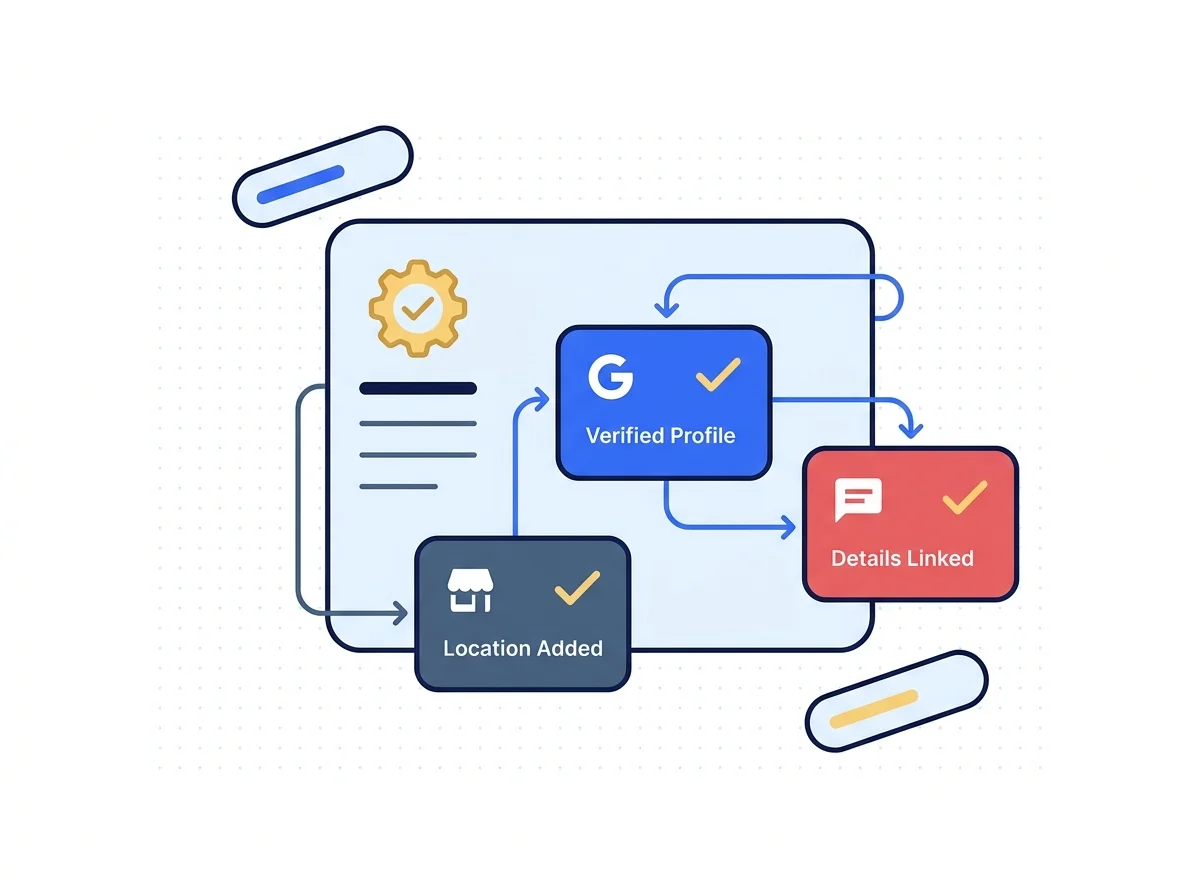
Meta Business Manager setup for remittance companies puts the business portfolio, the ad accounts, the pages, the pixel and the Conversions API under your own legal ownership, with the browser and server events deduplicated before launch. Registration, KYC completion and first transfer are configured as conversions, and the financial services readiness review happens before a single ad ever gets written.
What changes in the setup
Most remittance accounts were opened by some agency that no longer answers its email. Four things change.
Agency owns the assets
The page, the pixel and the ad account sit in their portfolio.
You own the assets
Everything sits in your business portfolio, with agencies as partners.
Events counted twice
The pixel and the server both claim the same registration.
Events deduplicated
Prevent browser and server events from being counted twice.
Verification stalls
The account gets restricted and nobody knows which check failed.
Verification prepared
Documents, domain and company details submitted as one pack.
Anyone can log in
Old staff, old agencies, and no two-factor on any of it.
Access is controlled
Roles, two-factor and an offboarding list that gets used.
What the whole setup covers
Four rows of work, run in order. Ownership gets settled before anything else even happens at all.

What actually gets set up first
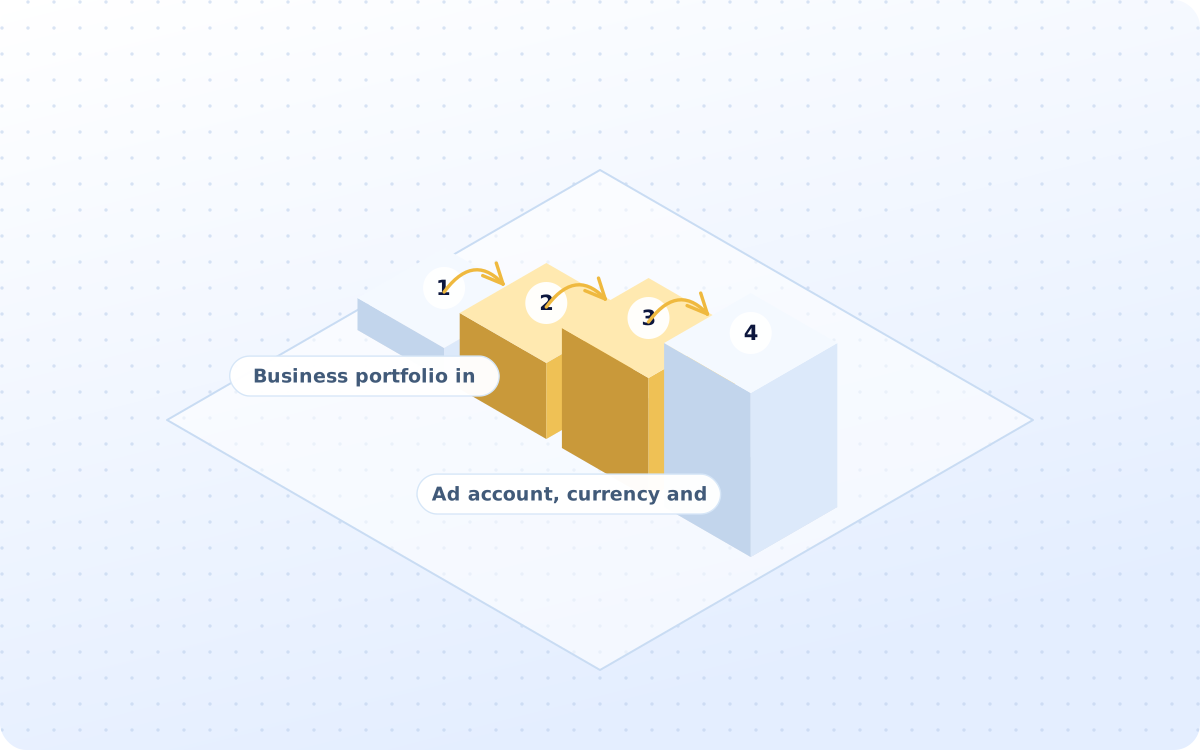
It is the assets first, and then the ads. Create and structure the Meta advertising infrastructure required to advertise, track and measure remittance customer acquisition across Facebook and Instagram.
- Business portfolio in your name
- Ad account, currency and time zone
- Page and Instagram both connected

The events, counted just the once
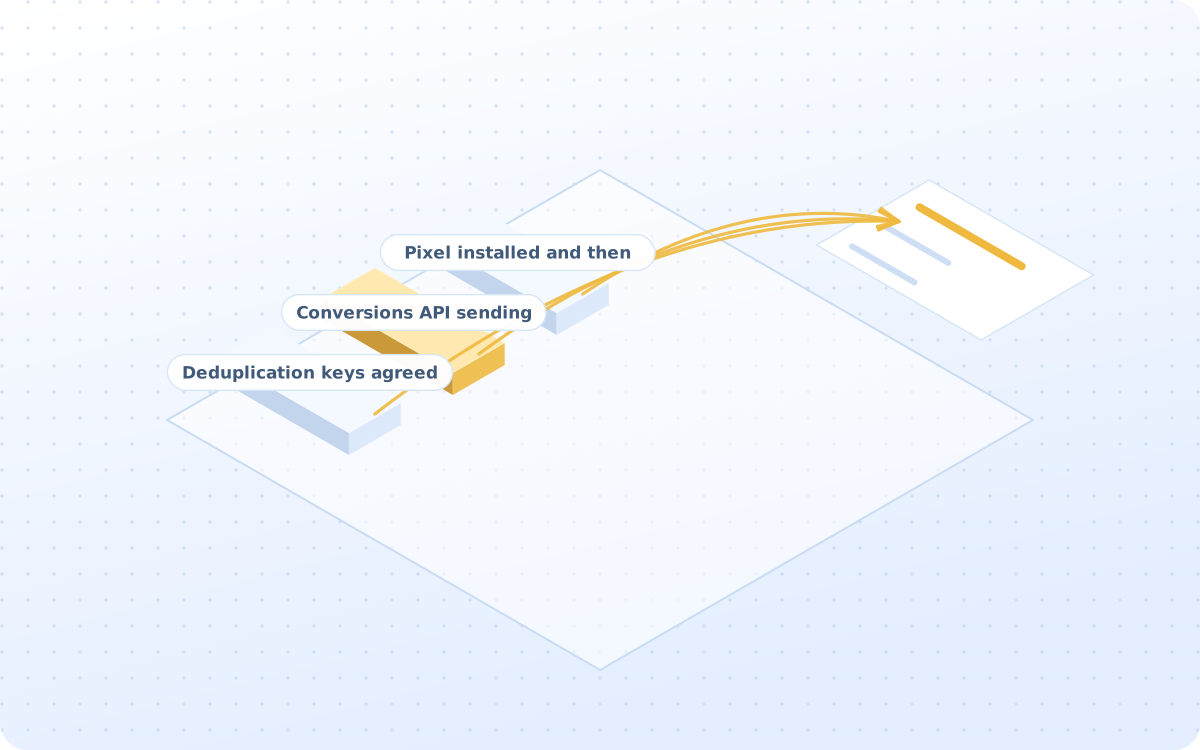
Pixel events and server events describe the same registration, so the deduplication rule is written before either one goes live. Prevent browser and server events from being counted twice.
- Pixel installed and then tested
- Conversions API sending events
- Deduplication keys agreed first
Which of the events matter most
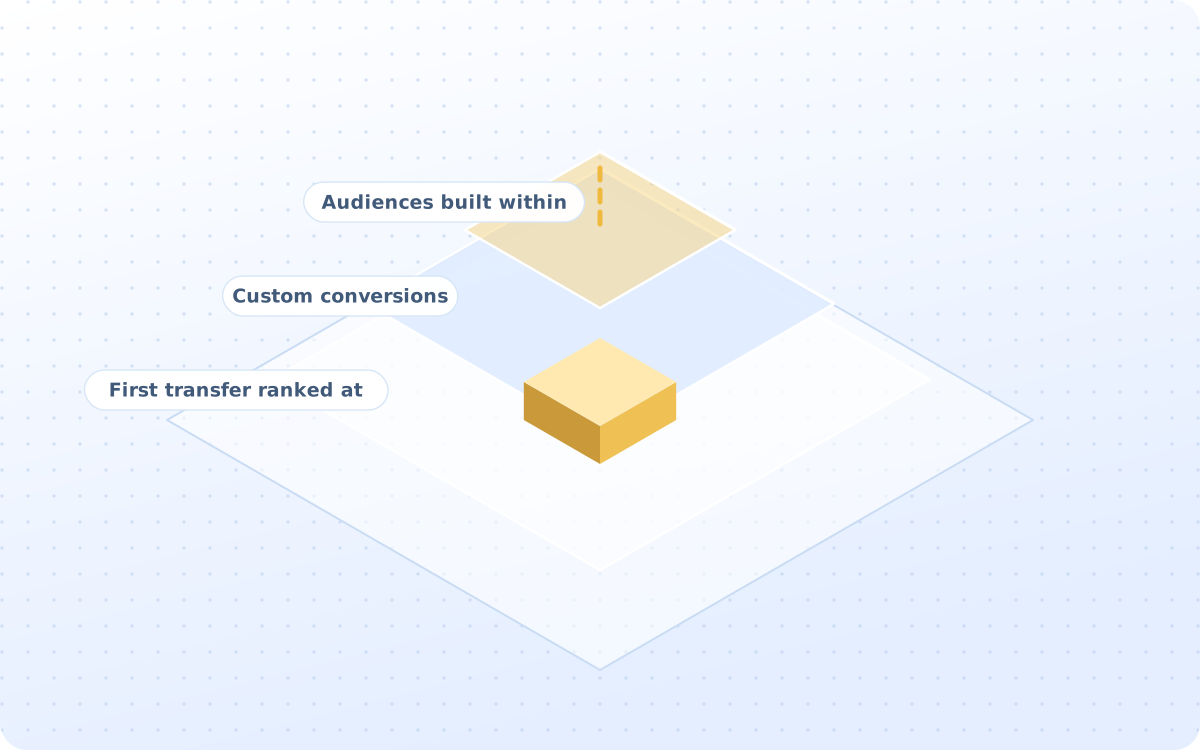
The order of the events matters more than people think. Where applicable, prioritise important conversion events according to Meta's available measurement framework. Subject to privacy, consent and platform rules.
- First transfer ranked at the top
- Custom conversions defined out
- Audiences built within the rules
Verification, and who holds keys
Business documents, the domain and the company information go in as one pack, and the two-factor rules and the offboarding list get written at the same time. Meta determines final approval.
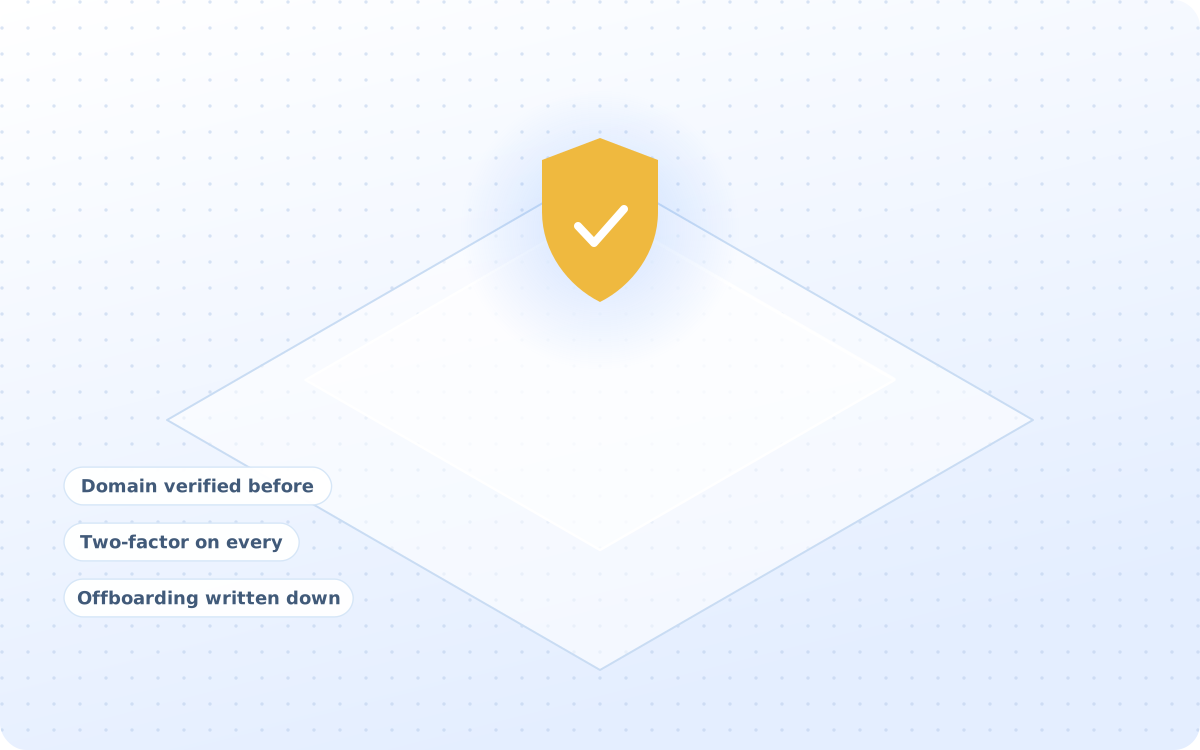
- Domain verified before any launch
- Two-factor on every single account
- Offboarding written down as well
What you actually receive
Six artefacts, all of them yours to keep. The ownership map is the one that really matters.
Asset ownership map
Which business owns which page, which pixel and which ad account, and who can move them around.

Event and value spec
Every single event, all its parameters, its value and the deduplication key that it carries.
CAPI implementation
What the server sends, when it sends it, and how it reconciles against the browser pixel event.
Custom conversion set
Registration, KYC completion and the first transfer itself, each one defined and each one ranked.
Security and access doc
Who holds which role, who has two-factor switched on, and who gets removed and exactly when.
Developer event guide
Exactly what your own developers send from the site, from the app and from the server itself.
How the setup work runs
Four stages, run in order. The ownership question gets answered before anything at all is even built.
Whose name all of the assets sit under
The business portfolio, the ad account, the page and the Instagram account are created under your name, with agencies invited as partners.
- 01Business portfolio created first
- 02Ad account, currency, time zone
- 03Page ownership properly claimed
- 04Instagram connected as an asset
- 05Agencies added as partners only
What the pixel and the server both send
The pixel goes onto the website, the Conversions API sends events from the server, and one deduplication key prevents the double counting.
- 01Pixel fires on the right pages
- 02Server events sent through CAPI
- 03Deduplication key on every event
- 04App events wired through the SDK
- 05Values attached where they are allowed
Which events Meta should optimise for
The available conversion slots are limited, so the first transfer occupies the top position and the smaller registration events sit underneath.
- 01First transfer at the top slot
- 02Registration ranked just below it
- 03Custom conversions all defined
- 04Audiences built to the platform rules
- 05Lookalikes from verified senders
The paperwork, and what it cannot buy
Domain verification, business documents and the financial services review are prepared and submitted, then the account waits like everybody else.
- 01Domain verified and then connected
- 02Business documents all submitted
- 03Disclosures checked on the site
- 04Product claims read very carefully
- 05No approval date ever promised
What the work actually does
Seventeen groups of work sit behind the service, and these twelve are what actually gets built first.
Business portfolio
Owned by you, and not an agency
Ad account setup
Currency, time zone, billing
Page connection
Ownership, roles and the access
Instagram link
Connected as a business asset
Domain verification
Verified before anything runs
The Meta pixel
Page views through to conversions
Conversions API
Server events for the real ones
The deduplication
One event, counted only once
App SDK setup
App events and the deep links
Custom conversions
Registration, KYC, first transfer
Audience setup
Within privacy and platform rules
Security and access
Two-factor, roles and offboarding
Three ways to buy this
One of these will fit, whether nothing exists yet or an old agency still holds all of it.
Complete account build
The assets, the pixel, the CAPI, the conversions and the verification, delivered just the once.
- Fixed fee, agreed before we start
- Everything opened in your name
- No approval date is ever promised
Complete tracking build
Only the pixel, the server events and the deduplication rule, all shipped inside a single release.
- One fixed fee, two weeks total
- Works with your existing assets
- Event spec handed over as well
Complete account audit
Who owns exactly what, what fires twice, and which of the events Meta is actually ranking first.
- One week, priced before we start
- No obligation to rebuild after
- Every duplicate event is listed
Comparison. A general agency will open an ad account in its own name. Meta Business Manager setup for remittance companies leaves you owning every asset it touches.
Position. Most operators need the deduplication and the ownership fixed, nothing else, and it costs less.
- Licensing and AML questions go to a qualified adviser. We handle advertising and marketing compliance.
Audit line. If none of the three fits, a fixed-fee growth audit will say which one should.
Four steps to going live
One week of building, and then the events. Verification runs on Meta's own clock, and not on ours.
Claim the assets
WEEK 1The portfolio, the ad account, the page and Instagram, all opened in your own company name.
Wire the events
WEEK 2Pixel, Conversions API and the app SDK, with one deduplication key across all of them.
Rank the events
WEEK 2The first transfer at the top, then the smaller events beneath it in a sensible order.
Verify and test
WEEK 3+The pack goes in, and every event is fired once before the first campaign goes live.
How results get reported
No client figure appears without written permission. These three are facts about how the work is run.
Services that pair with this
The account is only the start of it. These three are what the spend actually runs into.
The testing work that decides whether the paid traffic you buy ever does anything useful at all.
Learn moreWebsite Conversion RedesignThe landing pages that the pixel is sitting on, and whether they convert anybody in the end.
Learn moreApp Install & User AcquisitionThe paid app campaigns that cannot run properly until the Meta SDK has been wired in correctly.
Learn moreQuestions operators ask first
Answers come first. Where the honest answer is no, it says no and explains what to do instead.
Both. An app-led operator needs the Meta SDK and app events, and an agent-led one needs the branch pages and lead forms owned properly.
Yes. The Conversions API sends from whichever system holds the first transfer, using the same event names your analytics already uses.
Yes. Corridor rides along as a parameter, so audiences and reporting split by route without a separate pixel for each market.
Yes. Meta Business Manager setup for remittance companies is all that gets built, so the financial services review is part of it, not a surprise.
The financial services readiness review covers disclosures, landing pages and product claims. Meta determines final approval. Licensing and AML go to a qualified adviser.
Domain access, company documents, the current asset list, whoever can approve billing, and the name of the agency that holds things today.
One week to claim and wire, then verification. That part runs on Meta's timetable, and nobody honest will promise you a date for it.
Yes. KYC completion and first transfer go through the Conversions API as server events, so bidding learns from outcomes rather than from clicks.
Yes. One business portfolio holds an ad account per market where that is needed, with the same events and the same deduplication rule.
Yes. Customer audiences and repeat transfer events make reactivation campaigns possible, within whatever the consent state and the platform rules allow.
The first transfer is a server event with a value, so cost per first send appears in the ad account rather than in a separate spreadsheet.
Monthly: cost per registration, cost per verified customer and cost per first transfer, split by campaign, by corridor and by placement.
By ranking the first transfer above the signup, so Meta buys the people who send money rather than the people who fill in a form.
Wasted spend removed once the events are honest. Meta Business Manager setup for remittance companies usually pays back within the first month of spend.
Indirectly. Cleaner audiences mean reactivation reaches actual senders, and a sender who returns once usually returns again soon after that.
Operators, remittance apps and payout platforms on the roster
Marks appear once written permission is on file for each operator.
Own the assets, then advertise
If the pixel and the server both count one signup, every number in the Meta account is wrong. A fixed-fee growth audit shows exactly how much.
You keep the assets and the access whether or not we continue.