CRO services for remittance companies
Testing that starts at the verification screen, not at the button colour. Funnel analysis, corridor page work, calculator changes, and a test queue ranked by what each one earns.
Remittance only · Fixed fees · Measured on funded transfers, by corridor

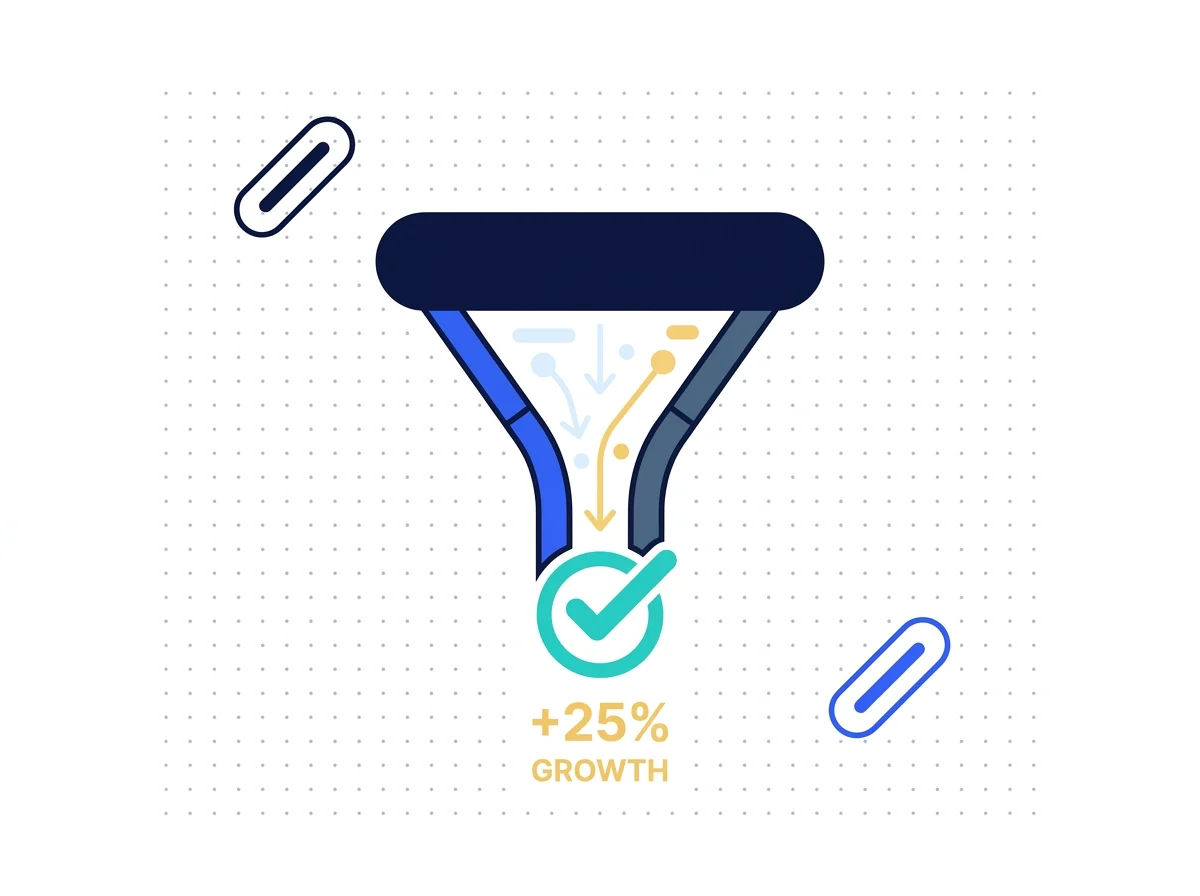
CRO services for remittance companies means finding where acquired visitors stop and fixing it: the landing page, the calculator, the signup form, the verification screen. Generic testing optimises a checkout. Here the funnel runs visit, register, verify, add recipient, fund and send, so every experiment is judged on funded first transfers rather than on clicks. Seventeen workstreams sit inside the service.
What changes in one quarter
Most remittance testing programmes work on the pages that were never the constraint. Four things change.
Testing button colour
The cheapest test wins the backlog, and the prize is tiny.
Testing the KYC screen
Work starts where the money leaks, which is verification.
One funnel for everyone
Corridors, devices and channels are all read as a single number.
Funnels split by corridor
Drop-off is read per corridor, per device and per source.
Tests judged on clicks
A lift in signups is called a win before anyone checks transfers.
Tests judged on transfers
Every result is read against funded first transfers, or discarded.
Compliance blocks tests
Variants reach compliance late and sit in review for weeks.
Compliance sees the plan
Claim wording is agreed before any variant is ever built.
What the programme includes
Four rows of work, run in order. Nothing gets tested until the funnel behind it can be read properly.
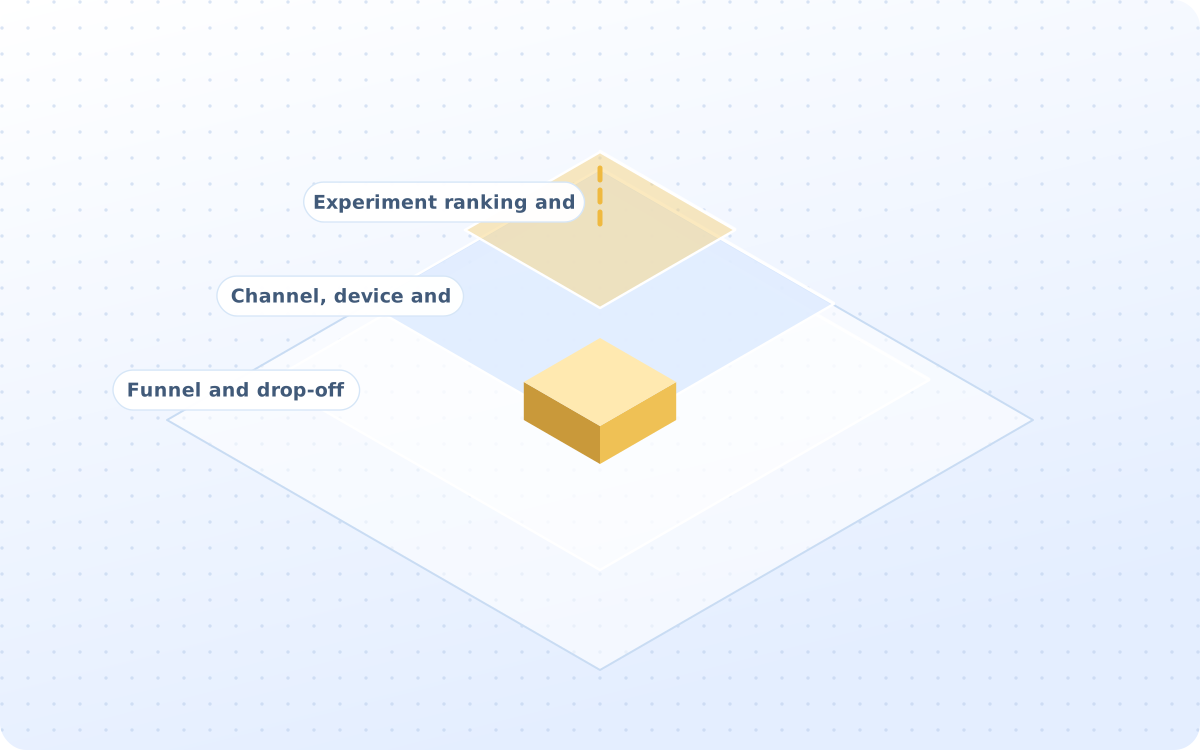
Strategy, funnel and test prioritisation
Stage by stage analysis across the landing page, signup, verification, beneficiary and first transfer, compared by channel, device, market and corridor. Tests are then ranked by what they can earn.
- Funnel and drop-off analysis by stage
- Channel, device and corridor comparison
- Experiment ranking and testing roadmap

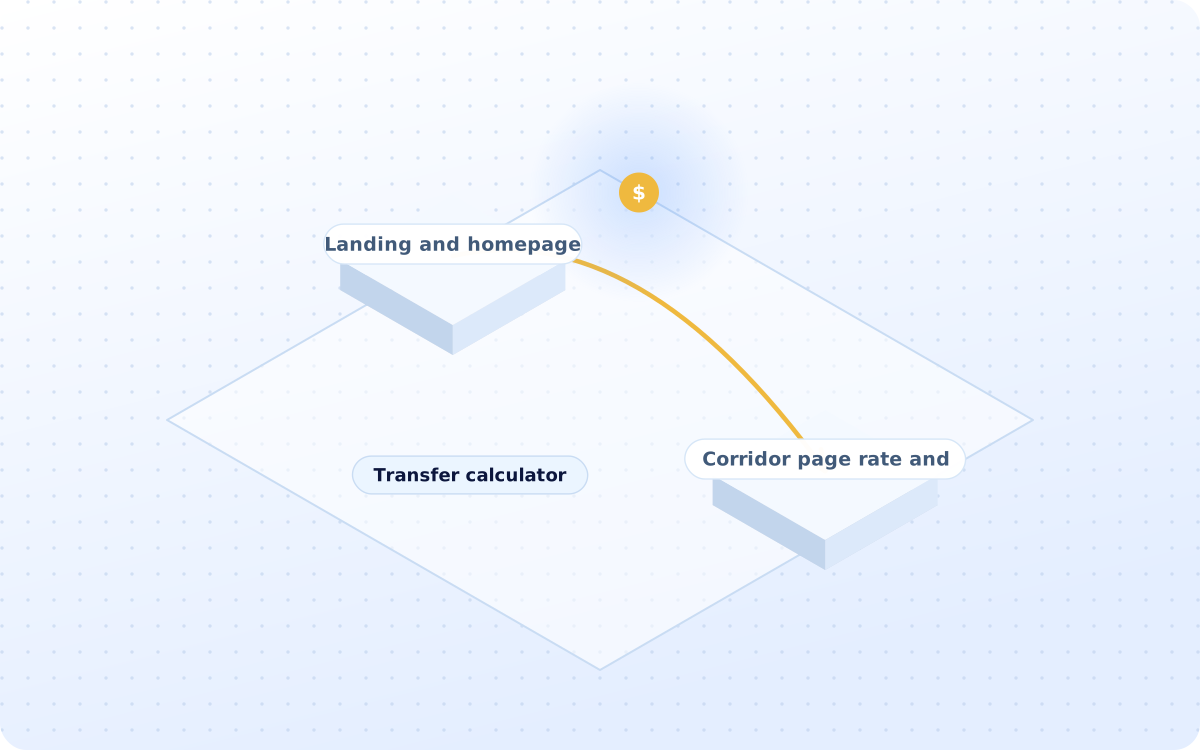
Landing, corridor and calculator work
Landing pages for paid traffic, corridor pages carrying rate and fee work, and the calculator itself. The interface should make pricing information understandable without creating unsupported or misleading claims.
- Landing and homepage conversion work
- Corridor page rate and fee presentation
- Transfer calculator interaction testing
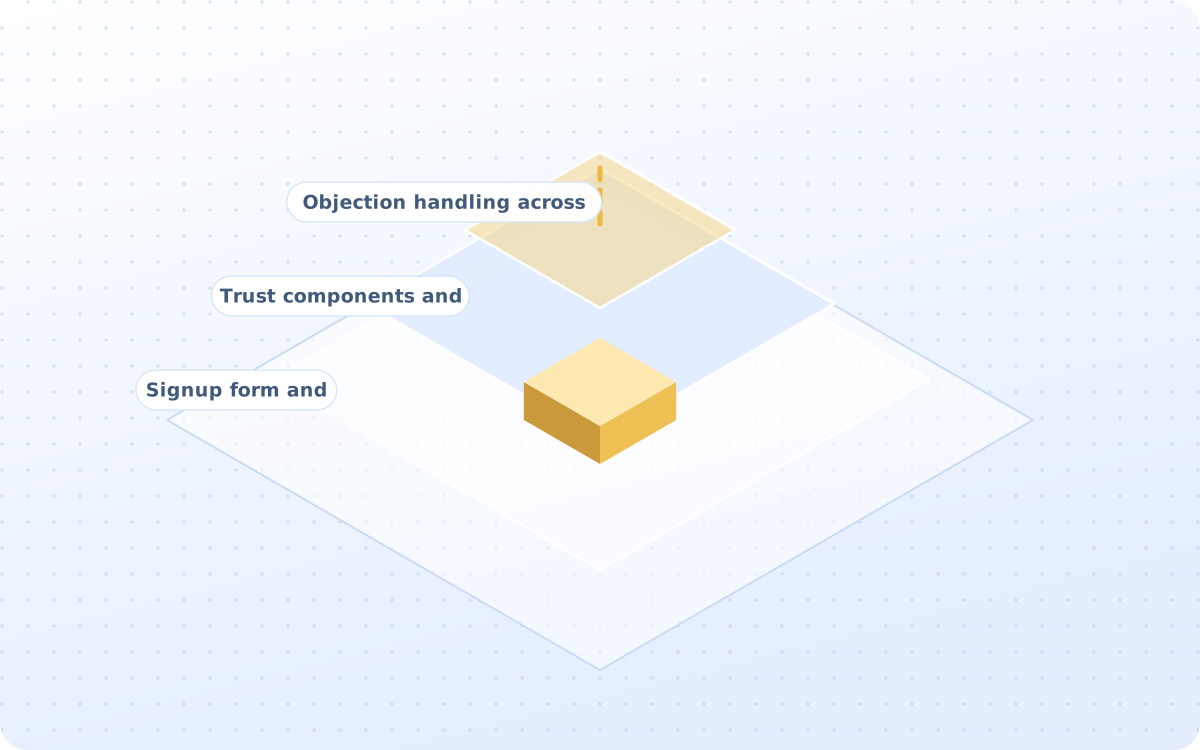
Forms, trust and objection handling
Field count, validation, error handling and mobile keyboard behaviour on the signup form, alongside the trust components and the eight questions senders ask before sending money to somebody abroad.
- Signup form and validation testing
- Trust components and security messaging
- Objection handling across the funnel
Testing, analytics and clean reporting
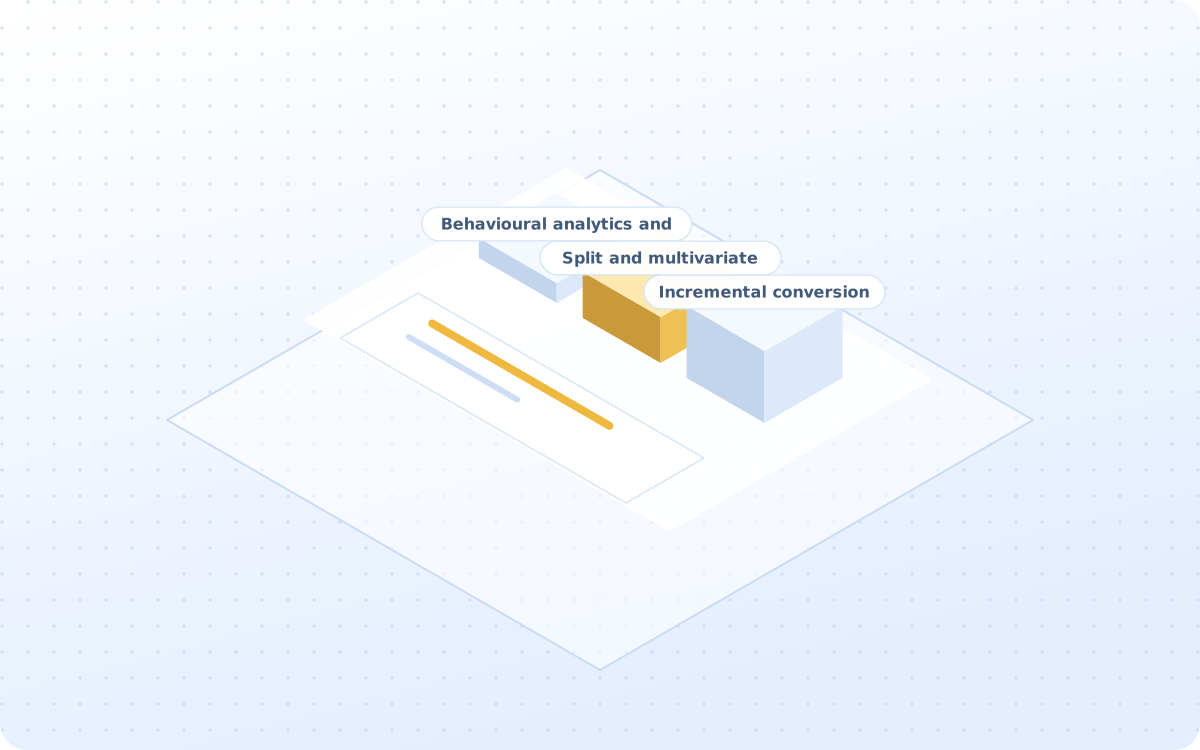
Heatmaps, session and form analytics feed the queue, then tests run as split or multivariate depending on traffic. Results are reported as incremental conversion and commercial value, not a raw percentage.
- Behavioural analytics and session review
- Split and multivariate experiments
- Incremental conversion reporting monthly
What you receive each month
Six artefacts you can open and check. The losing tests appear in them as plainly as the winners.
CRO audit report
Where the funnel leaks, by stage and corridor, with the commercial value of each leak estimated.

Funnel analysis pack
Stage conversion by channel, device, market and corridor, so the constraint is visible rather than argued.
Prioritised test roadmap
Every experiment is ranked on traffic, revenue, funnel leakage, effort, confidence and the risk involved.
Conversion copy set
Headlines, CTA wording, error messages and the words used to explain why verification has to exist.
Experiment result log
Every test run, its funnel stage, its outcome and whether it reached funded transfers at all.
Conversion report
Funnel conversion, incremental gains and commercial value, with the method stated next to each number.
How the programme runs
Four stages, in order. The first experiment does not run until the funnel numbers can be trusted.
Read the funnel before touching anything
Stage-by-stage conversion is read across channel, device, market and corridor, so the real constraint is identified rather than guessed at.
- 01Stage by stage conversion analysis
- 02Drop-off identification by stage
- 03Channel and device comparison work
- 04Market and corridor comparison
- 05New against returning sender analysis
Rank every experiment by what it earns
Every idea is scored on traffic, customer impact, revenue potential, funnel leakage, effort, confidence and risk before anything is built.
- 01Conversion opportunity mapping first
- 02Revenue and impact prioritisation
- 03Effort and confidence scoring applied
- 04Risk review with your compliance team
- 05Testing roadmap for the quarter
Build, run and call every experiment
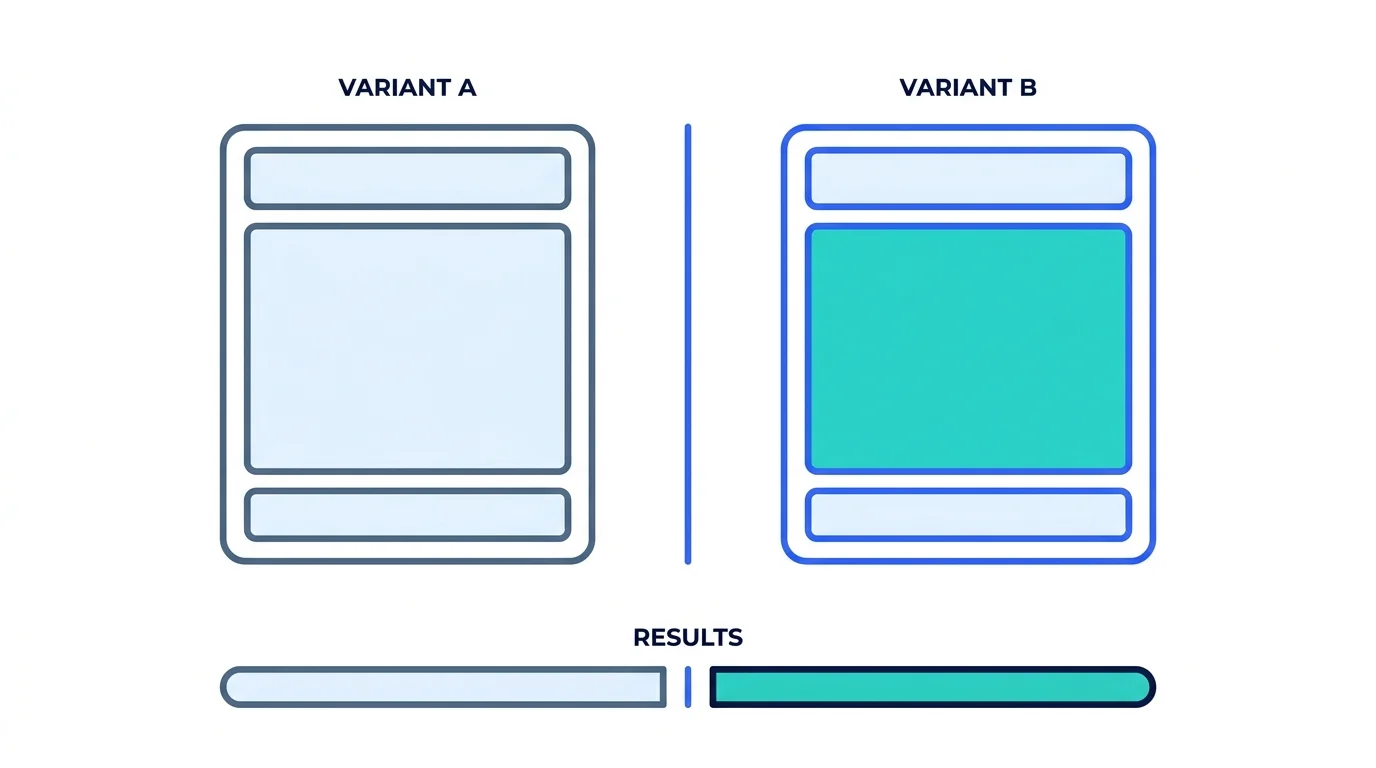
Split tests on most products, multivariate only where traffic genuinely supports it, with claim wording approved before a variant is built.
- 01Headline and CTA copy experiments
- 02Form and validation experiments
- 03Trust and rate presentation tests
- 04Multivariate tests where traffic allows
- 05Mobile-specific experiments and fixes
Report the transfers, not just the lift
Results are reported as incremental conversion and commercial value, with the losing tests listed, because a hidden failure repeats next quarter.
- 01Funnel conversion reporting by stage
- 02Experiment results and confidence
- 03Incremental conversion measured properly
- 04Revenue and customer activation impact
- 05Roadmap reordered on the findings
Where the conversion depth sits
The list a generalist would not write. Each one exists because a remittance funnel leaked there first.
Funnel analysis
Stage rates by corridor and device
Corridor page CRO
Rate, fee and payout presentation
Calculator CRO
Send, receive, fee and total cost
Form testing
Fields, validation and error states
Trust components
Security, support and partner signals
Objection handling
The eight questions senders ask first
Mobile CRO work
Sticky CTAs, speed and density
Behavioural analytics
Heatmaps, scroll and form analytics
Split testing
Headlines, layouts and CTA wording
Multivariate tests
Where traffic genuinely supports them
Experiment ranking
Traffic, revenue, effort and risk
Conversion reporting
Incremental value, not raw uplift
Three ways to buy this
One of these fits, whether you run a remittance app, an exchange house or a payout platform.
Managed test programme
We run the analysis, prioritisation, copy and reporting each month. Your developers ship the variants.
- Fixed monthly fee, never a share of uplift
- Agreed number of experiments each month
- Losing tests reported as plainly as wins
Fixed-scope funnel audit
The funnel read once, priced before we start. You keep the roadmap whether or not we continue.
- Priced upfront, delivered in two weeks
- Leaks quantified by stage and corridor
- Ranked roadmap, no retainer required
In-house team enablement
Your own team runs the tests. We supply the method, the ranking model and a quarterly review.
- Prioritisation model handed over
- Two training sessions for your team
- Quarterly review of experiment quality
Comparison. A generic programme optimises visit, add to cart, purchase. This funnel runs visit, register, verify, add recipient, fund and send, and every stage fails differently.
Position. We refuse performance pricing, because attribution here is too shared to make it honest.
- Licensing and AML questions go to a qualified adviser. We handle advertising and marketing compliance.
Audit line. If none of the three fits, a fixed-fee growth audit will say which one should.
Four steps, then repeat
Two fixed steps, then two that keep on running. The first experiment usually goes live in week four.
Read the funnel
WEEK 1-2Stage conversion pulled by corridor, device and channel, then the leaks quantified in transfers.
Rank the backlog
WEEK 3Opportunities are scored on traffic, revenue potential, effort, confidence and implementation risk.
Run the variants
MONTHLYVariants built and shipped against the biggest leak first, with claims approved before the build.
Report and reorder
MONTHLYResults read against funded transfers, then the roadmap reordered on what the data showed.
How results get reported
No client figures appear here without written permission. These three are facts about how the work runs.
Services that pair with this
Testing improves what exists. These three rebuild it, extend it to mobile and feed it more traffic.
For when testing keeps hitting the same structural limit and the site itself needs rebuilding.
Learn moreApp Conversion RedesignThe same discipline inside the app, from onboarding through verification to a first transfer.
Learn moreApp Install & User AcquisitionPaid app spend that gets cheaper per funded sender every time this funnel converts a little better.
Learn moreQuestions operators ask first
Answers come first. Where the honest answer is no, the answer says no and explains what to do.
Yes. No client is taken outside cross-border money movement, which is why the first conversation starts at the verification screen rather than at definitions.
Yes. Apps need in-product flow testing, agent-led operators need web, locator and counter handoff work. Both are read through the same funnel model.
Yes, and it usually matters. Document rules, payout methods and device mix differ by route, so drop-off is read per corridor rather than as one average.
Yes. Corridors are compared side by side, which is normally how the worst-performing route gets found and the budget behind it gets questioned.
Claim wording is agreed before a variant is built, and verification controls stay exactly where your policy sets them. Licensing questions go to a qualified adviser.
Analytics access, step-level funnel numbers where they exist, and a walkthrough of the live signup and verification flow on a real handset.
The funnel read takes two weeks. Prioritisation follows in week three, and the first experiment usually goes live during week four.
Yes. Existing analytics and testing tools are used where they work. Where events are broken, repairing them comes before any experiment runs.
Yes, at aggregate level. Experiments are read against KYC completion and funded first transfers by corridor, using your records rather than tool-reported wins.
Partly. Repeat transfer flows and saved beneficiaries are testable, though most repeat behaviour moves through lifecycle messaging rather than page testing.
Every experiment is tagged to a funnel stage and read against funded first transfers. A lift that stops at signup is reported as a lift that stopped at signup.
As incremental conversion and commercial value, with the method stated. Raw percentage uplifts without a transfer number behind them are not reported as results.
Additional funded first transfers against the fee, across the quarter rather than the test window, because single-experiment attribution flatters everybody involved.
By removing avoidable friction between registration and a funded transfer, particularly at document capture, liveness and the pending verification state.
Modestly. Faster repeat transfer flows and saved beneficiaries help, but send frequency is mostly earned through lifecycle work rather than conversion testing.
Operators, remittance apps and payout platforms on the roster
Marks appear once written permission is on file for each operator.
Start with your own funnel numbers
CRO services for remittance companies start where the funnel actually leaks. Two weeks and a fixed fee will say which stage is losing your senders.
You keep the roadmap whether or not we work together.