Remittance app social media marketing
A campaign that converts a Nigerian diaspora audience in Houston looks nothing like one that converts it in London. Both need a reason to download, not another rate graphic.
Remittance only · Campaigns, not a rota · Briefed for paid teams

Social media marketing for remittance companies plans campaigns rather than a posting rota: which diaspora community, which corridor, which offer and which platform. Concepts, hooks and messages are built per audience, briefed to the paid team, tested one variable at a time, then read against app installs and first transfers. Media buying itself sits with the paid growth service instead.
What changes in campaigns
Most remittance social is a calendar of posts with no campaign behind any of it. Four things change.
Posts, not campaigns
Everything runs at once, so nothing builds towards anything.
One campaign at a time
A corridor launch runs for six weeks, with a start and an end.
One diaspora audience
Every sending community gets the same creative and the same offer.
Community by community
Houston, Dubai and Milan get their own language and their own hook.
Paid and organic apart
The ad team and the social team run different messages entirely.
One brief, both sides
The same hook and offer runs organic first, then paid behind it.
Likes are the result
The campaign is judged on engagement and nothing further down.
Installs are the result
Each campaign is read against installs, signups and first transfers.
What the campaign work covers
Four rows of work, run in order. The audience and the offer are agreed before any creative starts.
The market, and the corridor plan
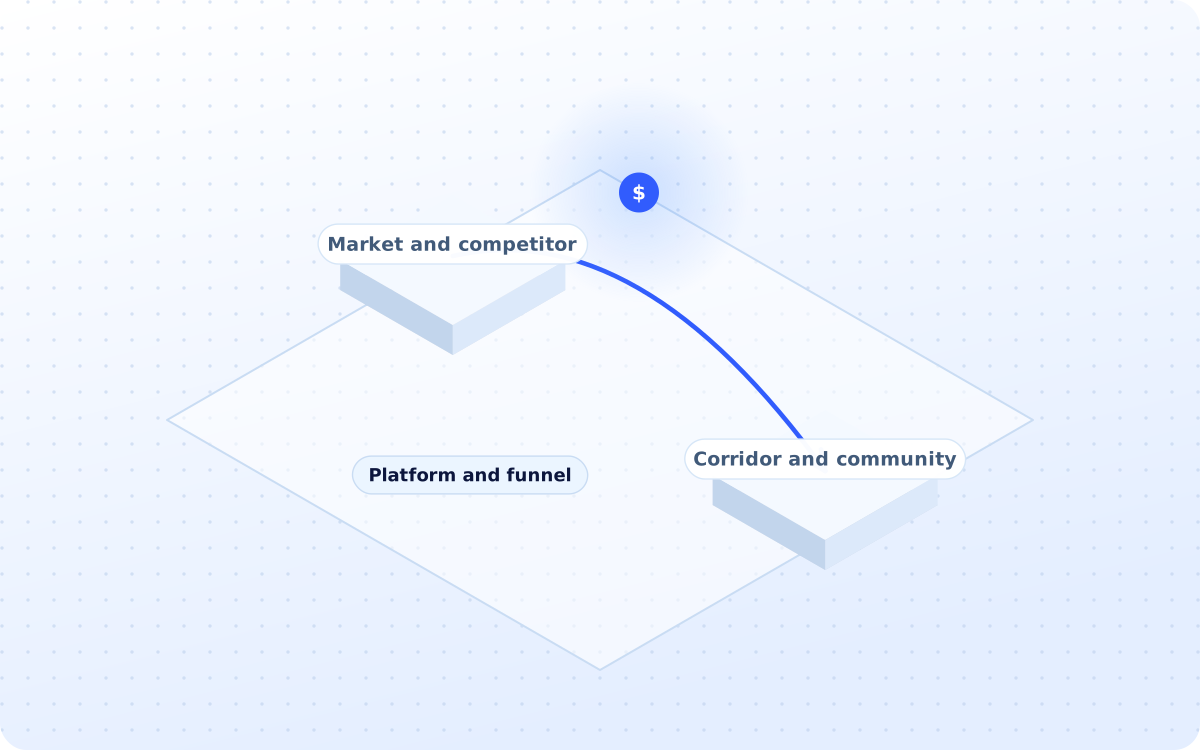
Market analysis first: which sending communities are worth a campaign, which corridors are growing, and what the competition already runs. Platform choice and funnel plan follow from the corridor.
- Market and competitor analysis
- Corridor and community priority
- Platform and funnel strategy set
Diaspora audiences and the products
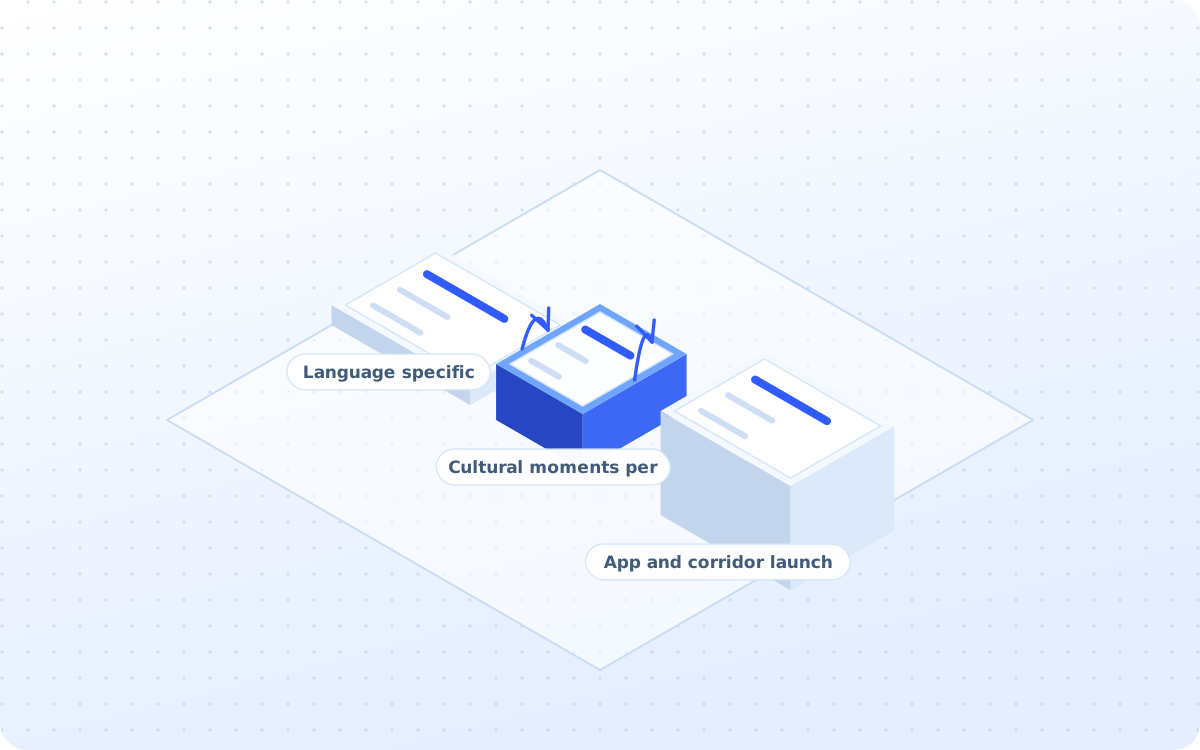
Community campaigns run in the language a household speaks, around the cultural moments that matter to it. Product campaigns cover app promotion, new corridor launches, transfer method pushes and referral offers.
- Language specific campaign copy
- Cultural moments per community
- App and corridor launch pushes
Concepts, hooks and the offers
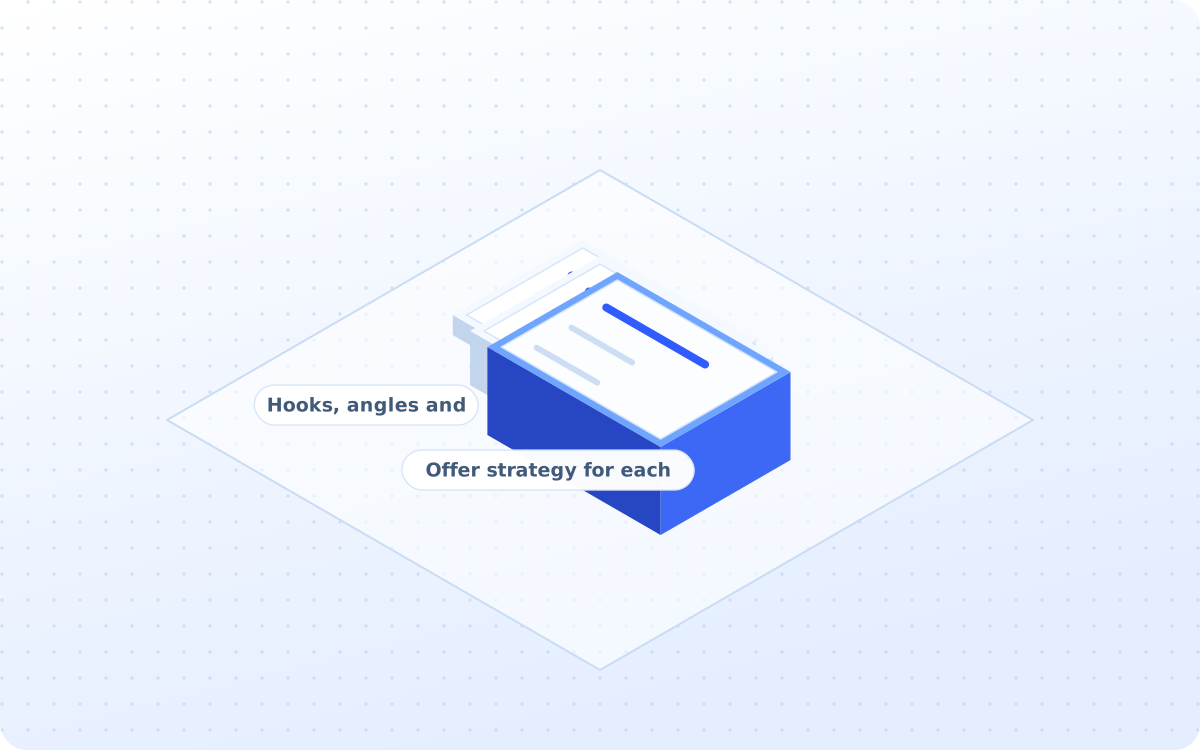
Every campaign starts with a hook and an angle, not a template. Concepts, video ideas, copy frameworks and the offer are worked out together, then checked against the landing page they send people to.
- Hooks, angles and creative themes
- Offer strategy for each campaign
- Landing page alignment checked
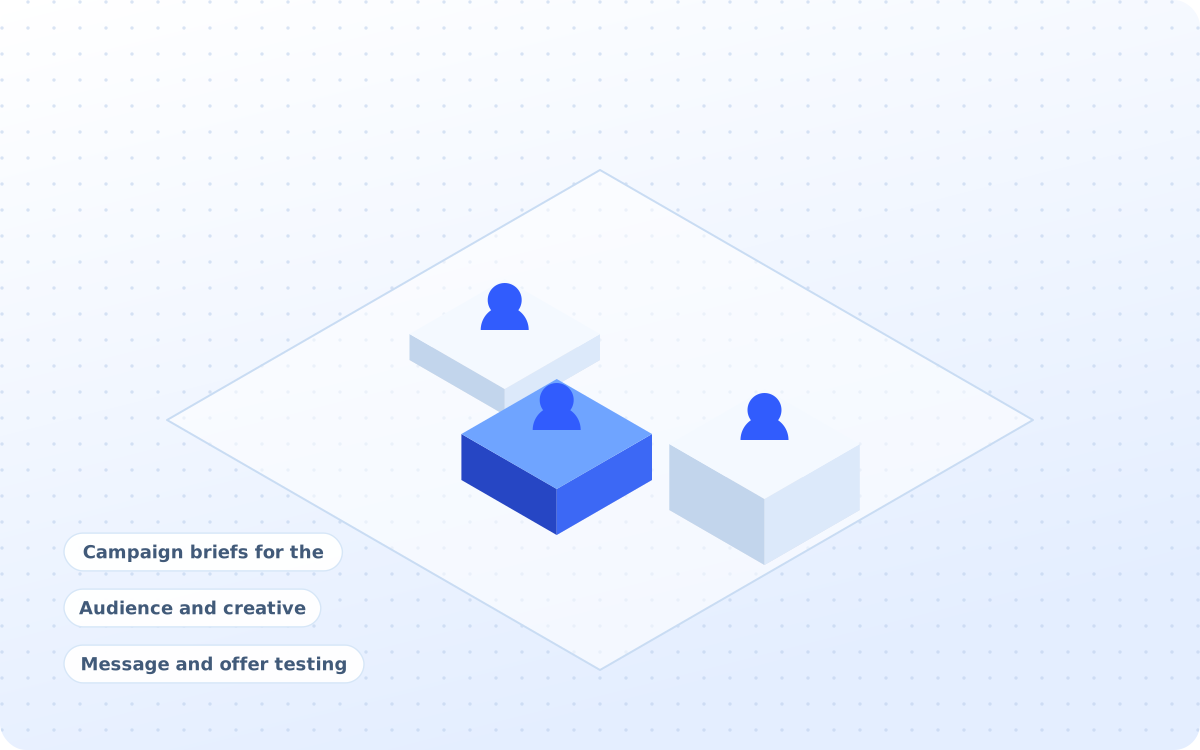
Paid briefing, testing and results
Where a paid team runs the budget, they get a brief: the audience, the concept, the funnel and what the creative has to do. Message, audience, creative and offer are then tested one at a time.
- Campaign briefs for the paid team
- Audience and creative recommendations
- Message and offer testing plan
What lands on your desk
Six artefacts, all of them editable. The campaign brief is the one your paid team will use.
Campaign strategy
Which audiences, which corridors and which platforms are worth a campaign in the next quarter.

Corridor campaign plan
One plan per send route, with the community, the offer, the platform and the timing set out.
Creative concepts
Hooks, angles and video ideas per campaign, written so a designer can build straight from them.
Paid campaign briefs
The audience, the concept, the funnel and the offer, written for whoever is buying the media.
Testing roadmap
What gets tested, and in what order, so one campaign never confuses the reading of the next.
Performance analysis
What each campaign actually produced in app installs, signups and first transfers, creative by creative.
How a campaign gets built
Four stages, run in order. The audience and the offer are settled before any creative is commissioned.
The market, and which corridor to back
Campaigns, not a posting rota. Unlike Social Media Management, this service focuses more heavily on campaign strategy and growth outcomes.
- 01Market and audience analysis done
- 02Corridor priority for campaigns
- 03Platform strategy per audience
- 04Funnel plan from post to install
- 05Campaign calendar for the quarter
The community, and what it responds to
Diaspora campaigns are written per community and language, because a Houston audience and a Dubai audience share a corridor and little else.
- 01Community and cultural campaigns
- 02Language specific campaign messaging
- 03App promotion and install pushes
- 04New corridor launch campaign sets
- 05Referral and feature promotion
The hook, the angle and then the offer
Concepts are constructed around a single hook, with the copy framework, the video idea and the landing page pointing the same direction.
- 01Hooks and angles for each audience
- 02Video concepts and copy frameworks
- 03Offer strategy and any incentives
- 04Landing page and app store match
- 05Awareness and education concepts
The paid brief, and then what gets tested
Concepts reach whoever purchases the media with the audience and funnel already attached, then campaigns are tested one variable at a time.
- 01Briefs written for the media buyer
- 02Audience recommendations are supplied
- 03Message and creative testing runs
- 04Format and offer test results shown
- 05Acquisition performance is reported
What a campaign contains
Ten groups of work sit behind the service, and these twelve are what any single campaign contains.
Market analysis
Who is already winning the corridor
Audience strategy
Which community, in which city
Corridor campaigns
Built per send and receive route
Diaspora campaigns
Written in the language spoken
App promotion
Campaigns that end in an install
Corridor launches
A new route, announced properly
Referral campaigns
Senders asked to bring senders
Offer strategy
What the campaign actually gives
Funnel planning
From first view to first transfer
Paid briefing
Concepts handed to the media buyer
Campaign testing
One variable, one campaign, one read
Three ways to buy this
One of these will fit, whether the next campaign is a corridor launch or a whole year of them.
Full campaign programme
The strategy, the concepts, the briefs and the analysis, with a new campaign built each quarter.
- Monthly fee, agreed before we start
- Media budget stays with your team
- Read against installs and transfers
Single corridor launch
One route, one community and one campaign, from the concept through to the performance read.
- One fixed fee, six weeks in total
- Concepts and paid briefs included
- Reported once, at the campaign end
Creative concepts only
Hooks, angles and offers for your own team to produce, with nothing published from our side.
- One fixed fee for each campaign
- You keep every concept file we make
- No retainer and no lock-in at all
Comparison. A general agency will pitch a viral idea. Social media marketing for remittance companies asks which corridor it grows and what it costs per install.
Position. Most operators need one corridor campaign done properly before a full programme, and it costs less.
- Licensing and AML questions go to a qualified adviser. We handle advertising and marketing compliance.
Audit line. If none of the three fits, a fixed-fee growth audit will say which one should.
Four steps to a campaign
Two weeks of planning, and then the build. A corridor campaign is usually in market inside six weeks.
Pick the fight
WEEK 1One corridor and one community chosen on send volume, margin and how winnable they are.
Settle the offer
WEEK 2What the campaign actually gives a sender, agreed with you before any concept is drawn.
Build the work
WEEK 3-5Hooks, copy, video concepts and the paid brief, produced against the funnel that was agreed.
Launch and read
WEEK 6Live for six weeks, then read against installs, signups and first transfers by community.
How results get reported
No client figure appears without written permission. These three are facts about how the work is run.
Services that pair with this
A campaign creates the demand. These three catch it, explain it and then hold onto it afterwards.
The long-form articles a campaign points to when a sender wants more than a thirty second video.
Learn moreSEO Website CopywritingThe corridor landing pages a campaign sends traffic to, written so the click becomes a signup.
Learn moreFull Stack SEOThe organic search work that keeps working long after a campaign has finished running altogether.
Learn moreQuestions operators ask first
Answers come first. Where the honest answer is no, it says no and explains what to do instead.
Yes. Social media marketing for remittance companies is all that gets planned, so corridor economics and diaspora communities are the starting point.
Both. App-led operators run install campaigns. Agent-led operators run campaigns that end at a counter, so the call to action is a location rather than a download.
Yes. A corridor campaign is the usual starting unit, because the community, the language and the competing operators all change with the route.
Yes, though one at a time works better. Running four corridor campaigns at once makes it impossible to read which creative earned the installs.
Campaign claims go to your compliance review before anything runs, and platform policy for financial services is checked first. Licensing and AML go to a qualified adviser.
Corridor volumes, current acquisition cost, the offer you can afford, platform access, and whoever signs off creative and compliance wording internally.
A corridor campaign is usually in market within six weeks. Strategy takes two of those, and creative production takes most of the rest.
Yes. Campaign tagging is set up so installs, signups and first transfers appear against the campaign in your own analytics rather than only in the platform.
Yes, where your systems allow it. Campaign tags carry through to registration and first transfer, so cost per verified sender can be read per community.
Partly. Referral and feature campaigns reach existing senders, though reactivation is moved far more reliably by email, SMS and push than by social.
Every concept carries a tag, so installs, signups and first transfers are counted per campaign and per community rather than as one social total.
Monthly: cost per install, cost per signup and cost per first transfer by campaign and by community, with the creative that produced each one named.
Margin from first transfers attributed to the campaign, against the fee and the media budget. Social media marketing for remittance companies is judged on that, not on reach.
By putting a specific offer in front of a specific community at the moment they are choosing, rather than posting rate cards and hoping somebody notices.
Indirectly. A sender acquired through a campaign built around their own corridor tends to send again, because the product matched the promise made.
Operators, remittance apps and payout platforms on the roster
Marks appear once written permission is on file for each operator.
Start with one corridor campaign
A campaign that converts in Houston will not convert in Dubai. A fixed-fee growth audit names the community worth starting with and the offer.
You keep the campaign strategy whether or not we work together.