AI outbound calling for remittance apps
A sender who abandoned verification on Tuesday does not need a promotional email on Friday. They need a phone call, in their language, while they can still remember trying.
Remittance only · Consent led, always · Opt-out honoured on the call

AI outbound calling for remittance companies is consent-led. Potential use cases include: Incomplete onboarding, Abandoned KYC, First-transfer activation, Customer service callbacks, Dormant customer reactivation, Survey and feedback collection. Every call runs inside your consent records, your suppression list and the calling hours of the market it sits in. None of it is cold calling, and none of it will be.
What changes on the phone
Nobody wants a robot ringing them at dinner time. Four things separate this work from exactly that.
A list gets dialled
Everyone with a phone number hears from the system anyway.
A segment gets called
Only consented customers at a known lifecycle stage get a call.
One script for all
The same English recording plays into every send corridor.
A script per purpose
KYC recovery, first transfer and reactivation each sound different.
The call goes nowhere
A complaint or a dispute just keeps talking to a machine.
The call finds a human
Disputes, complaints and vulnerability go straight to a person.
Nothing gets logged
Support has no idea the customer was even called last week.
Everything gets logged
Attempt, outcome, opt-out and escalation land in the CRM.
What the calling covers
Four rows, and all four are about restraint. The rules always come before the call list does.
What every call must operate within
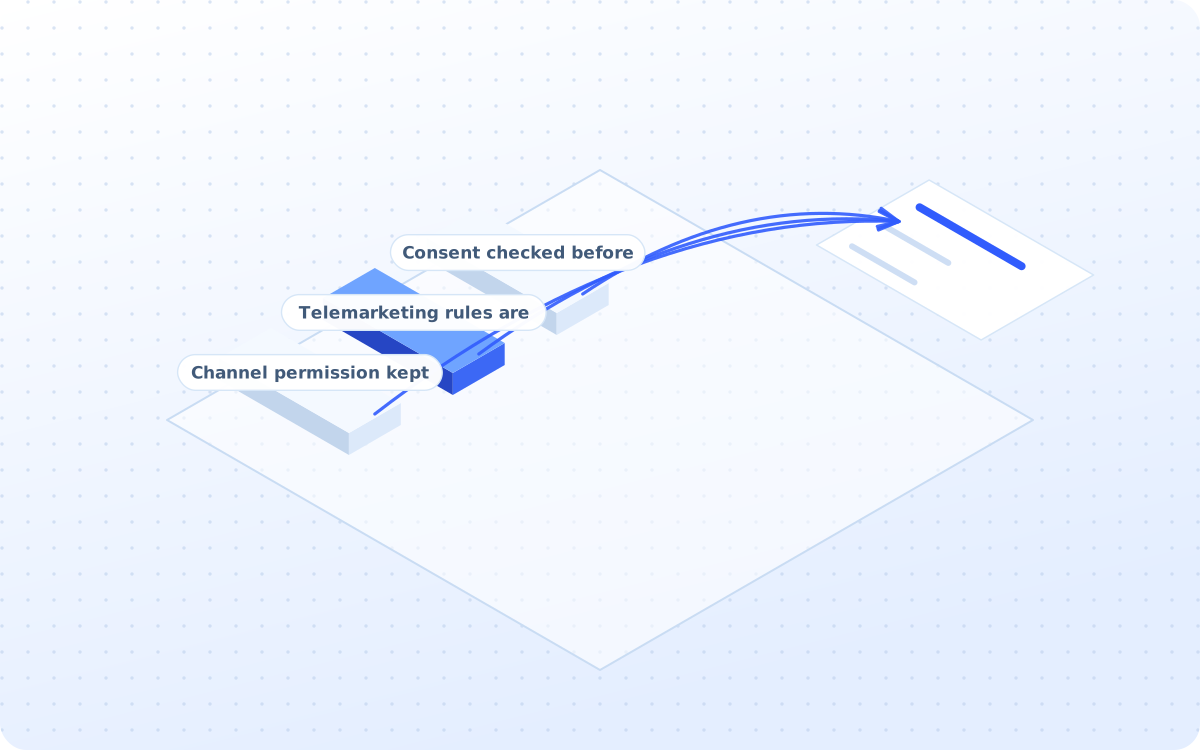
There is no version of this that starts with a list of numbers and a dialler. It starts with consent. AI outbound calling must operate within: Customer consent, Telemarketing regulations, Channel permissions
- Consent checked before dialling
- Telemarketing rules are respected
- Channel permission kept on record

The rest of that, and the warning
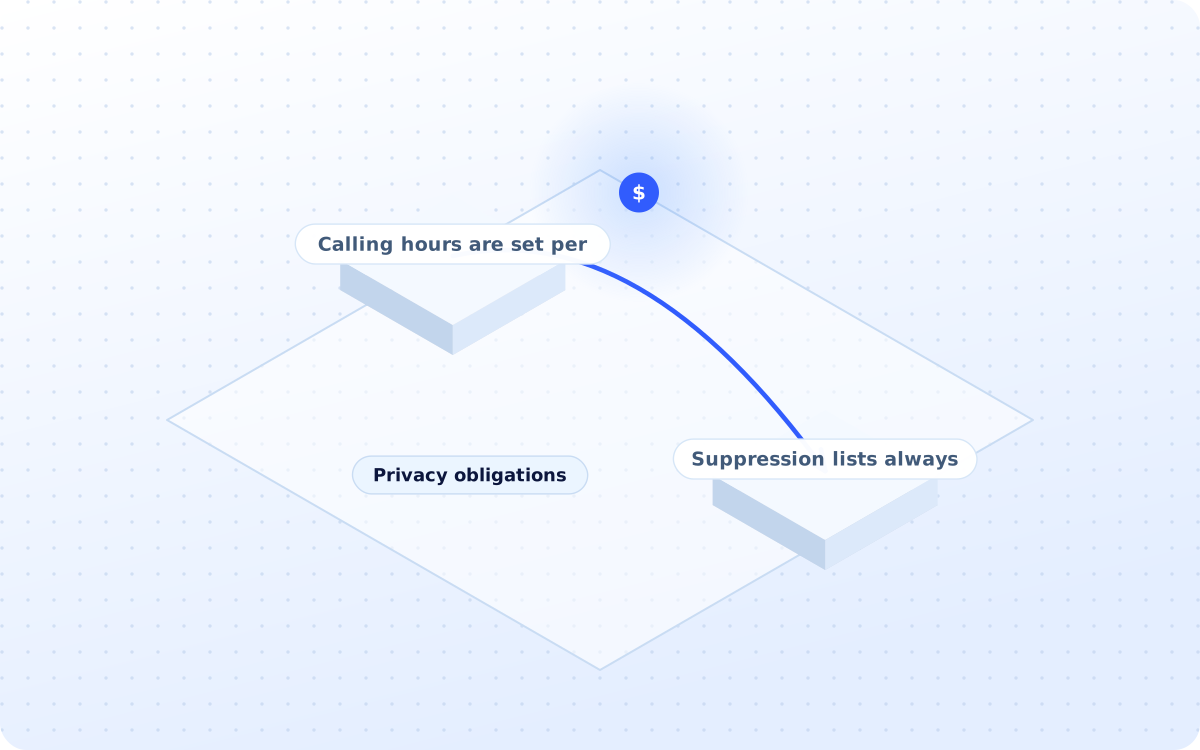
The list carries on, and so does the rule. Calling-hour restrictions, Suppression lists, Privacy obligations No website page should imply that automated calling can be deployed without these controls.
- Calling hours are set per market
- Suppression lists always honoured
- Privacy obligations written in
What this service is never sold as
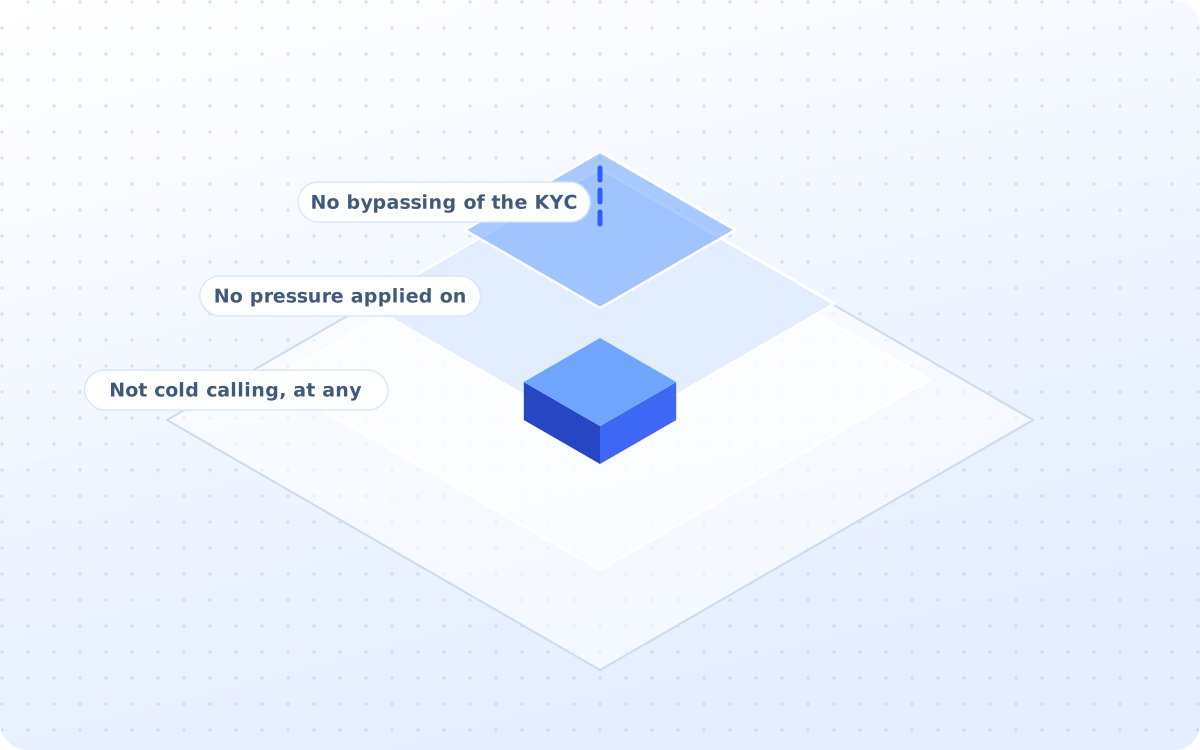
Two things this will never be. This service should never be positioned as unrestricted automated cold calling. The system should not attempt to pressure customers into bypassing verification requirements.
- Not cold calling, at any point
- No pressure applied on verification
- No bypassing of the KYC screen
The two rules people forget most
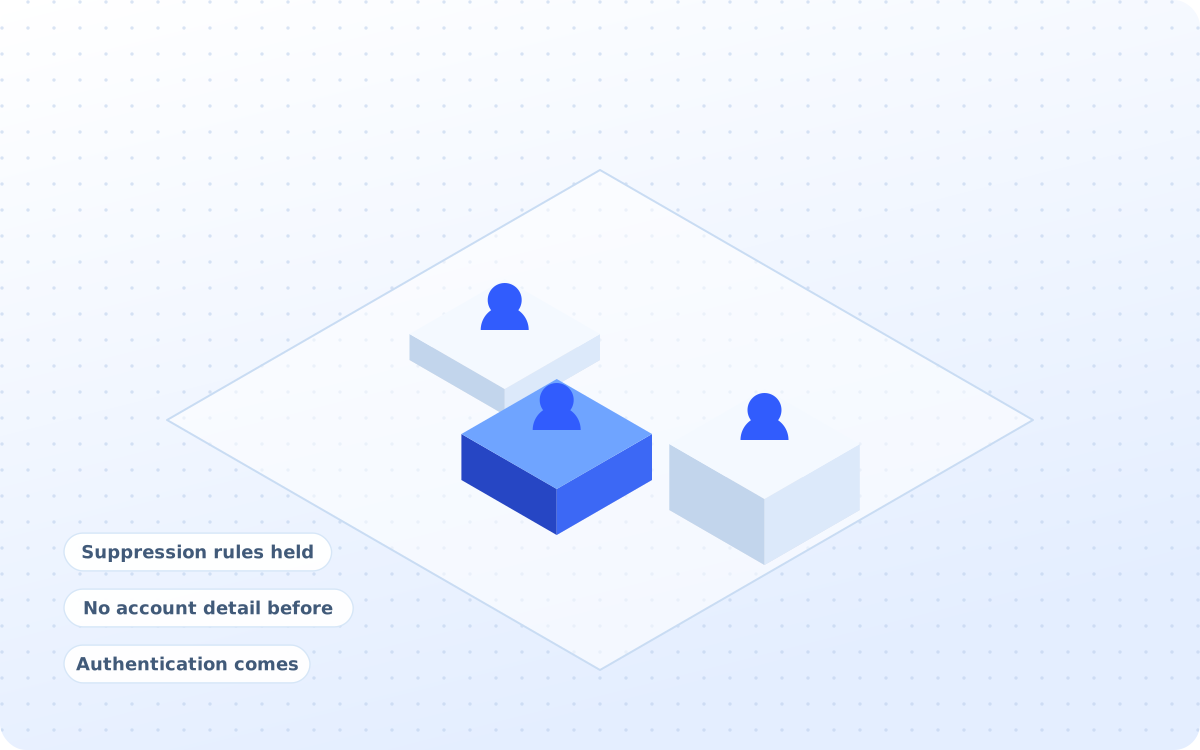
Two more rules sit behind this, and both of them get in the way of doing anything quick. Communications should respect customer consent, local telemarketing laws and internal suppression rules.
- Suppression rules held internally
- No account detail before login
- Authentication comes before anything
What you actually receive
Six artefacts, all of them yours to keep. The consent register is the one that really matters.
Calling strategy
The eligible segments, the call purpose, the frequency, the time windows and the escalation path.

Consent register
The consent status, the opt-outs, the do-not-contact lists, the frequency caps and the market rules.
The call scripts
One per purpose, in the languages the corridor actually speaks, with the opt-out line included.
Escalation rules
Which calls stop and go to a person, covering the disputes, complaints and vulnerability support.
CRM logging map
Whether it was attempted, connected, answered or refused, and what happened next, all written back.
Performance report
Contact rate, answer rate, recovery, activation, reactivation and the opt-out rate, all of it monthly.
How the calling work runs
Four stages, run in order. The consent check always happens before a single phone number gets loaded.
Who is actually allowed to get a call
The consent status, the opt-outs, the do-not-contact lists, the contact frequency and the market restrictions all get checked before dialling.
- 01Consent status checked up front
- 02Opt-outs honoured almost immediately
- 03Do-not-contact lists are respected
- 04Frequency capped for each customer
- 05Market restrictions all applied
The calls that finish what has stalled
Failed OTPs, abandoned account creation, incomplete documents and technical problems get a call from somebody who can actually help with it.
- 01Failed OTPs get called back again
- 02Abandoned signups get recovered
- 03KYC documents chased quite gently
- 04No pressure to skip a single step
- 05Technical faults get sent onward
Getting from registered to first transfer
Product education, recipient setup, transfer-method guidance and any approved offer go to customers who registered but have never sent anything.
- 01Recipient setup walked through
- 02Transfer method explained once
- 03Only approved offers mentioned
- 04First transfer help, on the call
- 05Dormant senders called separately
When the call stops being an automated one
Complaints, complex support, financial disputes, compliance questions and any sign of vulnerability get transferred to a trained person at once.
- 01Complaints leave the system at once
- 02Disputes always go to a person
- 03Vulnerability handled by staff
- 04Compliance questions get escalated
- 05Every handoff written to the CRM
What the service covers
Twelve groups of work sit behind the service, and these twelve tiles are the whole of it.
Signup recovery
Failed OTP, abandoned signup
KYC recovery
Documents, faults and guidance
First transfer
Recipient setup and method help
Dormant reactivation
Inactivity, corridor, past use
Service callbacks
Requested callbacks and updates
Feedback calls
Satisfaction, onboarding, support quality
Referral calls
Approved referral explanations only
Call personalisation
Name, language, lifecycle stage
Consent management
Opt-outs, caps, suppression lists
Human handoff
Disputes, complaints and vulnerability
The CRM logging
Attempt, outcome, opt-out, escalation
Three ways to buy this
One of these will fit, whether the consent data is already clean or still needs a lot of building.
Complete calling build
The strategy, the consent register, the scripts, the escalation and the logging, for every call type.
- Fixed fee, agreed before we start
- Six weeks from scope to first call
- Consent evidence required up front
Single recovery workflow
Just the abandoned KYC calls, when that queue is the one quietly costing you first transfers.
- One fixed fee, four weeks total
- One call type, measured properly
- Credited if the full build follows
Ongoing calling support
The calling work run every month, with the consent register and the scripts both kept current.
- Monthly fee, three months minimum
- Scripts reviewed at every month end
- Opt-out rate watched very closely
Comparison. A general call automation vendor sells minutes and a dialler. AI outbound calling for remittance companies starts with the consent record and the suppression list.
Position. Most operators have a KYC drop-off queue and nobody with the hours to call through it.
- Consent, telemarketing law and calling hours govern every call. We do not sell cold calling.
Audit line. If none of the three fits, a fixed-fee growth audit will say which one should.
Four steps to the first call
Six weeks to the first call. The consent evidence has to arrive before anything else at all.

Check the consent
WEEK 1-2Consent status, opt-outs and suppression lists, read before a single number is loaded.
Pick the moments
WEEK 3Abandoned KYC, registered but never sent, or dormant, with a call purpose against each one.
Write the scripts
WEEK 4-5One per purpose, in the corridor languages, with the opt-out line said out loud early.
Log the outcome
WEEK 6Attempt, connection, outcome, opt-out and escalation written into the CRM after every call.
How results get reported
No client figure appears without written permission. These three are facts about how the work is run.
Services that pair with this
Calling catches the drop-offs. These three deal with the reasons people drop off in the first place.
The inbound counterpart of it, for the sender who rings you rather than waiting to be called.
Learn moreOmnichannel AI ChatbotsThe written channel, for the customers who would rather type than answer the telephone at all.
Learn moreThe upstream fix for the KYC screen that lost them, so that fewer senders need calling back.
Questions operators ask first
Answers come first. Where the honest answer is no, it says no and explains what to do instead.
Both. An agent-led operator often has the consent recorded on paper at a counter, which becomes the first thing to sort out before any dialling.
Yes. Every attempt, outcome, opt-out and escalation writes back to the CRM you already run, because a call nobody can see is worse than no call.
Yes. Language, calling hours and the local telemarketing rules all change with the corridor, so a script that works for one route rarely works for the next.
Yes. AI outbound calling for remittance companies is the only kind built, which is why abandoned KYC and first transfer are the default call types.
No website page should imply that automated calling can be deployed without these controls. Advertising compliance is ours, the KYC decision is not.
The consent evidence, the suppression list, the corridors and the languages involved, and whoever signs off on the customer communication.
Six weeks to the first call, or four weeks for a single call type. The consent audit is what usually sets the pace, not the technology.
Yes, for targeting and reporting. Avoid exposing sensitive financial details before authentication. The call knows a customer stalled, not what their balance is.
Yes, one calling window at a time. Each corridor has its own language, its own calling hours and its own rules about when a phone may ring.
Yes. Dormant sender reactivation is one of the six call types, selected on inactivity, corridor and previous product use rather than on a raw phone list.
First-transfer activation is one of the ten indicators, measured on customers who registered, completed KYC and only sent after the call happened.
Ten indicators, monthly: contact, answer, qualified conversation, signup recovery, KYC recovery, first-transfer activation, reactivation, opt-outs, handoffs and cost per activation.
By calling the customers who finished KYC and then stopped. A short conversation about recipient setup often moves more first transfers than another push notification.
Cost per activated customer, against the manual outbound hours it replaces. AI outbound calling for remittance companies lives or dies on that one line.
A dormant sender who answers once and sends again is worth more than a new signup. The reactivation calls target inactivity, corridor and past sending patterns.
Operators, remittance apps and payout platforms on the roster
Marks appear once written permission is on file for each operator.
Call the ones who already said yes
The abandoned KYC queue is full of people who wanted to send money. A fixed-fee growth audit will say whether calling them is worth the build.
You keep the consent register whether or not you call anybody.