App user acquisition for remittance apps
A cheap app install is straightforward to purchase and worth almost nothing on its own. The number that pays salaries is cost per verified sender completing a first transfer.
Remittance only · No markup on spend · Reported on verified senders

App user acquisition for remittance apps starts with the events, not the campaigns. Install, registration, KYC completion and first transfer are defined and passed back through your measurement stack, so bidding can move past cheap installs. Campaigns, creative and deep links then all run per corridor, with cohorts read on first transfer rate rather than on raw install volume alone.
What changes in the funnel
Most remittance apps buy installs, celebrate the cost per install and never look past it. Four things change.

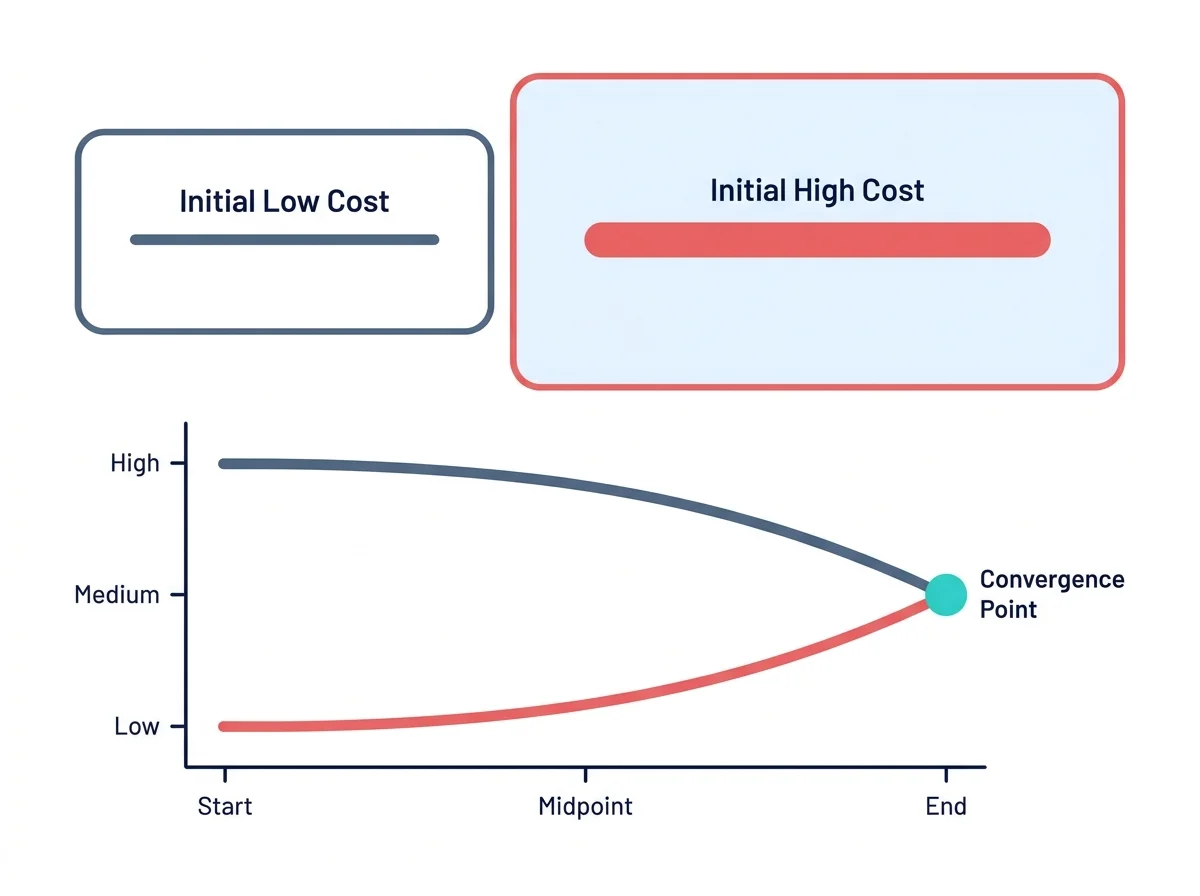
Bidding on installs
The cheapest install wins, whoever downloads and never returns.
Bidding on transfers
The first transfer event drives the bid once it fires cleanly.
Events half wired
Install fires, registration sometimes, and verification never at all.
Every event mapped
Install through to first transfer, defined and tested before launch.
One market, one plan
Nine corridors share a campaign and nobody knows which pays.
Cohorts by corridor
Each route is read on its own first transfer rate monthly.
Installs then silence
A registered user who never verified is left alone forever.
Re-engagement runs
Registered but unverified users get their own campaign and offer.
What the acquisition covers
Four rows of work, run in order. The events are wired up before any budget is committed.
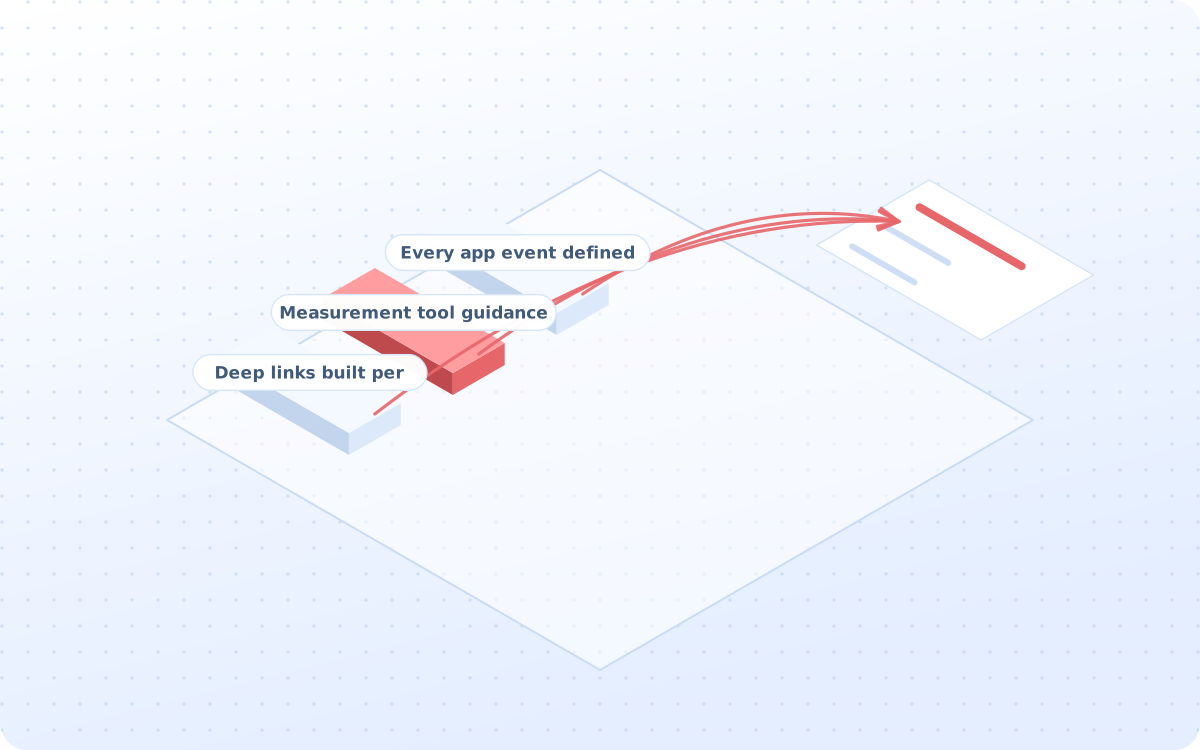
Events, attribution and deep links
Install, registration, KYC completion and first transfer are defined as events, passed back through your measurement tools and deep linked per campaign. Specific technology should depend on the client's stack.
- Every app event defined up front
- Measurement tool guidance given
- Deep links built per campaign type
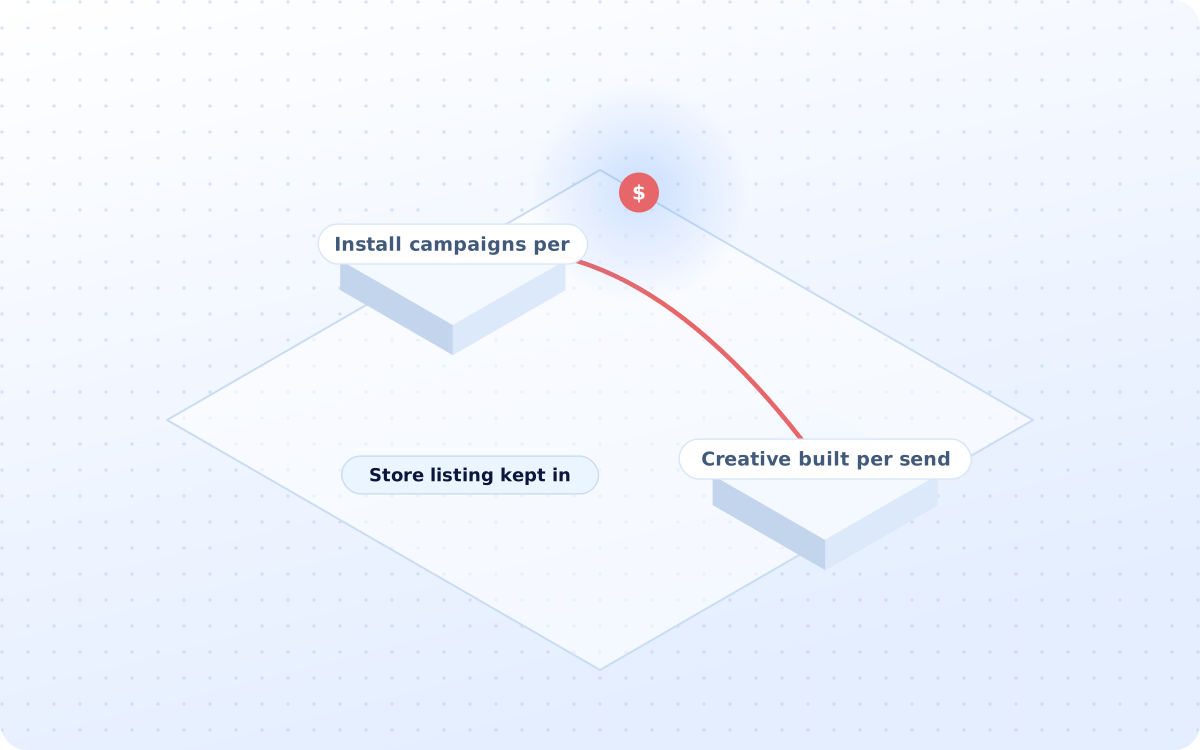
Campaigns, creative and the store
Install campaigns run across the platforms that reach diaspora audiences, with creative built per corridor. For remittance businesses, cost per install should never become the primary definition of success.
- Install campaigns per platform
- Creative built per send corridor
- Store listing kept in step with ads
Registration, KYC and first send
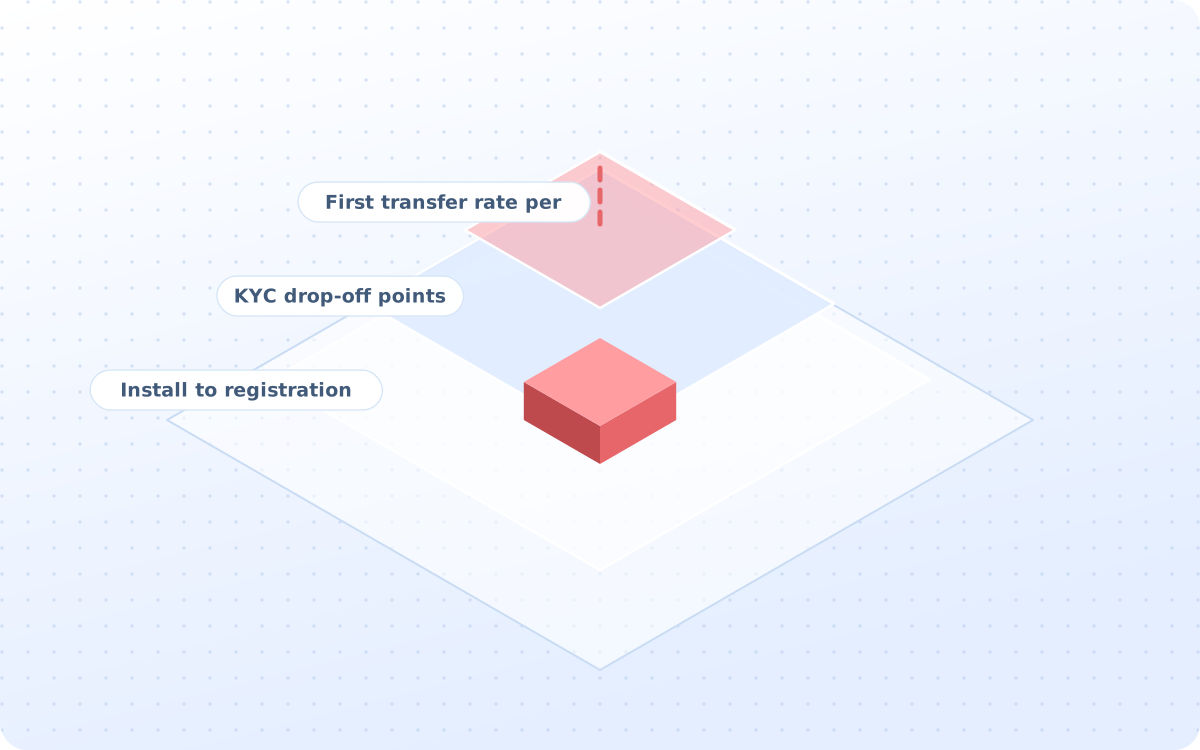
Install to registration, then to verification, then to a first transfer, each step measured on its own. The marketing team should coordinate closely with product, compliance, and analytics teams here.
- Install to registration rate read
- KYC drop-off points identified
- First transfer rate per cohort
Cohorts, re-engagement and the value
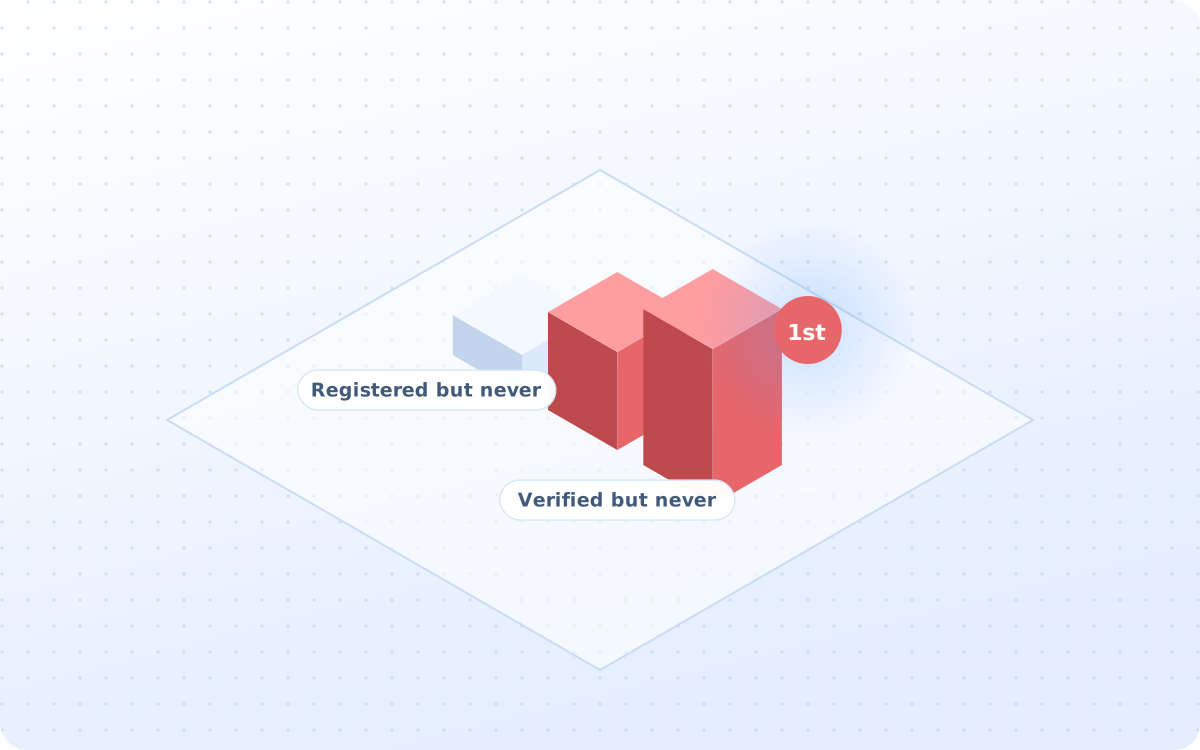
Registered but unverified users, verified but never sent, and dormant senders each get their own campaign. A cheap install that never produces a verified sender has little commercial value.
- Registered but never verified users
- Verified but never transferred
- Cohort value read out each month
What you actually receive
Six artefacts, all of them yours to keep. The event map is the one engineering will use.
The app event map
Every single event from install through to first transfer, named, defined and ready to implement.

Attribution plan
Which channel gets the credit for what, and how far past the install it is actually counted.
Deep link schedule
Which campaign opens which app screen, including the corridor pages and all the promotional ones.
UA creative briefs
App demos, corridor messages and offer creatives, briefed so that any designer can build them.
Monthly cohort report
Every acquisition cohort, read on its registration, verification and its first transfer rate each month.
Funnel drop-off log
Where the users leave, screen by screen, with the biggest losses all ranked right at the top.
How the acquisition runs
Four stages, run in order. Nothing gets scaled until the first transfer event is firing properly at all.
The events, before any of the money moves
Install, registration, KYC and first transfer are defined, implemented and tested, because a campaign can only bid towards an event that exists.
- 01Event list agreed with product
- 02SDK guidance written for your stack
- 03Attribution windows agreed first
- 04Deep links tested on each screen
- 05Event QA before any spend at all
The installs that are worth paying for
Campaigns operate across the approved app networks with creative per corridor, and the store listing is kept in step with the advertising.
- 01Google, Meta and TikTok campaigns
- 02Corridor creative and app demos
- 03Value based audience planning done
- 04Store screenshots kept aligned
- 05Budget split by market and value
From an install through to a first send
Registration friction, document upload and verification drop-off are read screen by screen, then fed back to whoever owns the product itself.
- 01Install to registration friction
- 02Onboarding and permission steps
- 03Document upload drop-off found
- 04Verification completion is tracked
- 05First transfer prompts inside the app
The users that you have already paid for
Registered but unverified, verified but dormant, and previous senders are worked separately, because each one needs a different reason to return.
- 01Registered but unverified users
- 02Verified but never sent yet group
- 03Dormant sender re-engagement runs
- 04Cohorts by source and corridor
- 05Payback period read per market
What the work actually covers
Fourteen groups of work sit behind the service, and these twelve are what the budget actually buys.
Acquisition strategy
Which markets and which corridors
Install campaigns
Google, Meta, TikTok and YouTube
App event mapping
Install through to first transfer
Measurement setup
Guidance for whichever tool you run
Attribution work
Credit given past the install
Deep linking
Straight to the corridor screen
Store alignment
The listing matches the advert
Signup friction
Where the registration form loses
KYC drop-off
Which document screen loses most
First send push
Verified users nudged to send
Cohort analysis
Read by source, market and week
Three ways to buy this
One of these will fit, whether the app is already live or still sitting in store review.
Full managed acquisition
The events, the campaigns, the creative and the cohorts, run every month against verified senders.
- Monthly fee, no markup on spend
- Your accounts and your MMP data
- Reported on verified senders only
Complete tracking setup
The event map, the deep links and the attribution plan, built once and then handed straight over.
- One fixed fee, three weeks total
- Works with whichever MMP you use
- Your engineers implement it all
Full acquisition audit
What each source, each market and each creative actually produced, from install to first transfer.
- Two weeks, priced before we start
- Every cohort read to first send
- No obligation to continue after
Comparison. A general agency will report a cost per install. App user acquisition for remittance apps reports cost per verified sender, which is a very different number.
Position. Most operators need the verification screen fixed before more installs, and that costs less.
- Licensing and AML questions go to a qualified adviser. We handle advertising and marketing compliance.
Audit line. If none of the three fits, a fixed-fee growth audit will say which one should.
Four steps to a sender
Three weeks of wiring, and then spend. Cohort readings need a full month of transfers behind them.
Wire the events
WEEK 1-3Install through to first transfer defined, implemented and tested before any spend.
Buy the installs
WEEK 4Campaigns launched per corridor, with creative and deep links matched to each of them.
Fix the funnel
MONTHLYRegistration and verification drop-off measured, then handed to product with the numbers.
Read the cohorts
MONTHLYEvery single source judged on verified senders and first transfers, month after month.
How results get reported
No client figure appears without written permission. These three are facts about how the work is run.
Services that pair with this
App installs are only ever the start. These three decide whether any of them send money at all.
The app campaigns that live inside the very same account as the rest of your paid search spend.
Learn moreMeta AdsThe install and event campaigns that usually carry most of the whole app budget every month.
Learn moreThe verification screen where most of these expensive installs quietly give up on you entirely.
Questions operators ask first
Answers come first. Where the honest answer is no, it says no and explains what to do instead.
App-led operators mostly. Agent-led operators with an app get the same treatment, though counter transactions will never appear in the mobile attribution at all.
Yes. Guidance is written for whichever measurement tool you already run, and events are passed back so first transfers appear against the campaign.
Yes. Campaigns, creative and deep links are split per corridor, so a route that produces senders can be funded without carrying one that does not.
Yes. App user acquisition for remittance apps is all that gets run, so the event map already includes verification and first transfer.
The marketing team should coordinate closely with product, compliance, and analytics teams here. Licensing and AML questions go to a qualified adviser.
App store access, your measurement tool, current install and registration numbers, the corridors that matter, and whoever owns the signup screens.
Three weeks to wire the events, then live. Cohort readings need a further month, because a first transfer rarely happens on install day.
Yes, where your systems allow it. Verification and first transfer events can be passed back, which is what lets bidding move beyond installs.
Yes. Corridors are split into separate campaigns and separate cohorts, so the budget follows the routes that produce verified senders.
Yes. Re-engagement campaigns cover registered but unverified users, verified users who never sent, and previous senders who have gone quiet.
Through the first transfer event and cohort analysis, so every install is eventually judged on whether it produced a sender or simply a download.
Monthly, by cohort: installs, registrations, verified users, first transfers and payback period, split by source, by corridor and by creative.
By bidding towards the transfer event rather than the install, and by fixing the verification screens where the paid users are actually lost.
Cost per verified sender against margin per sender, with payback period reported beside it. A cheap install that never produces a verified sender has little commercial value.
Through re-engagement and cohort work, though send frequency responds far more to lifecycle messaging than to yet another paid impression.
Operators, remittance apps and payout platforms on the roster
Marks appear once written permission is on file for each operator.
Start with the event map first
If the first transfer event does not fire, every install you buy is a guess. A fixed-fee growth audit will show you exactly where it breaks.
You keep the event map whether or not we work together.