Video ads for remittance companies
One production should feed every paid channel that you actually buy. Most operators commission three agencies to film the same explainer, then run none of it for very long.
Remittance only · One shoot, every channel · Claims checked before edit

Video ads for remittance companies are planned once and cut for every channel that runs them. One production covers the fee explainer, the app walkthrough, the corridor story and the customer scenario, then adapts into YouTube, Meta, TikTok, Reels, display and programmatic formats. Every claim about fees, rates or transfer speed is reviewed and signed off before the edit ever starts.
What changes in production
Most remittance video gets commissioned per platform, so an explainer is filmed three times. Four things change.
Filmed per platform
Three shoots, three invoices and three versions of one story.
Filmed once, cut often
One production day becomes eleven cuts across six ad formats.
Claims added in edit
A fee figure appears in the voiceover that nobody approved.
Claims checked first
Fees, rates and speed are reviewed before a camera turns on.
One length, one channel
A sixty second film runs everywhere and suits almost nowhere.
Cut to fit each feed
Six seconds, fifteen, thirty and sixty, in every aspect ratio.
Creative runs to death
The same hook keeps playing until the cost per install doubles.
Creative gets replaced
New hooks and lengths are queued before the old ones fade.
What the production covers
Four rows of work, run in order. The claims list is agreed before a single script is written.

One plan, and then every channel
One set of assets, cut for every channel that runs video. This service should function as the cross-platform video advertising capability, whereas YouTube Ads focuses specifically on YouTube media buying.
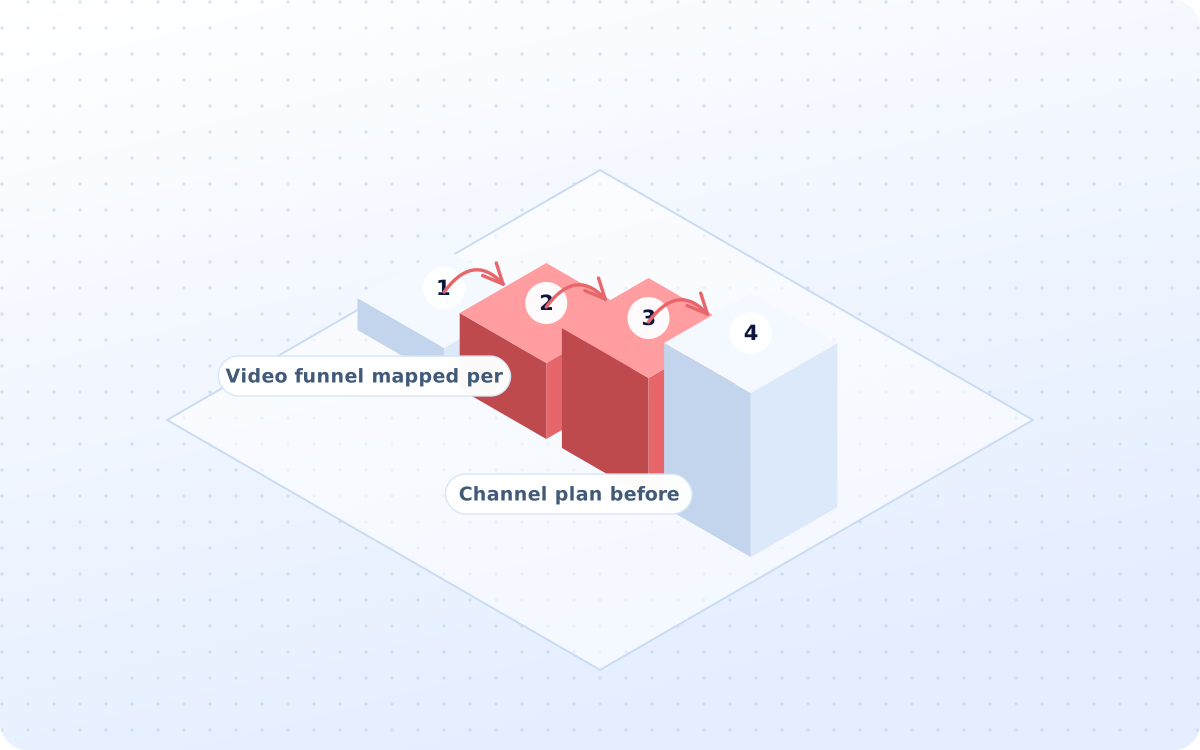
- Video funnel mapped per funnel stage
- Channel plan before production
- Testing roadmap agreed up front
Explainers, UGC and the corridors
How a transfer works, how the recipient collects and what verification asks for are the core explainers. Creator scripts, customer scenarios and corridor stories in the right language sit alongside them.
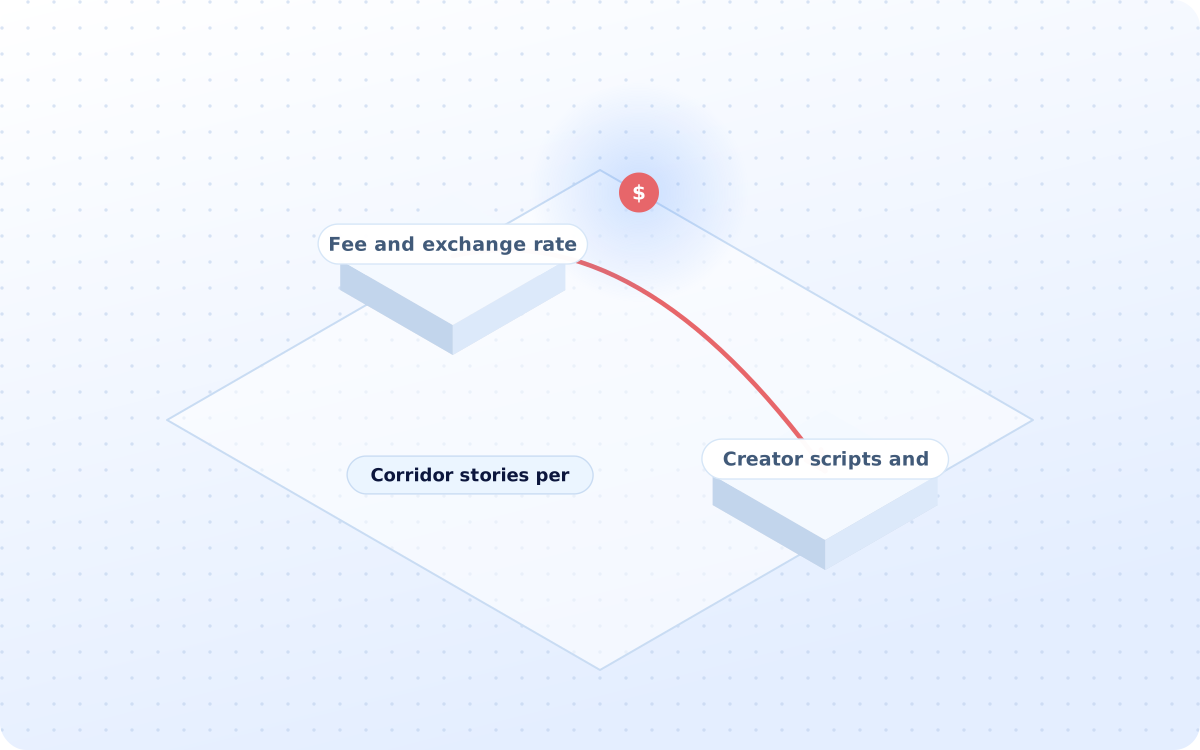
- Fee and exchange rate explainers
- Creator scripts and customer scenarios
- Corridor stories per receive country
Adaptation, copy and all the cuts
One master becomes YouTube, Meta, TikTok, Reels, display and programmatic cuts, each with its own aspect ratio and length. Hooks, supers, captions and end cards are written per format rather than reused.
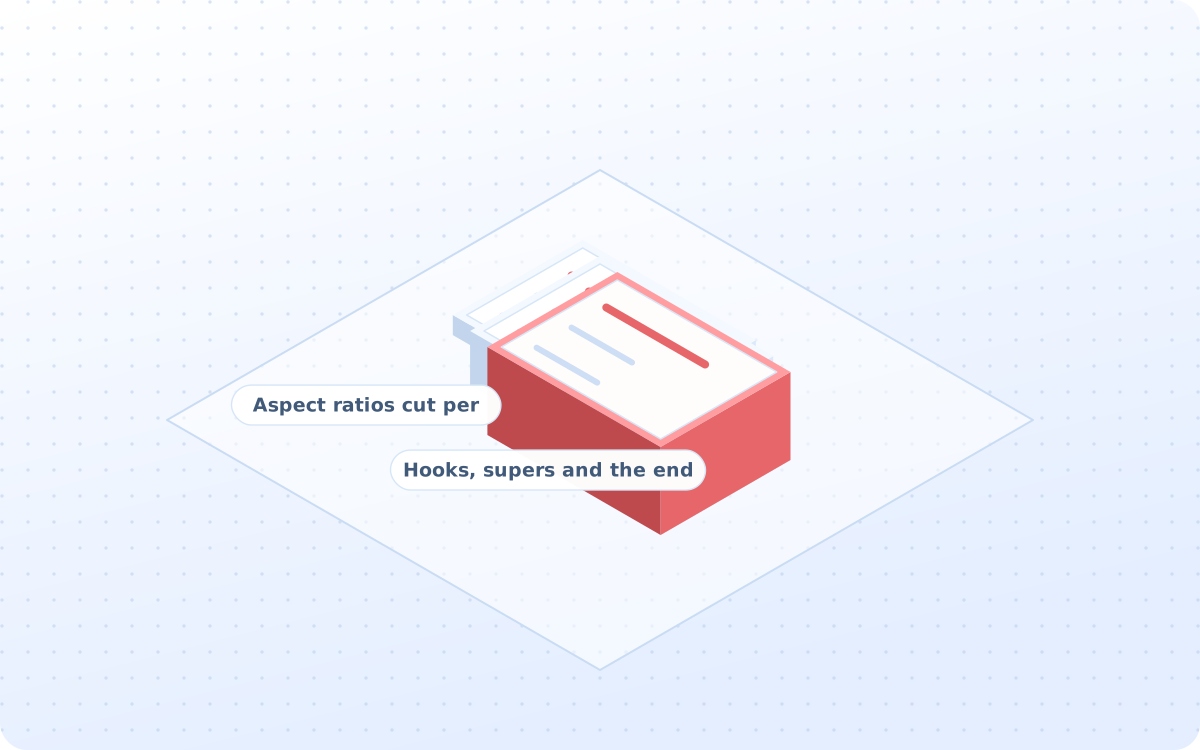
- Aspect ratios cut per placement
- Hooks, supers and the end cards
- Captions written for sound off
The claims pass, and then the tests
No script gets to an edit until it has had a claims pass. Review creative claims involving: fees, exchange rates, transfer speed, security, promotional offers, customer savings, regulatory statements.
- Fee and rate claims reviewed first
- Promotional offers checked too
- Hook, length and format testing
What lands in the folder
Six artefacts, all of them yours to keep. The claims log is the one your compliance team keeps.
Video funnel plan
Which video does which job, on which channel, and at exactly which stage of the funnel itself.

Script and hook pack
Every script, hook, super and end card, written in full and ready for whichever editor you use.
Explainer video set
The transfer, the payout, the fee and the verification, each explained in its own short cut.
Channel cut library
Every ratio and length a media buying team needs, named clearly so nobody has to ask twice.
Claims review log
Which claims were checked, which ones were changed, and who signed the finished wording off.
Experiment roadmap
Hook, length, format and offer tests, all set out in the order they should actually be run.
How the video gets made
Four stages, run in order. Nothing reaches an edit suite before the claims have been signed off.
The funnel, and which channel gets what
Channels, funnel stages and objectives are agreed first, so one production brief covers everything rather than three separate ones later.
- 01Funnel stage set per video type
- 02Channel list agreed with you first
- 03Audience plan drawn per corridor
- 04Campaign objectives written down
- 05Testing roadmap before filming
The explainers, and who actually tells them
Acquisition, retargeting and first transfer creatives are produced together, with explainers and creator scripts filmed in the same few days.
- 01Acquisition and retargeting cuts
- 02App install and first transfer
- 03How a transfer works, explained
- 04Creator and customer style videos
- 05Corridor stories in the language
One master, and then every ratio needed
The same production is cut for YouTube, Meta, TikTok, Reels, display and programmatic, with copy rewritten for each feed rather than pasted.
- 01Six second and fifteen second cuts
- 02Vertical, square and landscape
- 03Sound off captions on every cut
- 04End cards written for each channel
- 05Programmatic and display sizes
The claims pass, and what gets tested
Fees, rates, speed, security and offers are checked against your own approved wording before an edit begins, then the testing follows on.
- 01Fee and exchange rate claim check
- 02Transfer speed statements reviewed
- 03Security and savings wording checked
- 04Hook and length experiments run
- 05Creator and offer tests booked
What one shoot produces
Nine groups of work sit behind the service, and these twelve are what comes out of one shoot.
Acquisition films
Built to earn a registration
App install cuts
Shorter, faster, store facing
Transfer explainers
How the money actually moves
Fee explainers
What a transfer really costs
Verification video
Why the documents are needed
Creator scripts
Customer style, not brand voice
Corridor cuts
Local references, local language
Channel adaptation
Six ad formats from one master
Ad copywriting
Hooks, supers, captions, end cards
Claims review
Fees, rates, speed and savings
Creative testing
Hook, length, format and offer
Three ways to buy this
One of these will fit, whether there is a studio on retainer already or nothing filmed yet.
Continuous video supply
A set number of new cuts every month, each tested and replaced before creative fatigue arrives.
- Monthly fee, agreed before we start
- Production billed at cost to you
- Claims pass on every single cut
Complete production block
One shoot, every explainer and every channel cut, delivered in a single six week run of work.
- One fixed fee for the whole block
- Six weeks from brief to delivery
- Every channel format is included
Complete script package
Every script and the claims pass, written out for whichever production house you already use.
- One fixed fee for each script set
- You keep your own production house
- Claims log handed over as well
Comparison. A production company will deliver a beautiful film. Video ads for remittance companies deliver eleven cuts and a claims log your compliance team can read.
Position. Most operators need one shoot used properly before a second one gets commissioned at all.
- Licensing and AML questions go to a qualified adviser. We handle advertising and marketing compliance.
Audit line. If none of the three fits, a fixed-fee growth audit will say which one should.
Four steps to the cuts
Two weeks of planning, and then a shoot. Every channel cut is usually delivered inside six weeks.
Plan the shoot
WEEK 1Channels, funnel stages and objectives agreed, so one brief covers every cut needed.
Write and check
WEEK 2Scripts drafted, then every fee, rate and speed claim reviewed before any filming starts.
Filming and edit
WEEK 3-5One production day, then every ratio, length and end card cut from the same footage.
Test and replace
WEEKLYHooks and lengths tested weekly, with tired cuts pulled before the install cost climbs.
How results get reported
No client figure appears without written permission. These three are facts about how the work is run.
Services that pair with this
A video explains the product properly. These three then decide where it runs and what happens next.
The search demand that follows a video, from somebody who is now looking for your brand by name.
Learn moreMeta AdsThe feed where these cuts run hardest, and where most of the retargeting budget ends up living.
Learn moreThe verification screen every explainer sends people to, and where most of them give up entirely.
Questions operators ask first
Answers come first. Where the honest answer is no, it says no and explains what to do instead.
Both. App-led operators need install and first transfer cuts. Agent-led operators need branch and counter scenarios, which is a different shoot list entirely.
Yes. Every cut is named and tagged so installs, registrations and first transfers can be read against the exact creative in your own reporting.
Yes. Corridor cuts change the language, the local references and the recipient scenario, which is usually a recut rather than a whole new shoot.
Yes. Video ads for remittance companies are all that gets produced, so the scripts already know what payout options and verification mean.
Every script goes through one pass first. Review creative claims involving: fees, exchange rates, transfer speed, security, promotional offers, customer savings, regulatory statements.
Your approved claims, the corridors you want covered, brand assets, channel access, and whoever signs off creative and compliance wording.
Six weeks from brief to delivered cuts, with two of those spent planning. Adapting footage you already own can take as little as a fortnight.
At the creative level, yes. Cost per verified sender can be compared cut by cut, though the videos themselves never touch any customer data.
Yes. One master production usually covers several corridors, with recuts per receive country rather than a separate shoot for each of them.
Through retargeting cuts, yes. Repeat sending still responds far better to email and push than to paying to show the same person another video.
Every cut carries its own name and tag, so a first transfer can be attributed to the hook, the length and the channel that produced it.
Monthly, and per cut: view rate, cost per registration and cost per first transfer, so a tired creative shows up before the budget notices.
By answering the fee, payout and verification questions before signup, so a first-time sender reaches the form already expecting what it asks for.
Production cost against the media efficiency it buys. One shoot spread across six channels is measured on blended cost per first transfer, not on views.
Indirectly. A sender who understood the product before signing up needs less support and sends again, though lifecycle messaging moves frequency far more.
Operators, remittance apps and payout platforms on the roster
Marks appear once written permission is on file for each operator.
Start with one shoot, used properly
You almost certainly own footage that could be cut eleven more ways. A fixed-fee growth audit will say what is worth reusing and what needs filming.
You keep the scripts and the claims log either way.