Money transfer programmatic advertising
Programmatic will spend a budget faster than any other channel, on inventory nobody ever looked at. The exclusion list matters more than the targeting on a financial services account.
Remittance only · No markup on spend · Exclusion list before launch

Programmatic advertising for remittance companies buys display, video and native inventory around the content diaspora audiences already read: migration, international money, family finance and travel. Geography narrows it to the sending cities that matter, and the exclusion list keeps a money transfer brand off inventory it should never appear on. It works best as an expansion channel, not a first one.
What changes in the buy
Most programmatic runs wide, buys cheap and tells you almost nothing you can act on. Four things change.
Reach at any price
The cheapest impressions win, wherever they happen to appear.
Reach where it counts
Inventory is chosen around migration, money and family finance content.
No exclusion list
A money transfer banner turns up beside content nobody wants.
Exclusions first
Sites, apps and categories are blocked before a bid is placed.
Frequency runs free
One person sees the same banner forty times in a single week.
Frequency is capped
Caps are set per audience, so budget reaches new people instead.
Impressions reported
The monthly deck counts views and no registrations at all.
Placements reported
Every placement, its quality and its conversions are named.
What the media work covers
Four rows of work, run in order. The exclusion list exists before the first bid goes out.

Strategy, inventory and the budget
The first honest question is whether you should be buying this channel yet at all. Programmatic should generally become an expansion channel, not the first channel launched for an early-stage remittance company.
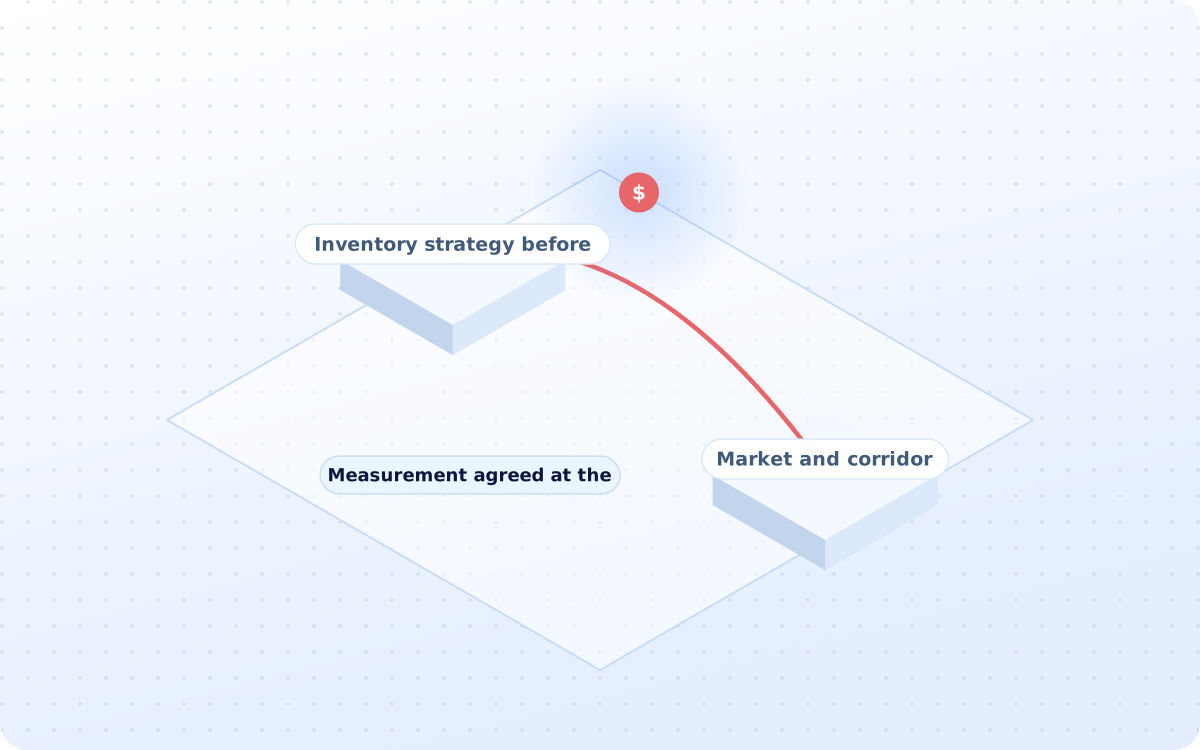
- Inventory strategy before budget
- Market and corridor selection set
- Measurement agreed at the start
Context, geography and the audiences
Placement sits around migration, international money, personal finance, diaspora news and travel sites, narrowed to the cities where your senders actually live, where data policy and platform capabilities permit.
- Contextual themes chosen per market
- Cities and diaspora clusters named
- First-party audiences, where allowed
Display, video and the retargeting
Banners, responsive display, native units and pre-roll video all run from the same creative set, with website visitors, product readers and funnel drop-offs retargeted. Subject to consent and privacy requirements.
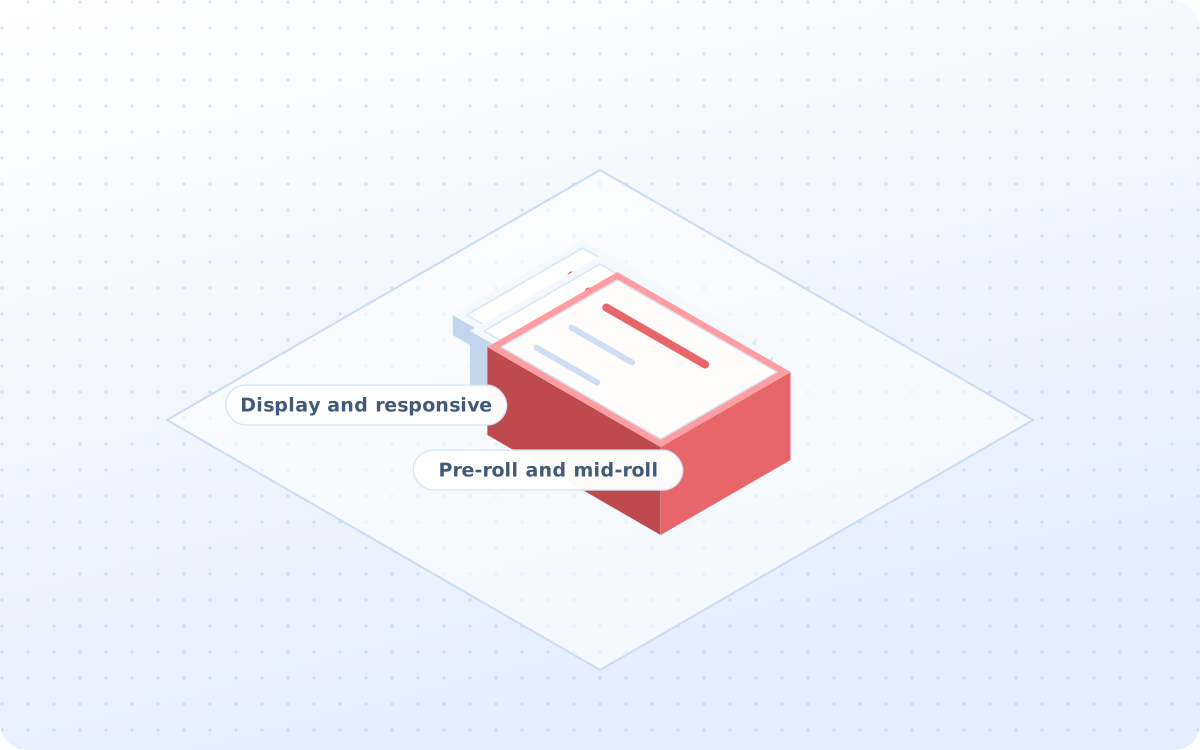
- Display and responsive banners
- Pre-roll and mid-roll video slots
- Funnel drop-off retargeting sets
Brand safety and the reporting
Site, app and category exclusions, fraud detection, invalid traffic monitoring and frequency caps sit around every campaign, and the placement report names each site. Especially important for financial services.
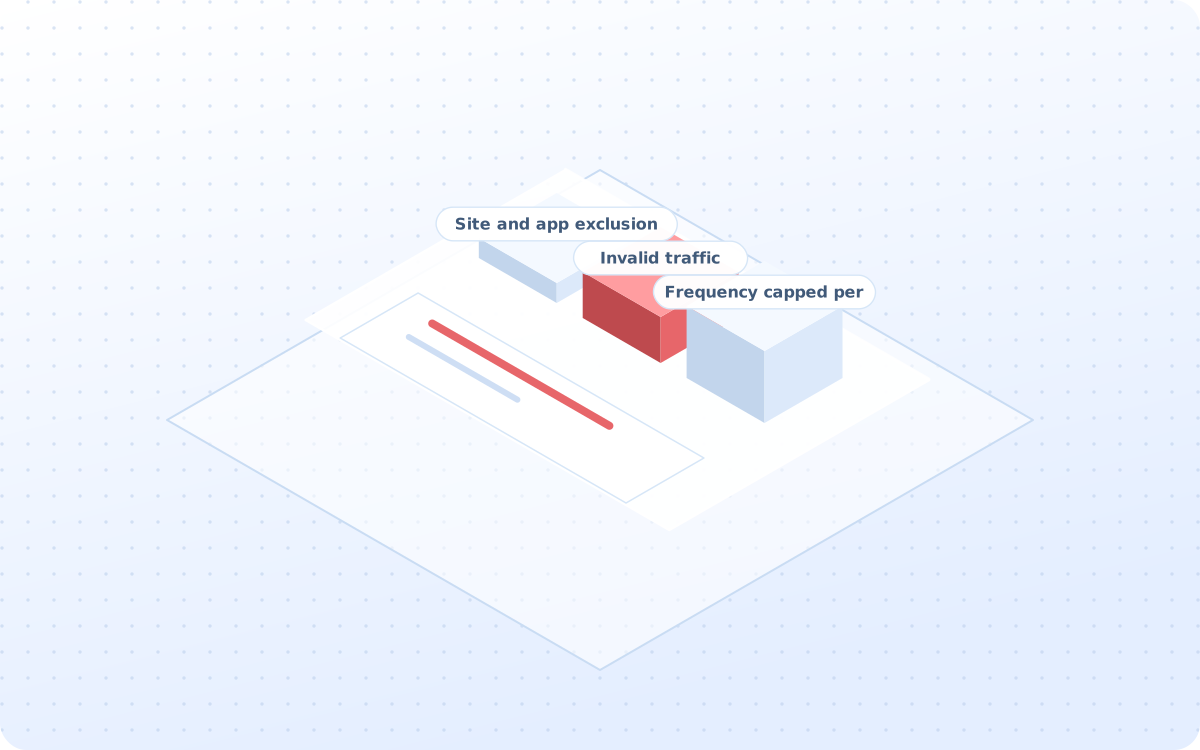
- Site and app exclusion lists built
- Invalid traffic monitoring in place
- Frequency capped per audience set
What you actually receive
Six artefacts, all of them yours to keep. The exclusion list is the one worth reading twice.
Inventory strategy
Which environments are worth buying, which ones are not, and why each of those calls was made.

Audience and geo plan
Which cities, which clusters and which audience types get the budget, and in what exact order.
Site exclusion list
Every single site, app and category that a money transfer brand should never appear beside.
Creative format set
Every banner size, every native unit and every video length that this buy actually will need.
Frequency rules
How often a single individual can see you throughout one week, set per audience and creative.
Placement quality report
Every single site that ran, what it cost you and whether anybody registered afterwards at all.
How the media buying runs
Four stages, run in order. Nothing bids at all until the exclusion list and the caps are agreed.
Whether you should be buying this at all
Search and social generally deserve the first budget, so the honest answer is often to wait until those channels genuinely stop scaling.
- 01Audience and inventory strategy
- 02Market selection, with the reasons
- 03Funnel role agreed for the channel
- 04Budget planned against search spend
- 05Measurement plan before launch
Where the ads are actually allowed to appear
Content themes, sending cities and diaspora clusters come first, with audience data used only where the platform and your own policy allow.
- 01Migration and money content sites
- 02Personal and family finance pages
- 03Sending cities and diaspora clusters
- 04First-party audiences, if allowed
- 05Lookalike prospecting, if allowed
The formats, and who sees them twice
Display, native and video run from one creative library, with retargeting kept entirely separate so nobody pays twice for the same person.
- 01Banner and responsive display units
- 02Native placements inside the feeds
- 03Pre-roll and mid-roll video slots
- 04Corridor creative built per market
- 05Website and product retargeting
The exclusions, and what gets counted
Fraud detection, invalid traffic monitoring and frequency caps run constantly, and the monthly report names every placement rather than a total.
- 01Site, app and category block lists
- 02Placement monitoring every week
- 03Invalid traffic watched closely
- 04Viewability and frequency reported
- 05Assisted conversions counted too
What the buy actually covers
Ten groups of work sit behind the service, and these twelve are what the budget actually touches.
Contextual themes
Migration, money, family finance
Geographic targeting
Sending cities, not whole countries
Diaspora clusters
Where the community actually lives
Display formats
Banner, responsive and HTML5 units
Native placements
In feed, in the reading flow
Programmatic video
Pre-roll and mid-roll inventory
Retargeting sets
Visitors, readers and drop-offs
Exclusion lists
Sites, apps and whole categories
Fraud controls
Invalid traffic watched every week
Frequency caps
Nobody sees you forty times over
Placement reporting
Every site named, every cost shown
Three ways to buy this
One of these will fit, though the honest answer for many operators is still not yet at all.
Managed programmatic buy
The strategy, the inventory, the creative and the controls, run every month with placement reporting.
- Monthly fee, no markup on spend
- Your seat and your data, always
- Exclusion list agreed with you
Corridor test campaign
One market, one budget and eight weeks, so the channel proves itself before it grows any further.
- One fixed fee for the whole test
- Eight weeks, in one market only
- Stop or scale after the first read
Complete setup handover
The inventory plan, the exclusion list and the controls, assembled once and run by your team.
- One fixed fee, three weeks total
- Your team buys the media itself
- Exclusion list handed over too
Comparison. A general agency will sell you reach. Programmatic advertising for remittance companies sells an exclusion list, a frequency cap and a placement report.
Position. Most operators should spend the next pound on search or social, and that is cheaper.
- Licensing and AML questions go to a qualified adviser. We handle advertising and marketing compliance.
Audit line. If none of the three fits, a fixed-fee growth audit will say which one should.
Four steps to first bid
Two weeks of setup, and then live. A corridor test needs eight weeks before it means anything.
Check the timing
WEEK 1Whether search and social have stopped scaling, honestly, before any budget moves at all.
Build the lists
WEEK 2Inventory, context themes, cities and the exclusions written before a seat is opened.
Launch one test
WEEK 3-10One market, capped frequency and daily placement checks for the first full fortnight.
Read the sites
WEEKLYEvery placement judged on registrations, with the weak ones excluded at the end of each week.
How results get reported
No client figure appears without written permission. These three are facts about how the work is run.
Services that pair with this
Programmatic adds reach at the top. These three usually deserve the budget long before it ever does.
The demand that already exists, which should be exhausted long before this channel even starts.
Learn moreMeta AdsThe retargeting that usually costs less than buying the same person on an open ad exchange.
Learn moreThe verification screen where all of this expensive reach quietly disappears, week after week.
Questions operators ask first
Answers come first. Where the honest answer is no, it says no and explains what to do instead.
Both, though app-led operators get more from it. Agent-led operators usually find geographic and contextual reach more useful than app inventory.
Yes. Placement, campaign and creative are tagged so registrations and first transfers appear in your own reporting rather than only in the platform.
Yes. Cities, clusters and content themes are chosen per corridor, so a Nigeria route and a Philippines route never share one campaign.
Yes. Programmatic advertising for remittance companies is all that gets bought, so the exclusion list already reflects financial services placement risk.
Brand safety controls sit around every campaign. Especially important for financial services. Licensing and AML questions go to a qualified adviser.
Your current search and social results, corridor priorities, brand safety requirements, seat access if you have one, and whoever signs off creative.
Two weeks to build the lists, then eight weeks of test before the numbers mean anything. Anybody promising a faster read is guessing.
Partly. Conversions can be imported where your systems allow it, though attribution is weaker than search or social by some distance.
Yes, though one at a time is wiser. Splitting a small budget across four corridors usually produces four campaigns that all read as noise.
Through retargeting, yes. Existing senders are reached far more cheaply by email and push than by buying their attention back on an exchange.
Through tagged placements and imported conversions, so a registration can be traced to the site it came from, with assisted conversions shown separately.
Monthly: reach, frequency, viewability, placement quality and cost per registration, with every single site that ran named rather than summarised.
Mostly by reaching people search cannot. Programmatic advertising for remittance companies works in the cities where a corridor community lives, then retargets the visitors.
Cost per registration and cost per first transfer against spend, with assisted conversions reported but never used to justify the budget on their own.
Barely. Programmatic is a reach channel, and send frequency responds to lifecycle messaging far more reliably than to another impression.
Operators, remittance apps and payout platforms on the roster
Marks appear once written permission is on file for each operator.
Start with the exclusion list first
Programmatic is easy to start and hard to control. A fixed-fee growth audit will say whether the channel deserves any of your budget yet at all.
You keep the exclusion list whether or not we work together.