Paid ads audit for remittance companies
Two weeks spent reading your ad accounts against your own transfer records, to find the campaigns, markets, audiences and creatives that have never once produced a single verified sender.
Remittance only · Fixed fees · Delivered in two weeks, not six

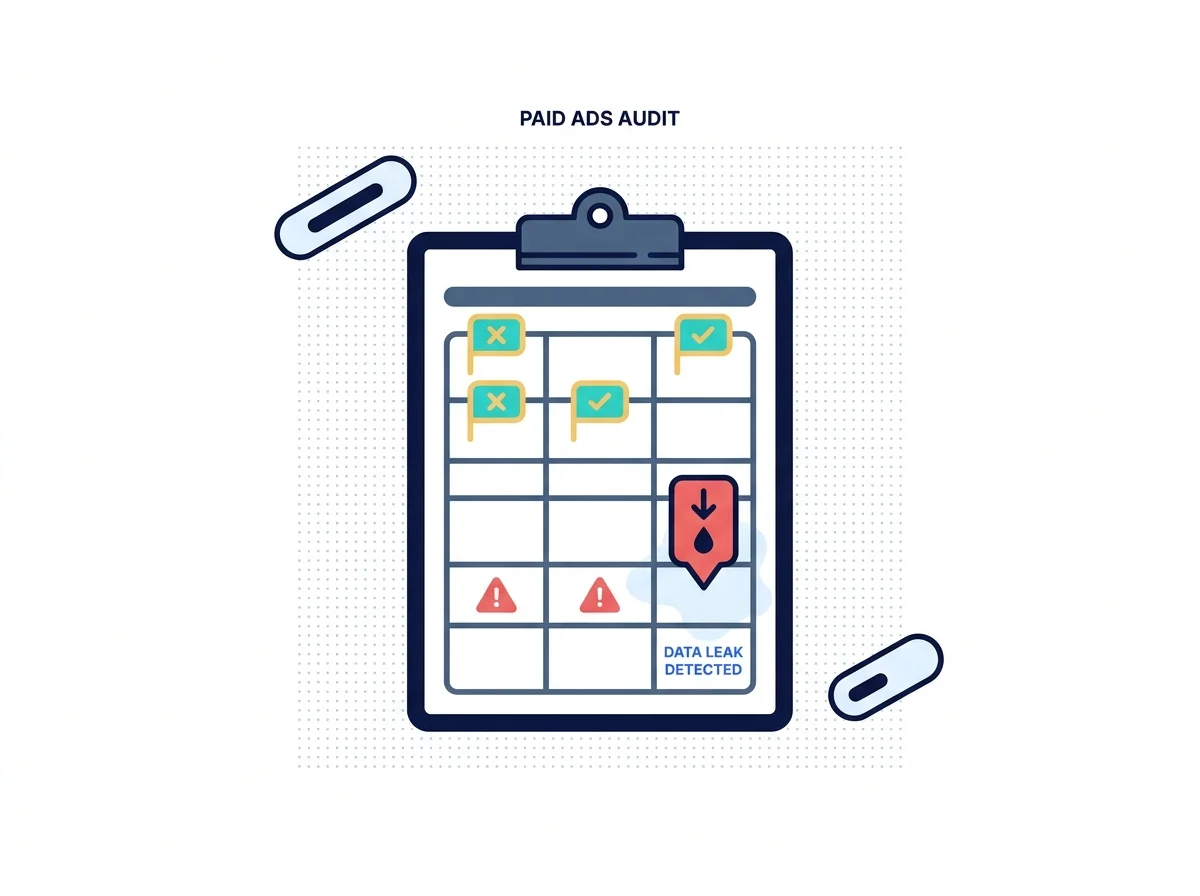
A paid ads audit for remittance companies evaluates the structure, tracking, creative, targeting and economics of an existing paid programme to find where spend is lost before it produces a verified, transacting customer. It does not stop at cost per click or cost per registration. The question is which campaigns, markets, audiences and creatives actually produce a funded first transfer at the end.
What changes after two weeks
Most remittance accounts look healthy on platform metrics and lose money on senders. Four things change.
Cheap registrations
Cost per registration looks strong and nobody checks who verified.
Cost per verified sender
Every channel is priced against senders who completed verification.
One blended number
All corridors and markets are averaged into a single acquisition cost.
Corridor by corridor
Spend and returns are compared by origin, destination and currency.
Platform-reported wins
Three platforms claim the same transfer and the total exceeds reality.
Reconciled reporting
Claims are matched against your records and the gap is written down.
Claims nobody checked
Live ads promise cheapest, fastest or instant with no evidence held.
Claim risk listed
Every risky phrase in the account is flagged before a platform finds it.
What the audit really covers
Four rows of work across eighteen audit areas. Every finding is priced in wasted spend or lost senders.

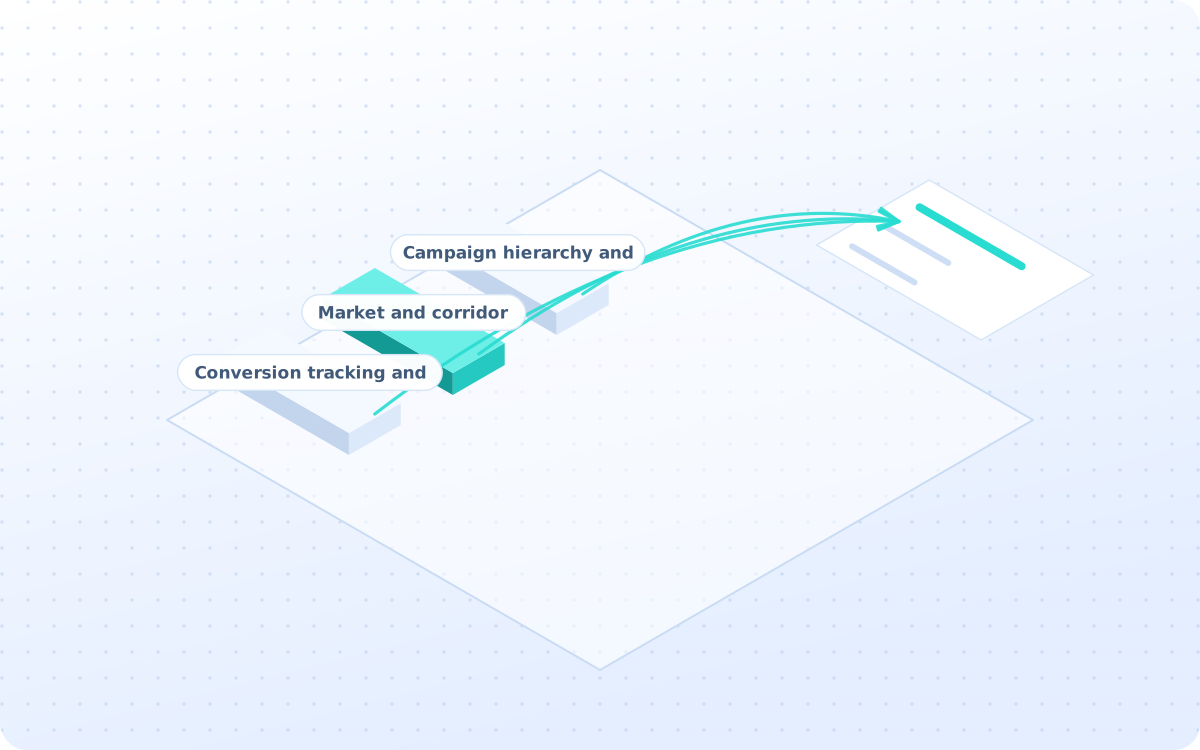
Accounts, structure and event tracking
Every live channel is reviewed, then the structure behind it: campaign hierarchy, market and corridor separation, and whether the conversion goals measure registration, verification and a first transfer at all.
- Campaign hierarchy and naming review
- Market and corridor separation
- Conversion tracking and attribution audit
Channels, audiences and the creative
Search terms, match types and negatives on Google. Objectives, overlap and events on Meta. Hooks, creator content and fatigue on TikTok. Then the creative itself, from corridor ads to trust-led messaging.
- Search term and negative keyword review
- Audience overlap and lookalike quality
- Creative fatigue and format analysis
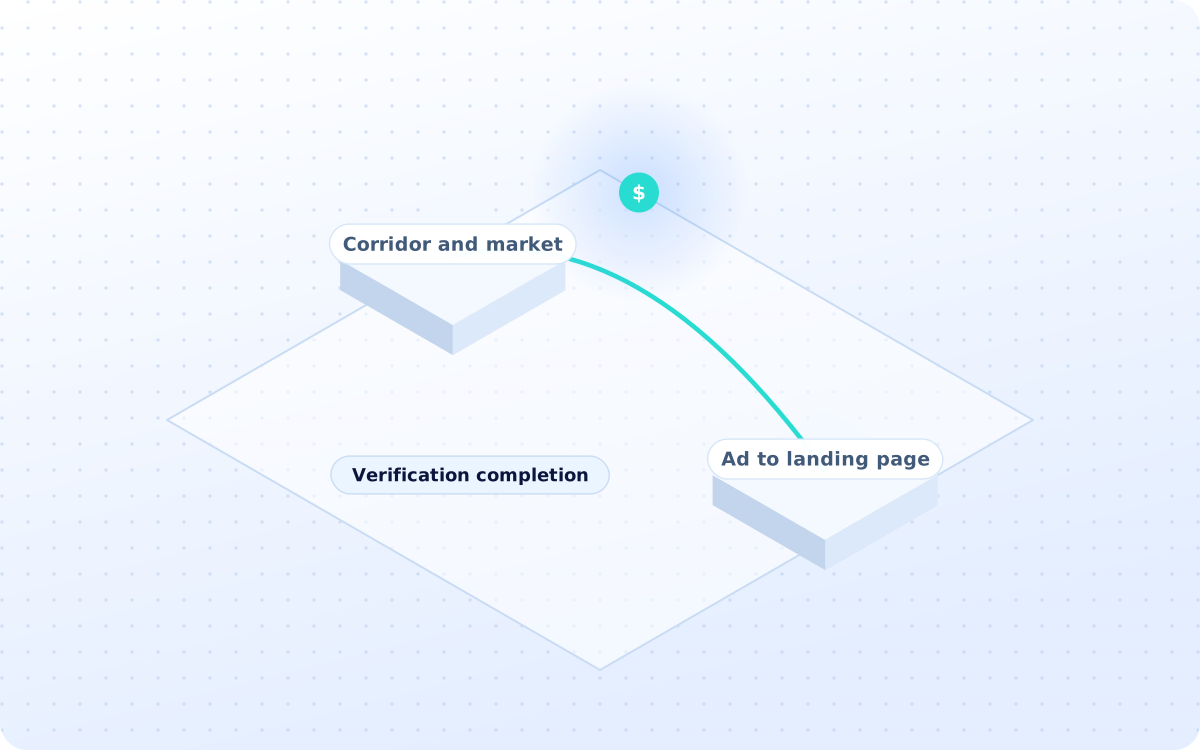
Corridors, landing pages and KYC quality
Acquisition is compared by origin market, destination market, corridor and currency, then the pages those clicks land on. Marketing data is then joined to registration quality and verification rate.
- Corridor and market performance comparison
- Ad to landing page message match
- Verification completion by channel
Waste, claim risk and the plan
Spend lost to irrelevant traffic, duplicate campaigns and tracking errors is quantified in money. Ad claims are reviewed for risk. Advertising approval itself remains under the relevant platform's control.
- Paid media waste quantified in spend
- Claim and ad policy risk review
- Prioritised recommendations by impact
What you receive at the end
Six artefacts, delivered once and yours to keep. None of it depends on hiring us afterwards.
Full paid media audit
Every live channel reviewed against eighteen areas, with each finding priced in spend or senders.

Conversion tracking audit
What each platform actually measures, and which of the nine transfer events are missing entirely.
Creative analysis
Ads ranked by cost per verified sender, with fatigue and corridor relevance noted against each.
Paid media waste report
The spend that was lost to irrelevant traffic, duplicate campaigns, weak placements and tracking faults.
Priority action plan
Findings sorted into immediate fixes, economics changes and the experiments that would be worth running.
30/60/90-day roadmap
The order of work for the quarter ahead, with the expected effect of each item stated plainly.
How the audit actually runs
Four stages across two weeks. Access on day one, findings in week two, and a plan you can act on.
Structure, tracking and how attribution works
Accounts are opened before anything else, because a structure fault or a broken event explains most of what looks like weak performance.
- 01Paid media account review, all channels
- 02Campaign and budget structure review
- 03Conversion tracking validated end to end
- 04Platform and mobile attribution
- 05Offline conversion import review
Google, Meta and TikTok read in detail
Each platform is reviewed on its own terms, then compared, because a budget behaves differently across search, social feed and short-form video.
- 01Search terms, match types and negatives
- 02Prospecting and retargeting balance
- 03Pixel, Conversions API and app events
- 04Creative format and hook analysis
- 05Audience overlap and list quality
Corridors, sender quality and the budget
Spend is compared by corridor and market, then joined to verification and transfer data so cheap acquisition that never converts becomes visible.
- 01Corridor performance compared by route
- 02Registration and verification quality
- 03Cost per verified customer by channel
- 04Budget allocation and scaling gaps
- 05Bidding strategy and value signals
Waste, claim risk and the priority plan
Waste is quantified, claim risk is listed and competitors are reviewed, then everything is sorted into immediate fixes and later experiments.
- 01Paid media waste analysis by source
- 02Compliance and ad policy review
- 03Competitive paid media review work
- 04Immediate issues affecting spend
- 05Experiments worth running next
What actually gets examined
Eighteen areas in total, and these twelve are where remittance accounts most often lose money quietly.
Account structure
Corridor and market separation
Tracking validation
Nine events from signup to repeat
Attribution review
Platform, GA4, mobile and CRM
Search term waste
Job and support queries removed
Audience overlap
Campaigns bidding against each other
Creative fatigue
Frequency, format and hook decay
Corridor economics
Origin, destination and currency
Landing page match
Ad promise against the page shown
KYC quality check
Which channels verify and which do not
Budget allocation
Overspend, underspend and scale gaps
Bidding review
Value signals and first-transfer bids
Ad policy risk
Claims that could pull an account
Three ways to buy this
One of these fits, whether you run a remittance app, an exchange house or a payout platform.
Standard account audit
All of your live channels reviewed across eighteen areas, delivered in two weeks for a fixed fee.
- Fixed fee, quoted before commitment
- Every finding priced in spend or senders
- Roadmap yours, with or without us
Single channel deep-dive
One platform reviewed in depth, for teams who already know roughly where the problem is sitting.
- Google, Meta or TikTok on its own
- Delivered inside a single week
- Cheaper entry point, same method
Quarterly review cycle
The same audit repeated each quarter, so waste gets caught before it compounds across a year.
- Same eighteen areas, every quarter
- Progress tracked against the last audit
- Cancellable at any point, no notice
Comparison. A platform representative reviews their own platform and recommends more spend on it. This reads all three accounts against your transfer ledger instead.
Position. Audits often end with a recommendation to spend less, which costs us the follow-on work.
- Licensing and AML questions go to a qualified adviser. We handle advertising and marketing compliance.
Audit line. If none of the three fits, a fixed-fee growth audit will say which one should.
Four steps in two weeks
Access on day one, then a fixed sequence. No discovery call is needed before the price is agreed.
Get the access
DAY 1Read-only access to ad accounts, analytics and whatever records verified senders and transfers.
Read the accounts
WEEK 1Structure, tracking, search terms, audiences and creative reviewed across every live channel.
Join the records
WEEK 2Spend matched to verification and first transfers by corridor, then waste quantified in money.
Deliver the plan
WEEK 2Findings ranked into immediate fixes, economics changes and experiments, with a costed order.
How results get reported
No client figures appear here without written permission. These three are facts about the audit itself.
Services that pair with this
An audit is a decision, not a fix. These three are usually what the findings recommend next.
For when the paid findings point at the landing pages rather than at the campaigns themselves.
Learn moreNew Corridor LaunchFor when the answer is a different corridor rather than better bidding inside the current one.
Learn moreGoogle Ads workThe channel work that follows most audits, once tracking and corridor priority are settled.
Learn moreQuestions operators ask first
Answers come first. Where the honest answer is no, the answer says no and explains what to do.
Yes. No client is taken outside cross-border money movement, which is why the audit starts at verified senders rather than at cost per click.
Yes. App accounts are read on install to first transfer, agent-led operators on catchment and counter volume. Both are compared against your own records.
Yes, and it is usually the finding that changes the plan. Spend is compared by origin market, destination market, corridor, currency and customer segment.
Yes. Every live corridor is ranked on cost per verified sender and cost per first transfer, which normally reorders where the budget should go.
Ad claims are reviewed for risk around wording such as cheapest, fastest or guaranteed. Advertising approval itself remains under the relevant platform's control.
Read-only access to your ad accounts and analytics, your live corridor list, and whatever system records verified senders and funded transfers.
Usually within a week of access being granted, then two weeks to deliver. Nothing is paused in your account while the review runs.
Yes, and it has to. Platform dashboards alone cannot show which campaigns produced senders who verified and then actually funded a transfer.
Yes, at aggregate level. Registration quality, verification completion, approval rate and first-transfer rate are joined to channel and campaign data.
Partly. Repeat transfer value is included where your data supports it, since a channel producing one-time senders is worth less than it appears.
Every channel, campaign and creative is priced against funded first transfers from your records, not against the conversions the platforms report.
As wasted spend identified, cost per verified sender by channel, and the expected effect of each recommendation, with the assumptions stated.
Against the waste removed and the budget reallocated in the following quarter. If the audit finds nothing material, the report says exactly that.
By moving budget away from channels that produce registrations nobody verifies, and toward the corridors and audiences that already convert to transfers.
Indirectly. It identifies the acquisition sources whose senders transfer more than once, which changes what the next quarter of spend is buying.
Operators, remittance apps and payout platforms on the roster
Marks appear once written permission is on file for each operator.
Start by granting the account access
A paid ads audit for remittance companies costs less than one bad month of spend. Two weeks, a fixed fee, and the roadmap is yours regardless.
You keep the roadmap whether or not we work together.