Email marketing for remittance companies
A sender who finished verification last week and has never transferred is a marketing problem, not a product problem. Email marketing is the cheapest route back to that person.
Remittance only · Consent first · Segmented by corridor, not by list

Email marketing for remittance companies runs on the transaction record, not on a mailing list. Sequences welcome a new account, explain verification, prompt the first transfer, then follow send frequency: rate alerts for active senders, reactivation for quiet ones, corridor offers for the routes they use. Copy, sequences, segments and reports are what get delivered. Transactional messages usually need engineering.
What changes in the inbox
Most remittance email goes to one list, with one message, sent whenever somebody remembers. Four things change.
One list, one message
Every sender gets the same email, whatever they last did.
Segments by behaviour
Verified but never sent gets a different email from a weekly sender.
Send when we remember
Campaigns go out in bursts, then nothing for two months.
A calendar, agreed
Sends are planned by corridor, by season and by rate movement.
Nobody opens it
Subject lines say newsletter, so diaspora senders scroll past.
Subject lines tested
Rate, fee and delivery time lines are tested against each other.
Opens are the report
The monthly report shows opens and clicks, and nothing else.
Transfers are the report
Each campaign is read against first transfers and repeat sends.
What the email work covers
Four rows of work, run in order. The segments are agreed before the first sequence is written.

The strategy and the segment list
Segments are built from the transaction record: send country, receive country, transfer frequency, lifecycle stage and engagement level. The calendar and what each segment hears follow from that, not a template.
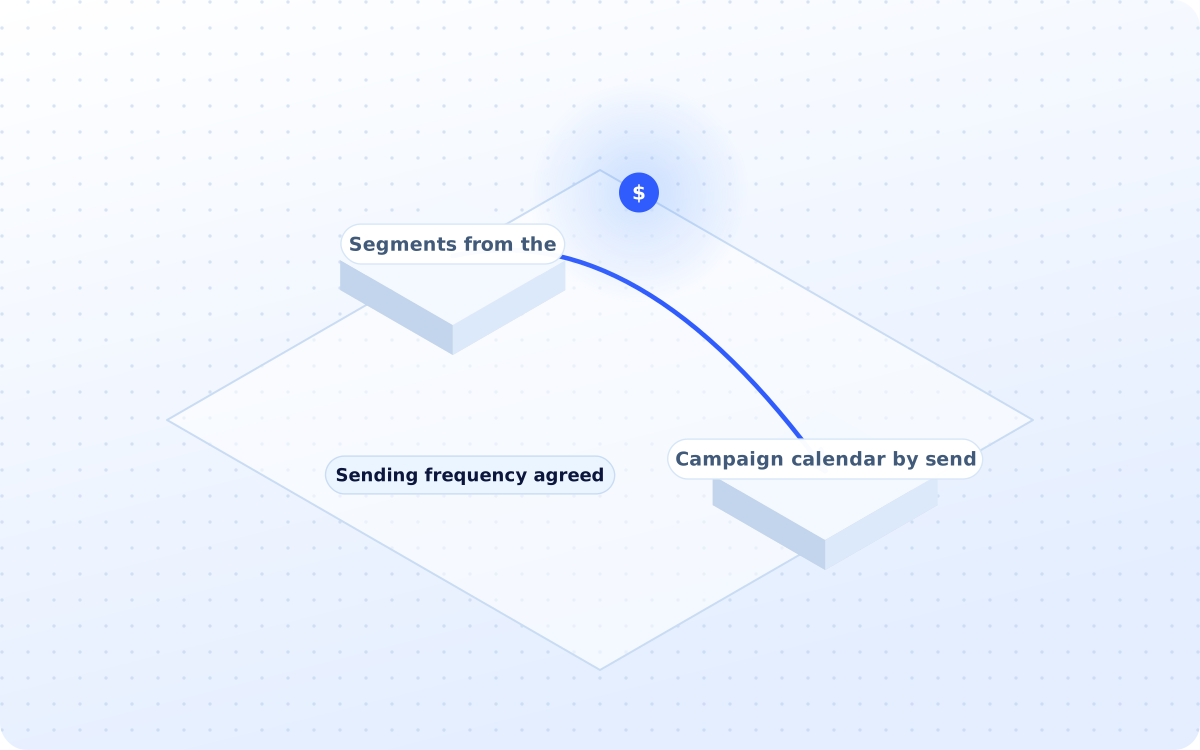
- Segments from the transaction record
- Campaign calendar by send corridor
- Sending frequency agreed up front

Onboarding and the first transfer
A welcome sequence explains what the app does, why verification is asked for and how a document is accepted. The next sequence sets up a beneficiary and prompts the first transfer while intent is still high.
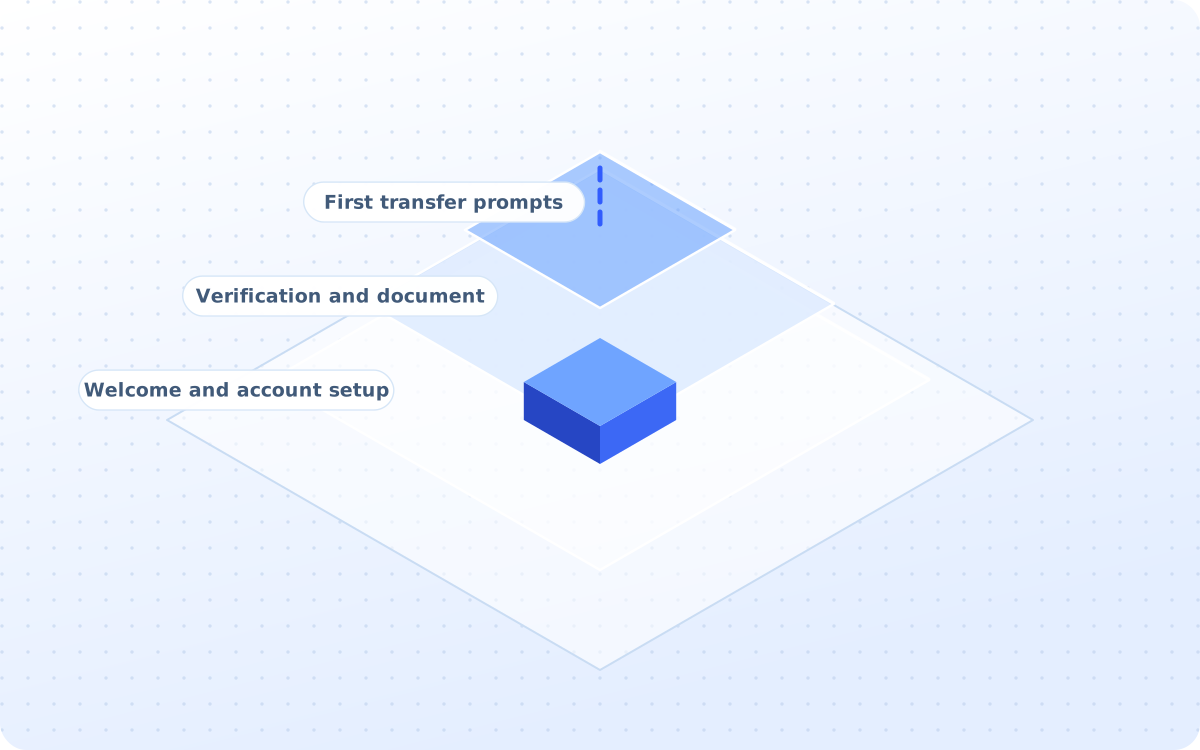
- Welcome and account setup emails
- Verification and document guidance
- First transfer prompts and incentives
Promotions, rate alerts and education
Fee promotions, corridor offers and rate alerts go out only to the segments they apply to, never to the whole list. Any pricing or comparative claims should follow the client's compliance requirements.
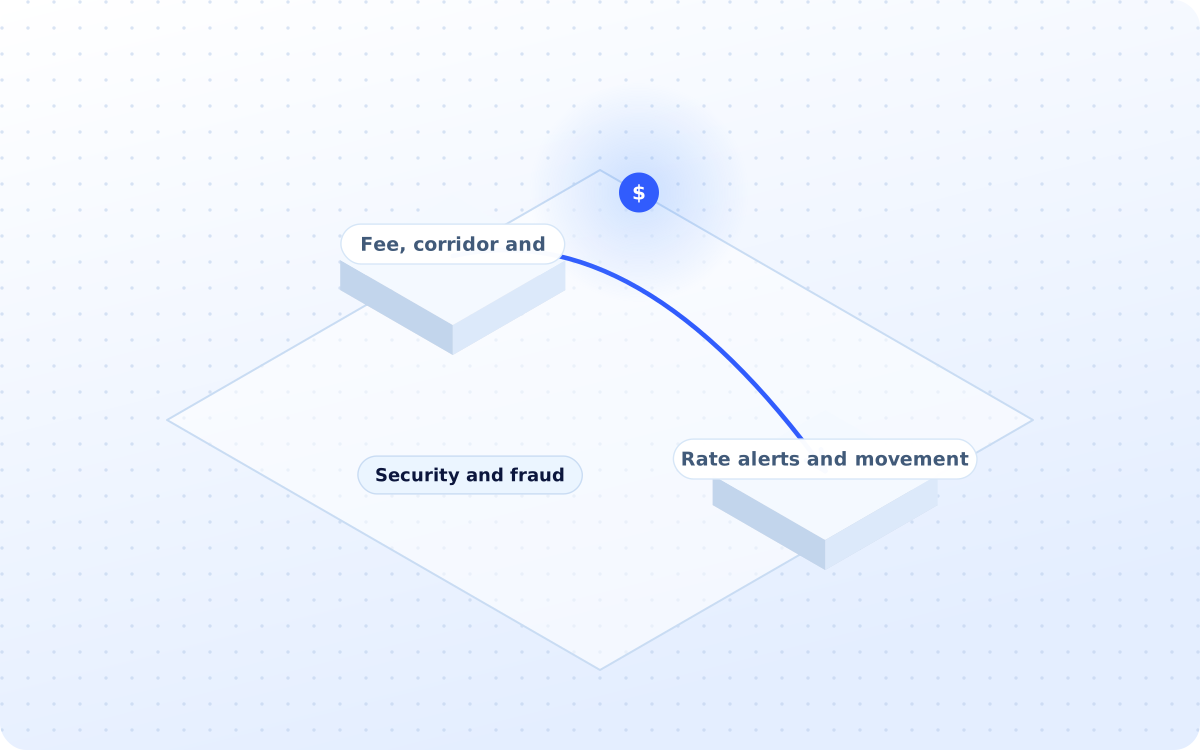
- Fee, corridor and seasonal offers
- Rate alerts and movement notices
- Security and fraud awareness emails
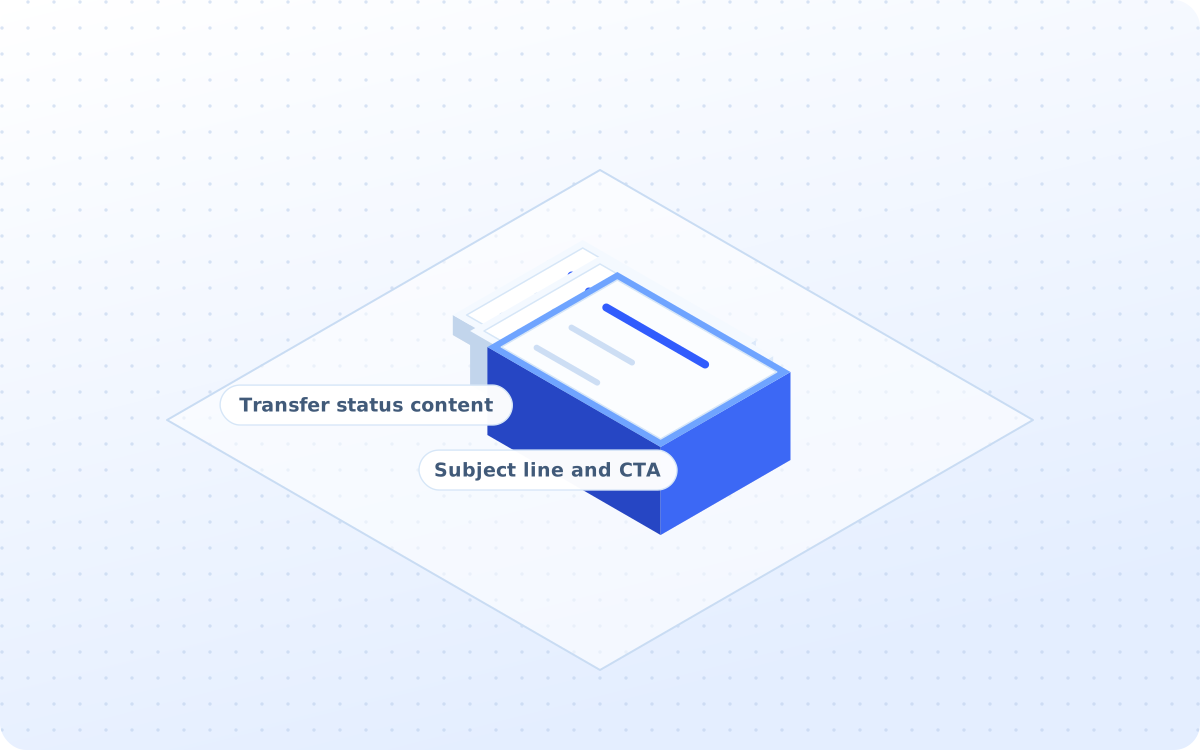
Transactional content and the testing
Transfer initiated, in progress and completed messages are planned as content, and the recipient is kept in the loop too. Transactional communications themselves may require product or engineering implementation.
- Transfer status content planning
- Subject line and CTA testing plan
- Send time and template test results
What gets handed to you
Six artefacts, all of them editable. The sequences arrive ready to load into whatever platform you run.
The email strategy
Which segments get contacted, how often they hear from you, and what each message should achieve.

Campaign calendar
Twelve months of sends, mapped to corridor seasons, paydays and the promotions you already run.
Final email copy
Every email written in full, with the preheader, the body copy and the button label included.
Subject line sets
Three variants for every send, so the testing plan has something to run from the first week.
Email sequences
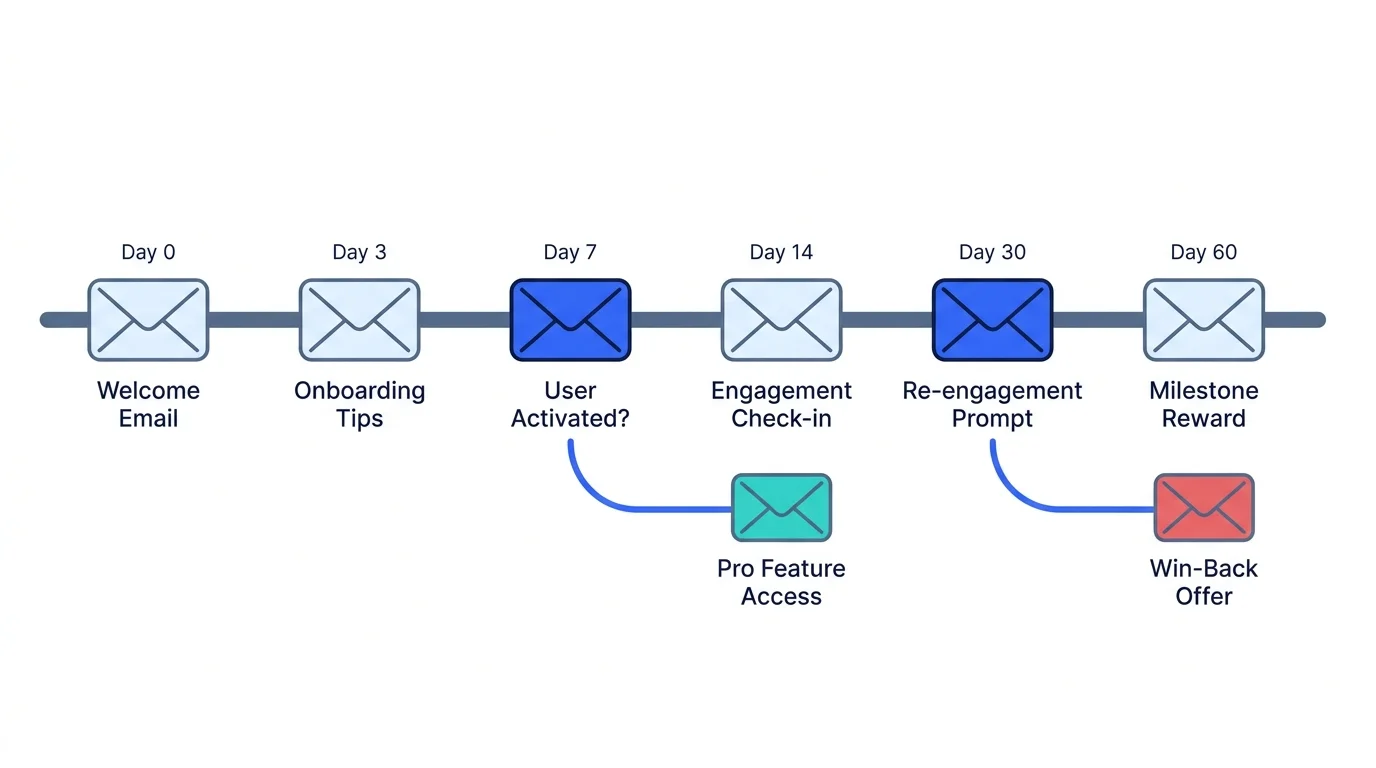
Welcome, verification, first transfer and reactivation, each one with its trigger and its timing set out.
Segmentation plans
How the list splits by corridor, frequency and lifecycle stage, with the rules written down.
How the programme runs
Four stages, run in order. Nothing is sent until consent and the suppression rules have been confirmed.
The segments, then the send calendar
Transaction history, corridor and lifecycle stage split the base into segments, and the sending calendar is built from those segments outward.
- 01Segments from transfer frequency
- 02Corridor and send country splits
- 03Lifecycle stage definitions agreed
- 04Sending frequency and suppression
- 05Twelve month campaign calendar
The route from signup to first transfer
Welcome, verification and first transfer sequences run on triggers, so a stalled account hears from you while the intent is still there.
- 01Welcome and product introduction
- 02Verification guidance email set
- 03Beneficiary setup prompt emails
- 04First transfer incentives, where used
- 05App feature discovery email set
Rate alerts, offers and the newsletter
Rate movements, corridor promotions and product education keep an active sender sending, while quiet accounts get a different message entirely.
- 01Rate movement alerts by corridor
- 02Fee and seasonal promotion sends
- 03Reactivation for quiet senders
- 04Security and fraud awareness sends
- 05Newsletter and product updates
The testing plan, and what gets reported
Copy, tests and a report are what you get from us. Transactional communications themselves may require product or engineering implementation.
- 01Subject line and preheader tests
- 02CTA wording and content variants
- 03Send time testing by send country
- 04Template tests across the devices
- 05Performance read against transfers
What actually gets sent
Ten groups of work sit behind the service, and these twelve are what a sender actually receives.
Welcome emails
The first week after a signup
Verification help
Why the documents are asked for
First transfer prompts
Beneficiary setup and a first send
Rate move alerts
Corridor rates when they move
Fee promotions
Offers on the corridors that matter
Corridor campaigns
Seasonal sends per send country
Reactivation sends
Quiet accounts, contacted again
Referral prompts
Asking senders who already send
Security education
Fraud awareness for diaspora senders
The newsletter
Product, corridor and payout updates
Segmented sends
By corridor, frequency and stage
Subject line testing
Three variants, then the winner
Three ways to buy this
One of these will fit, whether the list holds a hundred people or a million of them today.
Complete email programme
The strategy, the segments, the sequences and the calendar, written and then reported on monthly.
- Monthly fee, agreed before we start
- Your platform, your list, your data
- Reported against transfers, not opens
Activation sequence build
Welcome, verification and first transfer only, built once and handed over for your team to run.
- One fixed fee, with no retainer
- Built in your existing platform
- Handed over for your team to run
Email programme review
What is sending now, what each sequence earns and what should be switched off, in one report.
- Delivered in two weeks, fixed price
- Sequence by sequence economics
- No obligation to continue after
Comparison. A general agency will send a monthly newsletter. Email marketing for remittance companies runs on send frequency, corridor and the date of the last transfer.
Position. Most operators need one activation sequence before a newsletter, and that is the cheaper of the two.
- Licensing and AML questions go to a qualified adviser. We handle advertising and marketing compliance.
Audit line. If none of the three fits, a fixed-fee growth audit will say which one should.
Four steps to first send
Two weeks of setup, and then sending. The first activation sequence is usually live inside a month.

Read the record
WEEK 1Transaction history, corridor and lifecycle stage pulled into a segment map you can check.
Plan the sends
WEEK 2A calendar by corridor and season, with the sending frequency agreed before anything is written.
Write and build
WEEK 3-4Copy, subject lines and sequences written, then built in the platform you already pay for.
Test and report
MONTHLYSubject lines and send times tested monthly, with every campaign read against first transfers.
How results get reported
No client figure appears without written permission. These three are facts about how the work is run.
Services that pair with this
Email keeps the sender sending. These three bring the sender in and answer them along the way.
The articles a first-time sender reads long before an email is welcome in their inbox at all.
Learn moreSEO Website CopywritingThe corridor pages an email links to, written so that the click has somewhere worth landing.
Learn moreFull Stack SEOThe organic search work that fills the list, so there are people to email in the first place.
Learn moreQuestions operators ask first
Answers come first. Where the honest answer is no, it says no and explains what to do instead.
Yes. Email marketing for remittance companies is all that gets written, so corridor, payout method and verification language are already understood.
Both. App-led operators lean on app education and in-app prompts. Agent-led operators need branch, counter and cash pickup details written into the same sequences.
Yes. Rate alerts, delivery times and payout options differ by route, so a corridor segment gets its own subject line and its own offer each time.
Yes. Segments are built per send and receive country, so one campaign can run across twenty routes without saying the same thing to all of them.
Email explains verification, it never promises approval. Any pricing or comparative claims should follow the client's compliance requirements. Licensing and AML go to a qualified adviser.
Your current platform, the consent status of the list, transaction history at segment level, and whoever signs off product and compliance wording internally.
An activation sequence is usually live within four weeks. The full calendar takes longer, because the segments have to be agreed before anything sends.
Yes. Sending stays in whatever platform you already pay for. Segments, triggers and reporting are built to read from your existing transaction data.
Yes, where your systems allow it. Verification status and transfer history drive the triggers, so a stalled account and an active sender get different emails.
That is most of the work. Reactivation sequences, rate alerts and corridor offers exist to move send frequency, not to fill a monthly newsletter slot.
Every send is tagged to the sender record, so a welcome sequence is judged on first transfers completed, not on the open rate it happened to produce.
Monthly: first transfers, repeat sends and reactivated accounts by segment and by corridor, with opens and clicks kept as diagnostics rather than results.
Margin from transfers attributed to each sequence, against the monthly fee. Email marketing for remittance companies is cheap to run, so payback is usually quick.
By reaching the verified account that has not sent yet, with the specific thing blocking it: a beneficiary not added, a payout method not understood.
Rate alerts and corridor offers arrive when a sender is deciding, so the next transfer goes through you rather than through the agent down the road.
Operators, remittance apps and payout platforms on the roster
Marks appear once written permission is on file for each operator.
Start with the quiet accounts list
Every operator has a list of people who verified and never sent. A fixed-fee growth audit will count them and price the sequence that reaches them.
You keep the segment map whether or not we work together.