Multi-location SEO for exchange houses
A sender searching for cash pickup in Birmingham is not searching for your brand. Location SEO in remittance means branches, sending cities and corridors, not just a Maps pin.
Remittance only · Three location layers · Pages only where demand exists

Multi-location SEO for money transfer operators covers three layers: the branches and agent locations people walk into, the sending cities they search from, and the corridors they search for. Location pages, agent locators, business profiles and local citations are built to a template that scales, with cannibalisation controlled so a hundred pages do not end up competing with each other.
What changes across sites
Most remittance location pages are the same page with the city name swapped in. Four things change.
One page, city swapped
Forty pages share one paragraph with a different city name.
Pages worth ranking
Each page names the branch, the payout options and the hours.
Pages for every city
Hundreds of thin pages exist where nobody is actually searching.
Pages where demand is
A page exists only where searches and a real service do.
Locator buried deep
The agent finder sits four clicks down and never ranks at all.
Locator that ranks
City and neighbourhood agent pages carry the cash pickup detail.
Pages fight each other
Three pages target one search and none of them ever wins it.
One page, one search
Overlap is audited, merged and canonically pointed one way.
What the location work covers
Four rows of work, run in order. No page gets built without genuine demand behind it first.

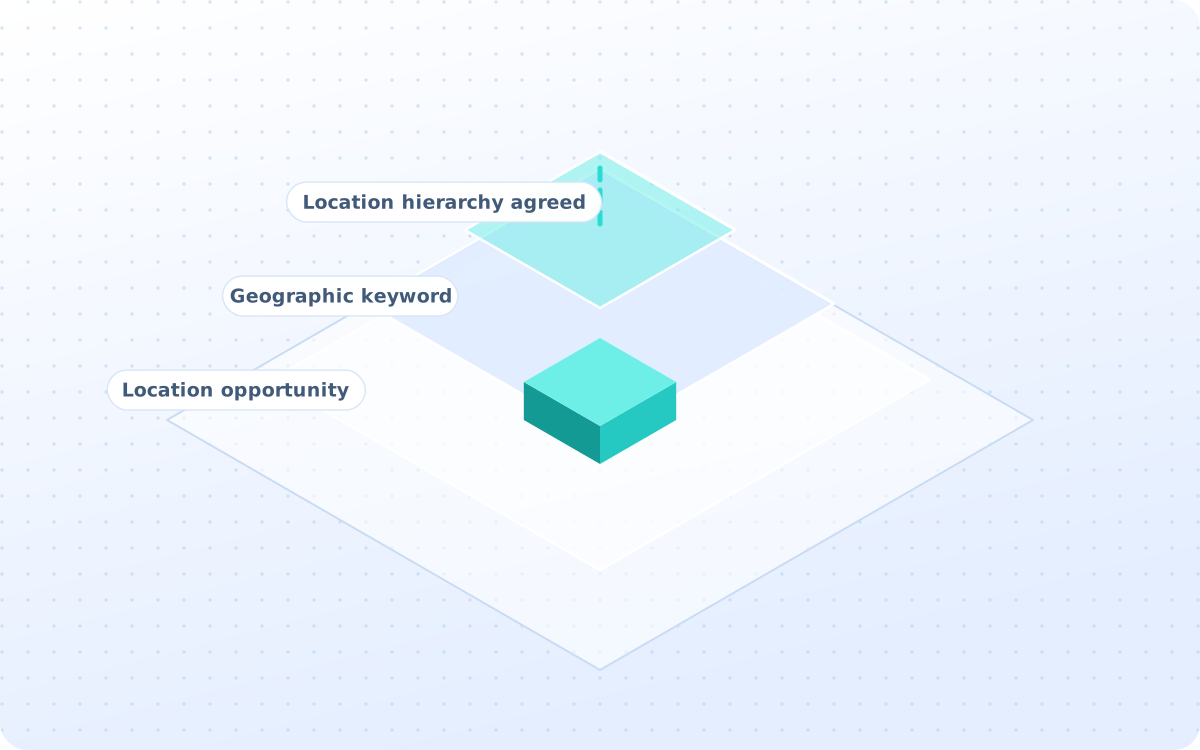
The three layers, all mapped first
Three layers, not one. For remittance companies, "location SEO" should not be limited to traditional branch SEO. It can encompass three distinct layers: Physical Locations + Sending Markets + Transfer Corridors
- Location opportunity analysis done
- Geographic keyword mapping built
- Location hierarchy agreed first

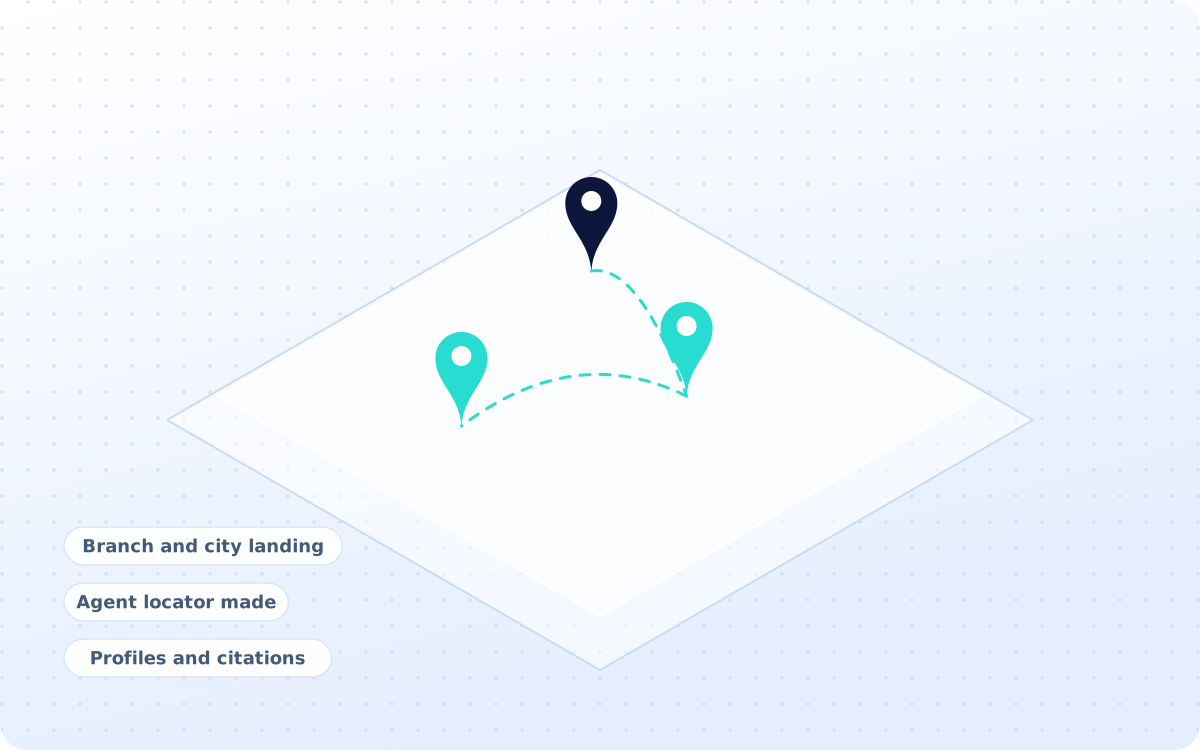
Branches, agents and the profiles
For money transfer operators working through agent locations, the locator itself is the page that matters, with city and neighbourhood pages beneath it. For eligible physical locations, profiles are optimised too.
- Branch and city landing page set
- Agent locator made properly findable
- Profiles and citations cleaned
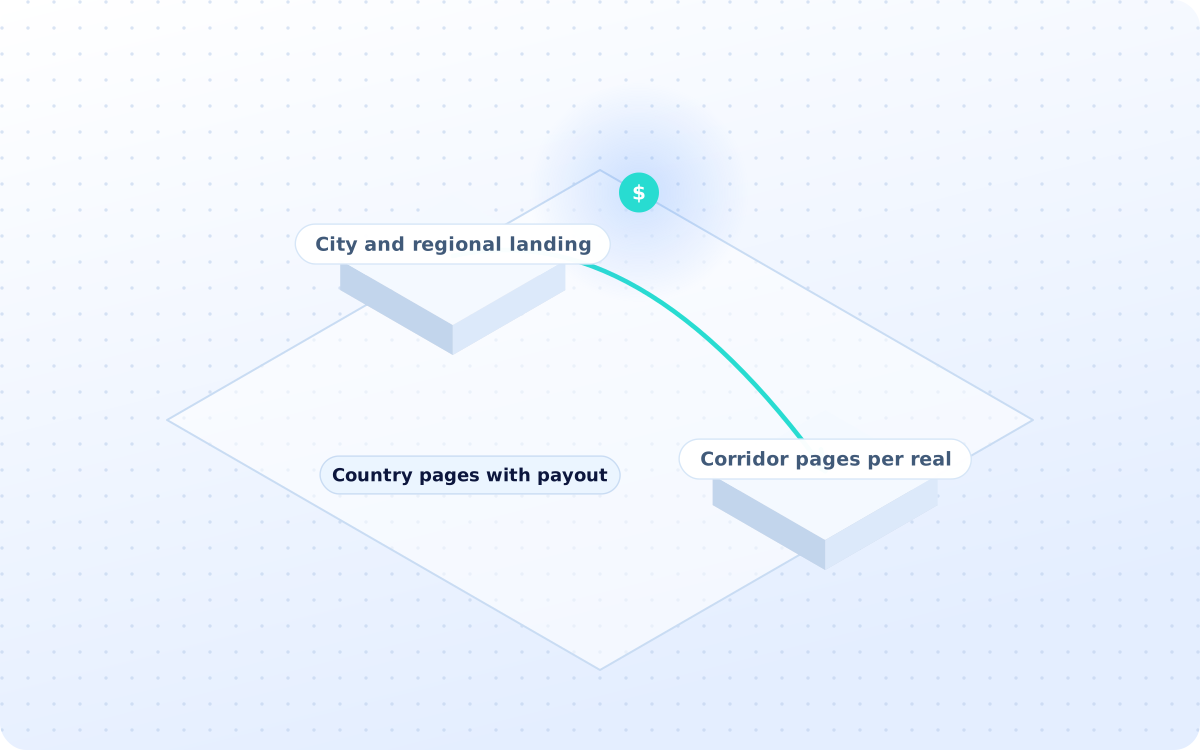
Cities, corridors and the countries
One page per real need. Useful where there is genuine market, service, or physical relevance. Pages should only be created where legitimate search demand and meaningful service differentiation exist.
- City and regional landing pages
- Corridor pages per real send route
- Country pages with payout detail
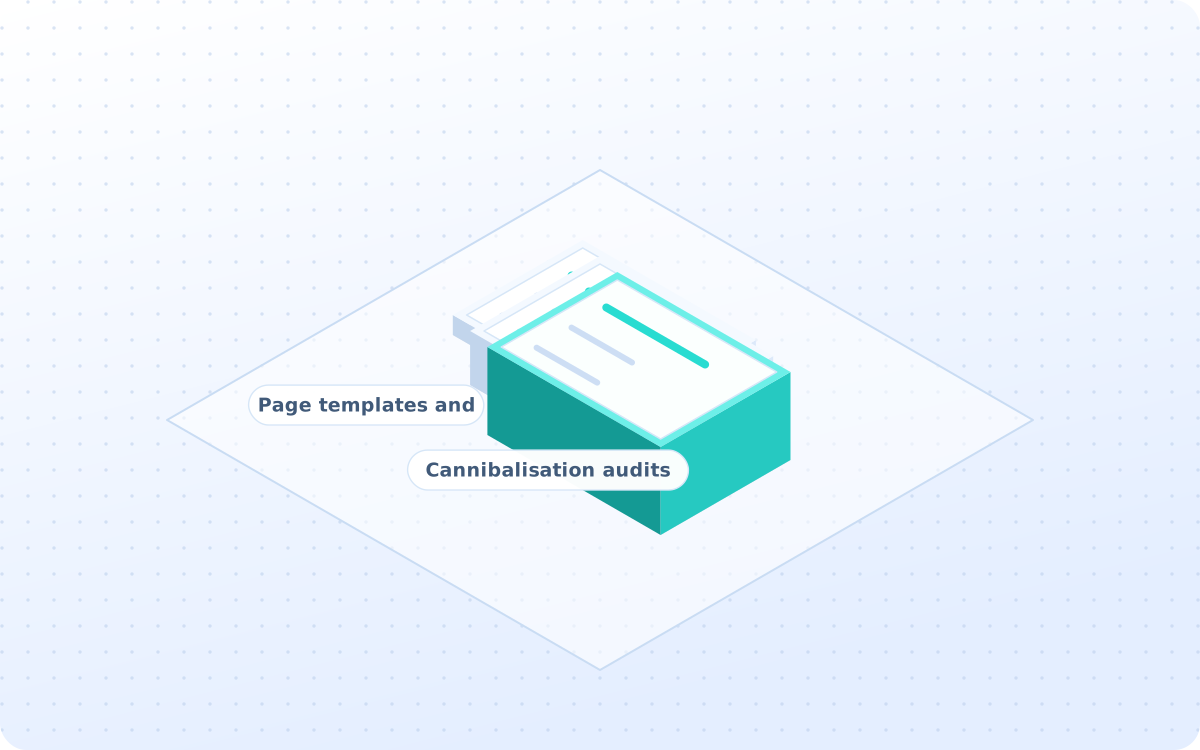
Templates, duplication and the links
Critical for large location websites, the same template that scales across hundreds of pages also creates duplicates, so cannibalisation audits and canonical rules run alongside the build from day one.
- Page templates and content blocks
- Cannibalisation audits each month
- Local links from community pages
What you actually receive
Six artefacts, all of them yours to keep. The hierarchy decides every single page that follows it.
Location hierarchy
Exactly which location pages exist, which ones sit beneath which, and which should never be built.

Page build plan
What gets written first, in what order, and what the search demand behind each page actually is.
The citation audit
Every directory listing your brand appears in, and which ones disagree with all the others.
Page template set
The blocks, the fields and the rules that keep hundreds of pages from all reading exactly alike.
Cannibalisation report
Which pages compete with which, and which of them should now be merged, redirected or dropped.
Location reporting
Traffic, rankings and first transfers, all split by country, city, branch and by corridor too.
How the location work runs
Four stages, run in order. The hierarchy is agreed before a single new page gets written at all.
Which locations are actually worth a page
Branches, agent clusters, sending cities and corridors are scored on genuine search demand, so the page list starts short and grows later.
- 01Branch and agent market analysis
- 02Search demand checked per city
- 03Corridor demand checked as well
- 04Location hierarchy drawn out first
- 05Page list kept deliberately short
The branches, and then the agent network
Branch pages, agent locators, business profiles and citations are built and cleaned, because a wrong opening time costs more than a keyword.
- 01Branch landing pages all written
- 02Agent locator made discoverable
- 03Business profiles set up right
- 04Citations audited and then fixed
- 05Review responses given a framework
The cities, the corridors and the countries
City, corridor and country pages carry the payout methods, delivery times and local FAQ questions rather than just a swapped-in city name.
- 01City and regional page copy written
- 02Corridor pages where demand is
- 03Country pages with currency detail
- 04Local guides and community content
- 05Local questions answered on page
The template, and what it usually breaks
Modular blocks and dynamic fields make a hundred pages possible, and cannibalisation audits stop those pages from quietly eating each other.
- 01Templates and the modular blocks
- 02Unique content rules are enforced
- 03Duplicate pages found and merged
- 04Local links from real partners
- 05Reporting by branch and corridor
What the work actually covers
Fourteen groups of work sit behind the service, and these twelve are what actually gets built first.
Location strategy
Which places actually earn a page
Branch pages
Hours, services and the address
Agent locators
Findable, and indexable as well
Business profiles
Set up for eligible locations
Citation cleanup
One address, every directory
Review frameworks
Responses within platform policy
City landing pages
Written where the demand exists
Corridor pages
London to Lagos, and the rest
Country pages
Payout methods and currencies
Page templates
Scales without reading the same
Duplicate control
Pages stopped from competing
Three ways to buy this
One of these will fit, whether you have four branches to cover or several hundred agent locations.
Complete location build
The hierarchy, the pages, the profiles and the reporting, built once and then maintained monthly.
- Monthly fee, agreed before we start
- Pages only where demand exists
- Reported by branch and corridor
Complete locator build
The locator, the city pages and the neighbourhood pages, built just once for the whole network.
- One fixed fee for the whole build
- Six weeks from start to finish
- Templates are handed over as well
Full duplication audit
Which of your existing pages compete, and exactly what should now be merged or dropped entirely.
- Two weeks, priced before we start
- Every overlap listed and ranked
- No obligation to continue after
Comparison. A general agency will build a page for every town. Multi-location SEO for money transfer operators builds one only where the searches and the service both exist.
Position. Most operators need twenty good pages rather than two hundred thin ones, and it costs less.
- Licensing and AML questions go to a qualified adviser. We handle advertising and marketing compliance.
Audit line. If none of the three fits, a fixed-fee growth audit will say which one should.
Four steps to the pages
Three weeks of mapping, and then the building. Local rankings usually take a full quarter to move.
Score the places
WEEK 1Branches, agent clusters, cities and corridors are all ranked on real search demand.
Draw the hierarchy
WEEK 2-3Which page sits where, which ones sit beneath them, and which never get built at all.
Build and clean
WEEK 4-8Pages written to the template, profiles set up and citations all corrected together.
Watch the overlap
MONTHLYCannibalisation is checked monthly, with any competing pages merged before they spread.
How results get reported
No client figure appears without written permission. These three are facts about how the work is run.
Services that pair with this
Location pages still need somebody to write them. These three cover the rest of the search work.
The technical and content work that makes any of these pages rank in the first place at all.
Learn moreAEO & GEOThe work that gets a corridor page quoted when somebody asks an assistant the question instead.
Learn moreContent Marketing & Blog WritingThe articles and guides that give a city page something actually worth linking to from elsewhere.
Learn moreQuestions operators ask first
Answers come first. Where the honest answer is no, it says no and explains what to do instead.
Both, though agent-led operators gain most. An app-only business still has sending cities and corridors, which are two of the three layers.
Yes. Every location page is tagged so registrations and first transfers can be read per branch, per city and per corridor in your own reporting.
Yes, where the demand is real. A London to Lagos page earns its place, while a page for every possible city pairing does not.
Yes. Multi-location SEO for money transfer operators is all that gets built, so the pages already know what cash pickup and payout methods mean.
Nothing is incentivised. Review acquisition must comply with relevant platform policies and regulations. Licensing and AML questions go to a qualified adviser.
Your branch and agent list, current location URLs, search console access, the corridors that matter, and whoever approves published wording.
Three weeks to map and draw the hierarchy, then pages go live in batches. Local rankings typically need a full quarter before they settle.
Yes, where your systems allow it. A page can be tied to registrations and first transfers, so a branch page is judged on senders rather than sessions.
Yes. Corridor pages are one of the three layers, though each one only gets built where the search demand and the service both genuinely exist.
Indirectly. A findable agent locator keeps existing senders using you, though repeat sending is moved far more by lifecycle messaging.
Every location page is tracked through to registration and first transfer, so a branch page that produces visits but no senders shows up quickly.
Monthly: local rankings, map visibility, location page traffic, locator usage, registrations and first transfers, split by country, city and corridor.
By catching the sender searching for cash pickup near them, at the moment they need it, and landing them on a page that answers rather than markets.
First transfers attributed to location and corridor pages, against the fee. Multi-location SEO for money transfer operators pays back over quarters, not weeks.
Modestly. A sender who can find their nearest agent in seconds sends again, though frequency responds far more to email and push.
Operators, remittance apps and payout platforms on the roster
Marks appear once written permission is on file for each operator.
Start with the hierarchy, not pages
Half the location pages you have probably compete with each other. A fixed-fee growth audit will name the ones worth keeping and the ones to merge.
You keep the location hierarchy whether or not we work together.