App store optimization for remittance apps
An app install is not a sender. The store listing has to withstand the KYC screens, the verification queues and the first transfer before it has genuinely earned anything.
Remittance only · Both app stores · Measured through to first transfer

App store optimization for remittance apps covers the keyword field, the title, the screenshots and the reviews on both Apple and Google Play, written for the sender who is looking for one specific corridor. The listing is judged on registrations and first transfers rather than installs, because an install that never clears verification has cost real money and returned nothing at all.
What changes on the listing
Most remittance app listings are written for the store rather than for a sender. Four things change.
Brand name only
The title says the brand and nothing that a sender searches.
Title that gets found
Brand, then send money, then the corridor people actually type.
Screens of the UI
Six screenshots of empty app screens with no words on them.
Screens that sell
Exact claims and screens should match the actual product.
One listing worldwide
The same English listing runs in every country you serve.
Listings per market
Language, screenshots and keywords change with the receive country.
Reviews left alone
Hundreds of reviews about delayed transfers sit there unanswered.
Reviews worked
Replies go out, and the verification complaints reach product.
What the ASO work covers
Four rows of work, run in order. The listing gets judged on senders, not on installs alone.

The objective, stated quite plainly
More installs are not the actual point. The objective is therefore not merely more app-store impressions. It is to attract relevant prospective senders and improve the quality of app acquisition.
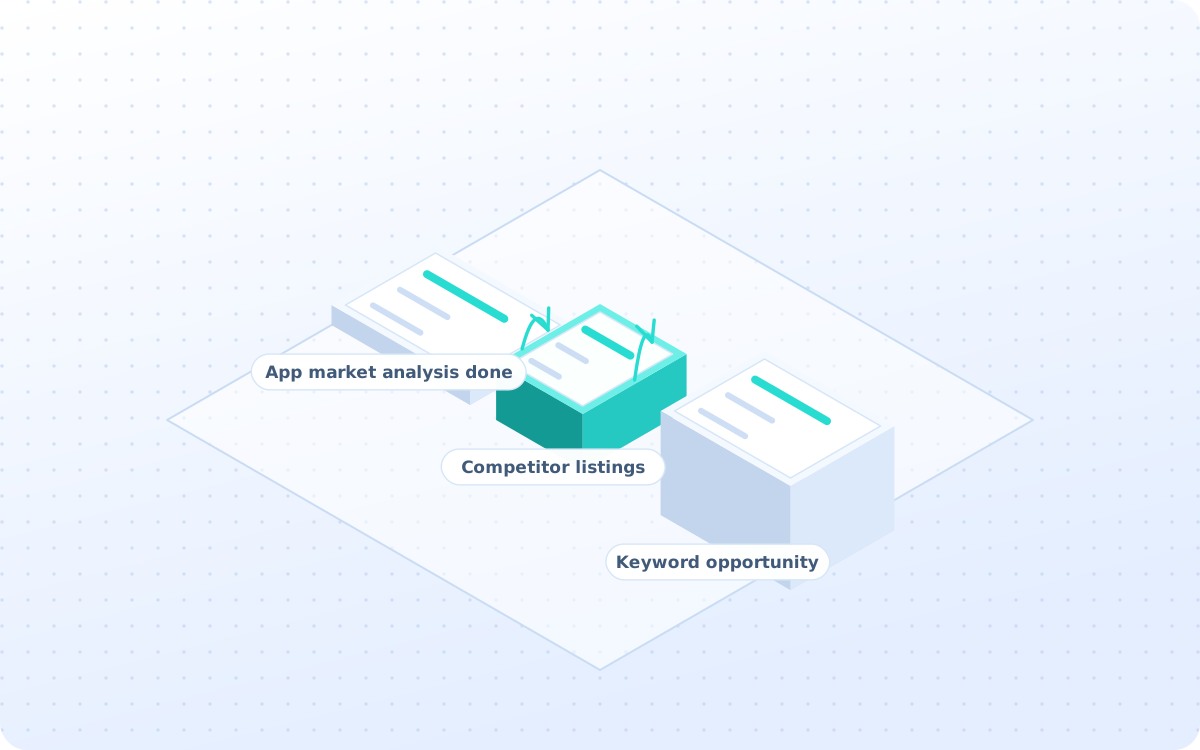
- App market analysis done first
- Competitor listings pulled apart
- Keyword opportunity analysis run
The funnel that the listing feeds
The store listing is only the very first screen. ASO should help a money transfer company achieve: App Store Discovery → Listing Visit → Install → Registration → Verification → First Transfer
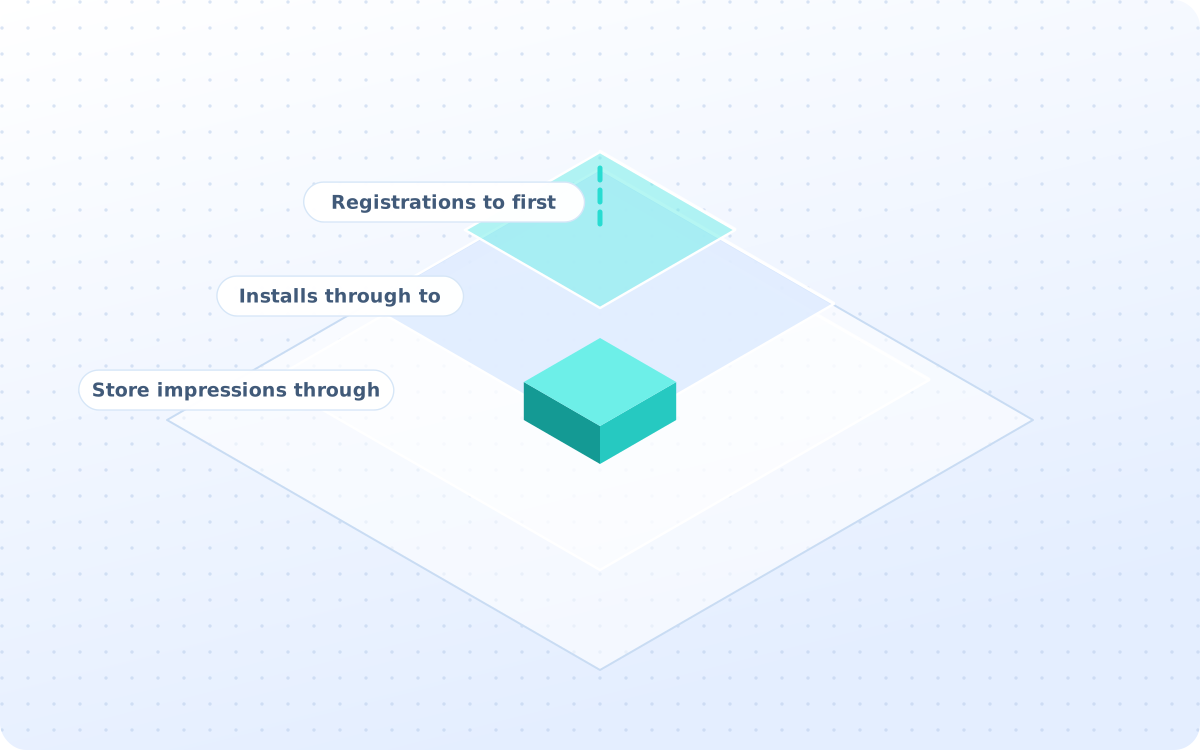
- Store impressions through to installs
- Installs through to registration
- Registrations to first transfers
Metadata, creative and the markets
Subtitles carry the core product and the use case, without unsupported claims. Localisation should go beyond direct translation when customer behaviour differs by market. Corridors get their own listings.
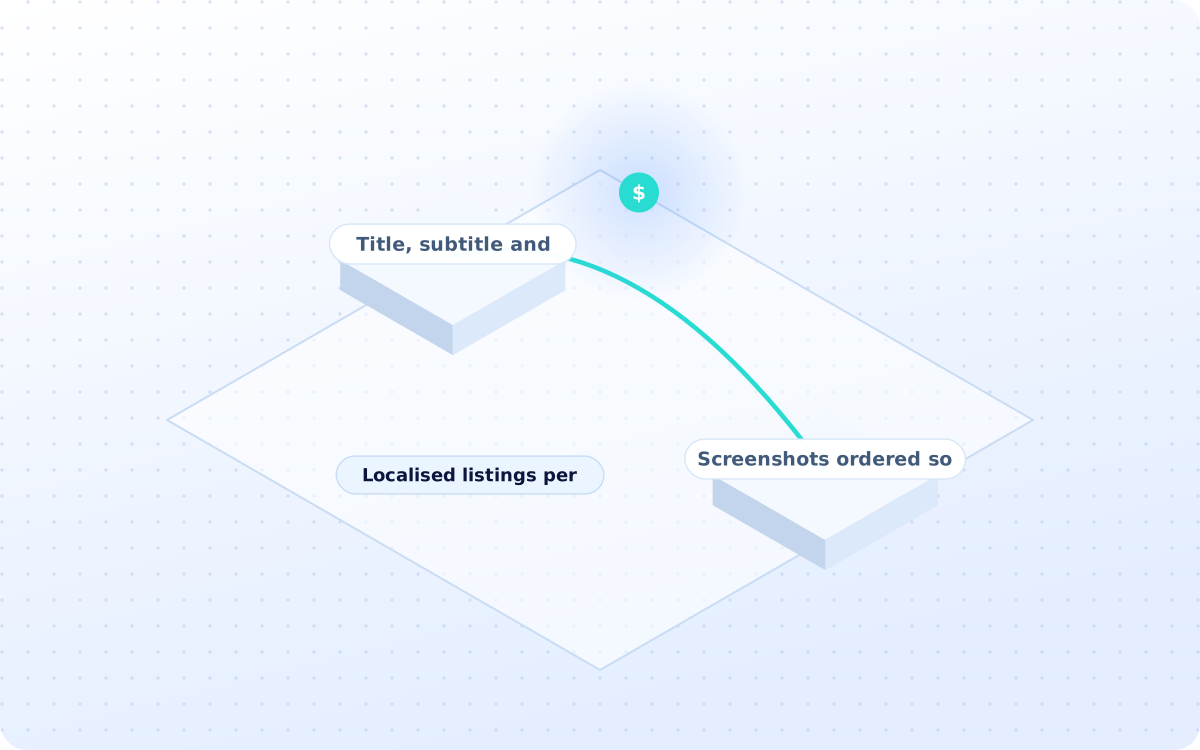
- Title, subtitle and description
- Screenshots ordered so they sell
- Localised listings per receive market
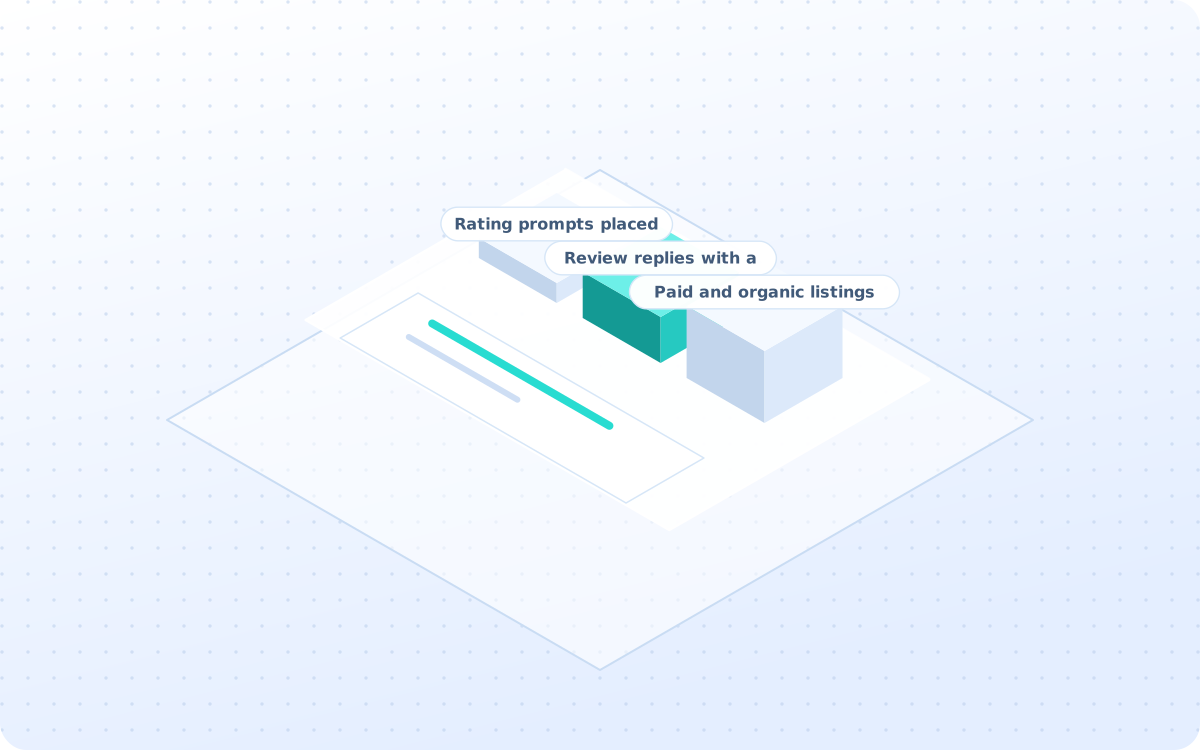
Ratings, reviews and the reporting
Ratings strongly influence app-store conversion. Reviews get read for the verification complaints too. Advertising should land users on an app-store experience that matches the promise made in the ad.
- Rating prompts placed properly
- Review replies with a framework
- Paid and organic listings aligned
What you actually receive
Six artefacts, all of them yours to keep. The keyword set will survive any change of agency.
ASO keyword set
Core, corridor and feature terms, all ranked, with the volume and difficulty beside each one.

Store metadata pack
Title, subtitle, keyword field and the description, all written once for both of the stores.
Screenshot storyboard
Six screenshot frames in their running order, each with the line of copy across the very top.
Listing test plan
What gets tested, in what order, and what actually counts as a result worth keeping at all.
Review insight log
What the senders complain about, all grouped, with the verification issues sent through to product.
ASO reporting pack
Store impressions, installs, registrations, and first transfers, all split by store and by market too.
How the store work runs
Four stages, run in order. Nothing gets claimed on the listing that the app cannot actually do.
What senders actually type into the store
Core terms, corridor terms and feature terms are extracted from both app stores, then ranked against what the product can honestly claim.
- 01App market analysis comes first
- 02Competitor listings taken apart
- 03Store visibility measured up front
- 04Keyword opportunities ranked out
- 05Markets put into priority order
The title, and then what sits under it
Title, subtitle, keyword field and long description are written for both stores, because Apple and Google index them in quite different ways.
- 01Brand plus the actual search terms
- 02Subtitle without inflated claims
- 03The keyword field used in full
- 04Long description covers payout
- 05Release notes actually written
The screenshots, and then the markets
Screenshots, the preview video and the localised listings are built per market, then tested against each other rather than argued about.
- 01Six frames set in a fixed order
- 02Preview video shows a transfer
- 03Icon and headline are both tested
- 04Localised screenshots per market
- 05Custom store pages where supported
The reviews, and what they actually tell you
Prompts go out at the right moments, replies go back within policies, and the complaints about verification are sent through to product.
- 01Rating prompts kept within policy
- 02Replies written to the negative ones
- 03Verification issues sent onward
- 04Paid and organic listings kept aligned
- 05Reporting split by store and market
What the work actually does
Twenty one groups of work sit behind the service, and these twelve are what actually changes first.
ASO strategy
Which markets get the effort
Keyword research
Core, corridor and feature terms
Title and subtitle
Brand, then what senders type
Long description
Countries, payout methods, security
Store metadata
Category, promo text, release notes
Screenshot strategy
Six frames that follow a transfer
Preview video
The send, shown rather than told
Listing testing
Icon, order, headline, video
App localisation
Per market, beyond translation
Ratings and reviews
Prompts and replies within policy
Review intelligence
What breaks before first transfer
ASO reporting
Installs through to first transfers
Three ways to buy this
One of these will fit, whether the app is already live in twelve send markets or none yet.
Continuous ASO programme
The keywords, the metadata, the creative and the reviews, all worked monthly across both stores.
- Monthly fee, agreed before we start
- Both stores, and not just Apple
- Reported through to first transfers
Complete listing rebuild
The keywords, the metadata, the screenshots and the video, rebuilt once for both of the stores.
- One fixed fee, five weeks total
- Both of the stores done together
- Screenshot files are handed over
Complete listing audit
Where exactly the listing loses people, all ranked, with the fixes ordered by what they cost.
- Two weeks, priced before we start
- Both stores and three competitors
- No obligation to continue after
Comparison. A general agency will optimise for installs. App store optimization for remittance apps optimises for the sender who clears verification and sends money.
Position. Most apps need the keyword field and the screenshots fixed before anything else, and it costs less.
- Licensing and AML questions go to a qualified adviser. We handle advertising and marketing compliance.
Audit line. If none of the three fits, a fixed-fee growth audit will say which one should.
Four steps to the listing
Two weeks of research, and then the rebuild. Store rankings usually take a full month to settle.
Read the stores
WEEK 1-2Keywords, competitors and the current listing are pulled apart, one store at a time.
Write the listing
WEEK 3-4Title, subtitle, the keyword field and the description written for both of the stores.
Rebuild the frames
WEEK 5-6Screenshots and the preview video built per market, then tested against each other.
Work the reviews
MONTHLYPrompts, replies and the complaint themes reported monthly, with the fixes ranked by cost.
How results get reported
No client figure appears without written permission. These three are facts about how the work is run.
Services that pair with this
The app store is only one route in. These three cover the searches that happen before it.
The web searches that happen long before anybody ever opens an app store listing page at all.
Learn moreMulti-Location SEOThe corridor and city pages that catch exactly the same sender out on the open web instead.
Learn moreContent Marketing & Blog WritingThe guides that answer the fee question long before a sender ever reaches an app store listing.
Learn moreQuestions operators ask first
Answers come first. Where the honest answer is no, it says no and explains what to do instead.
Apps mostly. An agent-led operator with an app still benefits, though the branch and locator work sits in multi-location SEO instead.
Yes. Store console data joins your MMP and product analytics, so installs can be read through to registration and first transfer.
Yes. Corridor terms like send money to Nigeria are researched per store. Actual keyword targeting should reflect store behaviour, market availability, and keyword research.
Yes. App store optimization for remittance apps is all that gets built, so the screenshots already know what a payout method is.
Nothing is incentivised. Review generation should comply with Apple, Google, and applicable consumer-protection policies. Licensing and AML go to a qualified adviser.
Store console access, your MMP, the corridor and market list, the current screenshots, and whoever signs off on claims made in the store.
Two weeks to research, then the rebuild ships with your next release. Store rankings usually need a month before they settle down.
Yes, where your MMP allows it. An install can be followed through the KYC screen to first transfer, which is where the listing gets judged.
Yes. Corridor listings, localised screenshots and custom store pages exist for this, though each one needs genuine demand behind it.
Indirectly. Better listing quality brings senders who actually intend to send, and those senders repeat. Frequency itself moves through lifecycle messaging.
Installs are tracked through registration, verification and first transfer, so a keyword that produces installs but no senders gets dropped quickly.
Monthly: keyword visibility, store impressions, product page views, install conversion, organic against paid installs, ratings, and first transfers by market.
By setting the expectation before install. A listing that names the corridor, the payout method and the fee brings senders who finish verification.
First transfers from organic installs against the fee, with paid installs separated out. Organic listing gains keep paying after the work stops.
Modestly. Senders who arrived through an honest listing complain less and stay longer, though send frequency responds far more to push and email.
Operators, remittance apps and payout platforms on the roster
Marks appear once written permission is on file for each operator.
Start with the keyword field first
Your listing probably ranks for your brand name and nothing else. A fixed-fee growth audit will show what senders type and what the listing misses.
You keep the keyword set whether or not we work together.