TECH

Remittance management system for MTOs

Operations run on spreadsheets, and the reconciliation break is found a week after the payout failed. The platform holds the transaction, the agent and the rate in one place.

Remittance only · Compliance stays with you · Reconciliation built in first

Payouts, agents, rates and reconciliation running on one platform

A remittance management system for money transfer operators is the operational layer beneath the app and the website: customers, quotes, compliance queues, funding, payouts, settlement and reconciliation in one single place, with agents, rates, fees and permissions all configured rather than coded. It supports the compliance work your policies and providers already define, and it never replaces either of them.

BEFORE AND AFTER

What changes in operations

Most operators run the corridor in one tool, the agents in another and the ledger in a third.

Before

Rates in a spreadsheet

Someone edits the corridor rate and nobody knows who did.

After

Rates with an audit trail

Every change to a rate carries a name, a time and a reason.

Before

Payouts chased by email

Operations ask the partner where a transfer actually went.

After

Payouts with a status

Each transfer shows its state and the partner behind it.

Before

Reconciliation by hand

Two people spend a week matching payouts to bank statements.

After

Reconciliation with rules

Matching runs automatically and only the exceptions come up.

Before

Agents in the dark

Commission is worked out monthly, in a separate workbook.

After

Agents with a portal

Balance, limits and commission are visible to the agent.

WHAT IS INCLUDED

What the platform covers

Four rows of work, run in order. The compliance boundary is set before anything at all gets built.

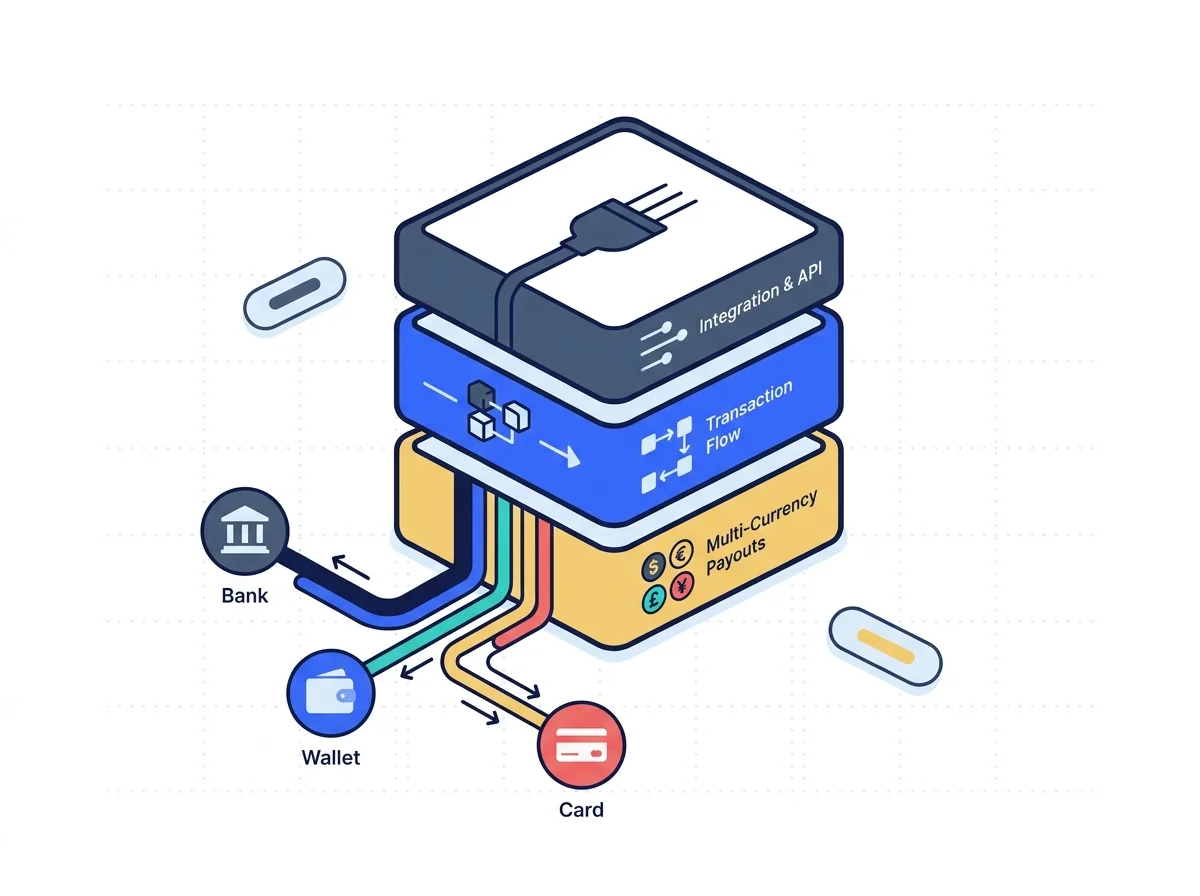
System architecture of a remittance platform with connected services

The whole lifecycle, end to end

Nine steps, and there is one system behind every one of them. The platform can potentially support: Customer → Quote → Compliance → Funding → Transaction → Payout → Settlement → Reconciliation → Reporting

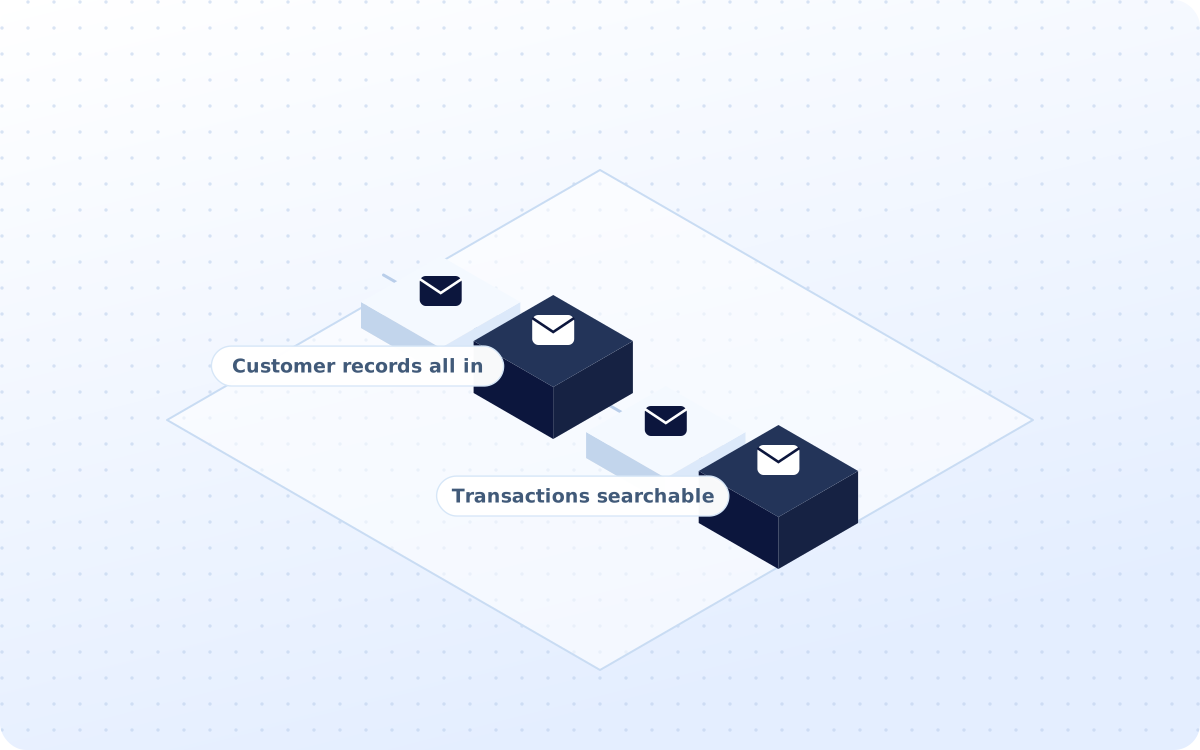
  • Customer records all in one place
  • Transactions searchable by state
  • Reporting runs off the same data
Routing tree selecting a payout partner by corridor and method

What software cannot do for you

No system on its own makes a business licensed or AML compliant. Build compliance-ready workflows and integrations around the policies, controls and regulated providers required by your operating model.

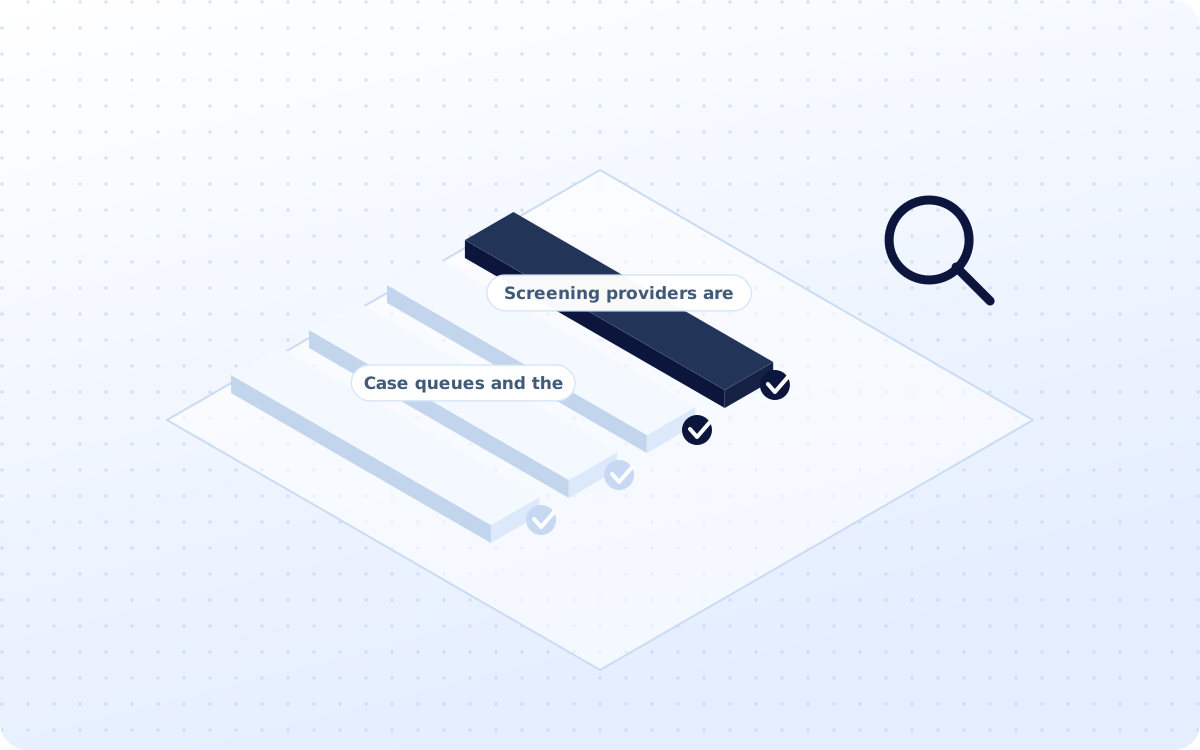
  • Screening providers are integrated
  • Case queues and the review states
  • Audit log kept on every change
Network of agent locations connected to a central operations hub

Where the decisions actually stay

Compliance sits with your own team and your own providers, never with the software. The system can facilitate workflows but should not be positioned as automatically satisfying regulatory obligations.

  • Limits are set by your own policy
  • Roles and permissions per user
  • Flags routed to a review queue
Reconciliation flow matching transfers, ledger entries and settlement records

The money, ledgers and settlement

The ledger question comes up early on. For systems requiring formal accounting or regulated ledger functionality, scope and controls should be designed with relevant finance, legal and compliance expertise.

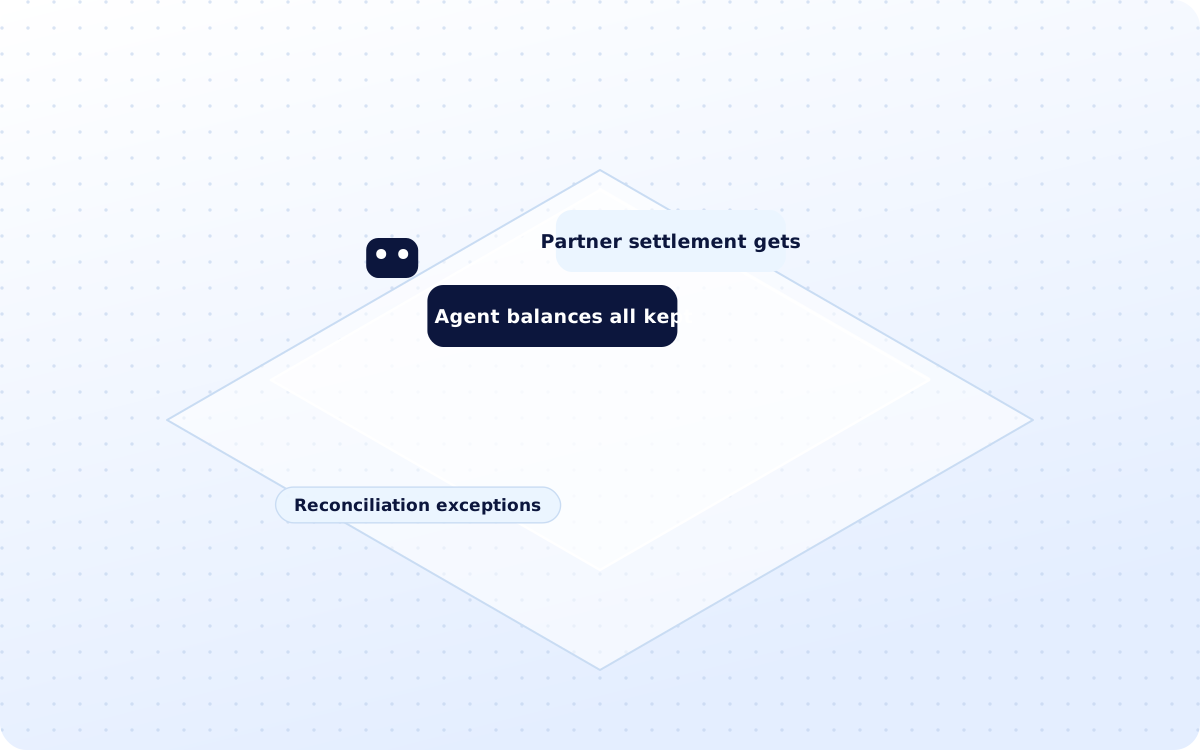
  • Partner settlement gets tracked
  • Agent balances all kept current
  • Reconciliation exceptions surface only
DELIVERABLES

What you actually receive

Six artefacts, all of them yours to keep. The module scope decides the price and the time.

ONE-OFF

Module scope map

Exactly which of the forty work groups you need now, which wait, and which will never apply.

ONE-OFF

Corridor and fee rules

Every corridor, with its rate, its fee, its limits and all its available payout methods listed.

ONE-OFF

Integration list

Every provider that the platform speaks to, and exactly what each one of them returns to it.

ONE-OFF

Role and permission grid

Which role can see a corridor rate, which can change one, and which can authorise a refund.

ONE-OFF

Reconciliation design

How the payments, payouts and partner statements all get matched, and what counts as a break.

ONGOING

Operations dashboard

The volume, the value, the failures and the exceptions, all on one screen for the operations team.

HOW IT WORKS

How the platform gets built

Four stages, run in order. Nothing gets built before the module scope has been signed off first.

Which of the modules you actually need

Forty separate work groups exist on paper. The operating model, the corridors and the partner network decide which ones get built first.

Workstreams
  1. 01The operating model written down
  2. 02Corridors and currencies listed
  3. 03Partners and the providers named
  4. 04Module list agreed and then priced
  5. 05Compliance boundary written in
CAPABILITIES

What the platform can do

Forty groups of work sit behind the service, and these twelve are the ones most operators need.

01

Customer records

Profiles, status, history, notes

02

Transaction engine

Created through to completed

03

Corridor rules

Countries, currencies, limits, fees

04

Rate management

Base, customer and corridor rates

05

Fee management

By segment, method or promotion

06

Payout partners

Routing, limits and settlement

07

Agent management

Branches, limits and commission

08

Compliance queues

Flags, cases and audit history

09

The reconciliation

Matching, breaks and exceptions

10

FX and treasury

Pairs, spreads and exposure views

11

Roles and access

Who sees what, and who approves

12

The reporting layer

Volume, revenue, corridor profit

WAYS TO BUY

Three ways to buy this

One of these will fit, whether the platform exists already or nothing at all has been built yet.

Complete platform build

The scope, the configuration, the integrations and the launch, delivered against the one module list.

  • Fixed fee, agreed before we start
  • Compliance boundary written in
  • Handover with the documentation

Modular platform build

Reconciliation first, then the agents, then the rates, with each module priced on its own terms.

  • One module at a time, fixed fee
  • Usually starts with reconciliation
  • Stop whenever it suits your team

Platform scoping study

Which modules, which integrations, what the whole thing costs, and how long it all will take.

  • Four weeks, priced before we start
  • No obligation to build with us
  • Module list costed line by line

Comparison. A general software house will build what you specify. A remittance management system for money transfer operators arrives knowing what a reconciliation break is.

Position. Most operators need reconciliation and agent management first, not all forty groups, and it costs less.

Where this stops
  • Technology can support compliance operations. Licensing and AML questions go to a qualified adviser.

Audit line. If none of the three fits, a fixed-fee growth audit will say which one should.

PROCESS

Four steps to going live

Four weeks of scoping, and then the build. Integrations set the timeline far more than anything else.
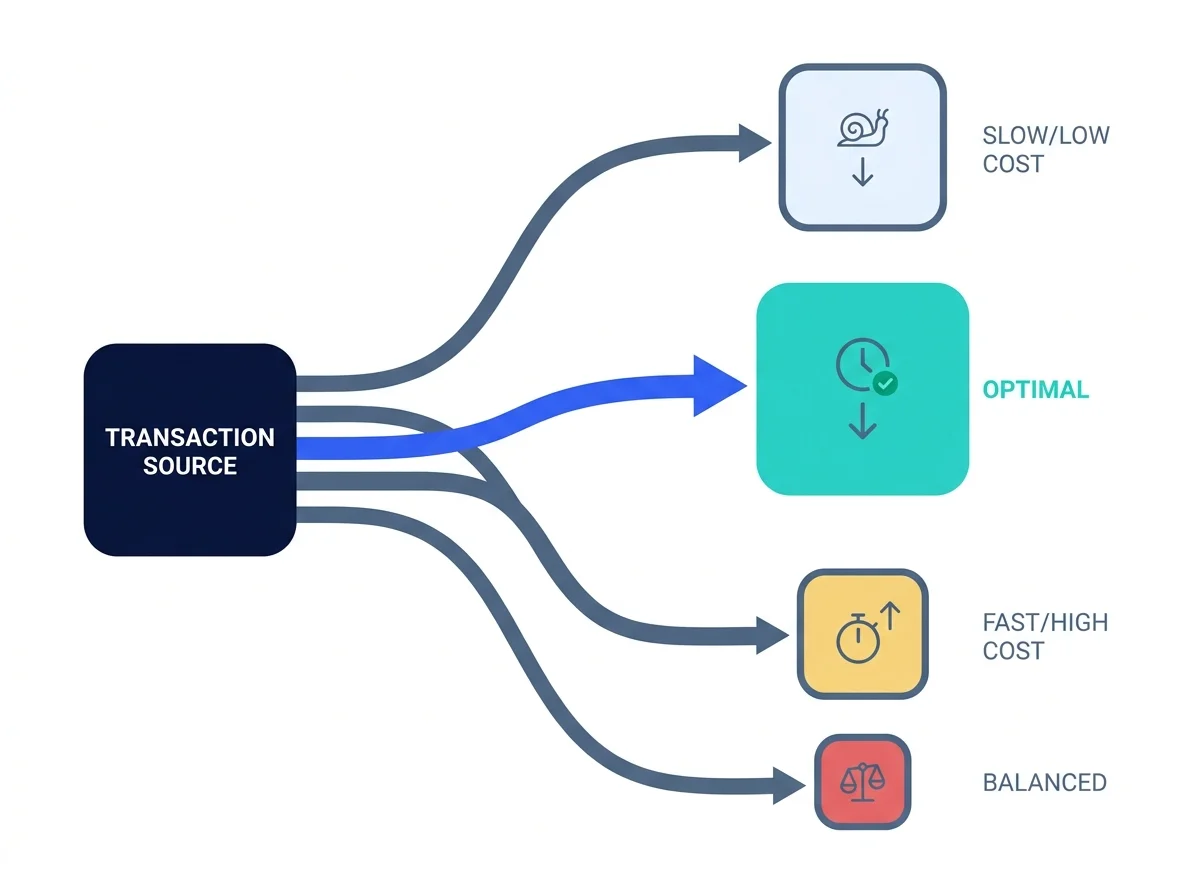
Routing tree selecting a payout partner by corridor and method
01

Scope the modules

WEEK 1-4

Operating model, corridors and partners are documented, then the module list is agreed.

02

Configure it all

MONTH 2

Corridors, rates, fees, limits and permissions are configured before any integration work.

03

Wire the providers

MONTH 3-6

KYC, payments, payouts and FX integrated one at a time, each tested against failure.

04

Run and monitor

ONGOING

Live transactions, with failures and reconciliation breaks watched from the first day.

WHAT WE CLAIM

How results get reported

No client figure appears without written permission. These three are facts about how the work is run.

40WORK GROUPSForty groups of work comprise the service, customers through to reporting.
9LIFECYCLE STEPSNine lifecycle steps run from customer record through to the reporting.
10TRACKED KPISTen indicators are documented, from completion rate to repeat transfer rate.
FAQ

Questions operators ask first

Answers come first. Where the honest answer is no, it says no and explains what to do instead.

Operators, remittance apps and payout platforms on the roster

  • SwiftLoom Pay
  • Transfeo
  • Transfera Loop
  • VaultBridge
  • Alta Remit
  • Corridor Pay
  • Corriva Pay
  • Diaspora FX

Marks appear once written permission is on file for each operator.

NEXT STEP

Start with the module list first

Forty modules is a wish list, not a plan. A fixed-fee growth audit will name the ten that would actually change your operations this year alone.

You keep the module list whether or not we build it.

Scroll to Top