Go-to-market strategy for remittance apps
A remittance business gets one launch. Most spend the first quarter finding out the tracking was never live and the corridor was picked in a boardroom, not from evidence.
Remittance only · Plan before spend · Licensing goes to your advisers

Go-to-market strategy for remittance startups is the work that happens before the first campaign, not after it. Help a new money transfer or cross-border payments business move from concept or pre-launch stage into a structured commercial launch. Licensing and AML approval are not part of it, and those questions stay with your own qualified advisers. The plan comes first, then the tracking, then the spend.
What changes before launch
Most launches run the marketing first and the measurement afterwards. Four of those things get switched around.
Spend before tracking
The ads go live and nobody can even see the first transfer.
Tracking before spend
Events, KYC and first transfer all fire before a penny goes out.
Corridor picked in a room
The first corridor gets chosen on somebody's personal hunch.
Corridor picked on data
Diaspora size, search demand and payout options decide it instead.
One generic message
The same fintech line runs at senders, agents and payroll firms.
A message per segment
Family senders, students and SMEs each hear a different thing.
Licensing claimed loosely
An agency implies it can help with the regulatory side of it.
Licensing left alone
That work stays with your legal and compliance advisers instead.
What the launch plan covers
Four rows, in order. The boundary comes first, because it decides what the rest of it means.
What this service can actually define
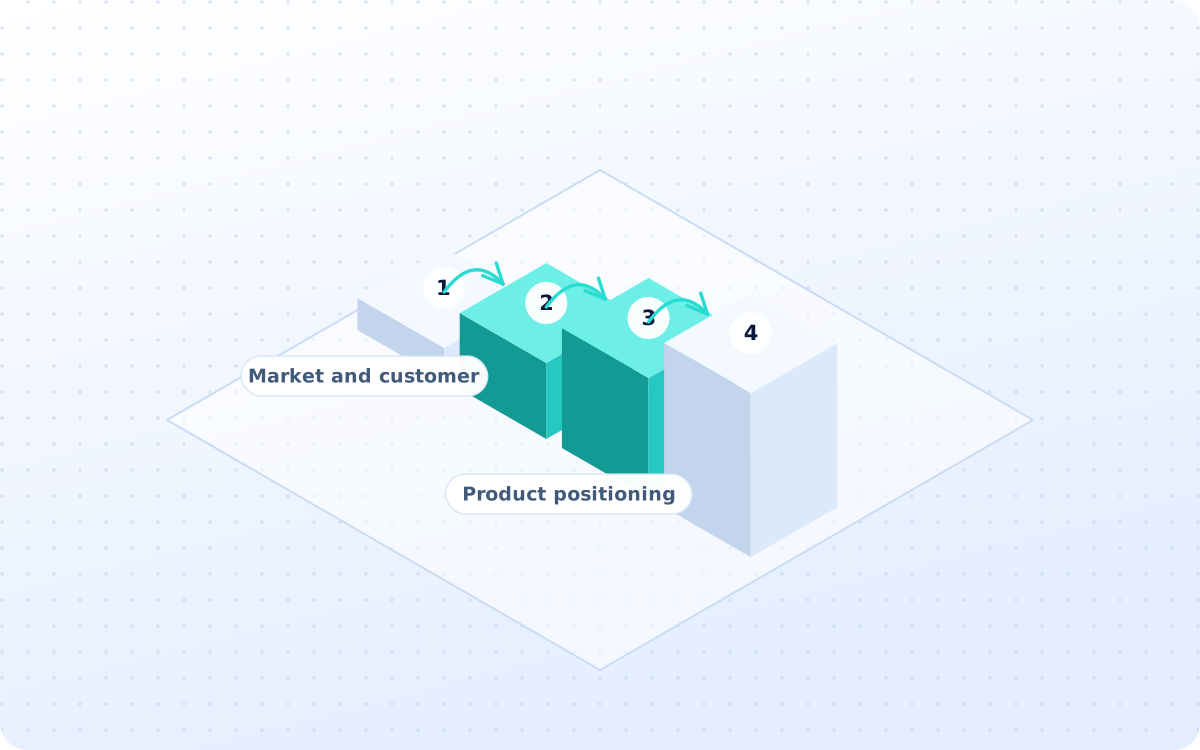
The line is set out in writing before any work starts. The GTM service can help define: Market, Customer, Product positioning, Marketing, Customer acquisition, Analytics, Launch sequencing, Digital infrastructure
- Market and customer defined first
- Product positioning written down
- Launch sequencing set out in order

What it will never claim to provide
That is what the work defines. This next part is what it will never claim to do. It should not claim to provide: Regulatory authorization, Licensing approval, Legal advice, AML programme approval
- No regulatory authorisation at all
- No licensing approval is given
- No legal advice at any point at all
Where the regulatory questions go
Somebody has to answer the licensing question, and it is not going to be an advertising agency that does it. Those functions should remain with qualified legal, compliance and regulatory advisers.
- The referral is made to a specialist
- Scope agreed before any work starts
- Marketing claims kept checkable
What the service is actually for
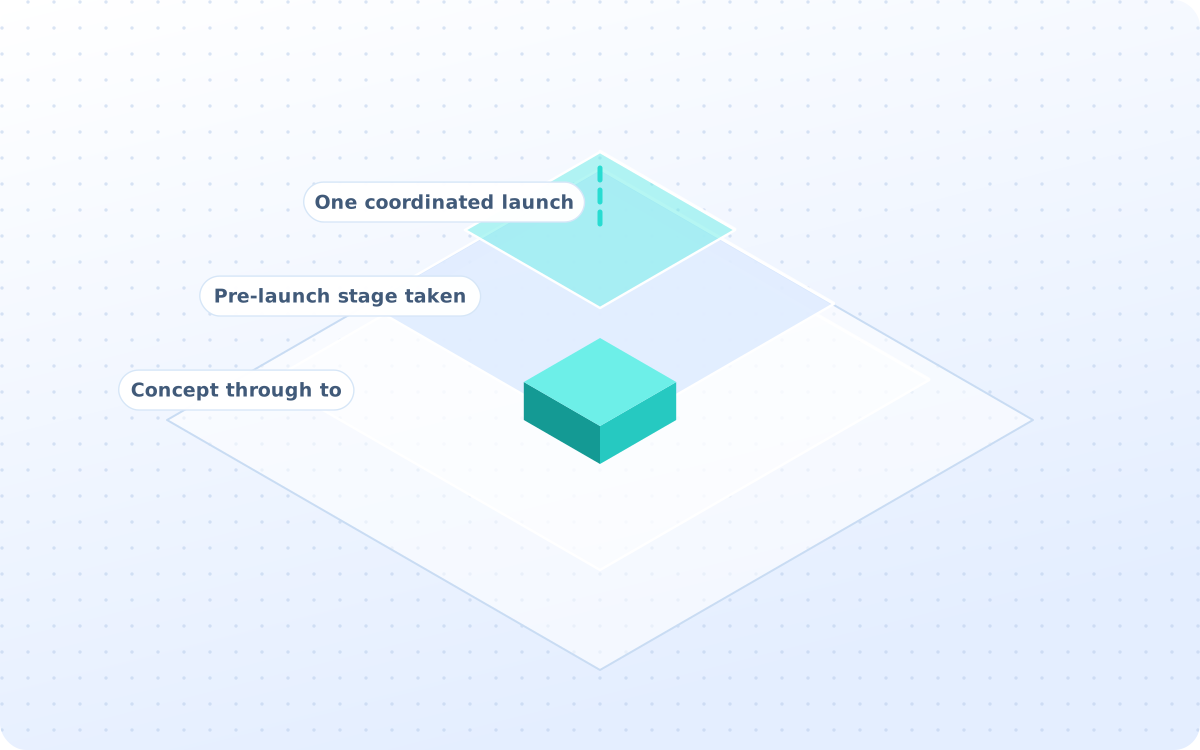
There is a stage before the first campaign ever runs. Help a new money transfer or cross-border payments business move from concept or pre-launch stage into a structured commercial launch.
- Concept through to commercial launch
- Pre-launch stage taken seriously
- One coordinated launch ecosystem
What you actually receive
Six artefacts, all of them yours to keep. The 90-day plan is the one your board actually reads.
Readiness assessment
The product, the website, the app, the brand, the analytics and the ad accounts, each scored.

Positioning and messaging
The category, the promise, the proof points and a message for each segment you actually sell to.
Corridor and market plan
The launch country, the destination markets and the initial corridors, with the segments for each.
Measurement plan
GA4, GTM, Firebase and the event architecture, with the first transfer defined as the event.
Channel and budget plan
The channel mix, the campaign structure and a recommended split, which you approve or you do not.
90-day growth plan
Weekly priorities, the experiments, the campaigns and the review points, for the first ninety days.
How the launch plan runs
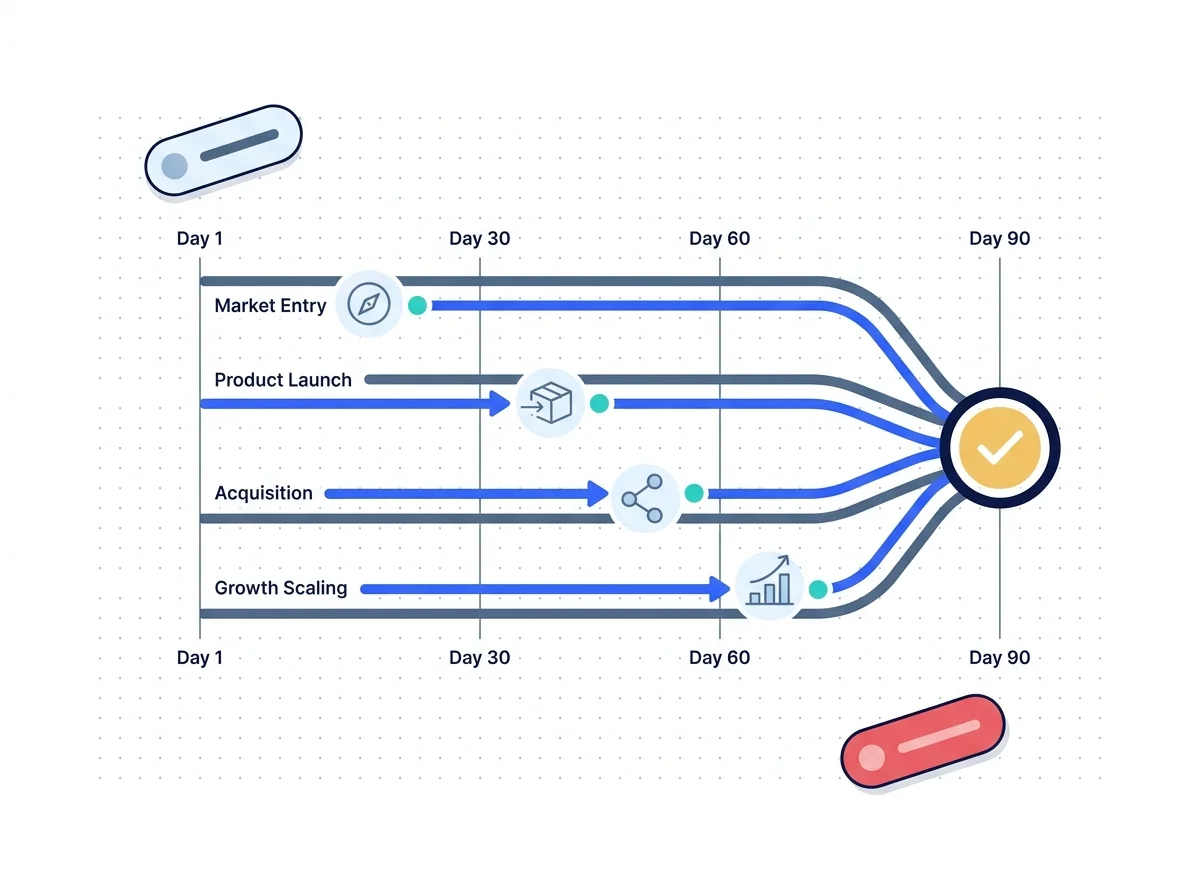
Four stages, run in order. The whole plan is finished before any advertising account even gets opened.
Whether the business is ready to launch
Product, website, app, brand, analytics, advertising accounts, CRM, content and customer support all get scored before the plan is written.
- 01Product readiness scored first
- 02Website and app are both checked
- 03Analytics gaps all written down
- 04Ad accounts and the verification
- 05Support cover checked out as well
Who this is for, and which corridors
The launch country, the destination markets, the initial corridors and the segments get named, because a launch aimed at everybody lands nowhere.
- 01The launch country decided first
- 02Destination markets named properly
- 03Initial corridors picked on data
- 04Segments named, not guessed at
- 05Diaspora, students, SMEs, payroll
The plan the launch will actually run on
Positioning, messaging, the website and app plan, the analytics foundation and the channel mix all get written as one document, not six.
- 01Positioning and all the messaging
- 02Website structure and copy plan
- 03App store presence and the ASO
- 04GA4, GTM and Firebase all planned
- 05Channel mix and the budget split
Five stages, and the gates between them
Pre-launch foundation, launch, validation, optimisation and scale, with a gate that has to be cleared before the next stage even begins.
- 01Foundation comes before any spend
- 02Launch, then initial acquisition
- 03Validation tests the economics
- 04Optimisation comes before scale
- 05Scale only when it all pays back
What the launch work covers
Twenty groups of work sit behind the service, and these twelve are what actually carry a launch.
Readiness check
Product, brand, analytics, accounts
Target market
Launch country and destination markets
Customer profile
Diaspora, students, SMEs, payroll firms
The positioning
Category, promise and proof points
Messaging plan
Customer, product, trust and corridor
Competitor work
Price, product, search and paid
Website plan
Structure, copy, corridor pages, tracking
App launch plan
Store presence, ASO, events, deep links
Analytics base
GA4, GTM, Firebase, first transfer
Paid acquisition
Channel mix, budget, testing, scaling
Lifecycle plan
KYC recovery, activation, repeat send
Launch timeline
Five stages with gates in between
Three ways to buy this
One of these will fit, whether the licence is still pending or the launch date is already set.
Complete launch programme
The readiness, the market, the positioning, the measurement and the channel plan, in one document.
- Fixed fee, agreed before we start
- Six weeks from start to the plan
- Licensing referred, never advised
Launch readiness check
Just the readiness assessment, scored in a fortnight, and before the bigger plan gets commissioned.
- One fixed fee, two weeks total
- A go or no go answer on readiness
- Credited if the full plan follows
Launch support retainer
The plan, plus somebody senior sitting in the room through the first ninety days of live trading.
- Monthly fee, ninety days minimum
- The plan gets adjusted every week
- Stage review included each month
Comparison. A general fintech agency will run the same launch playbook everywhere. Go-to-market strategy for remittance startups starts with the corridor, the payout and the first transfer.
Position. Most pre-launch operators need the measurement in place before the media spend, not after it.
- Licensing and AML approval sit with your qualified advisers. We handle advertising and marketing compliance.
Audit line. If none of the three fits, a fixed-fee growth audit will say which one should.
Four steps to the plan
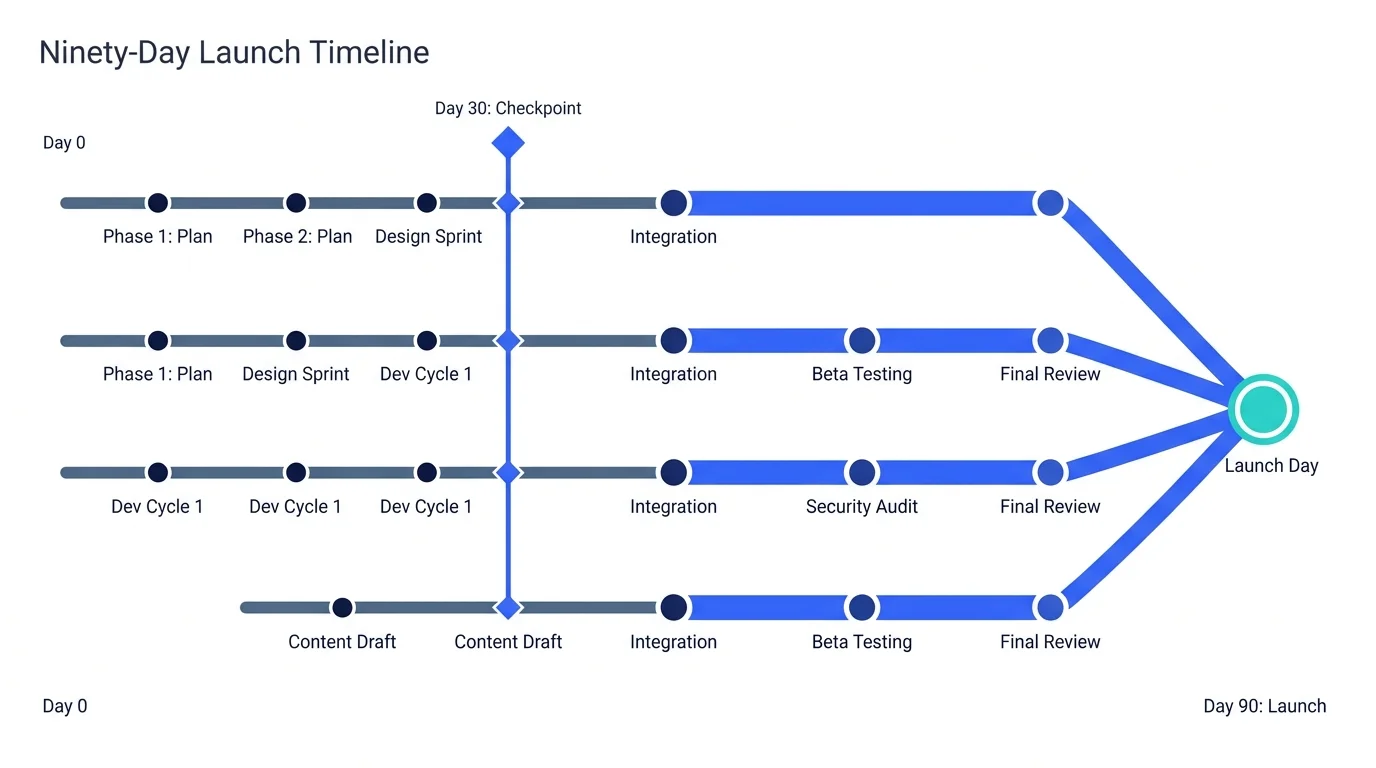
Six weeks to the plan. Nothing at all gets spent until the measurement is live and proven.
Score what exists
WEEK 1-2Product, website, app, brand and analytics, each marked against what a launch actually needs.
Name the market
WEEK 2-3Launch country, destination markets, the initial corridors and the segments worth selling to.
Write the plan
WEEK 4-5Positioning, messaging, website, app, analytics and channels, written as one connected document.
Sequence it all
WEEK 6Five named stages, each with the gate that has to be cleared before the next one begins.
How results get reported
No client figure appears without written permission. These three are facts about how the work is run.
Services that pair with this
The plan is one thing. These three are what check the work once it is actually gone live.
The review of the launch website, once it is live and taking in its very first registrations.
Learn morePaid Ads AuditThe account review that says whether the first launch spend actually paid for itself at all.
Learn morePaid Ads Audit (Paid Growth)The campaign-side version of it, for when the launch budget is going out faster than it returns.
Learn moreQuestions operators ask first
Answers come first. Where the honest answer is no, it says no and explains what to do instead.
Both. An agent-led operator gets the counter and community side planned as well, because the first conversation often happens in person.
Yes. The measurement plan is built on GA4, GTM and Firebase, and it uses whatever CRM you have already chosen rather than a new one.
Yes, and it should be. The initial corridors get chosen on diaspora size, search demand and payout options, then each one gets its own message.
Yes. Go-to-market strategy for remittance startups is the only kind written, so corridors, payout partners and KYC are the starting point.
It should not claim to provide: Regulatory authorization, Licensing approval, Legal advice, AML programme approval. Advertising and marketing compliance is ours.
The launch country, the corridors you are considering, the payout partners you can already reach, and whoever signs off the launch budget.
Six weeks to the finished plan. Most pre-launch operators reach their first paid campaign about two months after the work begins.
Yes. The event architecture runs from traffic through registration and KYC completion to the first transfer, so the launch gets judged on transfers.
Yes, in sequence rather than all at once. A first corridor that works teaches the second one something, and three at once teaches nobody anything.
Yes. The lifecycle plan covers welcome, KYC recovery, first-transfer activation, repeat campaigns and reactivation, though building them out is separate work.
First transfers per channel, against cost. A launch that produces registrations and no transfers gets stopped at the validation gate, not six months later.
Nine indicators, all reported monthly: traffic, registration, KYC, first transfer, acquisition cost, transaction value, retention, repeat transfer and lifetime value.
By putting the tracking, the corridor choice and the message in place before the media runs, so the spend lands on senders who actually complete KYC.
The launch budget that never got wasted. Go-to-market strategy for remittance startups usually pays for itself in the corridor that was quietly dropped.
The lifecycle plan is written at launch, not bolted on later, so the second transfer is designed before the first sender has even registered.
Operators, remittance apps and payout platforms on the roster
Marks appear once written permission is on file for each operator.
Get the plan before the first spend
A remittance launch happens once. A fixed-fee growth audit will say whether the tracking, the corridor and the proposition are actually ready for it.
You keep the readiness assessment whether or not you go ahead.