Social media automation for MTOs
Scheduling the corridor content is straightforward automation. Deciding whether a promotional exchange rate claim can go out at all is a decision that somebody senior has to sign off.
Remittance only · Publishing automated · Every claim reviewed by a human

Social media automation for remittance companies, in one sentence. Automate repeatable social media operations such as publishing, content distribution, inbox routing, reporting and workflow management while keeping brand strategy, sensitive customer communication and regulated claims under human oversight. The rest, the brand voice and any claim about a fee or a rate, stays with a person who signs it off.
What changes in the feed
Automation should take the calendar off somebody's desk. It should not take the brand off them too.
Posting by hand, daily
Somebody uploads the same post to five platforms every morning.
Scheduled once, ahead
A fortnight of corridor content goes up from one calendar.
The bot writes a claim
A caption quotes a fee that nobody in compliance ever saw.
The bot drafts, we edit
AI drafts the caption and a person signs off on any claim.
Complaints sit in the inbox
A failed transfer comment waits a weekend for an answer.
Complaints get routed out
Fraud, failed transfers and complaints reach a team in minutes.
Reports built by hand
Someone rebuilds the monthly deck from five platform exports.
Reports build themselves
Reach, engagement and content performance arrive on their own.
What the automation covers
Four rows. The line between task and judgment, the two review rules, and then the approval path.

The line that this service draws
Publishing at nine on a Tuesday is a task. Deciding what a money transfer brand should say about a fee is not a task at all. The goal is: Automate operational repetition, not brand judgment.
- Publishing and reporting automated
- Brand strategy stays with people
- Regulated claims under oversight
The two things a human still checks
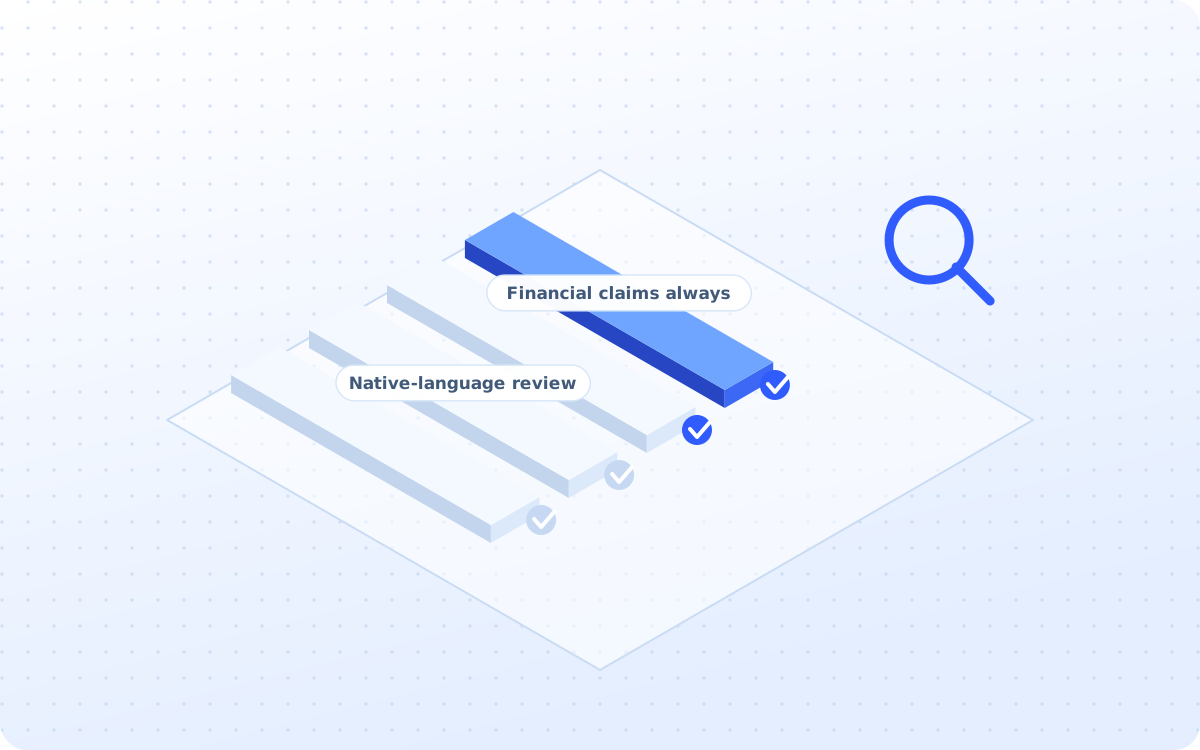
AI can draft a caption in every corridor language. Two rules still apply to those drafts. Human review should remain mandatory for financial claims. Native-language and cultural review should occur where needed.
- Financial claims always reviewed
- Native-language review where needed
- AI drafts, but never final copy
Which comments should never wait
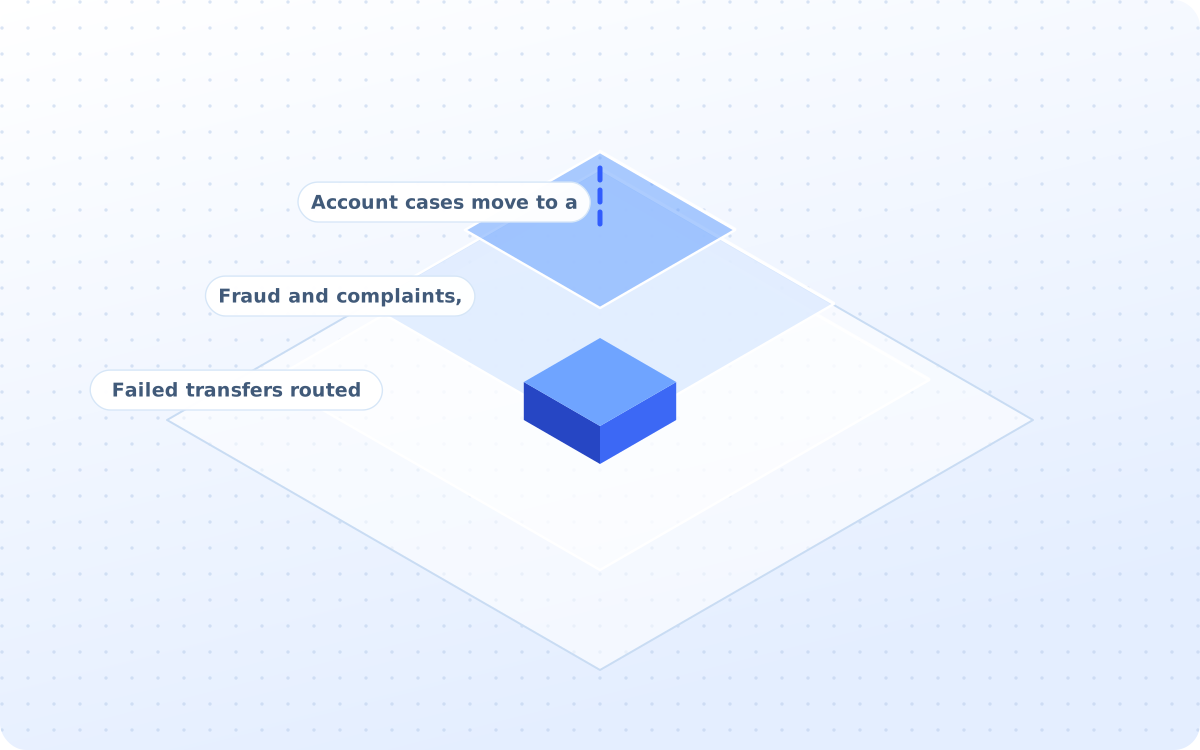
Some comments cannot wait at all. Route high-risk comments involving: Failed transfer, Fraud, Complaint, Account issue, Legal concern to appropriate teams. Sensitive account cases should move to secure channels.
- Failed transfers routed at once
- Fraud and complaints, straight out
- Account cases move to a secure channel
How a post actually gets published
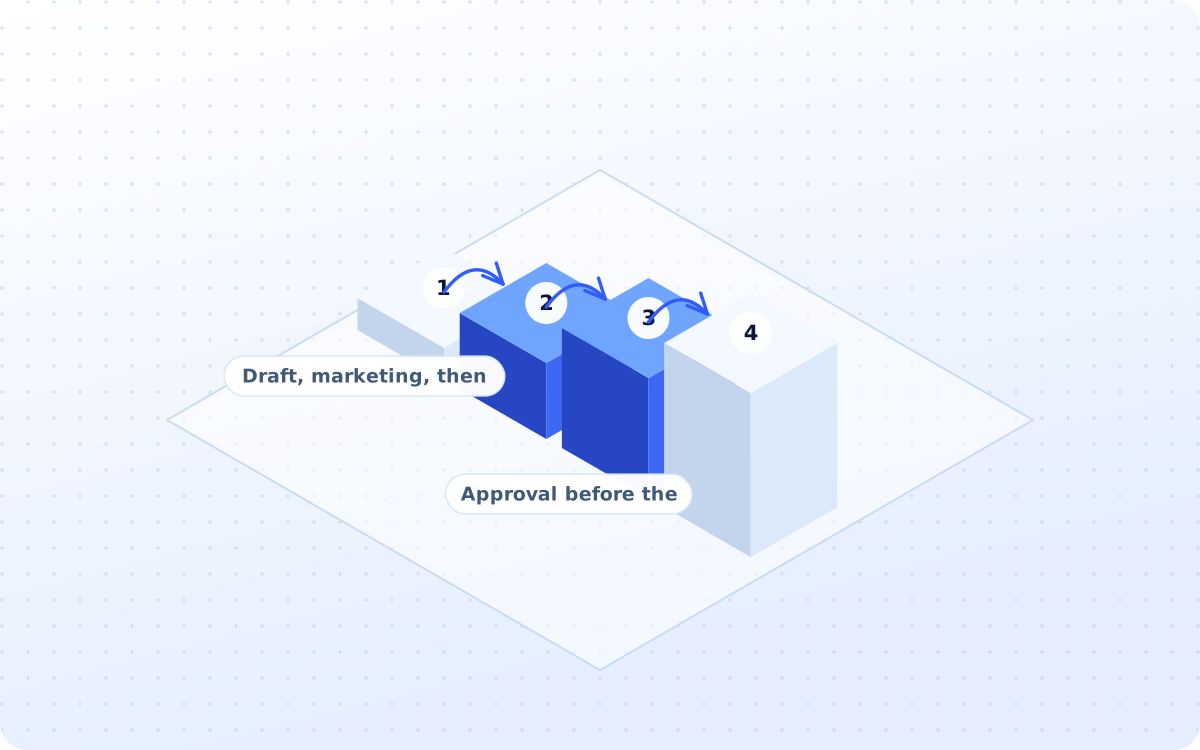
Nothing gets published because somebody had a good idea at half past four on a Friday afternoon. Route content through: Draft → Marketing → Compliance if needed → Approval → Schedule → Publish
- Draft, marketing, then compliance
- Approval before the scheduling
- Nothing skips a single step, ever
What you actually receive
Six artefacts, all of them yours to keep. The approval path is the one that actually saves you.
Automation strategy
What gets automated, what gets AI-assisted, what gets reviewed, and what stays manual all the way.

Content calendar
The campaigns, the corridor content, the education and the product updates, planned a quarter ahead.
Caption drafting kit
Prompts, hooks and CTA variations, with the review step that no financial claim ever skips.
Inbox routing rules
Sales, support, complaint, spam and transfer issue, each one with the team that receives it.
Approval workflow
Draft, then marketing, then compliance where needed, approval, schedule and publish, in that exact order.
The reporting pack
The reach, the engagement, the follower growth and the content performance, assembled every single month.
How the social work runs
Four stages, run in order. The approval path gets agreed before any of the content gets scheduled.
What a machine should never be touching
Every task gets marked as automated, AI-assisted, human-reviewed or fully manual before a single tool is bought or even connected to anything.
- 01Automated, only where it is safe
- 02AI-assisted, always with a reviewer
- 03Human-reviewed for all the claims
- 04Fully manual where that matters
- 05The line drawn before any tooling
The calendar that mostly runs itself
Campaigns, corridor content, education, product updates and seasonal work all get scheduled across the platforms from a single shared calendar.
- 01Corridor content planned ahead
- 02One calendar, and every platform
- 03Seasonal work all booked in early
- 04Repurposing, from blog to social post
- 05Localisation drafts per market
The comments that really need a person
Sales, support, complaint, spam, product and transfer issue each get classified, then routed to whoever actually deals with them all of them.
- 01A failed transfer, straight out
- 02Fraud goes straight to a named team
- 03Complaints are never auto-answered
- 04Spam removed without asking a person
- 05Account cases go to a secure channel
What actually gets counted each month
Reach, engagement, follower growth, content performance and channel performance arrive as a monthly summary that nobody has to build by hand.
- 01Reach and engagement, every month
- 02Follower growth for each platform
- 03Content performance patterns found
- 04Hooks and formats that actually worked
- 05Escalation response gets timed
What the service covers
Fourteen groups of work sit behind the service, and these twelve are what the team uses daily.
Content scheduling
Facebook, Instagram, TikTok, X
Calendar build
Campaigns, corridors, seasonal work
Caption drafting
Hooks, captions, CTA variations
Content repurposing
Blog to post, long video to clip
Localisation help
Drafts by country and language
Inbox classing
Sales, support, complaint, spam
Comment routing
Failed transfers, fraud, disputes
Safe replies
Links and general information only
Social listening
Mentions, complaints and competitors
Reporting build
Reach, engagement, growth, formats
Three ways to buy this
One of these will fit, whether the calendar is chaos or it is just the reporting that drags.
Full social automation
The strategy, the calendar, the routing rules and the approval path, built and connected once.
- Fixed fee, agreed before we start
- Six weeks from the scope to live
- Claims still reviewed by people
Comment routing package
Just the classification and the routing rules, when the inbox is where the damage is happening.
- One fixed fee, three weeks total
- Routing rules, and done properly
- Credited if the full build follows
Ongoing social support
The calendar kept full, the routing rules kept current and the reporting arriving each month.
- Monthly fee, three months minimum
- Calendar filled one month ahead
- Escalation response timed monthly
Comparison. A general scheduling tool sells seats and a calendar. Social media automation for remittance companies starts with which posts a compliance officer has to see.
Position. Most social teams want the calendar back, not a bot answering a fraud comment thread.
- Financial claims get human review. Fraud, complaints and failed transfers go to your own team.
Audit line. If none of the three fits, a fixed-fee growth audit will say which one should.
Four steps to the calendar
Six weeks to live. The approval path gets written before a single post is ever scheduled anywhere.
Draw the lines
WEEK 1Automated, AI-assisted, human-reviewed or manual, decided once for every recurring task there is.
Fill the calendar
WEEK 2-3Campaigns, corridor content and seasonal work planned a quarter out, then scheduled once.
Wire the inbox
WEEK 4-5Classification, routing and the escalation list, so a fraud comment never sits overnight.
Build the reports
WEEK 6Reach, engagement, growth and content performance, all arriving monthly without anybody asking.
How results get reported
No client figure appears without written permission. These three are facts about how the work is run.
Services that pair with this
Social is one surface. These three cover the phone line, and the screen the post points at.
The inbound phone line, for the follower who stops commenting and simply rings you instead.
Learn moreAI Outbound CallingThe other direction entirely, for the followers who never became senders in the first place.
Learn moreThe upstream repair for the KYC screen every one of those social posts sends people off to.
Questions operators ask first
Answers come first. Where the honest answer is no, it says no and explains what to do instead.
Both. An agent-led operator gets branch-level content in the calendar and the same routing rules on comments about a counter that closed early.
Yes. The reporting pulls from the platform accounts you already own, and a routed complaint lands as a ticket in the helpdesk you already run.
Yes. Corridor content sits in the calendar by country and language, with native-language review before anything goes out to that community.
Yes. Social media automation for remittance companies is the only kind built, which is why a failed transfer comment has its own routing rule.
Human review should remain mandatory for financial claims. A fee, a rate or a promotion goes through the approval path before it reaches a feed.
Access to the platform accounts, the current approval path if one exists, and whoever is allowed to sign off a claim about a rate.
Six weeks to live, or three weeks for the inbox routing alone. Agreeing the approval path usually takes longer than building any of it.
Partly. A comment about a failed transfer gets routed by topic, not by account. Sensitive account cases should move to secure channels.
Yes. The calendar carries a content track per corridor, so a Ramadan post for one community does not land in a feed where it means nothing.
Indirectly. Social keeps the brand in front of a dormant sender, though the actual reactivation message belongs in the lifecycle automation instead.
Through the link in the post and the campaign tag on it, so a registration that started on social can be counted against the content that caused it.
Eight indicators, all reported monthly: publishing efficiency, time saved, response time, engagement, content output, approval turnaround, reporting time and escalation response.
By getting the corridor content out on time, in the right language, and by making sure a question in the comments gets answered the same day.
Hours returned to the team, against the tool cost. Social media automation for remittance companies pays back on the reporting before anything else.
Only at the edges. A sender who sees the corridor content and gets an answer in the comments stays closer than one who hears nothing between transfers.
Operators, remittance apps and payout platforms on the roster
Marks appear once written permission is on file for each operator.
Automate the posting, not the claims
Publishing is a repeatable task. A promotional claim about an exchange rate is a decision. A fixed-fee growth audit will separate the two of them.
You keep the approval workflow whether or not you automate.