

Corridor pages are the organic engine of every large remittance brand
Wise and Remitly did not build fifty corridor pages by hand. They built one system and then produced pages from it. Here is how that system is structured, and why most attempts turn thin within a year.
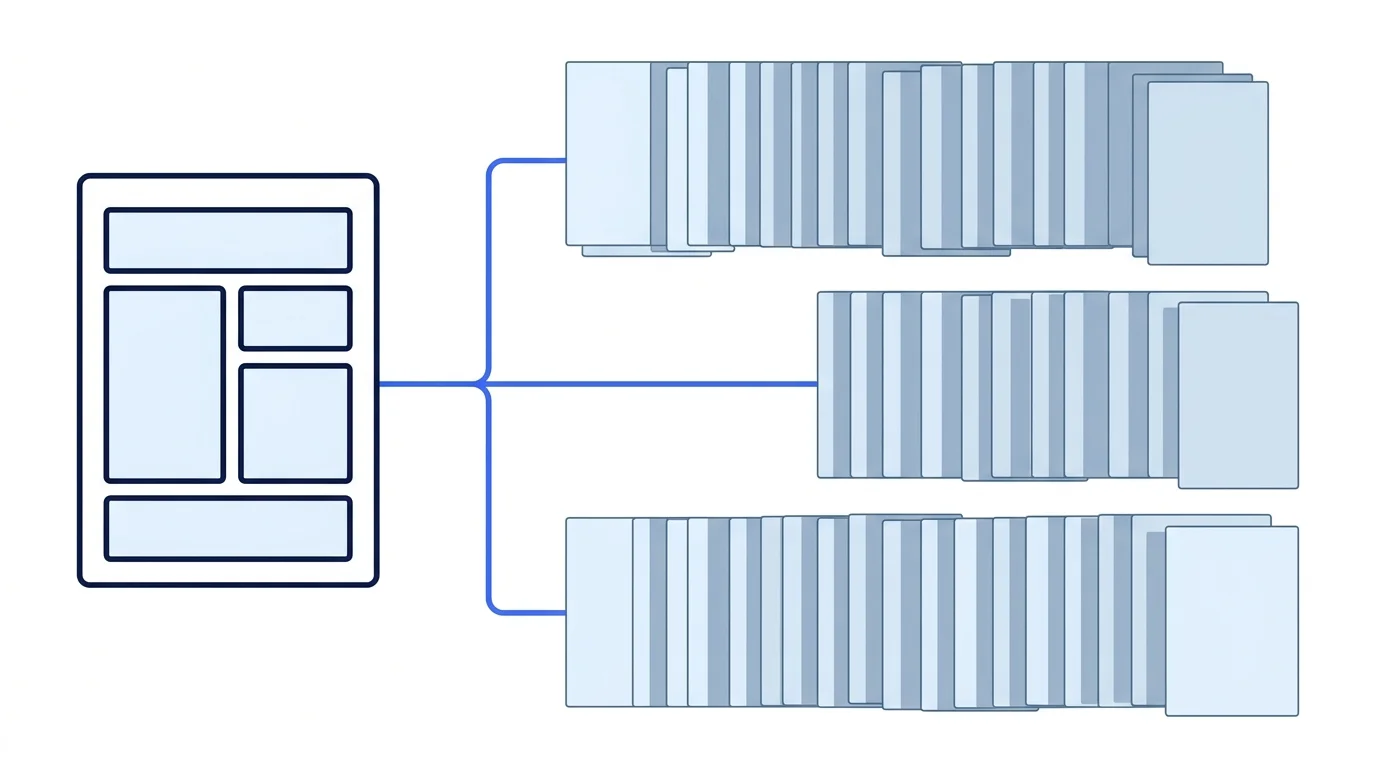
Look at the organic footprint of any large money transfer brand and the same pattern appears. Hundreds of near-identical pages, each targeting one send-and-receive pair, each ranking independently, together accounting for the majority of non-brand organic traffic.
It looks like brute force. It is not. Building four hundred corridor pages by hand would take a content team years and the result would be filtered rather than ranked. What those brands built was a system, and the pages are its output.
What the large brands actually built
Three things, in this order. A template with a fixed section order and heading structure. A data structure that feeds rates, fees, limits and payout methods from the platform rather than from copy. And an internal linking logic defined before a single page was written.
The pages came fourth and were the fastest part. That ordering is the whole insight, and it is the part that gets skipped.
The template, the data structure and the linking logic take longer to build than the pages do. That imbalance is why corridor pages work as a system and fail as individual projects.
Why hand-built pages fail
A typical mid-size operator has somewhere between eight and twenty corridor pages, written over two or three years by different people. We audit these regularly and they fail in the same four ways.
– No shared template, so three or four different structures exist and none can be improved systematically.
– Fees and limits hard-coded into copy, so a meaningful share of the pages quote figures that have changed. A page quoting last quarter's fee is worse than no page, because it damages trust at the exact moment of decision.
– No rate module, so the highest-intent moment on the page has nothing to act on and the sender leaves to find a quote elsewhere.
– No linking logic, so pages compete with each other and search engines cannot tell which one owns which intent.
The fourth is the most damaging and the least visible. In one audit, roughly a third of corridor queries surfaced the wrong page. The client had assumed they needed more pages. They needed a system, and then more pages.
The three components of a corridor system
1 · The template
One section order, one heading structure, used for every corridor without exception. Hero with both countries named in the H1, an answer block in the first sixty words, a rate and fee module above the fold, payout methods specific to that corridor, delivery times with an honest range, documents and limits, and an FAQ block.
The discipline is in the exception handling. A corridor with unusual payout coverage does not get a bespoke page. It gets the same template with a different data set.
2 · The data structure
Rates, fees, limits, payout methods and delivery times come from the platform, not from a content management system field somebody types into. This single decision is what stops the library going stale, and it is why the build takes longer than expected.
It also enables the refresh cycle. When a fee changes in the source, every page carrying it updates, and anything requiring editorial attention gets flagged automatically.
3 · The linking logic
Defined before writing. Every corridor page links up to its send-country hub and its receive-country hub, across to two adjacent corridors, and down to one service page and the quote flow.
Anchor text is descriptive and varied, never repeated on the same page, and never used for two different destinations anywhere on the site. This is what tells a search engine which page owns which intent, and it is the fix for cannibalisation.
How many pages you actually need
Fewer than the largest brands and more than you currently have. The right number is determined by payout coverage and verified demand, not by a target.
Start with corridors you can genuinely serve well, ordered by margin rather than by search volume. A corridor with high volume and thin margin is a worse first page than a corridor with moderate volume and comfortable margin, because the traffic converts into transfers you barely earn on.
Sixty pages built properly outperforms two hundred built thinly, and in a category where Google applies its strictest quality treatment, two hundred thin pages is an active risk rather than a neutral one.
The refresh problem
This is what separates a library that compounds from one that decays. Fees change. Payout partners change. Limits change. Delivery times change when a partner changes their cut-off.
Without a refresh mechanism, a corridor library degrades quietly for eighteen months and then someone notices that six pages quote fees the business no longer charges. By then the trust damage has been done invisibly, one sender at a time.
Set a quarterly refresh cycle with automated flags when source data changes. A corridor page quoting an outdated fee is a compliance and trust problem, not only an SEO one.
Cannibalisation, and how to see it
Four near-duplicate pages with a country name swapped is what triggers filtering rather than ranking. The signature is easy to spot once you look for it: a search for one corridor surfaces a different corridor's page.
Measure it directly. Take your corridor query set, check which page actually ranks for each, and count the mismatches. Above ten percent means a structural problem that more pages will make worse.
The fix is usually the linking logic rather than the content. When every page's internal links clearly signal which corridor it owns, mismatches fall sharply without a word of copy changing.
What good looks like
– One template, one data structure, one linking logic, applied without exception.
– Rate module connected to live pricing and visible without scrolling.
– Answer block in the first sixty words of every page, written to be extractable.
– Internal linking defined before writing, not improvised during it.
– Quarterly refresh with automated flags on source data changes.
– Cannibalisation measured after every batch of new pages, not once at the start.
– Pages prioritised by corridor margin rather than by search volume.
Get those seven right and the library compounds. Get them wrong and you have built a maintenance burden that looks like an asset for about a year.
Key takeaways
- Large remittance brands built a system and produced pages from it, not the other way round.
- The template, data structure and linking logic take longer than the pages and are what make the pages work.
- Hard-coding fees into copy is why corridor libraries go stale and damage trust at the point of decision.
- Sixty pages built properly outperform two hundred built thinly, especially under strict quality treatment.
- Cannibalisation above ten percent of corridor queries is a structural problem more pages will worsen.
Frequently asked questions
Start with the corridors you can serve well, ordered by margin. Forty to sixty is a common first build for a mid-sized operator.
Yes, provided each page is genuinely useful and distinct. Retire or consolidate the ones that are not rather than leaving them thin.
Yes, if it can pull rates and payout data from your platform. The data connection matters more than the CMS choice.
Quarterly at minimum, plus an automated flag whenever fees, limits or payout methods change in the source data.
They can, if each carries an extractable answer block and structured data. A corridor page is one of the easiest page types to make citable.
Umair Sajid · Growth Partner, Bussinesstan
Umair has spent over a decade running growth across fintech, remittance and payments, including work with money transfer operators across UK, Gulf and West African corridors. He writes about the operational side of cross-border growth, mostly the parts that do not appear in a platform dashboard.
Find your leak before you scale spend.
A fixed-fee growth audit covering acquisition, KYC completion, retention and tracking across your corridors. You keep the roadmap whether or not we work together.