

AI & Automation 10 min read
AI customer support for fintech: automating where-is-my-money safely at MTOs
AI customer support for fintech, applied to money transfer: ticket classes, login before status, live rate reads, escalation and what AI must never decide.
On this page
Quick answer
AI customer support for fintech means using chatbots, voice agents and ticket automation to answer predictable questions and route the rest to people. At a money transfer operator, that means sorting contacts into automatable, assisted and human-required classes, authenticating the sender before any transfer status is shared, reading rates live from the system of record, and escalating disputes, fraud and compliance matters to trained staff.
Key takeaways
- AI customer support for fintech works when it answers the predictable questions and knows exactly when to stop.
- Sort every contact into 3 classes: automatable, assisted and human-required.
- No transfer detail is shared before the sender is authenticated.
- Rates and fees are read live from the system of record, never generated by a model.
- AI never decides KYC approval, AML disposition, sanctions, suspicious activity, transfer blocking or risk classification.
Support is drowning in where-is-my-money. The queue spikes every Friday evening and before every Eid. Agents spend their shift looking up the same status in the same back office, while the one sender with a genuine fraud concern waits behind forty routine questions.
That is the case for AI customer support for fintech teams, and at a money transfer operator it is a strong one. It is also the case where getting it wrong costs the most. A bot that invents an exchange rate, reveals a transfer to the wrong caller or appears to decide a verification outcome creates a problem far bigger than a slow queue.
This is the implementation guide: how to sort the tickets, where the model must stop, how to roll out and what to measure. If you want the diagnosis first, the three questions that dominate remittance support covers it.
What AI customer support for fintech should do at a money transfer operator
The objective is not to replace the support team. It is to take repetitive work off it so people handle the cases that need judgement.
Most volume comes from a short list of questions. Across remittance support, 11 questions carry most of the load:
- How do I send money?
- Which countries can I send to?
- What documents do I need?
- Why do I need to verify?
- Did my transfer go through?
- When will it be received?
- What payout methods are there?
- Where is the nearest cash pickup location?
- Why did my payment fail?
- How do I add a beneficiary?
- How do I repeat a transfer?
Questions 5 and 6 are the where-is-my-money family. They are predictable, they need live data, and they need authentication. Get those right and the queue changes shape.
Sort every ticket into three classes
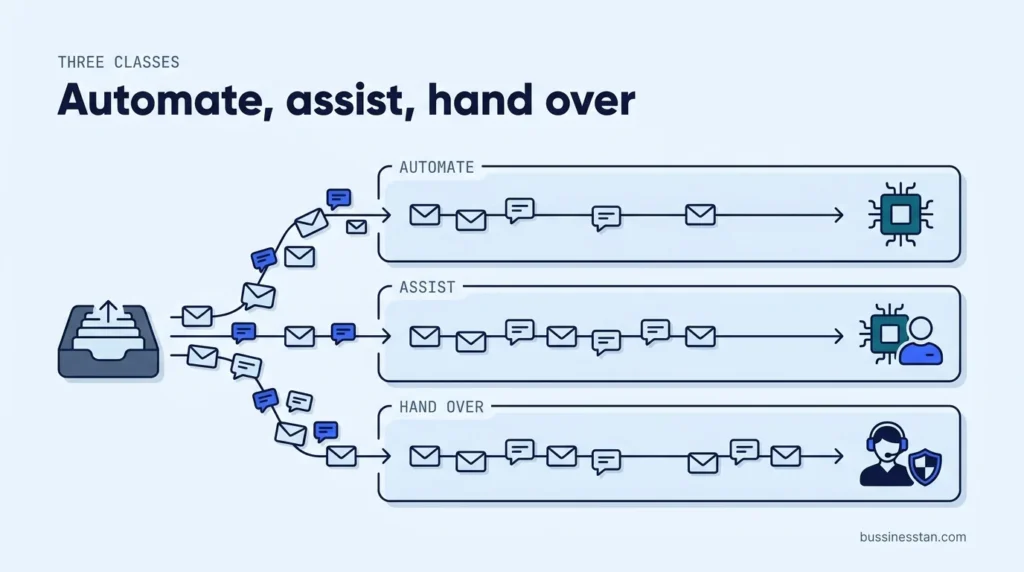
Customer support automation starts with a year of ticket exports, not a vendor demo. Tag each contact reason, then place it in one of 3 classes.
| Class | What it covers | Examples | What the AI does |
|---|---|---|---|
| Automatable | Predictable, low risk, answer comes from approved content or a live read | Supported countries, documents needed, payout methods, transfer status after login, today's rate | Answers fully, offers a person on request |
| Assisted | Needs a person, but the AI can prepare the work | Failed payment reasons, beneficiary detail changes, delayed payout questions | Gathers details, drafts a reply, summarises for the agent |
| Human-required | Judgement, money at risk, vulnerability or compliance | Fraud allegations, disputes, complaints, vulnerable senders, anything touching a compliance review | Recognises it and hands over immediately with notes |
The classes are a routing rule, not a quality rating. A sender asking why their transfer is on hold is human-required even if the question sounds routine, because the honest answer may involve a compliance review the AI must not discuss.
Authentication, live rates and languages
Why authenticate before sharing transfer status?
A transfer status reveals who sent money, to whom, how much and when. Before the assistant shares any of it, the sender must be authenticated through your existing login or verification method. On chat, that usually means answering inside the logged-in app or after a sign-in link. On voice, it means the same identity checks your agents use. The widget copy can be plain: "Sign in first to see your transfer."
How should the AI handle rates and fees?
Rates and fees are pulled from the system of record at the moment of the question, with the time of the quote shown. The model never generates a number. If the rate service is unavailable, the assistant says so and offers the rate board or a person. A model quoting an exchange rate from memory is not worth the risk.
Which languages come first?
Corridor languages matter more than the number of them. Start with the languages your top corridors actually use, whether that is Urdu, Yoruba, Twi or Tagalog. Have high-impact translated content reviewed by a fluent person before it goes live.
This is the work our customer support automation team does: taxonomy first, escalation rules written before any automation, then status automation behind login.
What AI must never decide
Some decisions stay with your governed systems and your trained people, whatever the model can technically do.
| Decision | Who decides | What the AI may do |
|---|---|---|
| KYC approval or rejection | Your verification process and reviewers | Explain what documents are needed and why |
| AML case disposition | Your compliance team | Nothing beyond routing |
| Sanctions screening outcomes | Your screening provider and compliance team | Nothing beyond routing |
| Suspicious activity judgements and reporting | Your compliance team | Nothing; the conversation stays neutral |
| Transfer blocking or release | Your operations and compliance processes | Tell the sender a person will follow up |
| Sender risk classification | Your risk framework | Nothing |
| Regulatory reporting and legal interpretation | Qualified staff and advisers | Nothing |
The assistant explains verification. It never decides it. Fraud, complaints and compliance cases follow your approved internal workflows, never an automation.
Licensing and AML questions go to a qualified adviser. We handle advertising and marketing compliance.
These boundaries are part of the governance framework in our AI automation consulting work, where 8 decision types are excluded from automation from the start.
Rollout: a six-step plan by top contact reasons
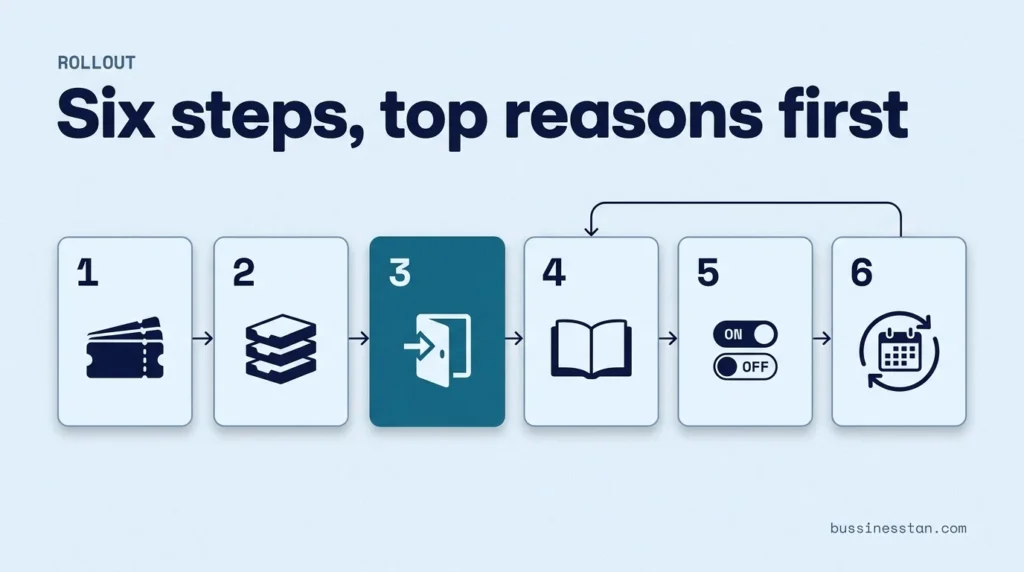
Do not launch everything at once. Roll out by contact reason, starting with the highest-volume automatable one.
- Read the tickets. Export 12 months of tickets and call logs. Tag contact reason, corridor, language and channel.
- Split the three classes. Agree the class for every reason with support, operations and compliance in writing.
- Write the escapes first. Define escalation triggers, handover notes and the phrases that always route to a person, such as "fraud", "complaint" or "not received" after the promised time.
- Build the knowledge base. One governed source for website, app, WhatsApp and voice, so the same question gets the same answer everywhere.
- Launch the top 5 reasons. Usually status after login, documents, countries, payout methods and rates. Start in one channel and one corridor language.
- Watch the gaps monthly. Review failed answers, escalations and repeat contacts, then add the next reasons.
Chat, voice or both?
| Channel | Best for | Watch out for |
|---|---|---|
| In-app and web chat | Status after login, documents, repeat transfer help | Senders who never open the app |
| Senders who prefer messaging, opt-in updates | Template and policy limits per market | |
| Inbound voice | Senders who call, older senders, peak-hour queues | Authentication by phone, accents and languages |
An AI chatbot for remittance usually comes first because status after login is simplest in the app. AI voice agents for money transfer follow when call volume justifies them. A first-line voice pilot on the top 5 call reasons can usually be answering calls inside 6 weeks.
The KPIs that tell you it works
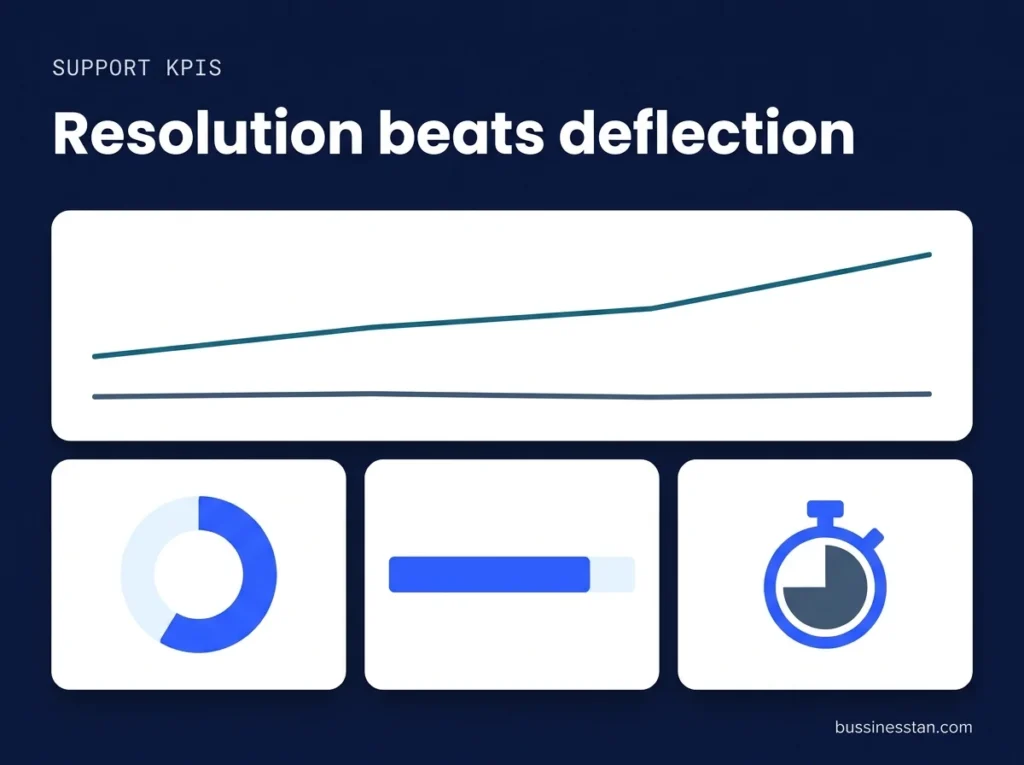
Measure support outcomes and sender outcomes together. A deflection rate on its own rewards a bot that frustrates people into leaving.
| KPI | What it shows |
|---|---|
| Automation rate | Share of contacts resolved without a person |
| First-contact resolution | Whether the answer actually ended the question |
| First-response time | Queue relief, especially at peak send times |
| Resolution time | End-to-end speed for assisted and human cases |
| Escalation rate | Whether the escapes trigger when they should |
| Repeat contacts | Whether senders come back with the same question |
| Satisfaction | How the sender felt, by class and language |
| Cost per interaction | Unit cost, before and after |
| Agent productivity | Time returned to the cases that need judgement |
Faster, accurate status answers also protect the second transfer. A sender who could not find out where the money was is less likely to send again. See customer retention for remittance apps for that side.
Frequently asked questions
How should an AI assistant answer "where is my money"?
Only after the sender is authenticated. The assistant then reads the live status from your transfer system and explains it in plain words, including the expected payout time for that corridor and method. If the transfer is on hold, delayed beyond the promised time or disputed, it hands over to a person with notes.
Are AI voice agents for money transfer worth it?
They are worth it when call volume is high, senders prefer to phone and a large share of calls are status and product questions. A pilot on the top 5 call reasons in 1 corridor language shows whether voice pays back before a full build. Disputes, fraud and private matters still go to people.
Can an AI chatbot in a remittance app approve KYC?
No. An AI chatbot can explain which documents are needed, why verification exists and how to retake a photo. The approval or rejection stays with your verification process and trained reviewers. The same applies to AML, sanctions, suspicious activity, transfer blocking and risk classification.
What is customer support automation in a money transfer business?
It is the use of routing rules, knowledge bases, AI assistants and agent tools to resolve predictable contacts automatically, prepare assisted ones and escalate the rest. It sits on your existing helpdesk and CRM, and it starts with a contact-reason taxonomy and escalation rules, not with a vendor choice.
How long does it take to launch AI customer support for fintech?
For a money transfer operator, status automation alone usually takes about 4 weeks. A full build across the main contact reasons takes around 8 weeks from ticket audit to live. Multilingual voice takes longer. Timelines depend on login flows, status data access and how quickly escalation rules are agreed.
Where to start
Start with your own ticket data. Tag a year of contacts, sort them into 3 classes and write the escalation rules before choosing any tool. Then automate status after login for your top corridor language and measure it for a month.
For help with the build, see our customer support automation service. If support load is one of several leaks you suspect, Book a Growth Audit. Two weeks and a fixed fee, and you keep the roadmap whether or not we work together.

Written by
Founder & CEO, Bussinesstan
Owns the commercial side of every engagement: fixed-fee scoping, corridor economics, and the reporting that ties spend to completed first transfers rather than to installs.
Meet the team
CRM for money transfer companies: design the data model first
CRM for money transfer companies, built on the data model: one record per sender, 9 lifecycle stages, B2B pipelines, consent rules and a 10-week rollout.
WhatsApp Business API for money transfer operators: a practical guide
A practical guide to the WhatsApp Business API for money transfer operators: opt-in, template approval, 6 remittance flows and when to hand over to a person.
UGC for financial services: creator marketing for money transfer brands without compliance risk
UGC for financial services, done safely: diaspora creators, 6 restricted claim areas, disclosure by market and a brief compliance can sign off.